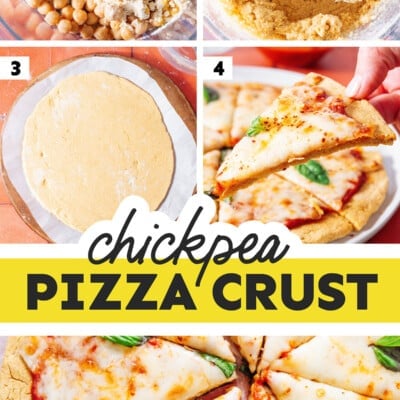
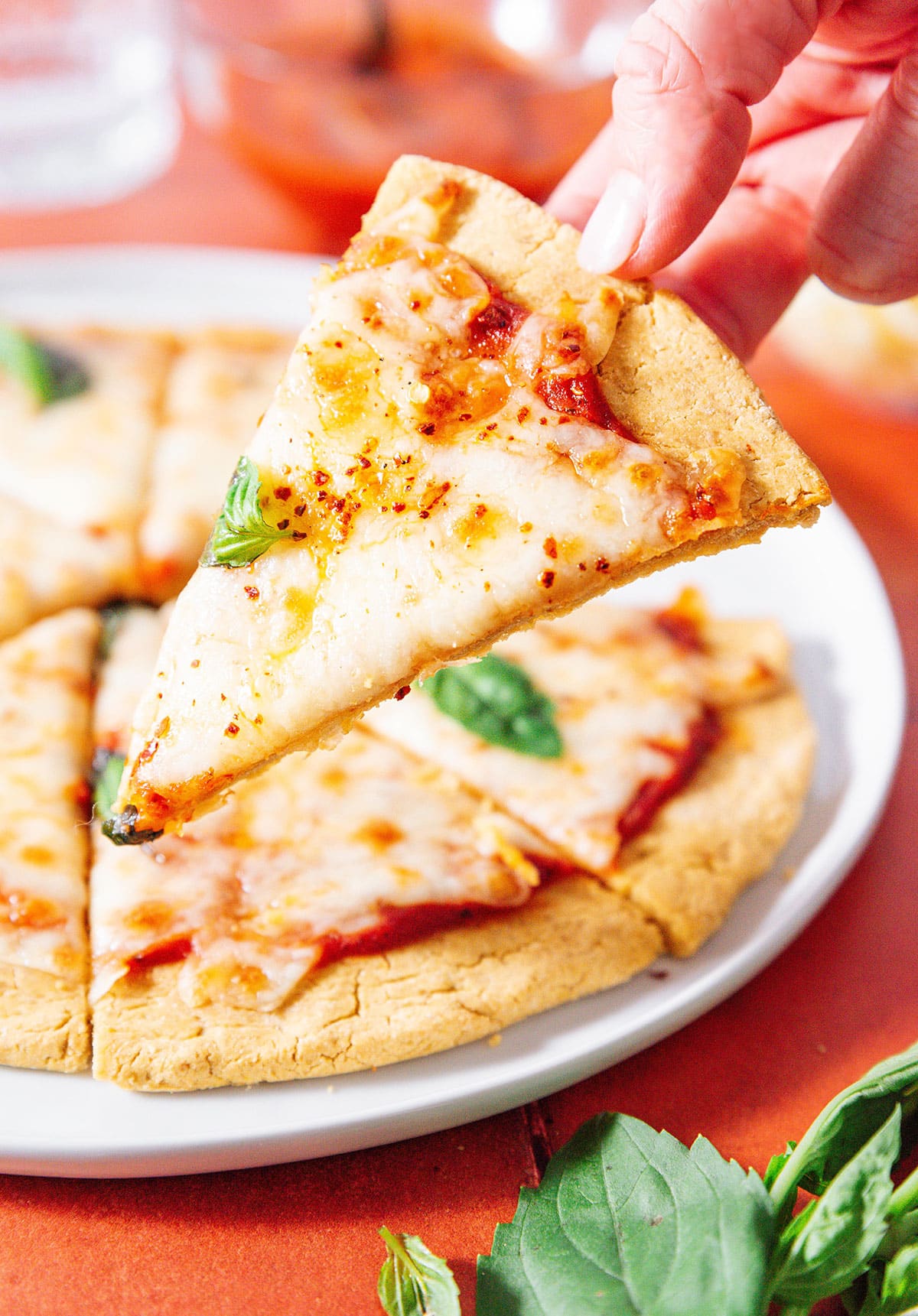
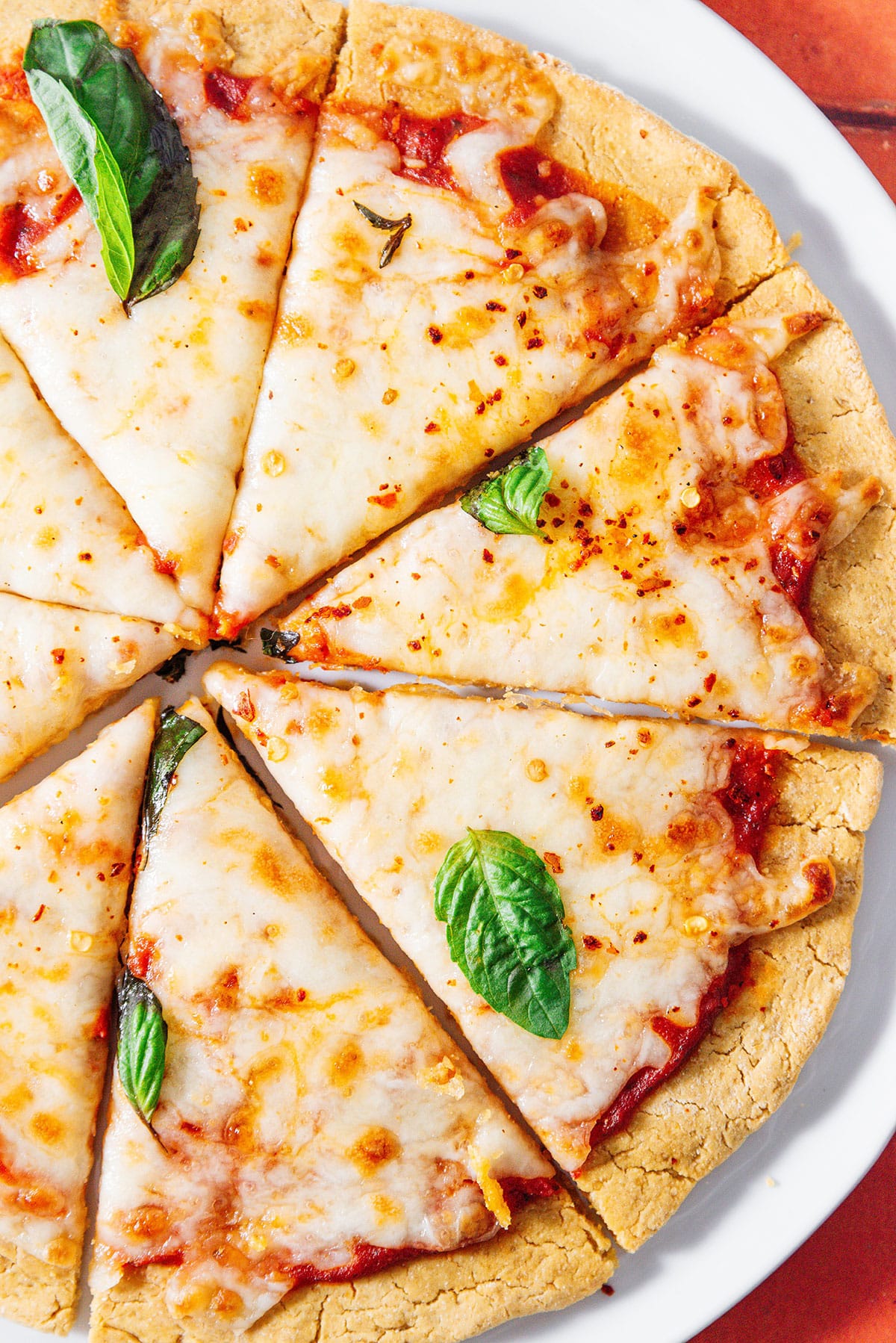
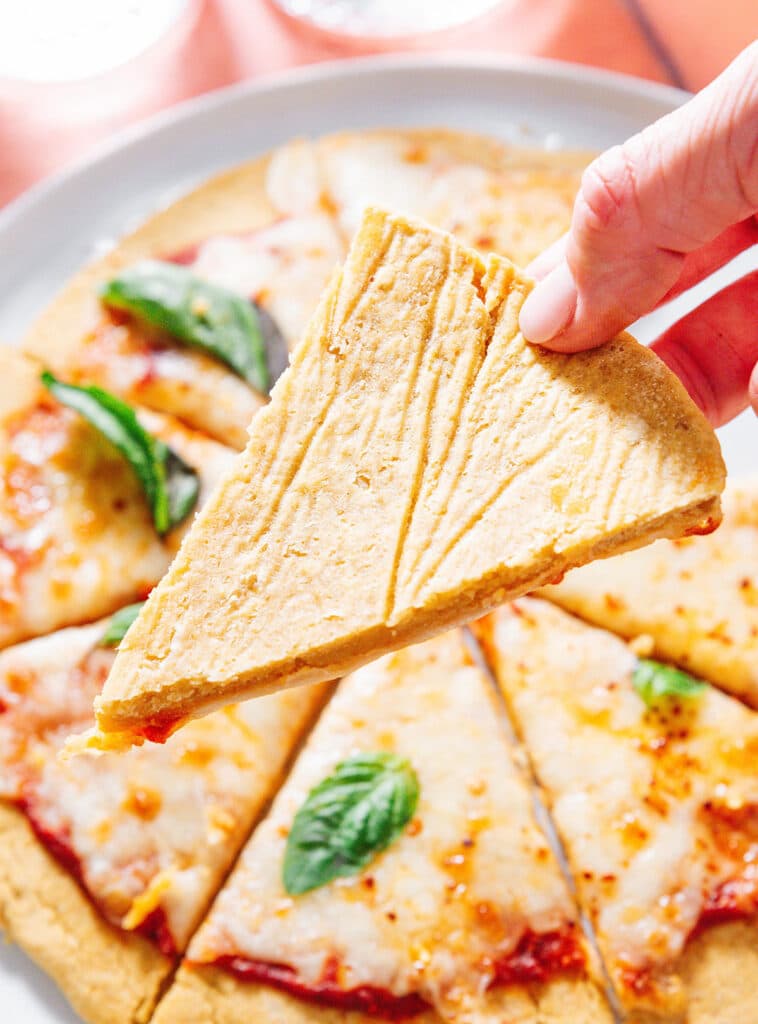
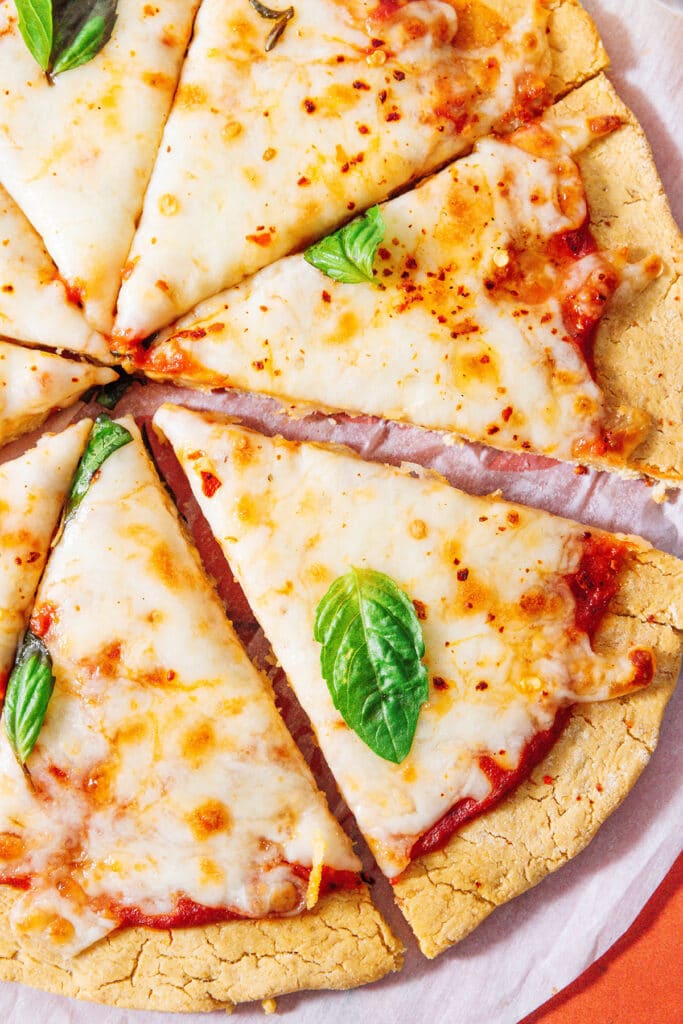
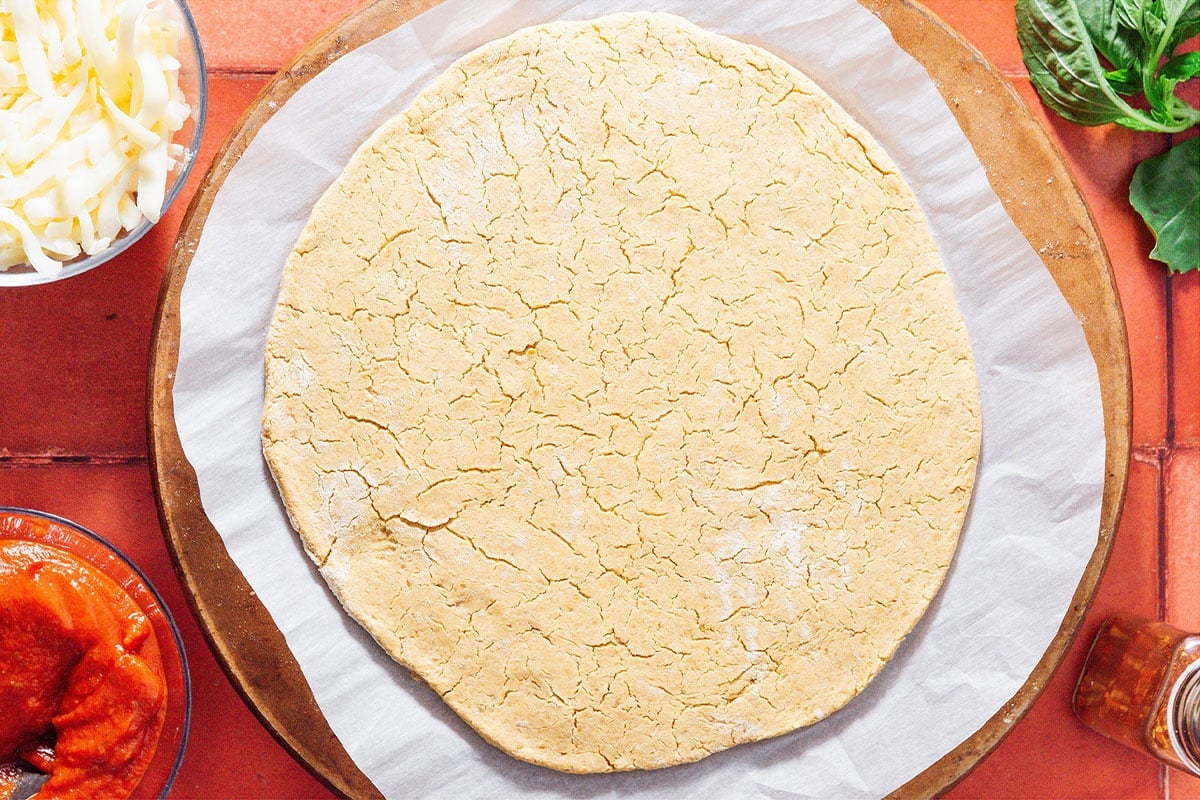
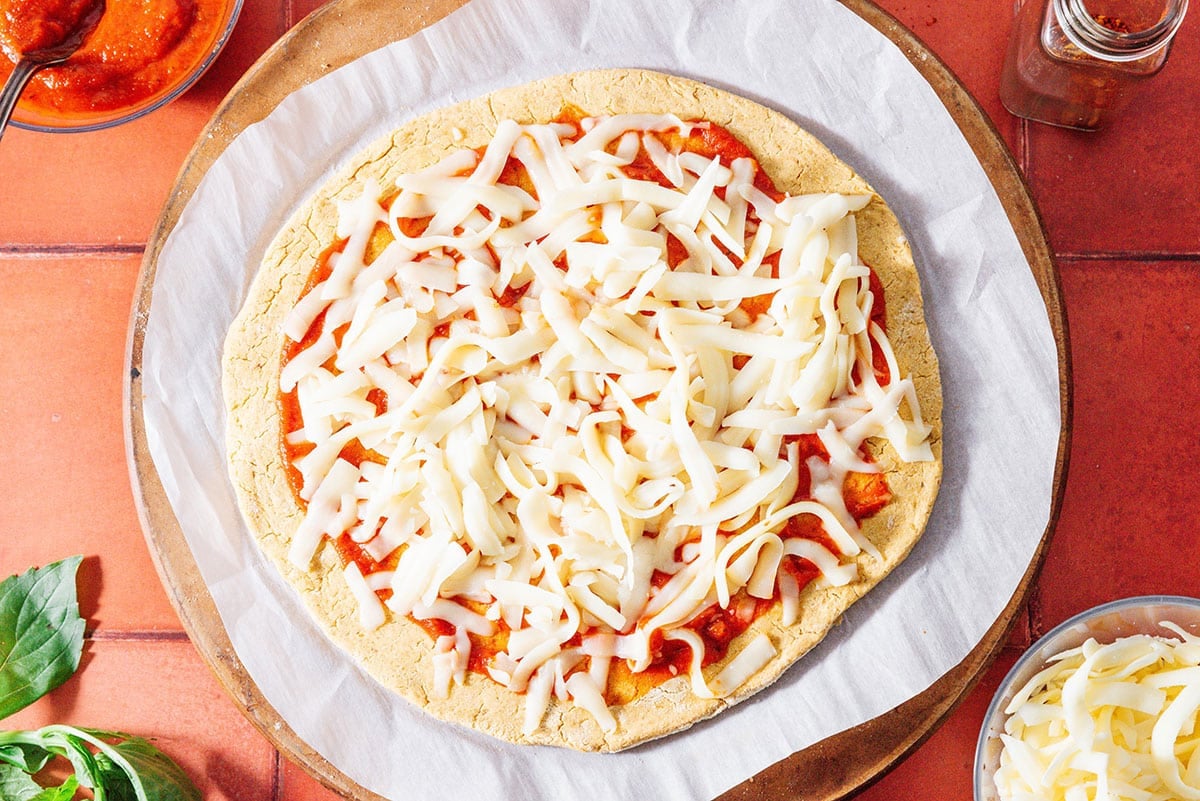
Pizza is my love language – it’s always a dreamy bite that takes me right back to my Italian travels. Over the years, I’ve developed a handful of pizza recipes, including truffle pizza, pesto pizza, bruschetta pizza, and more! Now, I’m onto the components of pizza, starting with a pizza crust made from a can of chickpeas and chickpea flour. This high-protein chickpea flour crust is surprisingly easy to make.
Why you’ll love it
Just 5 ingredients come together to make this crispy pizza crust. And none of those ingredients in yeast – win-win! Add whatever spices you like to this dough. Like my homemade pizza dough, I like to keep this one plain and simple so that the toppings really shine. But you can add in fresh herbs, dried Italian seasoning, or even just a little garlic powder. There is no wheat flour involved making this a dairy-free and gluten-free pizza crust! Instead, this is a chickpea flour pizza crust.
Ingredients for this chickpea pizza crust
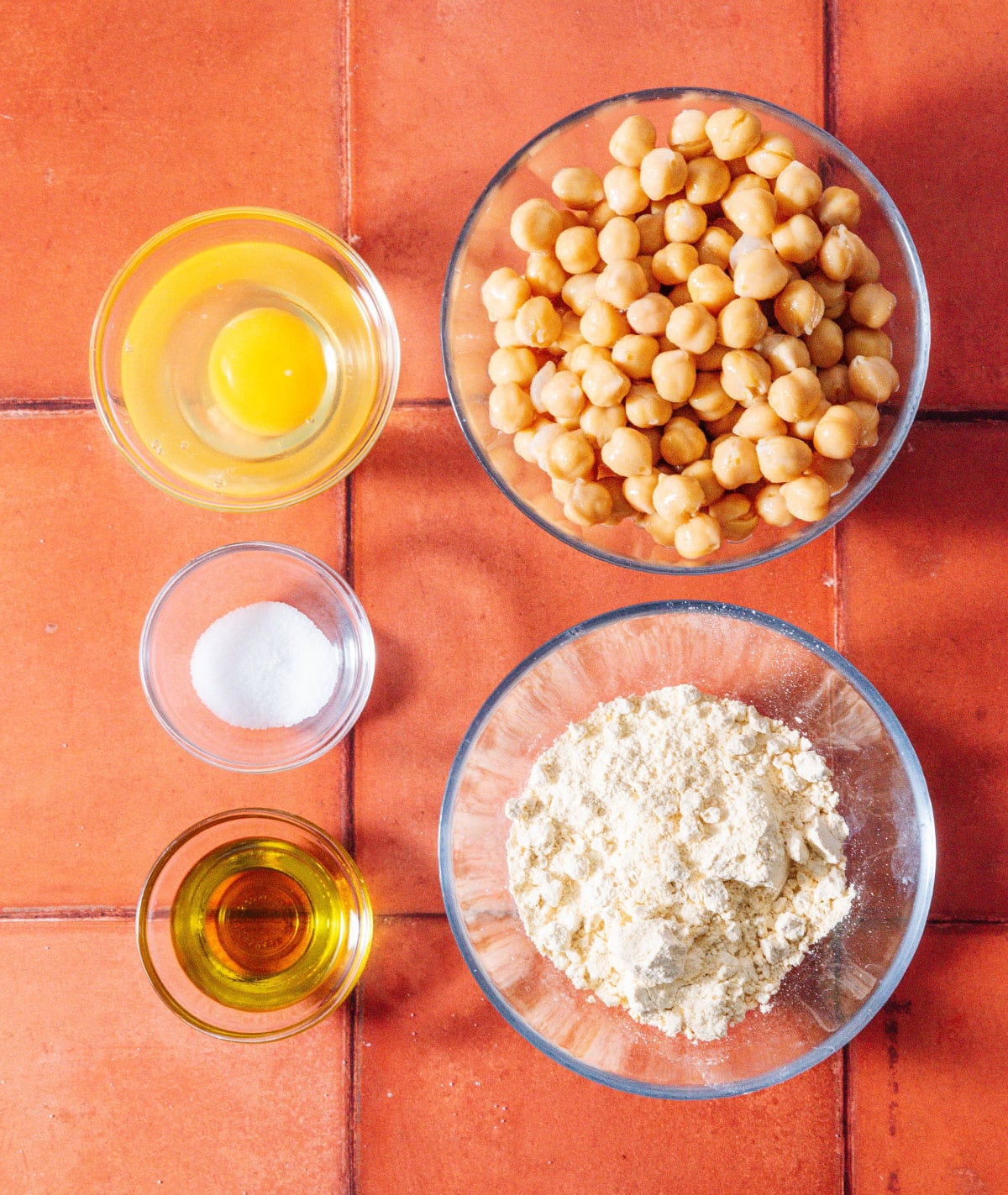
I know I already said this is only 5 ingredients, but wait until you see that it’s actually more like 4 since two are really one ingredient.
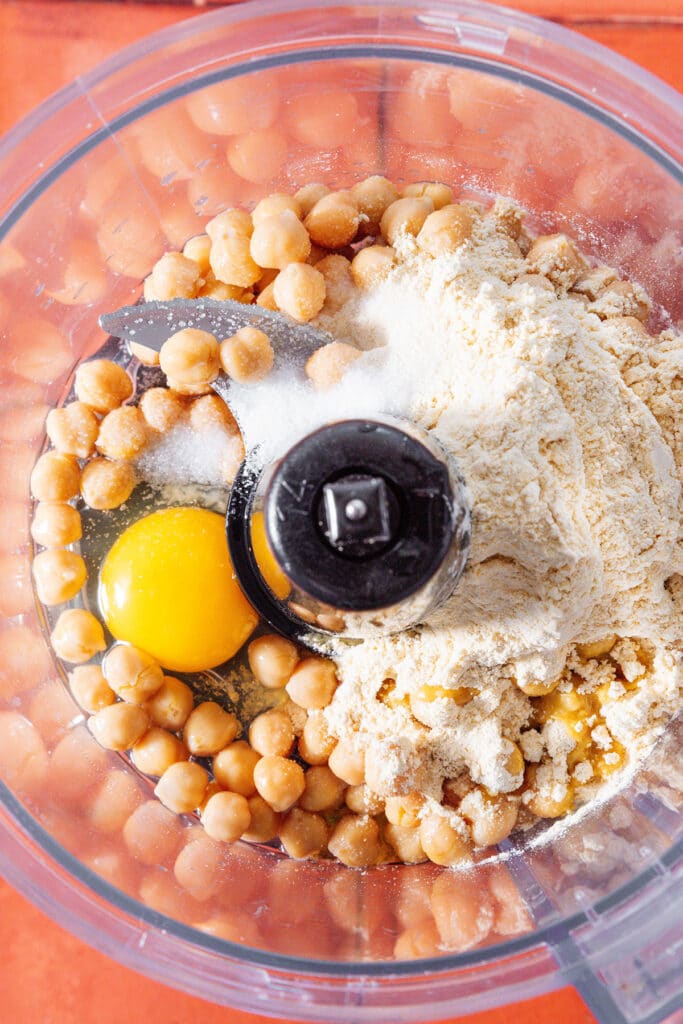
Chickpeas: You’ll need one can of chickpeas and chickpea flour (see, one ingredient). Chickpea flour or garbanzo bean flour can be found in the baking aisle or you can make homemade chickpea flour. The basics: Like any great pizza dough, this one needs an egg to bind everything together, a little salt for flavor, and a little olive oil for richness.
How to make chickpea crust pizza
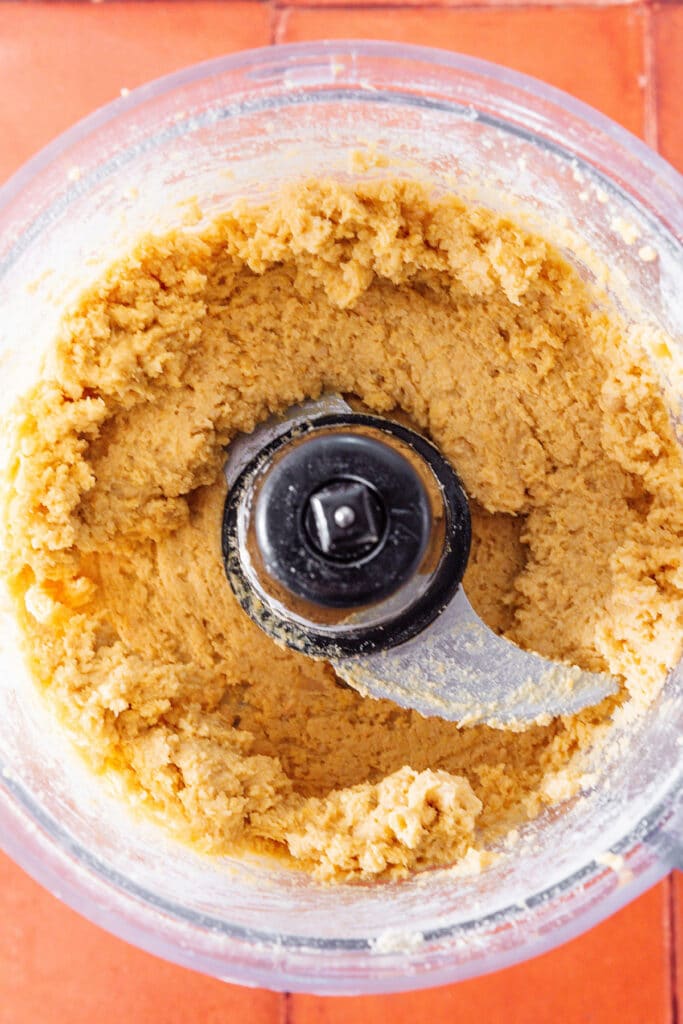
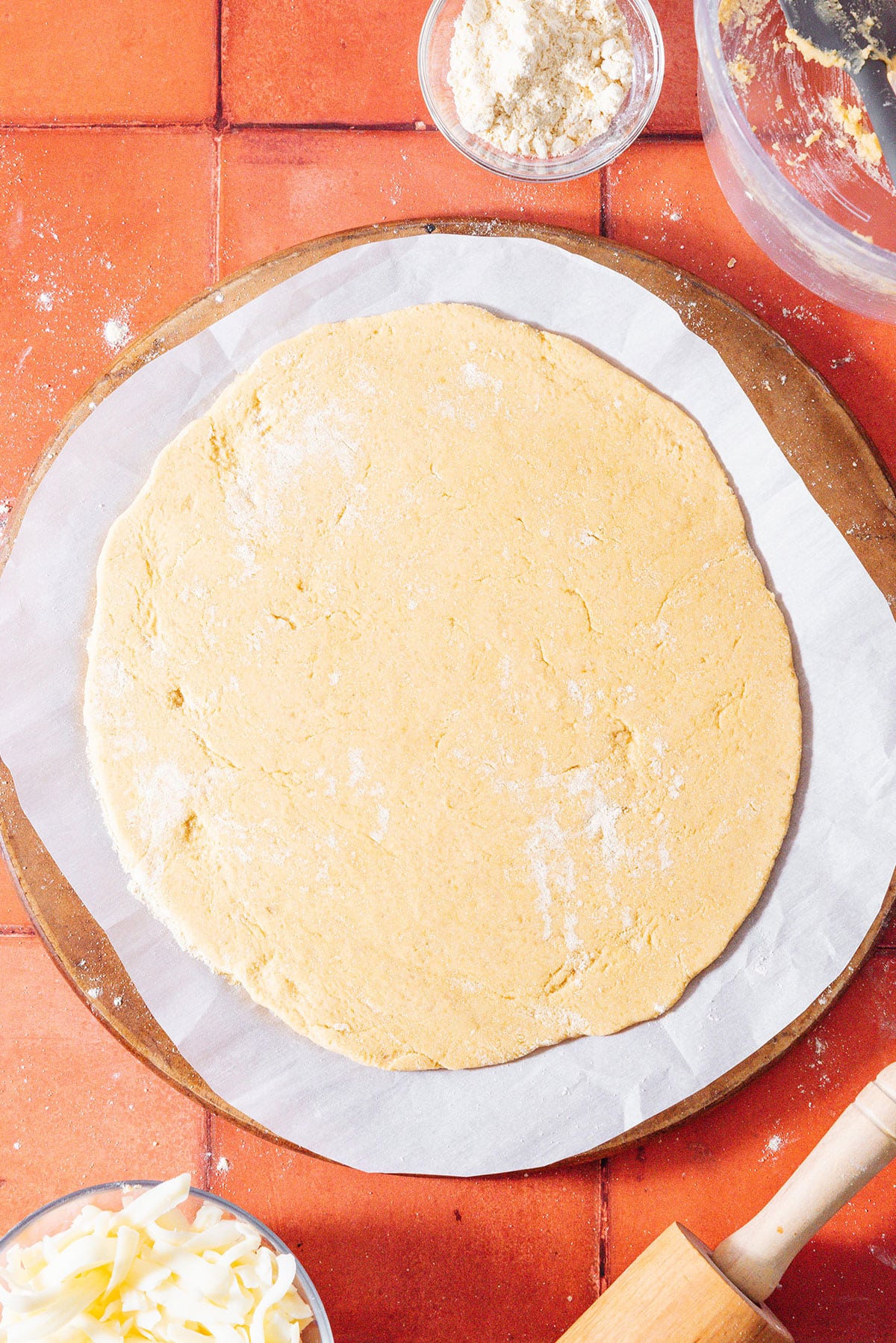
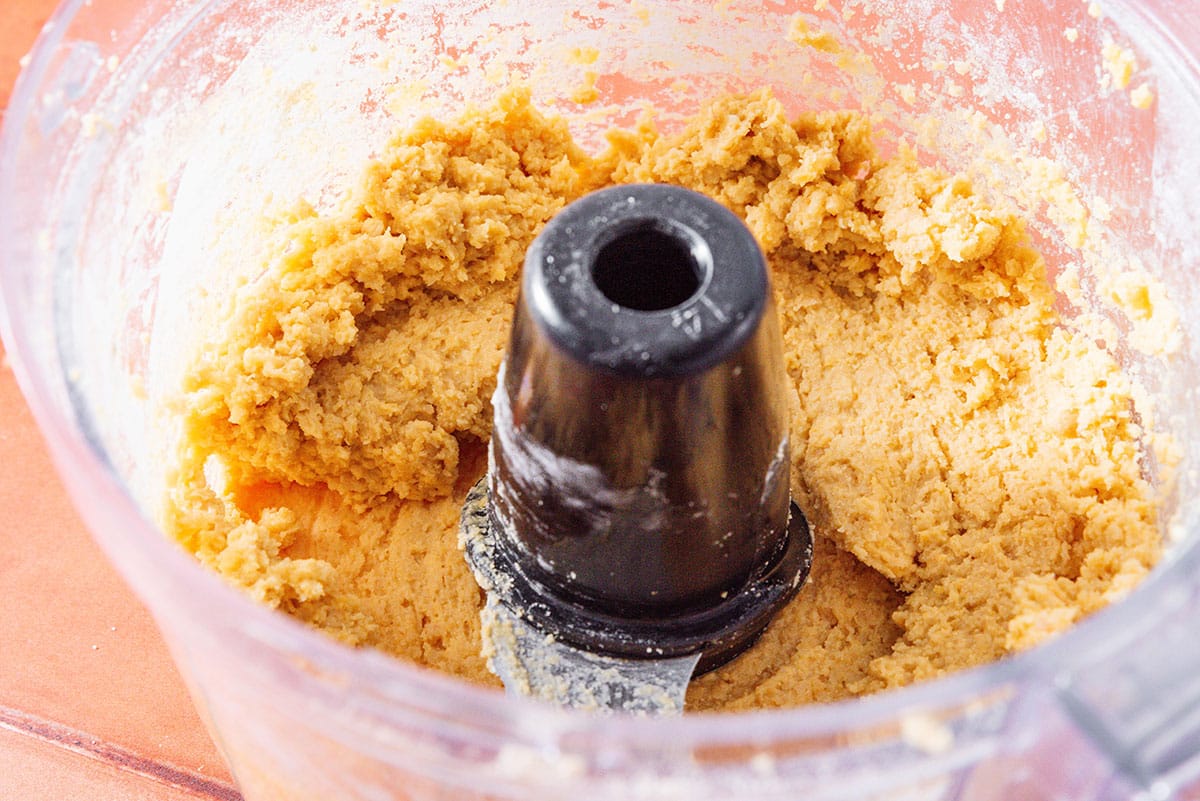
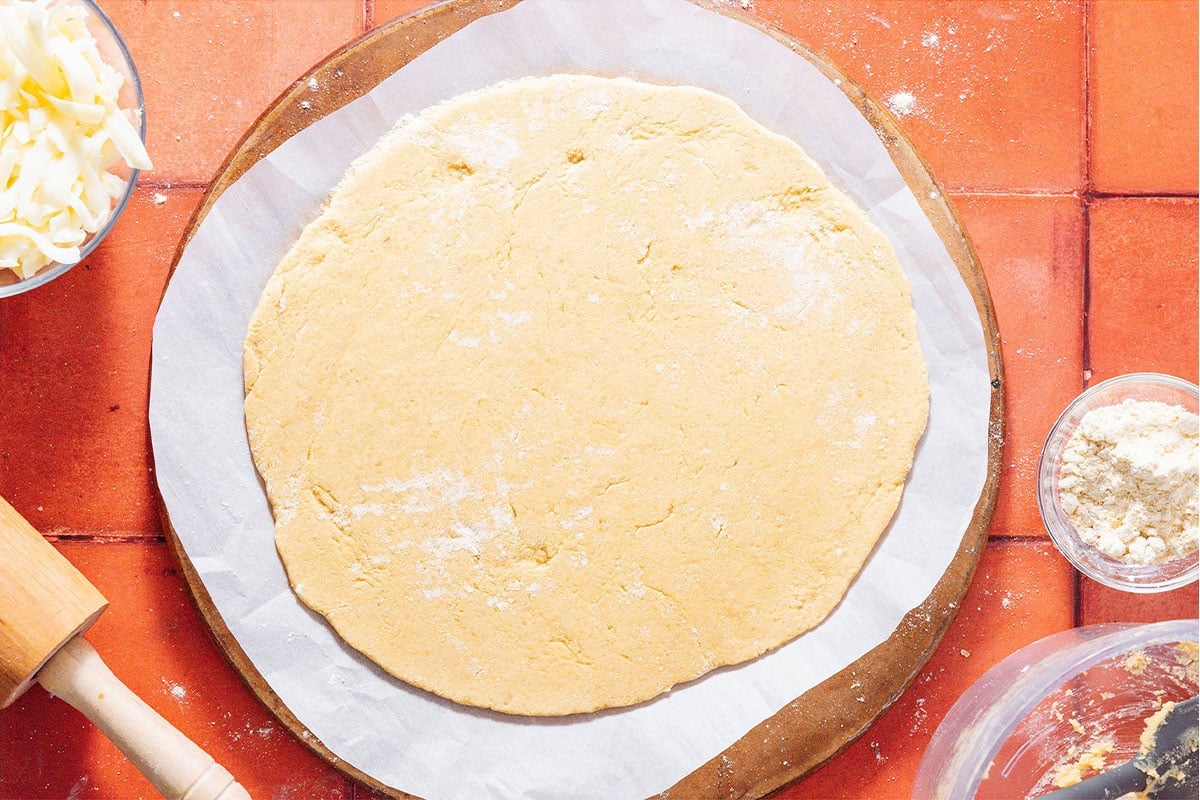
Making this flourless crust is super simple – see below for just how simple (check the recipe card at the end for the full instructions!)
Is this chickpea crust the same as Banza pizza crust?
It won’t ever be exactly the same, but as a food scientist I pride myself on being able to develop recipes by working backwards from the store-bought version. So, this recipe is pretty darn close in taste and texture.
Storage
You can store leftover chickpea pizza in the fridge in an airtight container for up to 4 days. Or, you can take the dough, wrap it in plastic wrap, and store it in the fridge for up to 1 week or freezer for 3 months. Just let it come to room temperature and soften a bit before attempting to shape and bake.
Recipe Testing Notes
Using warm water is a staple when making pizza dough so I tested this crust that way first. But, it wasn’t necessary since the oil and egg add enough moisture. Oat flour can sometimes be used in place of chickpea flour but in this case, it absorbs too much liquid leading to a dry crust. You can, however, use almond flour! Pricking the crust is something common with pie crusts so I tried this pizza crust with and without pricking it with a fork. There was no difference with or without poking!
what to put on the perfect pizza
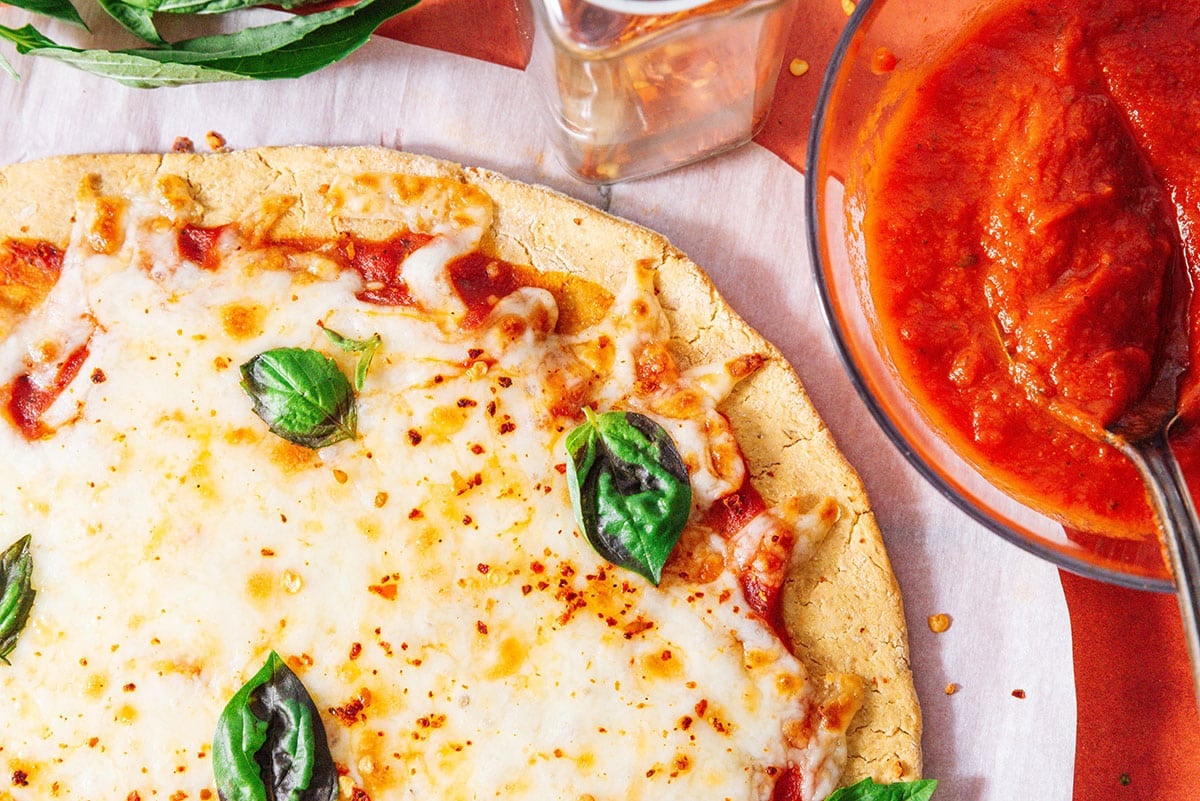
I thought I should share what I put on this gluten-free chickpea pizza crust to make what I feel is the perfect pizza. Of course, this is subjective, so you may take this as a starting point if you disagree with the perfect statement for some reason.
Homemade marinara sauce with fresh tomatoes is modeled after all the delicious pizza sauce I tried in Italy. It’s sweet and flavorful making it the perfect first layer to this pizza. Liquid mozzarella is a homemade version of the famous vegan mozzarella cheese flying off store shelves. Basil oil drizzled on top is the final touch to this perfect pizza! Don’t have fresh basil, use this basil oil! Veggies like mushrooms and peppers round out this vegetarian pizza of my dreams!