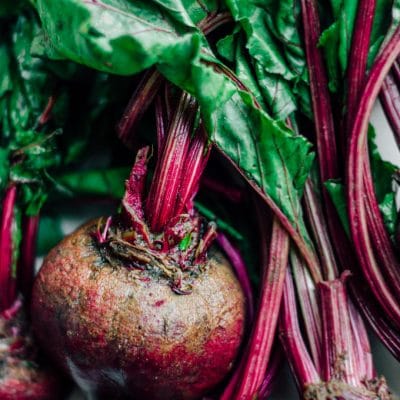
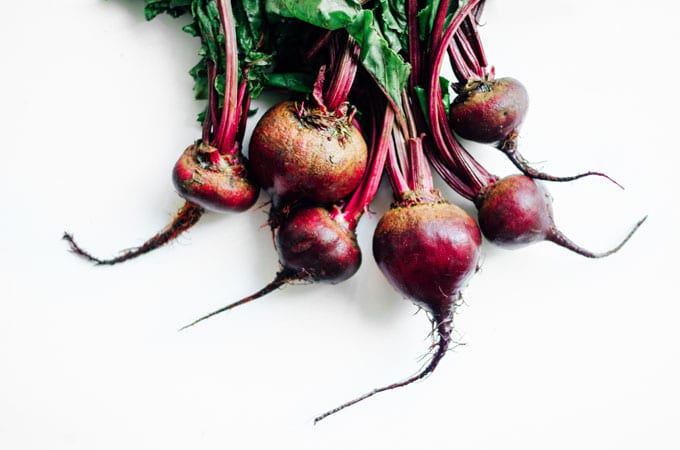
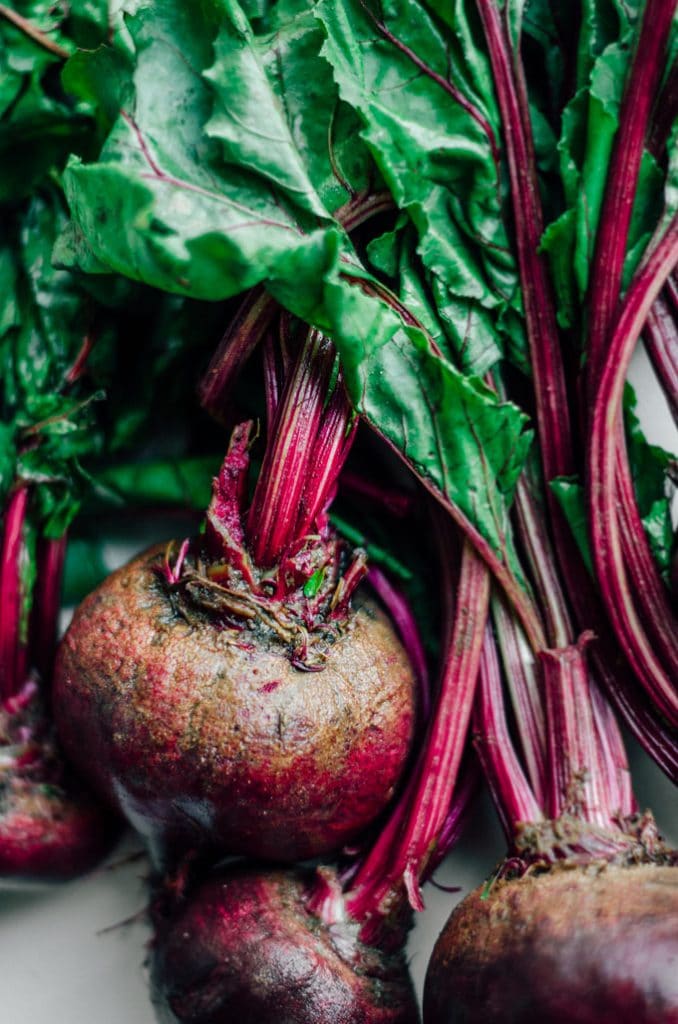
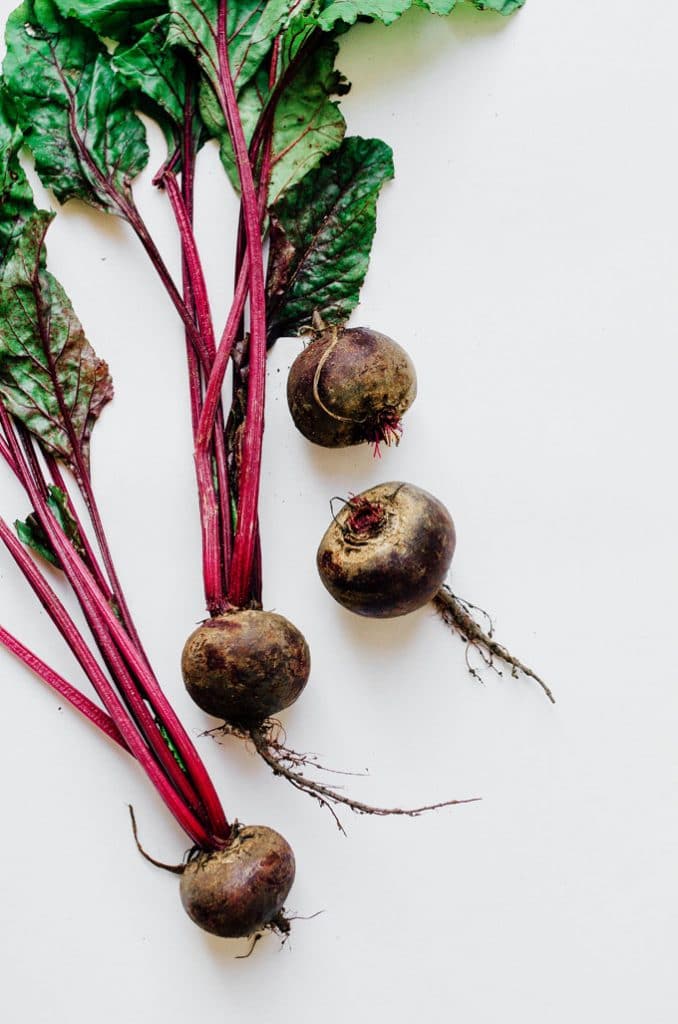
Beets were the very first featured ingredient on Live Eat Learn, which is surprising given how much I didn’t like beets when I started the blog. But I guess that’s why we started featuring ingredients in the first place, to learn to see the best in each ingredient. So in the name of giving beets a chance at love, we’re bringing them back into the spotlight this week!
How to pick the perfect beet
You can find beets in the produce section year-round, but they’re best in the winter. Look for beets with smooth, undamaged roots and crisp, green leaves. The smaller they are, the sweeter they taste.
Variations of beets
Red (Classic): Have a range of flavors, from bitter to very sweet.Golden: Less sweet, but also less earthy .Striped (Chioggia): A red and white striped Italian version. Great for slicing into salads!Baby: Picked before fully grown to make room for other beets to grow. These are very sweet and are typically served with their green leaves.Sugar: Processed and turned into table sugar rather than preparing as you would the other varieties.
How to store beets
Remove the leaves from the root (they’ll suck up all the moisture). Save the leaves, they’re edible as well! Wrap the root in a baggie and store in the refrigerator for up to 3 weeks.
Best Beet Recipes
Roasted Beet and Radish SaladButternut Beet and Ricotta GaletteRed Velvet Smoothie BowlBeet Pesto Pizza with Goat Cheese and KalePink Power Beet Smoothie
Beet Nutrition Information
per 1 cup of diced, raw beetroot
Calories: 58Carbohydrates: 13gFiber: 4g, 16% Daily Value (DV)Protein: 2gFat: 0g22% DV of Manganese: A trace element that plays a role in healthy brain and nervous system function.20% DV of Folate: A water-soluble B vitamin that helps make DNA & RNA, and metabolize amino acids.12% DV of Vitamin K: A fat-soluble vitamin that allows for activation of enzymes in the clotting cascade, which is responsible for blood clotting. Also builds bone by modifying osteocalcin so that it may bind calcium, thus building the bone matrix.13% DV of Potassium: A key mineral and electrolyte involved in countless processes, including healthy nervous system functioning and contraction of the heart and muscles.11% DV Vitamin C: A water-soluble vitamin that acts as an antioxidant to fight against damaging free radicals, and an important cofactor in collagen synthesis.