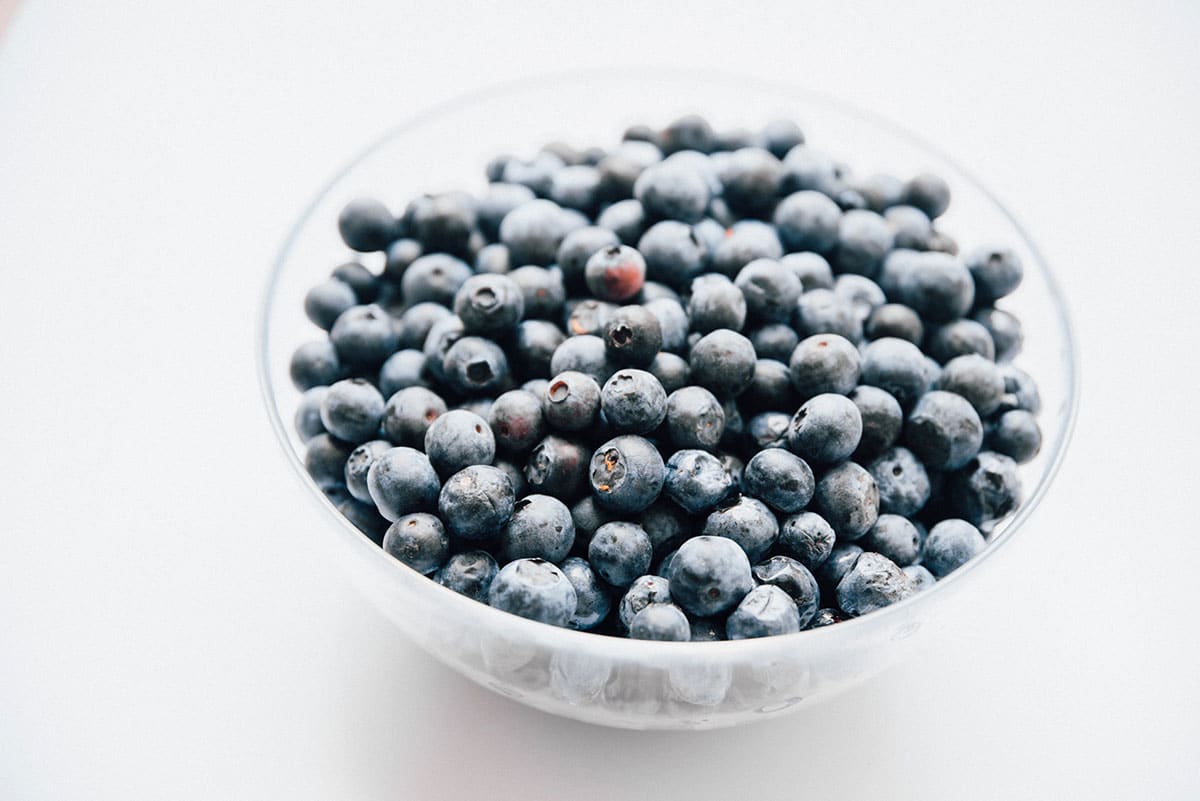
I decided on blueberries for this spotlight ingredient, not only because blueberries = summertime and sunshine, but because I read an interesting blurb about them in Food and Nutrition magazine. In it, they reported the results of a placebo-controlled trial where women with high blood pressure were randomly assigned to consume either freeze-dried blueberry powder or a placebo powder. After 2 months, the women who consumed the blueberry powder had significantly lower blood pressure and significantly higher nitric oxide levels compared to when they began. No change was seen in the placebo group. And what does all this gibberish mean? Higher nitric oxide = dilated blood vessels = less pressure on walls of blood vessels = good!
What kind of fruit are blueberries?
Blueberries are one of only three berries native to North America. They are blueberries, cranberries, and Concord grapes. So what is a berry? It’s a fleshy fruit produced from a single flower with no barrier between seed and pulp. That’s the botanical definition anywho. And interestingly enough, by this definition, strawberries are not berries, while bananas are. Things that make ya go hmmm.
When are blueberries in season?
In the Northern Hemisphere, blueberries are typically in season from late spring to mid-summer, depending on the variety and location, with peak season usually in July.
How to choose the perfect blueberries
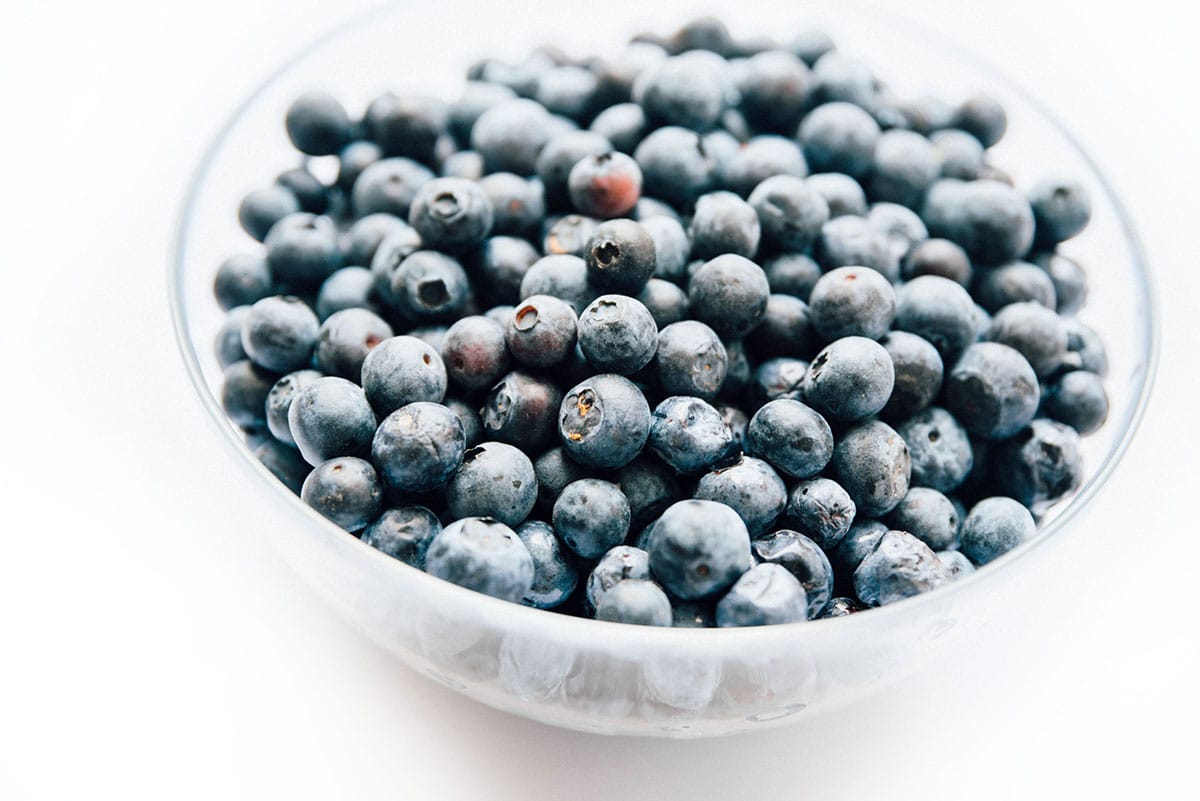
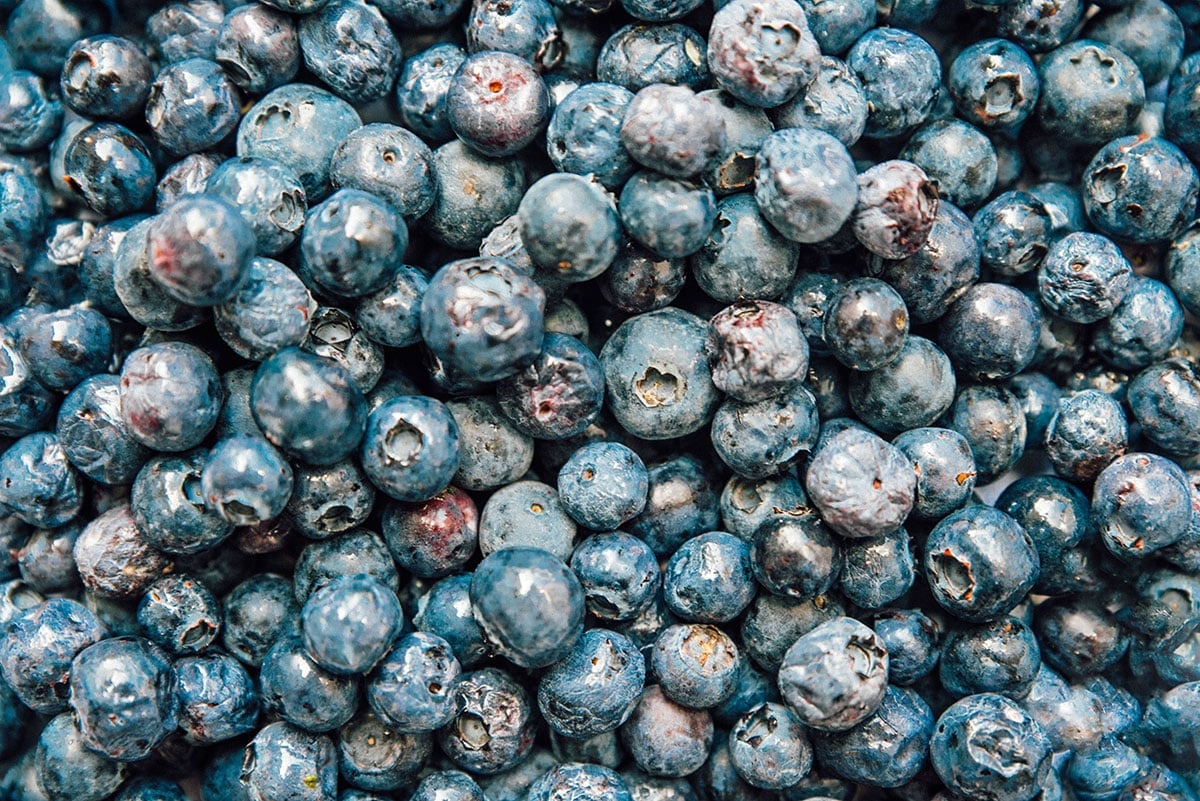
When selecting blueberries, choose plump, firm berries with a dusty blue color and a silvery sheen, and avoid any with soft spots, bruises, or mold.
Types of blueberries
There aren’t actually a wide variety of blueberries available to the general consumer. Most types of blueberries that you’ll buy at the grocery are from the high bush plant. There are also low bush plants, which are the wild blueberries you may find carpeting patches of ground in the woods.
How to Store Blueberries
Store Fresh Blueberries: Store blueberries in the pint container they came in! Wash just before using, but not sooner. The waxy coating keeps in the berry’s moisture. Fresh blueberries should keep for 10 days. How to Freeze Blueberries: Do not wash berries. Place in a single layer on a baking sheet and freeze, then transfer to an airtight container. Frozen blueberries are best cooked into a delicious blueberry recipe, as their texture will be slightly impacted by freezing!
Blueberry Nutrition Information
As with most blue fruits, blueberries are high in anthocyanin and antioxidants! Here is the nutrition information for blueberries (per 1 cup (148 g) fresh blueberries). Calories: 85 caloriesBlueberries are relatively low in calories, making them a healthy snack. Carbohydrates: 21gAs with most fruits, blueberries are no low in carbohydrates. Fiber: 4gBlueberries are a good source of fiber, and have 14% of your Daily Value (DV). This means that blueberries can can make you to feel full, helping you to eat less and lose weight. Protein: 1gAs with most fruits, blueberries are not high in protein. Fat: 0gAs with most fruits, blueberries are naturally fat-free. 36% Daily Value of Vitamin KBlueberries are high in Vitamin K, a fat-soluble vitamin that helps maintain healthy blood clotting and bone synthesis. 24% Daily Value of Vitamin CBlueberries are an excellent source of Vitamin C. This antioxidant helps maintain your immune system as well as helps to create collagen.