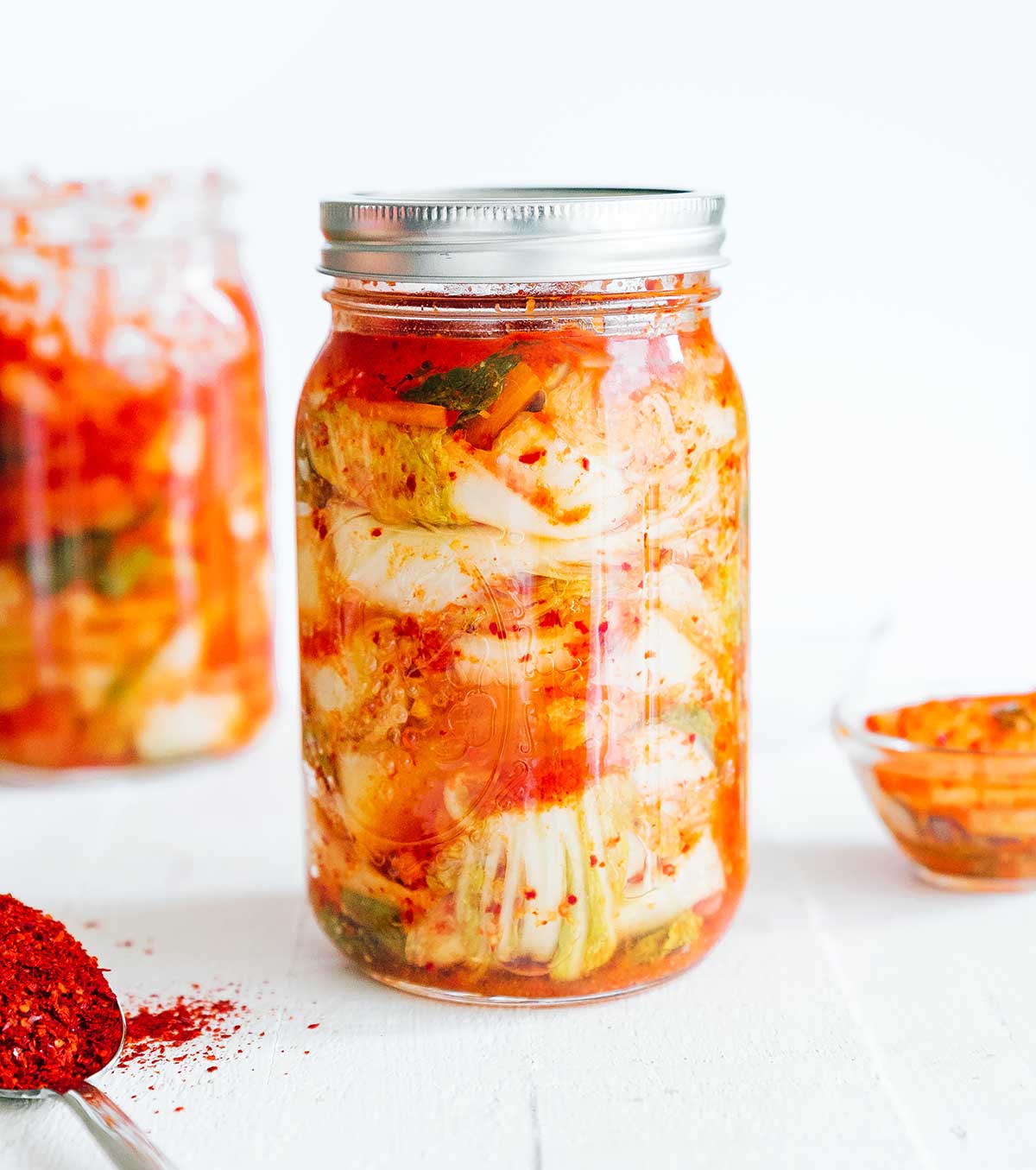
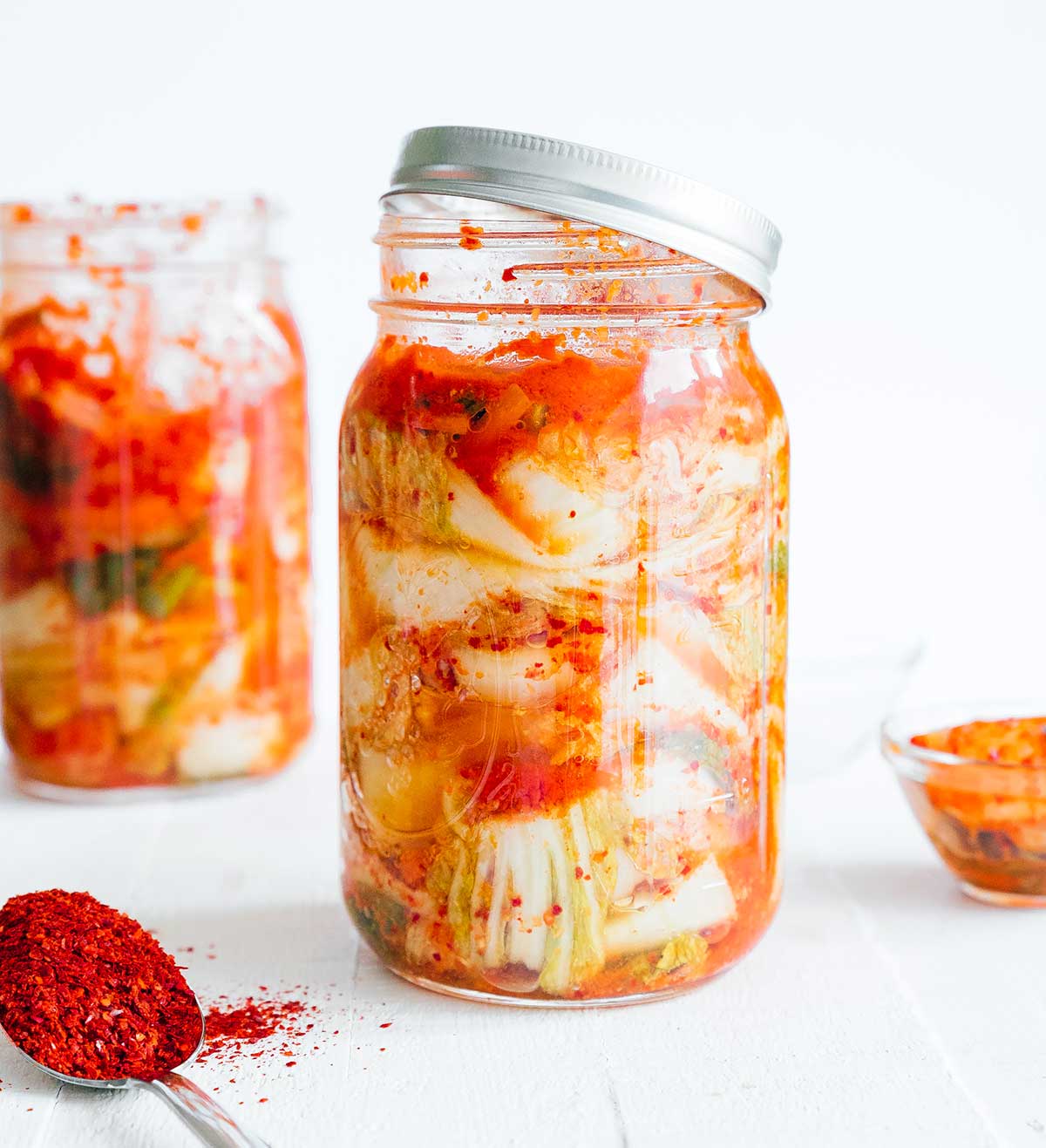
Kimchi can be a bit of a mystery for those who haven’t tried it (heck, it can be a mystery even if you have tried it). At its core, kimchi is fermented cabbage. But it’s so much more. It’s spicy and umami and sour and perfect for adding zing to everything from fried rice to tacos! But making kimchi is anything but a mystery. It’s truly so easy! After years of making it for our family, I’ve developed a method for making kimchi that’s straight-forward, using ingredients that can be found in most Western grocery stores.
So What is kimchi, really?
Kimchi is made by lacto-fermentation of napa cabbage, which is fermentation by Lactobacillus bacteria (the same kind of fermentation that gives us yogurt and dill pickles!). Basically, basteria are converting sugars into lactic acid! As with many fermentation products, kimchi is incredibly healthy! It’s packed with probiotics, which help promote a healthy gut microbiome. Its main ingredient, Napa cabbage, brings another punch of healthy properties, like being an excellent source of vitamins K, C, and folate. And when the fermentation is complete, 1 cup (150 g) of kimchi has just 23 calories while being relatively high fiber (2.4 g).
Kimchi…but make it vegan
So obviously with the promise of major flavor and health benefits like that, I had to try my hand at making kimchi. But the thing is, traditional kimchi isn’t vegetarian. Most authentic kimchi recipes include fish sauce, which adds umami taste. To make this kimchi plant-based, I tried two variations without fish sauce: in the first, I simply omitted it, and in the second, I used miso paste instead. Both vegan kimchi variations were delicious, and the recipes are included below!
Here’s what you’ll need
Napa Cabbage: Otherwise known as Chinese cabbage, this will form the base of the kimchi. Non-Iodized Salt: Aim for iodine-free or kosher salt (iodized salt may prevent fermentation and can lead to a metallic taste). Korean Pepper Flakes: Otherwise known as gochugaru. Find it online or check out your nearest Asian supermarket. If you’ve looked everywhere and can’t find gochugaru, you can sub hot paprika powder (but I recommend giving gochugaru a try if possible). Garlic: You only have to be in the general vicinity of kimchi to know it contains garlic. That smell 😅 Just be sure not to add too much garlic, as it can cause the kimchi to become bitter. Ginger: Ginger brings a fresh flavor while contributing to the fermentation. Sugar: Just a dash of sugar is enough to kickstart the fermentation, giving the bacteria something to “feed” on. Carrot or Daikon Radish: Traditional kimchi uses daikon radish for added crunch, though carrot works just as well (use whichever you have access to). Green Onions: Finally, green onions for flavor!
How to make kimchi
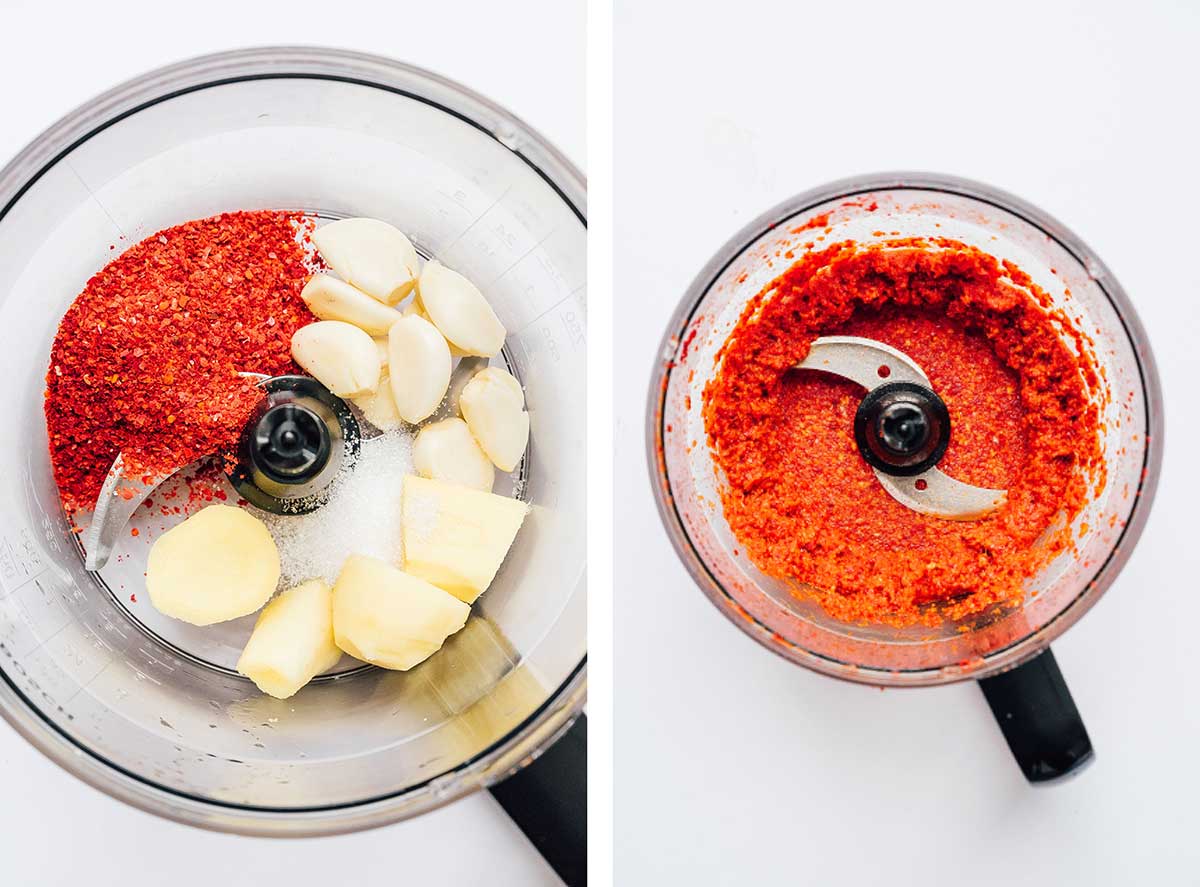
There are two main stages to making homemade kimchi. In the first, you salt brine the cabbage to kill off any bad bacteria and release moisture. In the second stage, the good Lactobacillus bacteria take over and convert all the sugars into lactic acids. Let’s get into it! Step 1: Sterilize everythingWash your hands well before every time you touch the ingredients. Wash supplies with hot water. Clean is key with any fermentation! Step 2: Brine the cabbageChop then rinse the cabbage well. Place in a large bowl and sprinkle completely with salt, working the salt in between each cabbage leaf. Let sit for about 2 hours, massaging and turning the cabbage every 30 minutes, until cabbage has wilted down. When finished, drain and rinse the cabbage very well (until a torn-off piece no longer tastes overly salty). Squeeze out the excess water. Step 3: Flavor it upWhile cabbage is sitting in the brine, add your Korean pepper flakes, garlic, ginger, and sugar to a clean food processor, along with some water to get things moving. If desired, add miso paste as well (for umami taste). Blitz until smooth. Step 4: MixCombine the well-rinsed cabbage (either whole leaves or roughly chopped), pepper paste, carrot (or daikon radish), and green onions in a large bowl, mixing well with clean hands. Step 5: FermentPack the mixture into clean glass jar(s), pressing down so that the veggies are submerged in the juices. Leave at least an inch of empty space at the top of the jar, then seal shut with a lid. Set the sealed jar on a plate or bowl (to catch possible leaks), and place somewhere room temperature and out of direct sunlight, letting it ferment for 2 to 5 days.
Serving ideas
Kimchi is great served on its own as a side dish of sorts, but you can also use it as a condiment or topping on a bunch of recipes! Here are our favorite ways to use kimchi, from Korean cooking to unique twists: