What are eggplants?
Eggplants are fruits that like to pretend they’re vegetables (and we’ll play along and call them a vegetable for this Ingredient of the Week). They’re thought to go all the way back to prehistory in India. It made its way around Asia, then travelled to Europe and North Africa via the Mediterranean Sea, where it was thought to cause insanity and death. It finally made its way to America, where it was used as a table ornament until the 1900’s, when people finally got their act together and realized the beauty that is a perfectly crafted eggplant parmesan. And while eggplants are now a staple in the American grocery, they’re still not getting all the attention they so rightly deserve on the American dinner table. They’re versatile, a great substitute for meat, and can absorb large amounts of sauces and flavors. Oh, and they’re super low calorie. Fun Fact: Why do we call these things eggplants? Earlier varieties were white, so they actually resembled eggs hanging from the plant.
Variations of Eggplants
There are many varieties of eggplant, but the most common are:
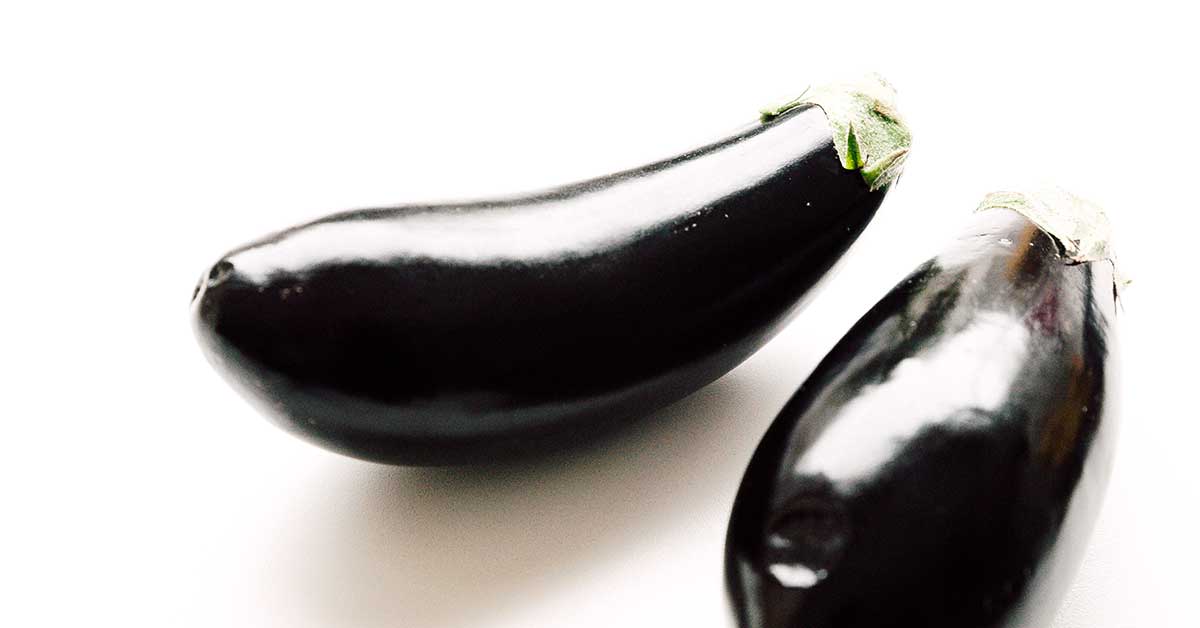
Italian: have a smooth, deep purple skin and a large, oval shape. Sicilian (Zebra, Graffiti): slightly smaller with purple and white streaks White: have a tough, white skin Indian (Baby): small, round, and purple Japanese/Chinese: longer, thinner, and a purple stem and skin
And of course, there are variations in the way people say eggplant around the world. While we call it “eggplant” in the U.S., Canada, and Australia, you make hear it called “aubergine” in Europe.
How to pick the perfect eggplant
Eggplants are generally available year-round, with peak season in the northern hemisphere being late-summer. Select an eggplant with a smooth, untarnished skin. The small and medium-sized ones will have a better, sweeter flavor, less seeds, and a more delicate skin.
How to store eggplants
Eat within 5 days of purchasing, as these will get more bitter with time. Store in refrigerator, and wash just before using.
To peel or not to peel?
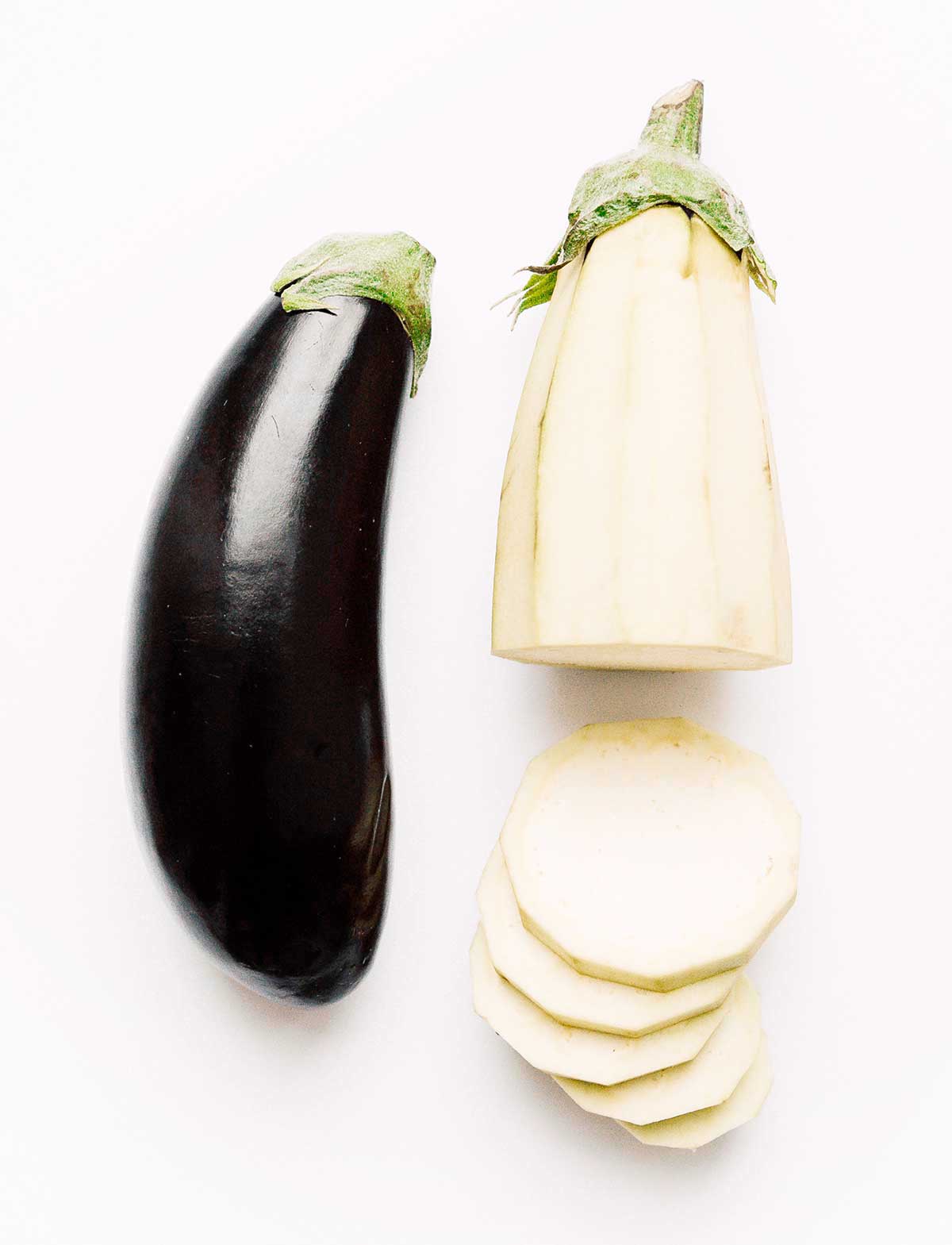
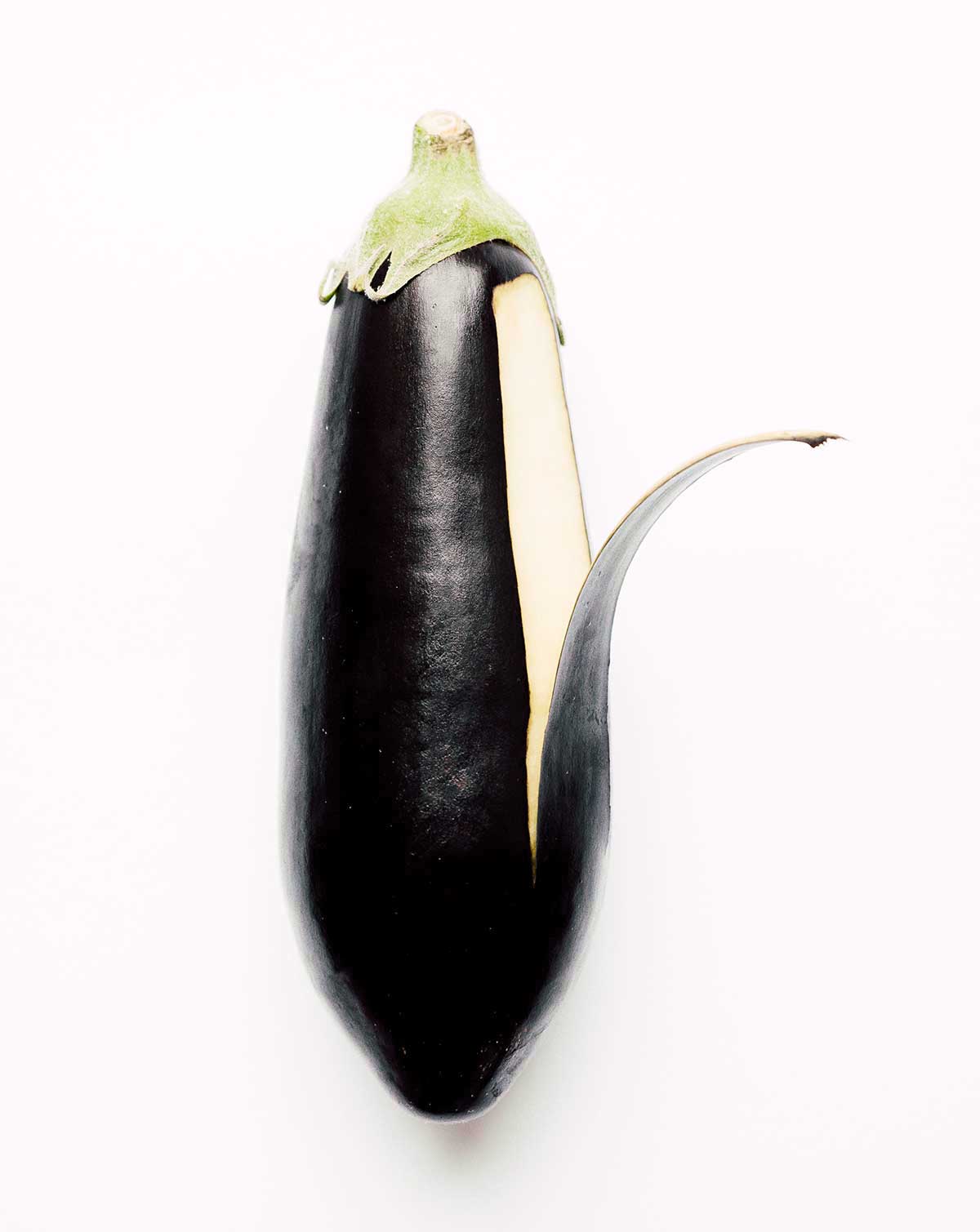
While the peel of small eggplants is delicate, larger eggplants may have more thick, bitter skins. So for bigger eggplants, it’s a good idea to peel the skin before cooking or eating. With that said, the peel of the eggplant contains a lot of the fiber and anthocyanin (the healthy compound that gives eggplant its distinct purple hue). Here’s how to peel and cut eggplant!
Our favorite eggplant recipes
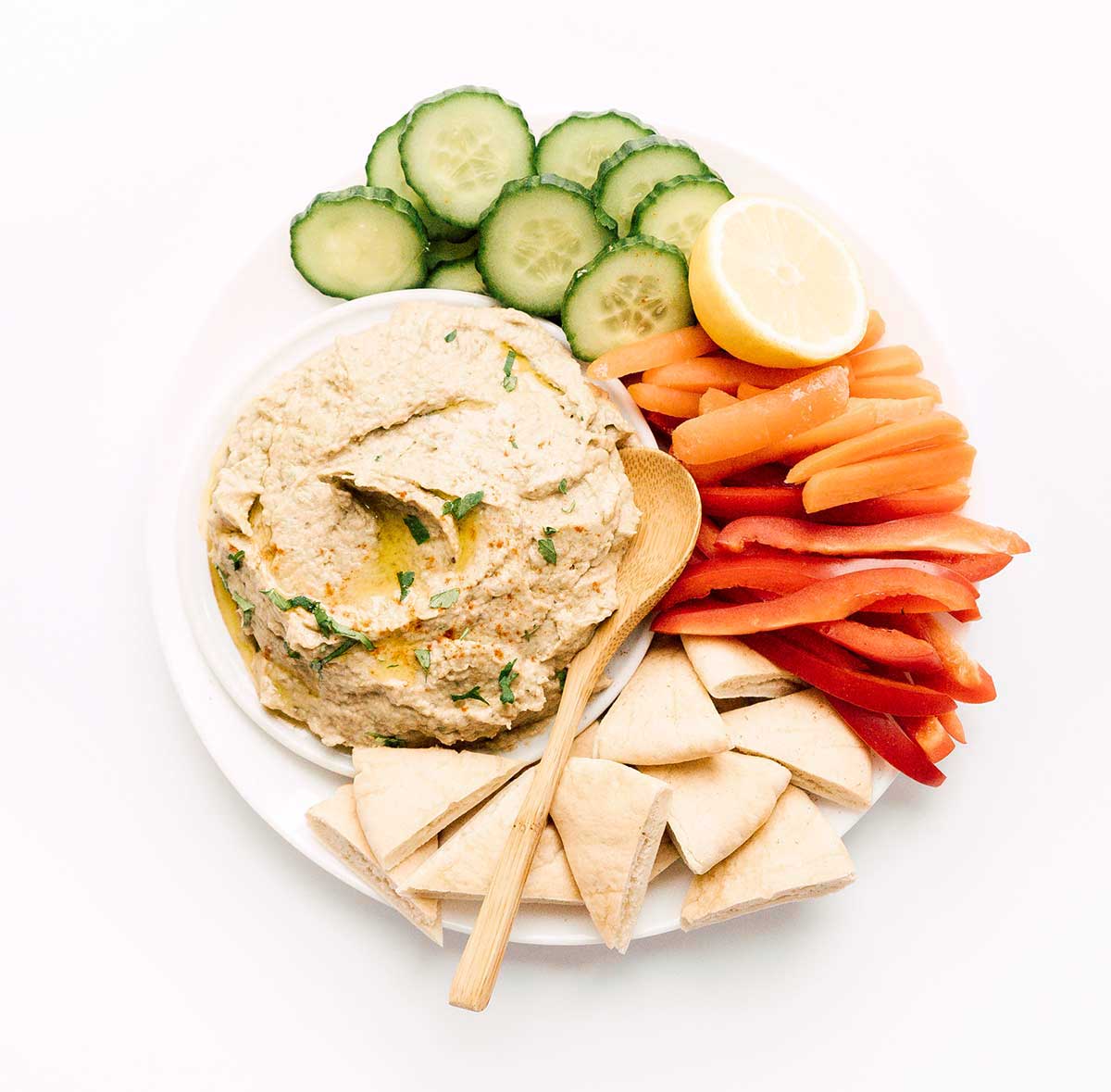
Vegetarian Lasagna Vegetable Pizza Baba Ganoush Stuffed Eggplant Parmesan Ratatouille (Veggie Tian) Baked Ziti Herby Bulgur Stuffed Eggplant
Eggplant Nutrition Information
per 1 raw eggplant, with peel (548 g)
Calories: 132 Carbohydrates: 32 Fiber: 19g, 75% Daily Value (DV) Protein: 6g Fat: 0g 69% DV of Manganese: A trace element that plays a role in healthy brain and nervous system function. 36% DV of Potassium: A key mineral and electrolyte involved in countless processes, including healthy nervous system functioning and contraction of the heart and muscles. 30% DV of Folate (Vitamin B9): A water-soluble vitamin that helps make DNA & RNA and metabolize amino acids. 24% DV of Vitamin K: A fat-soluble vitamin that allows for activation of enzymes in the clotting cascade, which is responsible for blood clotting. Also builds bone by modifying osteocalcin so that it may bind calcium, thus building the bone matrix. 23% DV of Vitamin B6 (Pyridoxine): A water-soluble vitamin that works behind the scenes as a coenzyme in many important reactions within your body, including protein metabolism and red blood cell formation, among countless other functions. 20% DV of Vitamin A: Provides the provitamin version of this fat-soluble vitamin, meaning it comes from a plant source and your body converts the plant pigment into active Vitamin A. It is essential in many components of healthy vision, as well as immunity and cell growth/differentiation. 20% DV of Vitamin C: A water-soluble vitamin that acts as an antioxidant to fight against potentially damaging free radicals (molecules with unshared electrons that float around wreaking havoc) and an important cofactor in collagen synthesis.