What are watermelons?
Well this mystery is best solved by breaking it down (and you don’t need to be a nutritionist to understand this equation!) Water: Watermelons are 92% water by weight! Melon: Watermelons are very loosely defined as melons. They’re actually (scientifically and botanically) classified as a type of berry – a berry called a pepo. (But if you’re from Oklahoma, you likely don’t consider it a fruit at all, as the watermelon is the official Oklahoma state vegetable!)
Health Benefits of Watermelon
Watermelon is 91% water and loads of nutrients, making it a great choice for summer snacking or cooking into a number of watermelon recipes! Let’s break the nutrition down. The following watermelon nutrition information is for 100 grams of watermelon (about 2/3 cup)! Calories: 30 caloriesWatermelon is a low calorie, especially when compared to other fruits! This makes it a great option for those looking to cut calories and lose weight. Carbohydrates: 7.6gAll of the calories in watermelon come from carbs, namely the natural sugars in the fruit. At 7.6g per serving, it’s still relatively low carb, and could be suited for a keto diet. Fiber: 0.4gWatermelon isn’t high in fiber…well, the fruity flesh isn’t. You can cut and cook the watermelon rind, which contains more fiber! Protein: 0.6gAs with most fruits, watermelon is not a good source of protein. Fat: 0.2gSimilarly, most fruits (including watermelon) are very low fat. 14% Daily Value of Vitamin CWatermelon is a good source of vitamin C. This antioxidant helps maintain your immune system as well as helps to create collagen. 11% Daily Value of Vitamin AWatermelon is also a good source of Vitamin A, which is essential in many components of healthy vision, as well as immunity! LycopeneWatermelon is also a great source of the plant compound lycopene, which is an excellent antioxidant (it has even more lycopene than tomatoes!)
Variations of watermelon
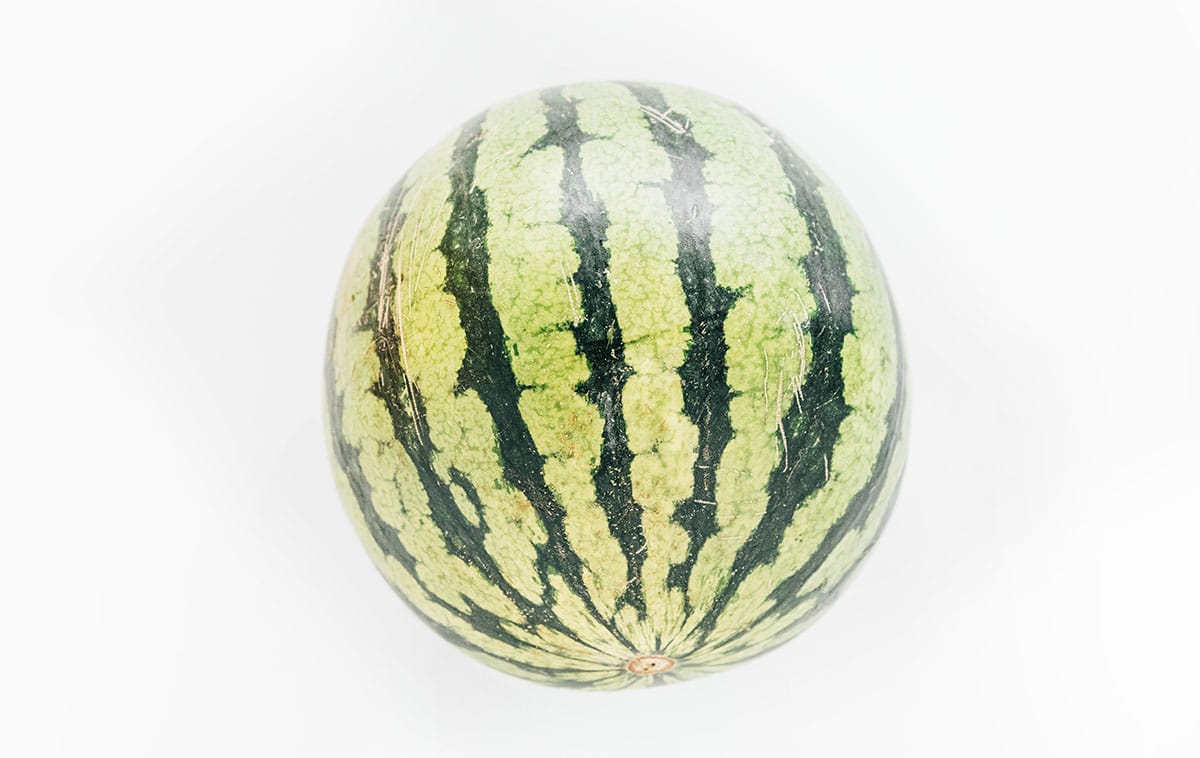
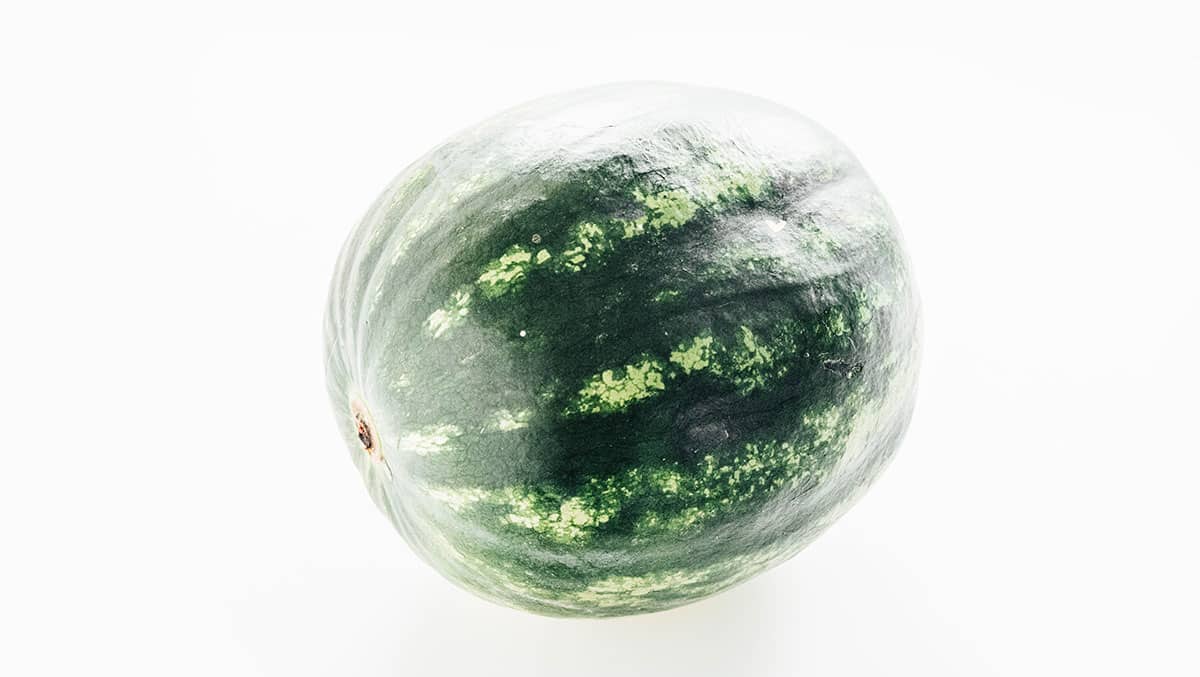
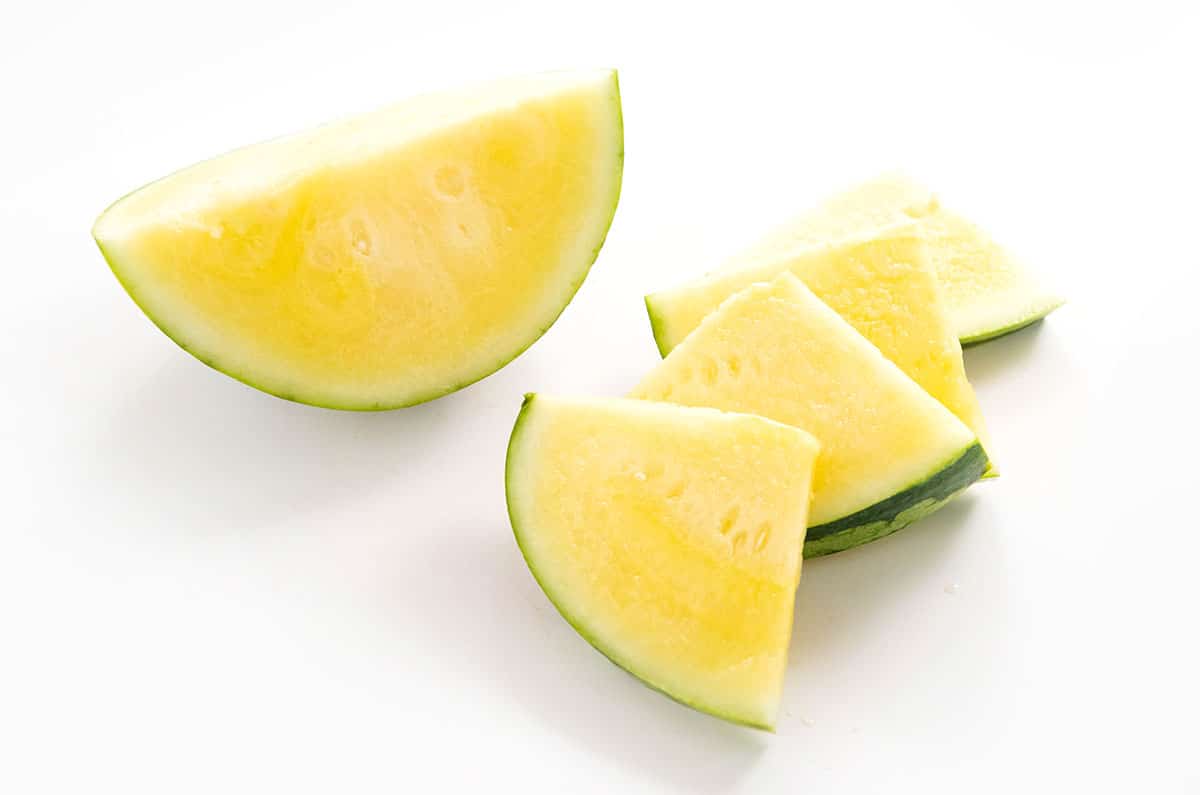
Did you know there are 1200 varieties of watermelon? SO MUCH WATERMELON! But there are 4 main types of watermelon: icebox, picnic, yellow/orange, and seedless. Icebox: 5 to 15 lbs (can fit in an icebox) Picnic: 15 to 50 lbs (a big picnic I guess) Yellow/Orange: 10 to 20 lbs with yellow skin and fruit Seedless: Seedless watermelon are not GMO. They’re made by cross-breeding a specific male watermelon flower with a specific female watermelon flower to produce a sterile (unable to reproduce) watermelon. This variety does still have seeds, but they’re very small, soft, and white.
How to cut watermelon
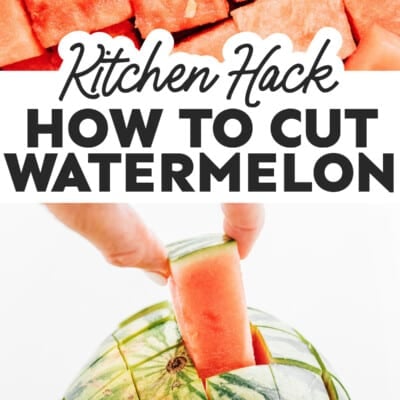
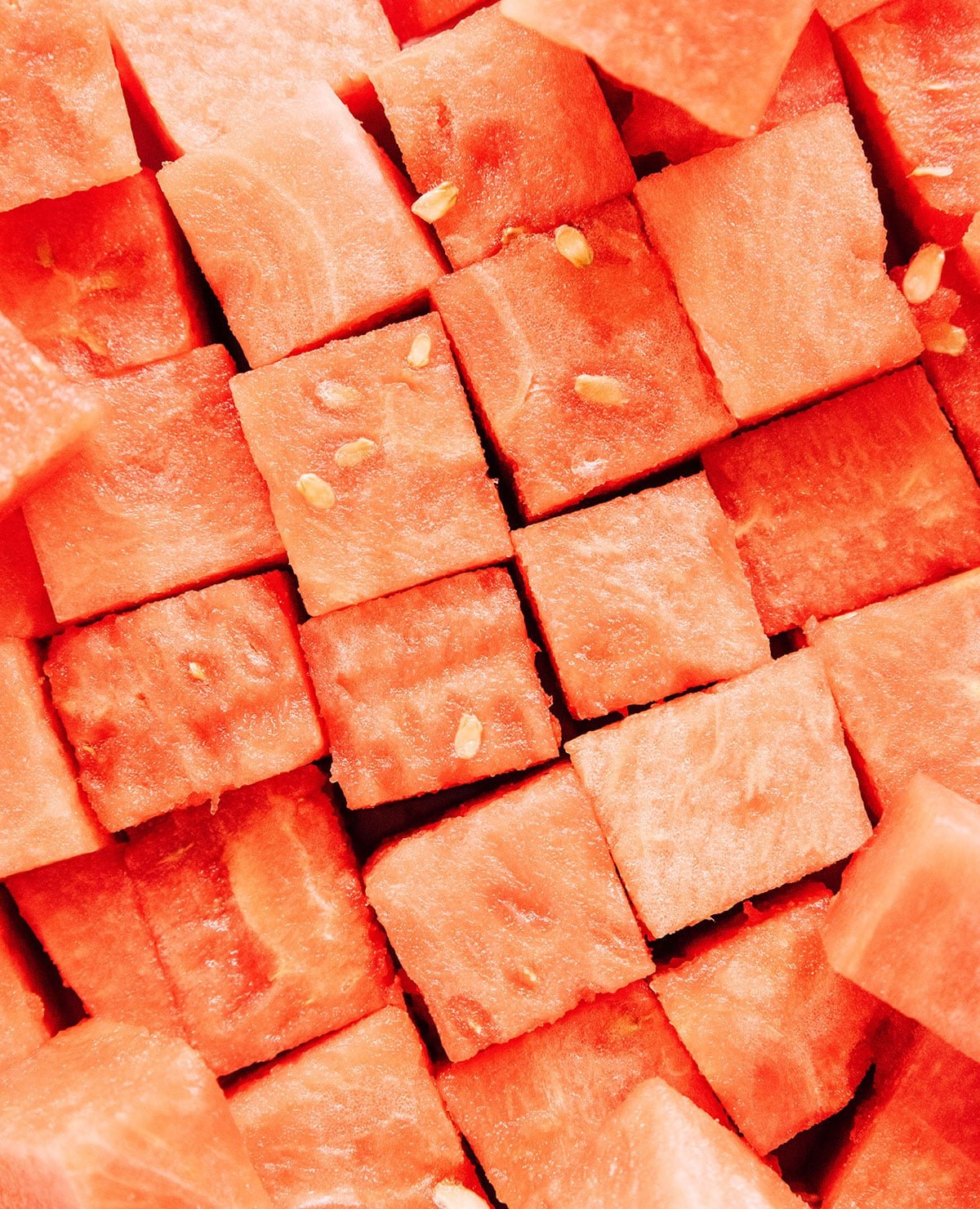
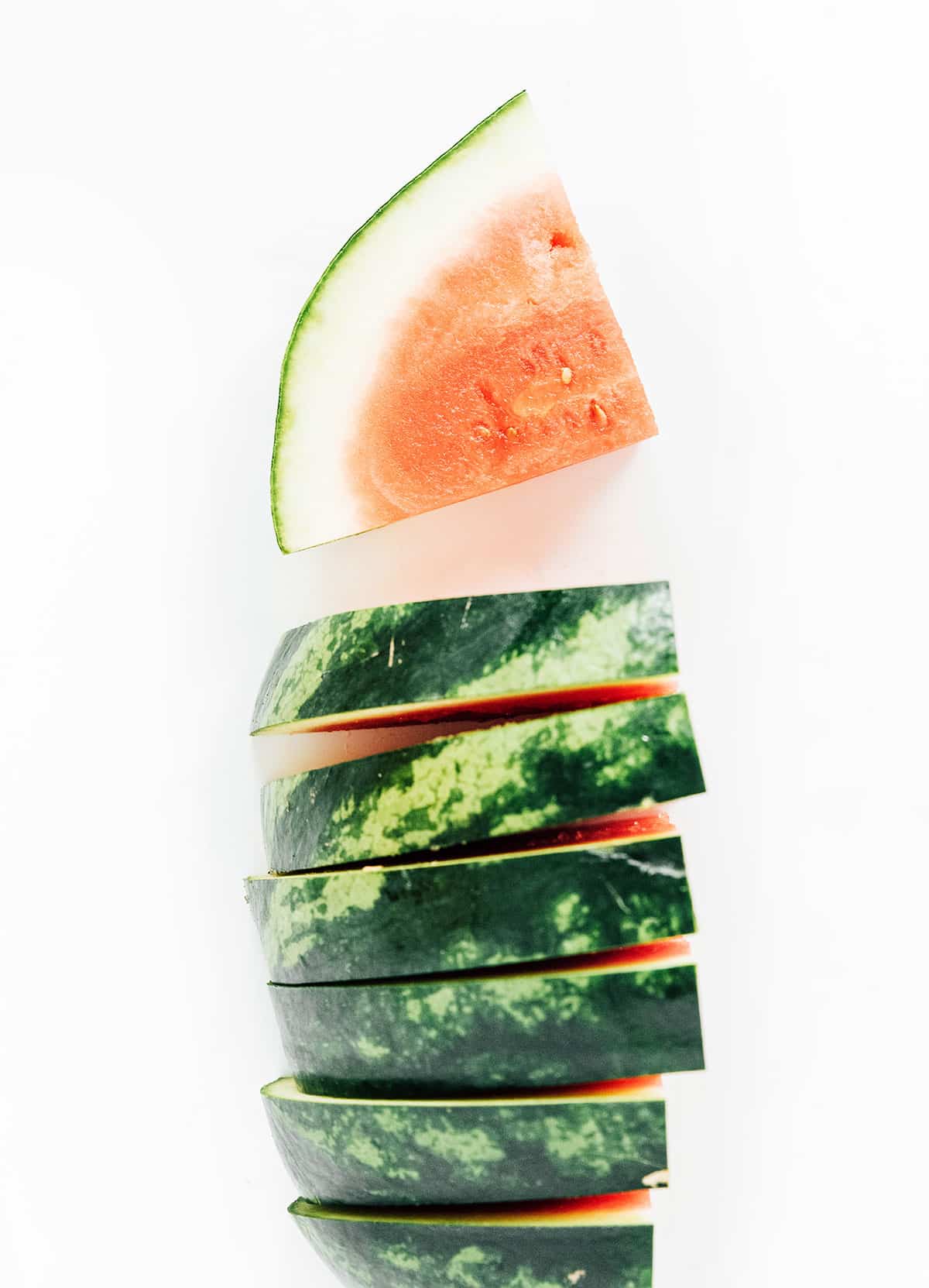
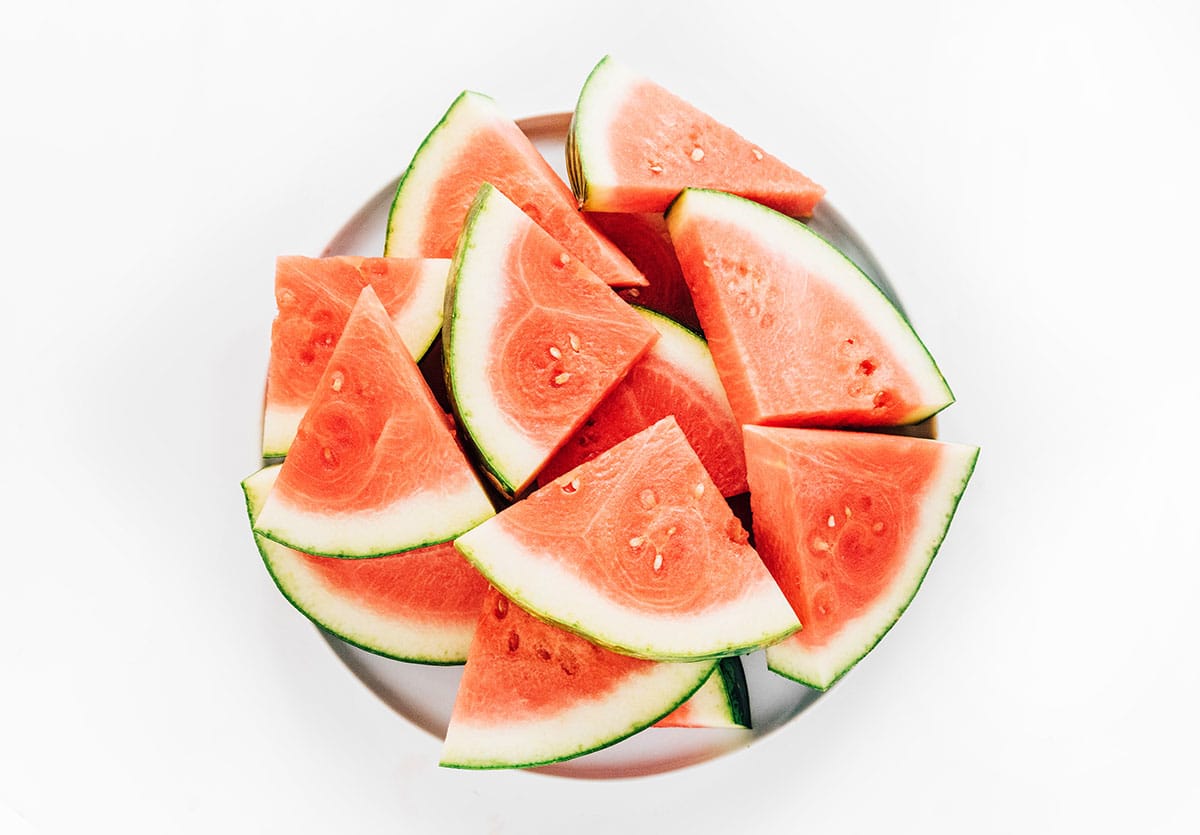
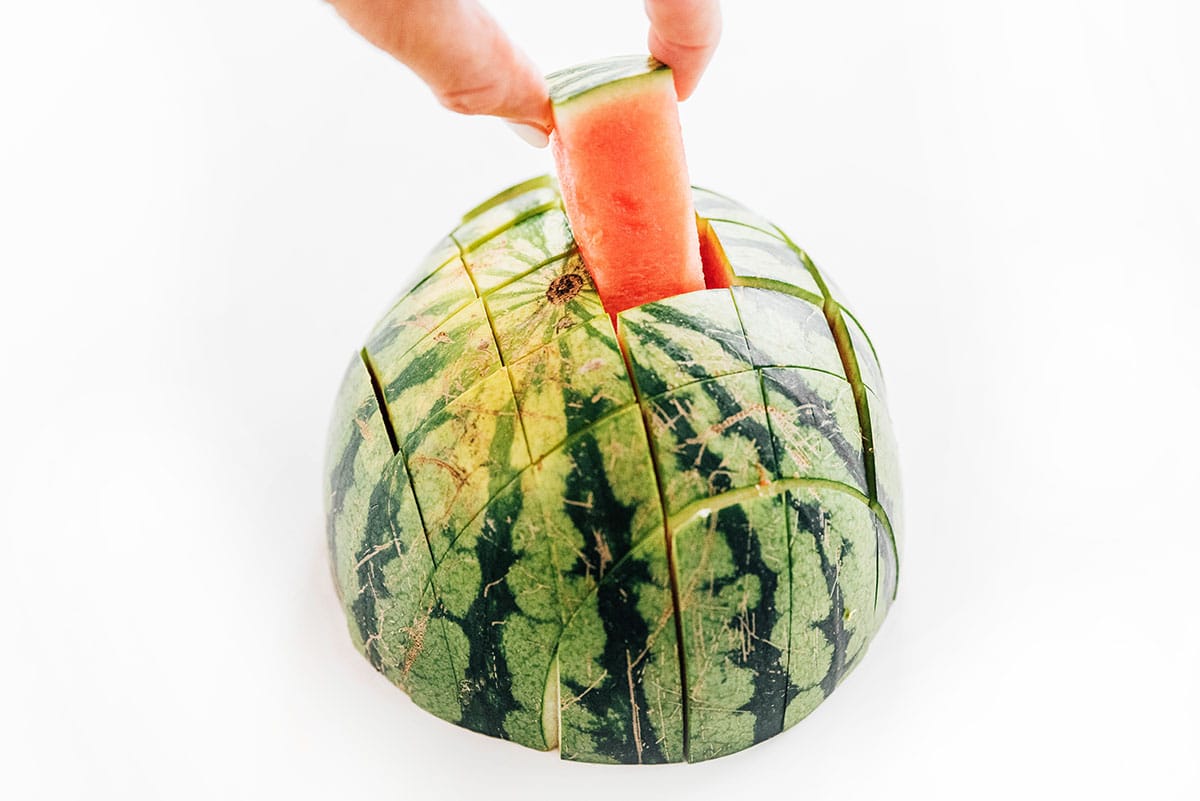
Call me lazy, but one of the most motivating reasons for me not to buy a watermelon is the thought of having to cut the thing up. But with this handy trick for cutting watermelon, there’s way less mess and the pieces are easier to eat! Grab our full guide to cutting watermelon here!