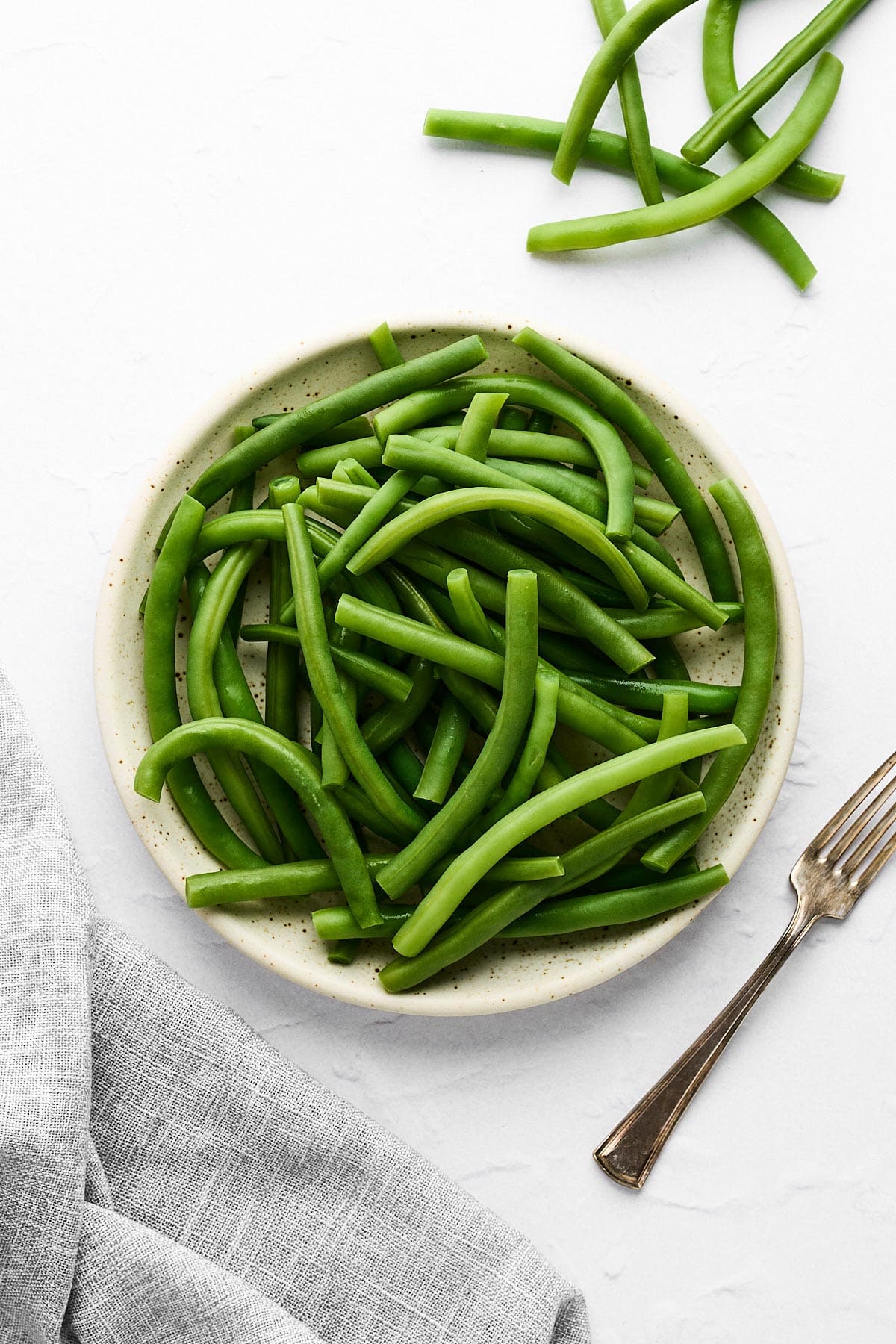
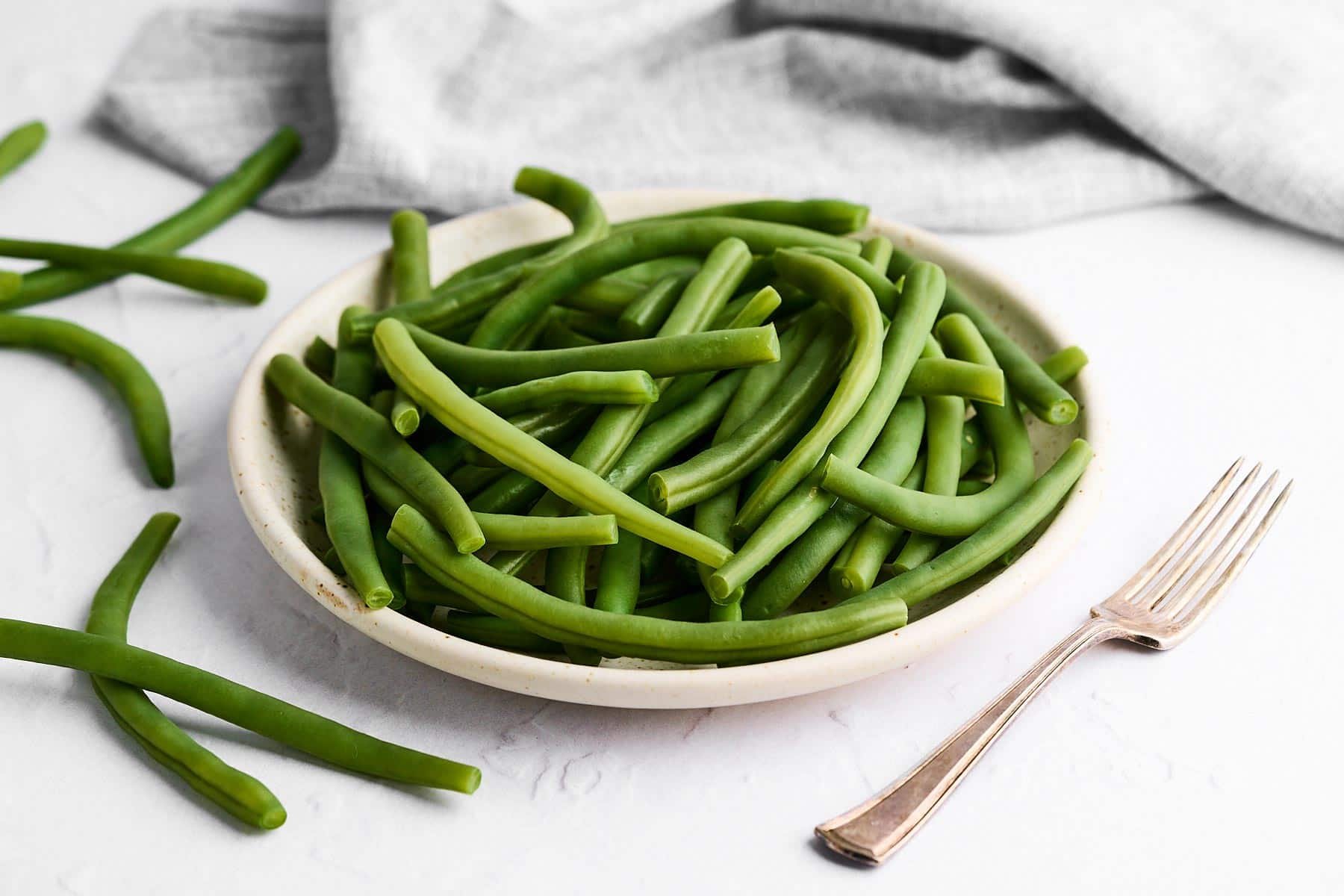
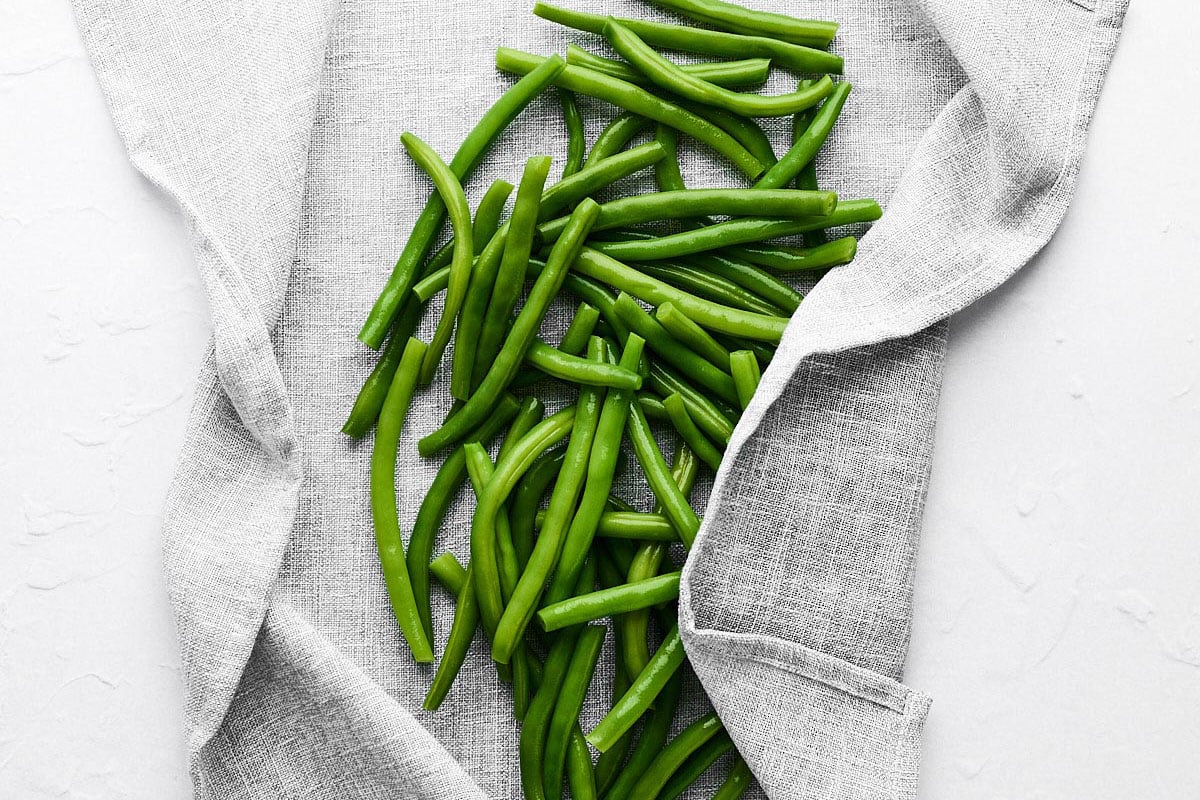
Green beans, also known as string beans, add the perfect pop of green color to a wide variety of dishes! Think of options like green bean casseroles, air fryer green beans, roasted vegetables, hearty vegetable soups, and more. Their crisp texture and mild flavor make them a go-to in my kitchen, and I love that they can be seasoned with any of my favorite herbs, spices, or oils. Blanching is one of my favorite ways to preserve the nutrients in this vegetable, so let’s learn how to blanch green beans!
Why blanch veggies?
Blanching veggies is like hitting the pause button on their freshness clock, plunging them into a brief pot of boiling water followed by an ice-cold shock. This culinary quick-step halts enzyme actions which can lead to loss of flavor, color, and texture, ensuring the veggies maintain their vibrant hues, crispness, and nutritional goodness. It’s a food science trick that preps vegetables for freezing, salad-making, or just giving them a longer, more colorful life in your fridge. So if you’ve just got back from the farmer’s market or grocery store with a bunch of fresh green beans, blanching them is the best way to preserve that fresh flavor! Let’s cook.
How to Blanch Green Beans
Blanching green beans is a basic kitchen skill that requires just a few simple steps and minutes. Here’s what to do:
Preparation
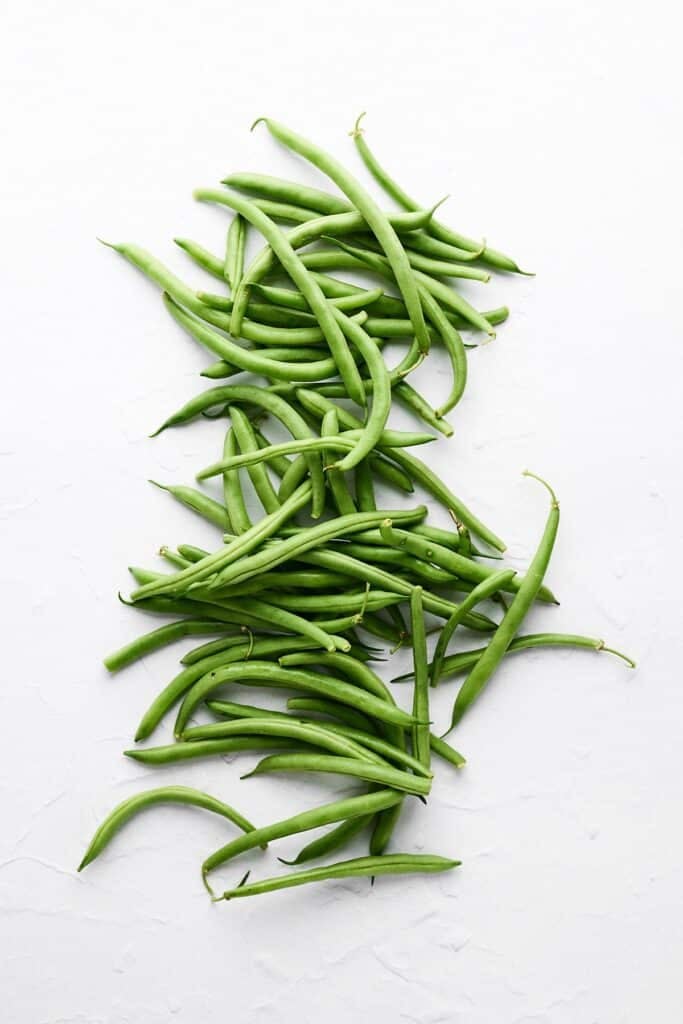
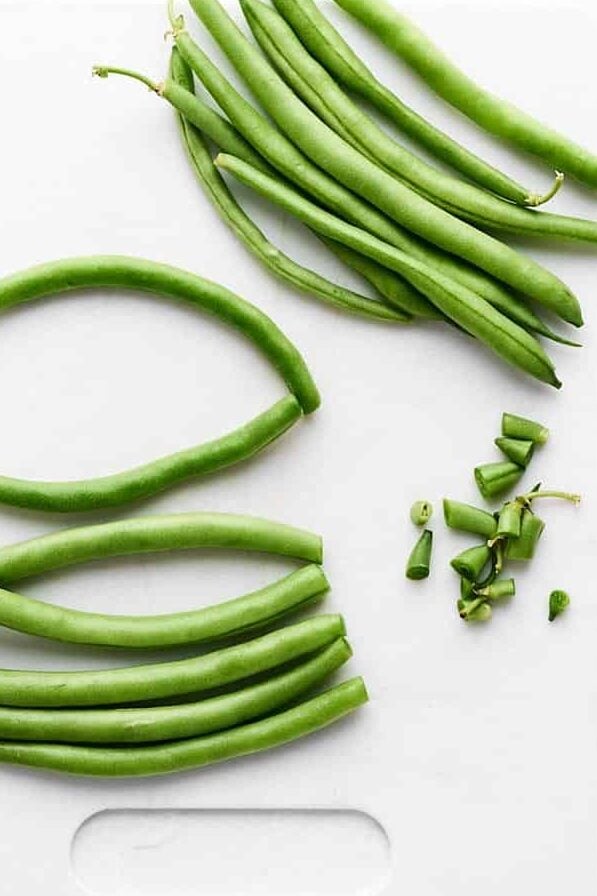
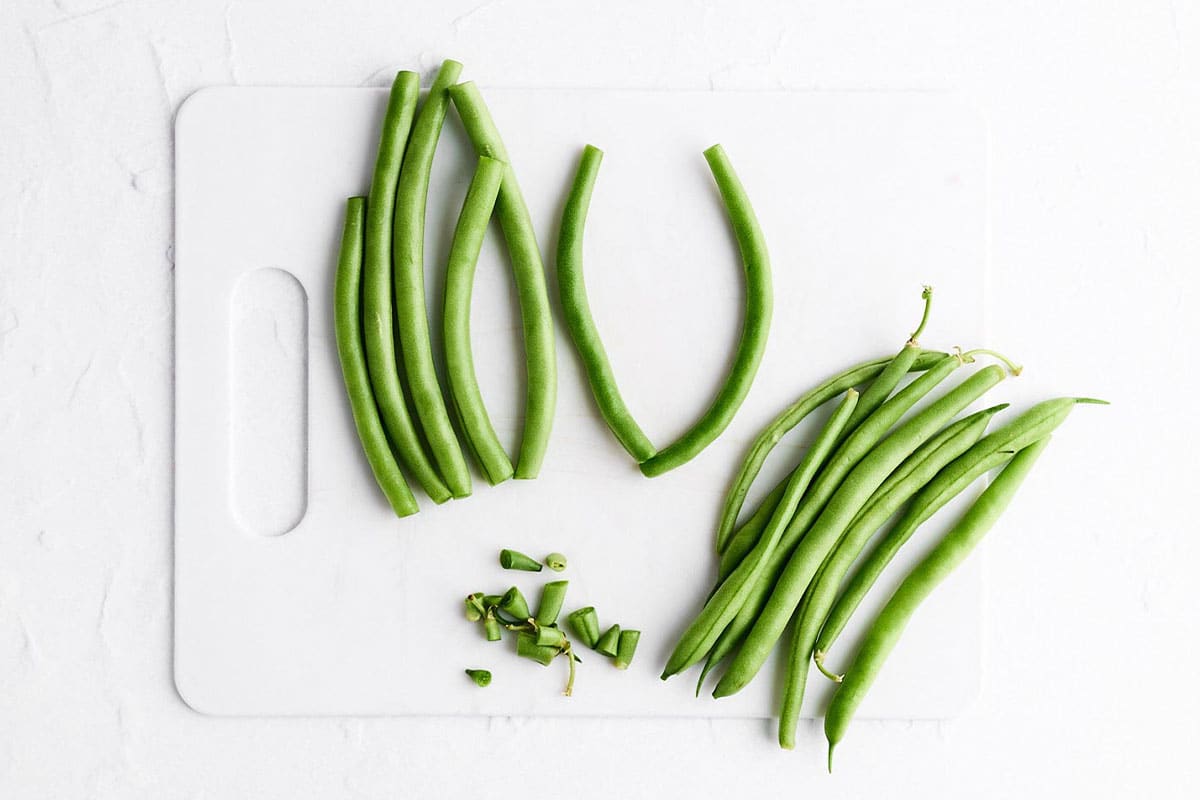
Before cooking, prepare your green beans by washing them under cold water. Trim the ends off of each bean with a small knife (or snap them off) to remove any tough parts.
Boil the Water
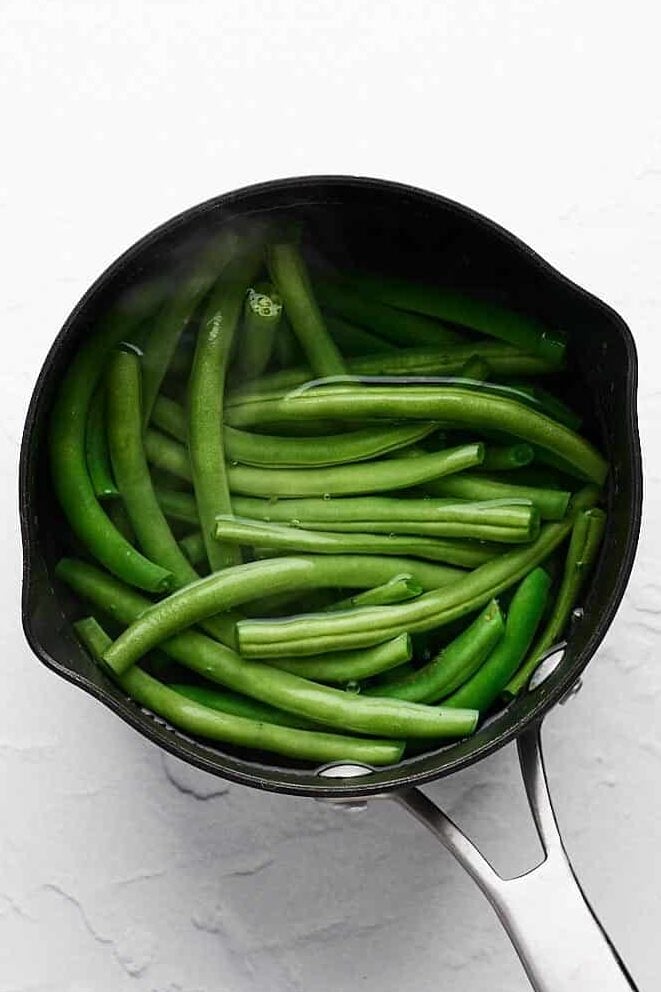
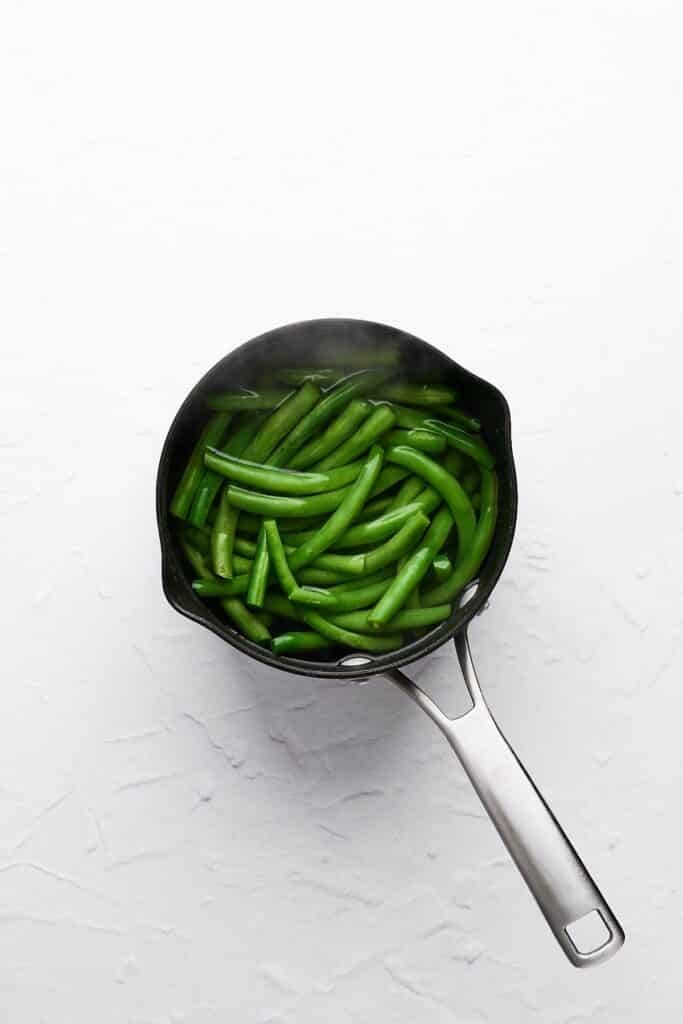
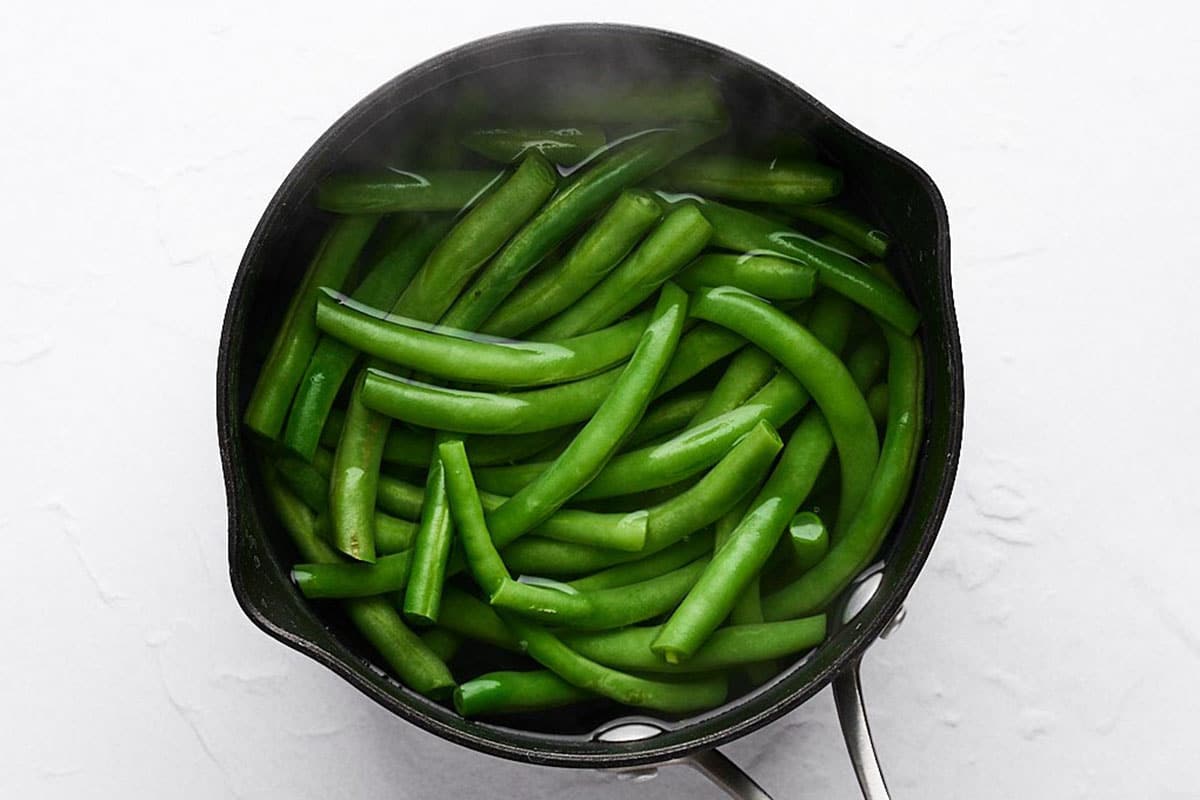
Fill a large pot with enough water to cover the green beans and bring it to a rolling boil. I recommend adding salt to the water, which helps enhance the beans’ flavor.
Cook the Green Beans
Add the prepared green beans to the boiling water. Cook them for 2 to 3 minutes until they are bright green and tender-crisp. Keep in mind that cooking times can be slightly longer at higher elevations due to the lower boiling point of water.
Ice Bath
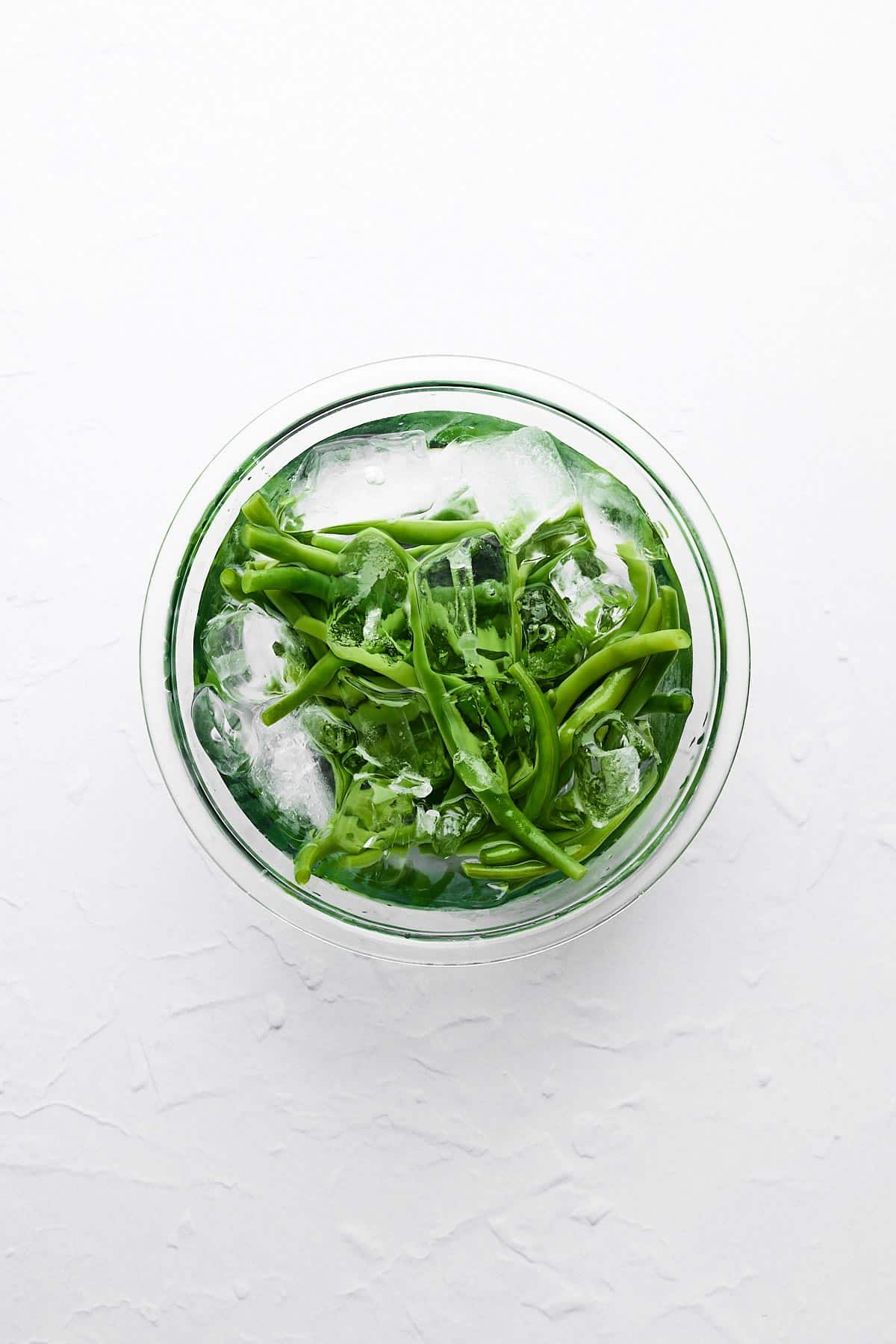
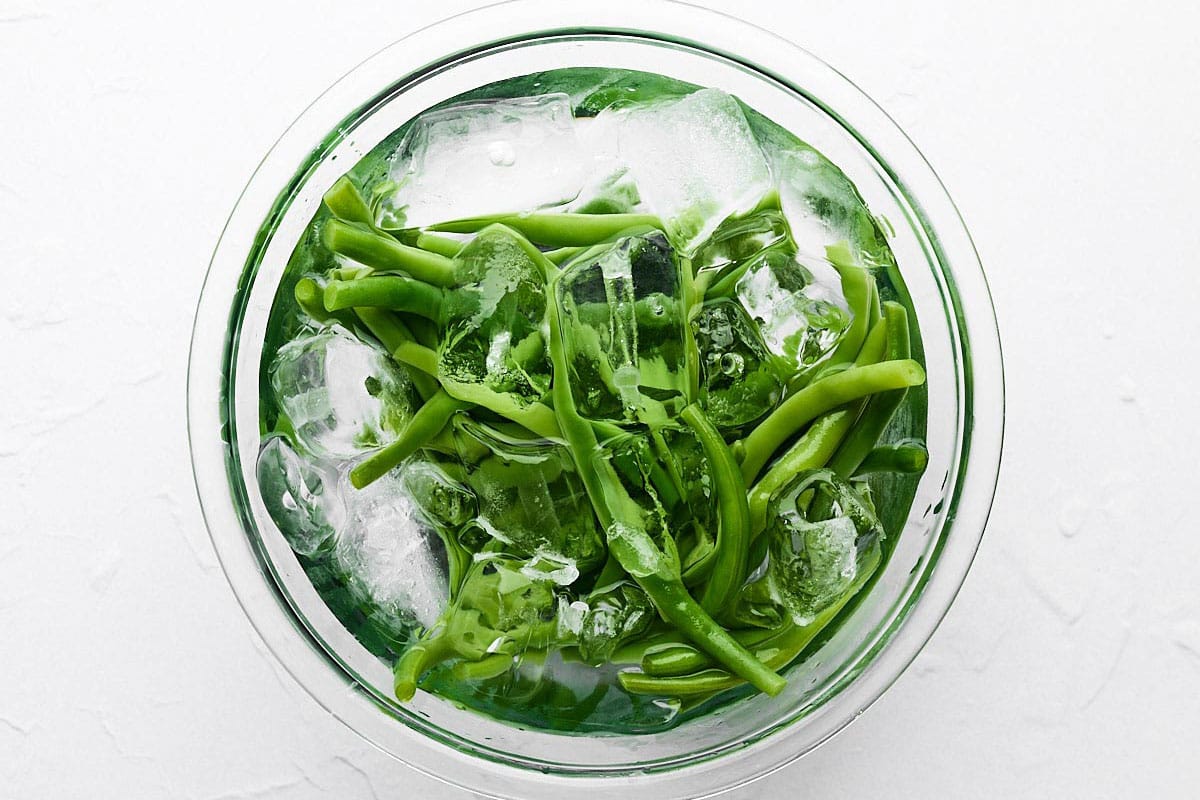
Once the green beans have reached the desired level of doneness, quickly remove them from the boiling water and transfer them to a large bowl of ice water. They should stay in the ice bath for the same amount of time that you blanched them. This step stops the cooking process immediately, preserving the beans’ vibrant bright green color and crisp texture.
Dry the Beans
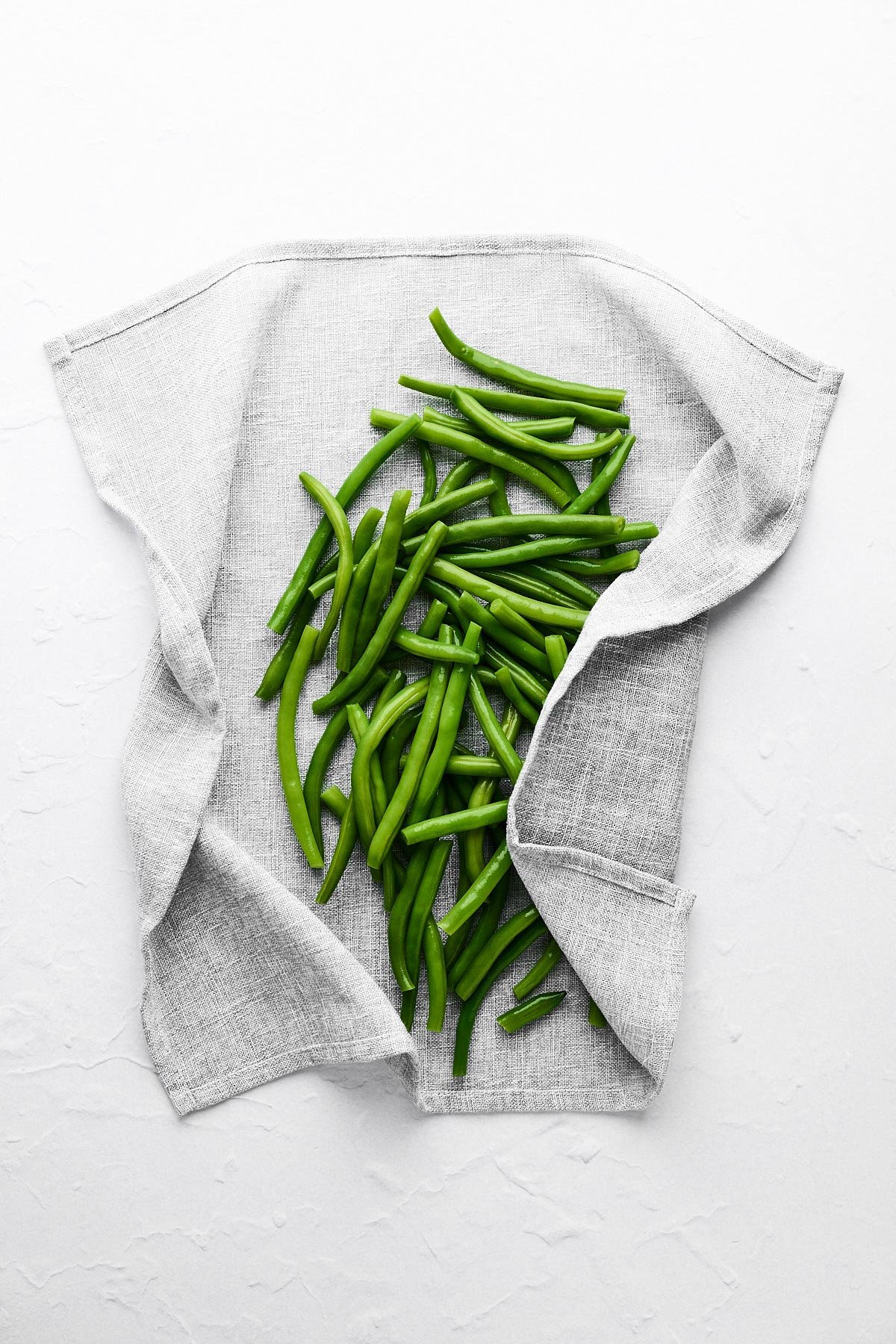
After cooling them in the ice bath for a few minutes, drain the green beans in a colander and pat them dry with a clean towel. Removing excess moisture is important, especially if you plan to sauté or further cook the beans in any way.
Tips for Perfectly Blanched Green Beans
Freshness Matters: For the best results, use fresh green beans that are firm to the touch and free from blemishes. Timing is Key: Keep a close eye on your green beans while they are boiling. Overcooking can lead to mushy, discolored beans, and no one wants that! Have the Ice Bath Ready: Have your ice bath prepared before you start cooking so that you can transfer the beans to the bowl and stop the cooking process immediately after they’re done.
Storage & Reheating
I love to keep blanched green beans on hand for quick additions to meals or side dishes! Here’s how to do it properly:
Fridge: Ensure the green beans are completely cooled after blanching and drying. Place them in airtight containers or resealable plastic bags. They should remain fresh for up to 3-5 days this way. Freezer: Spread the beans in a single layer on a baking sheet and freeze them for 1-2 hours. Once the green beans are frozen solid, transfer them into freezer bags or airtight containers. Stored properly, they can last for 8-12 months. Reheating: Microwave frozen blanched green beans in a covered bowl with a tablespoon of water for 2-3 minutes. You can also steam them for 3-5 minutes or sauté them in oil or butter for 5-7 minutes. Season the beans to taste with your preferred herbs, spices, or garnishes before serving.
Recipes with Green Beans
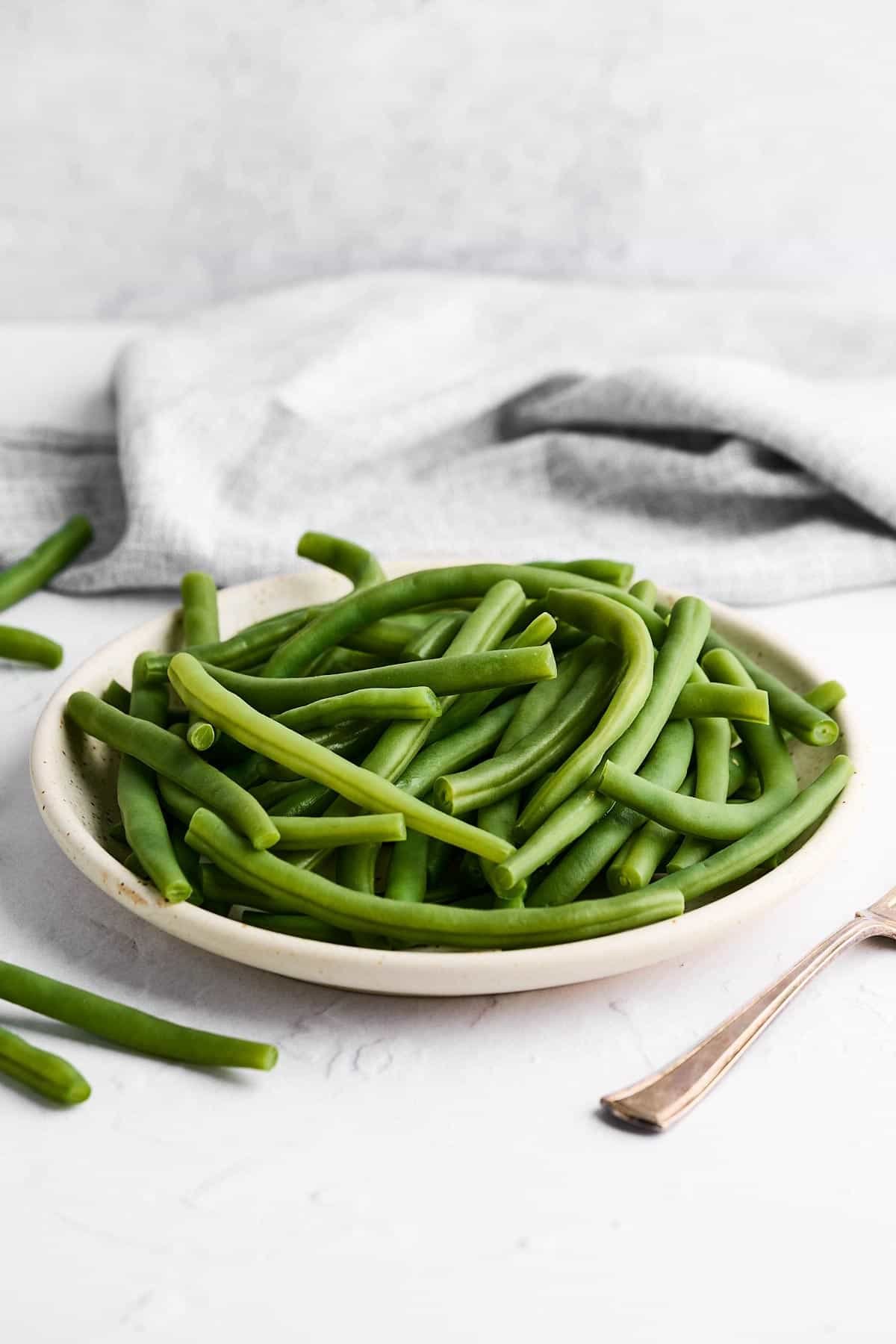
Blanched green beans are an incredibly versatile way to add more vitamins to your diet! I love to serve them as a healthy side dish with a drizzle of olive oil and a sprinkle of salt. Or, you can incorporate them into full meals like salads, stir-fries, cauliflower fried rice, and other dishes for added texture and nutrition. Whatever the case, blanched green beans are a great addition to any recipe!