As one of the most universally loved fruits, apples are known for their crunchy texture and refreshing taste. There are so many types of apples, from bright green to ruby red. They can also be sweet, tart, or a blend of both. It doesn’t matter if you’re whipping up a fresh apple salad, preparing homemade applesauce, or crafting a gourmet apple-infused entrée, the way you cut your apple can make all the difference! For more information on the types of apples, nutritional information, and when they’re in season, check out our apples 101 post.
How to cut an apple
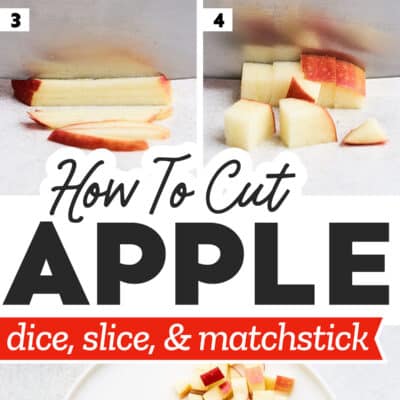
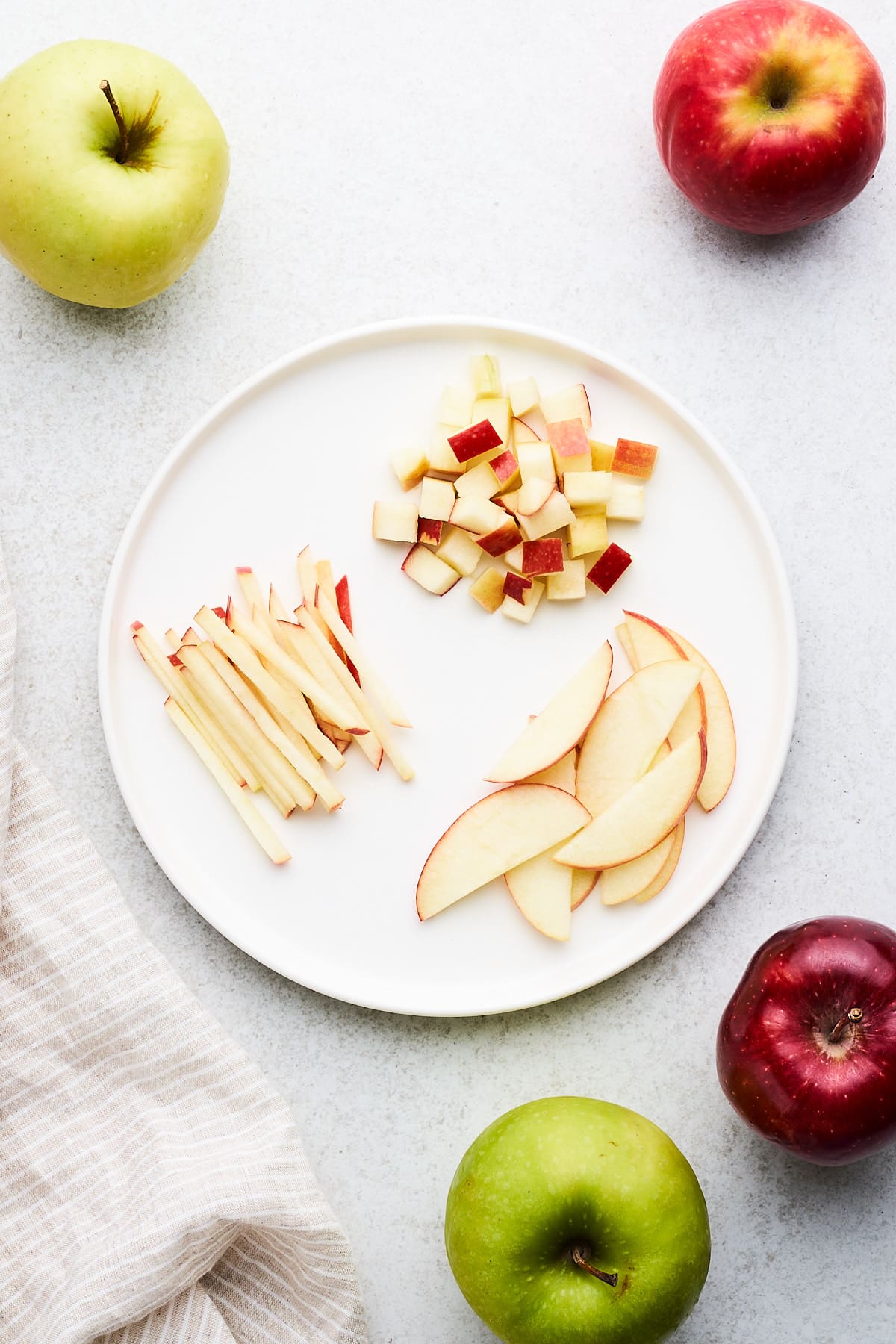
Apples are fairly simple to prepare, but there are a few techniques that can make the process even smoother. Here’s how to cut an apple into slices, julienne strips (matchsticks), and cubes.
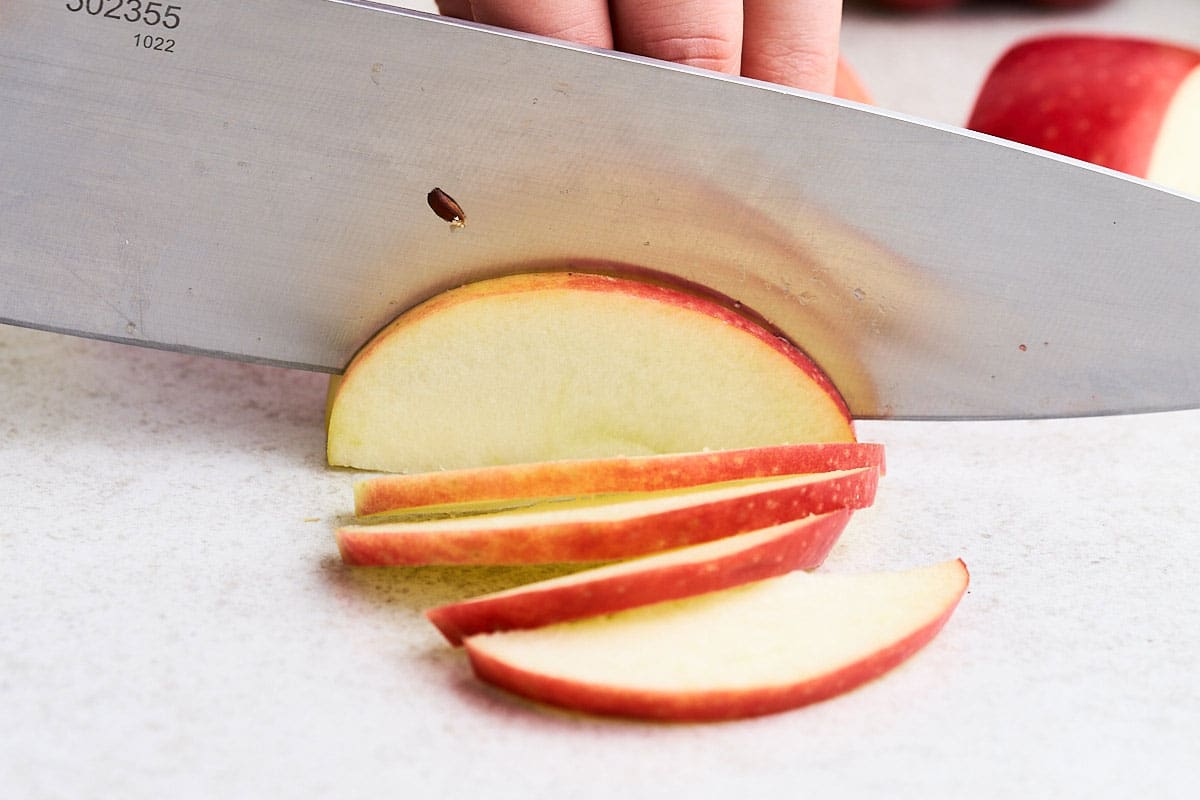
Slices
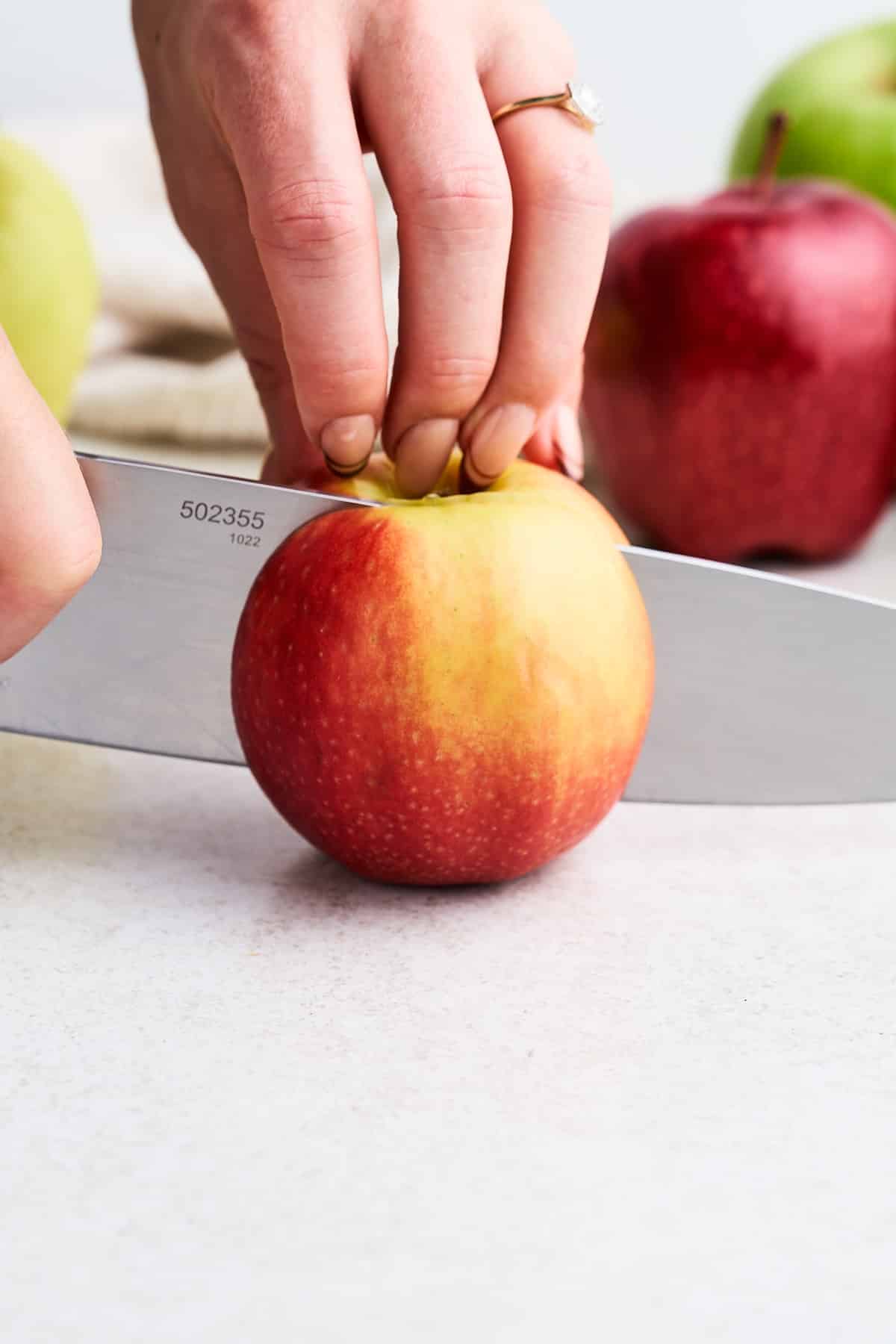
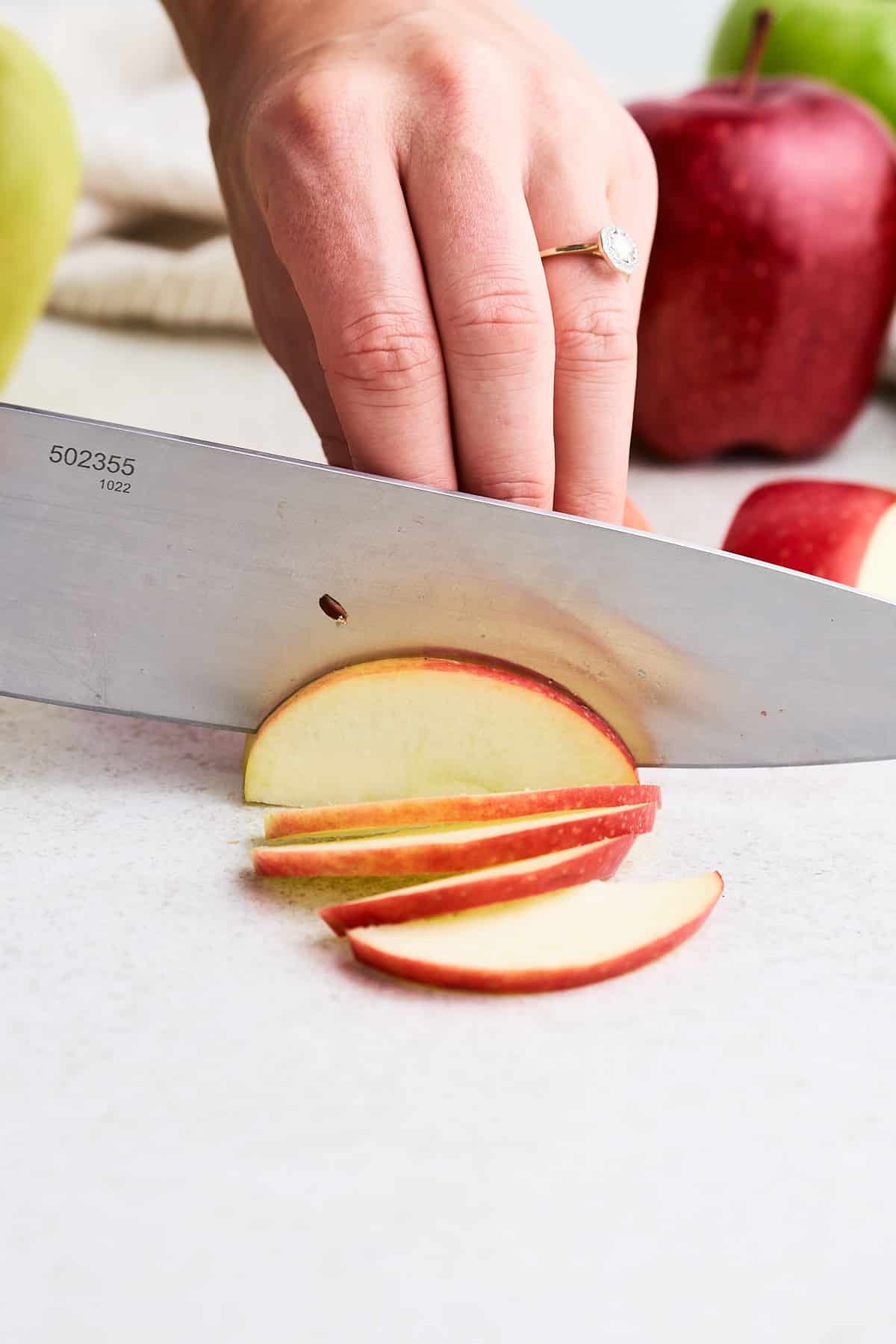
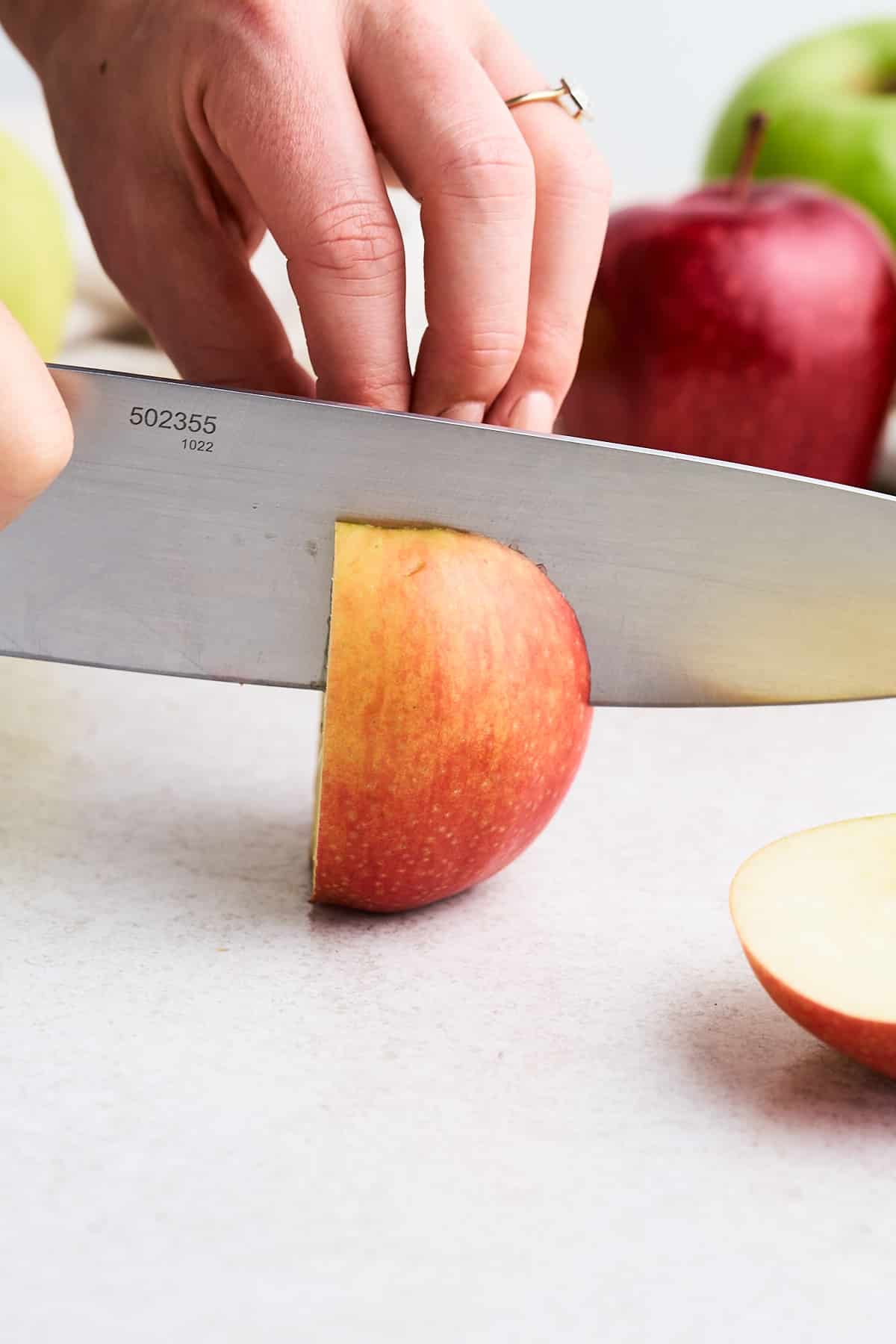
Stand the apple upright (with the stem facing up) on a cutting board. Holding onto one side, make a vertical slice on the opposite side as close to the stem as possible. Rotate the apple and repeat the same steps all the way around. You should end up with 4 larger wedges. You can make a few more slices on the core to prevent any waste, then discard the core itself. Turn the wedges to face down and make slices as thick or as thin as you’d like!
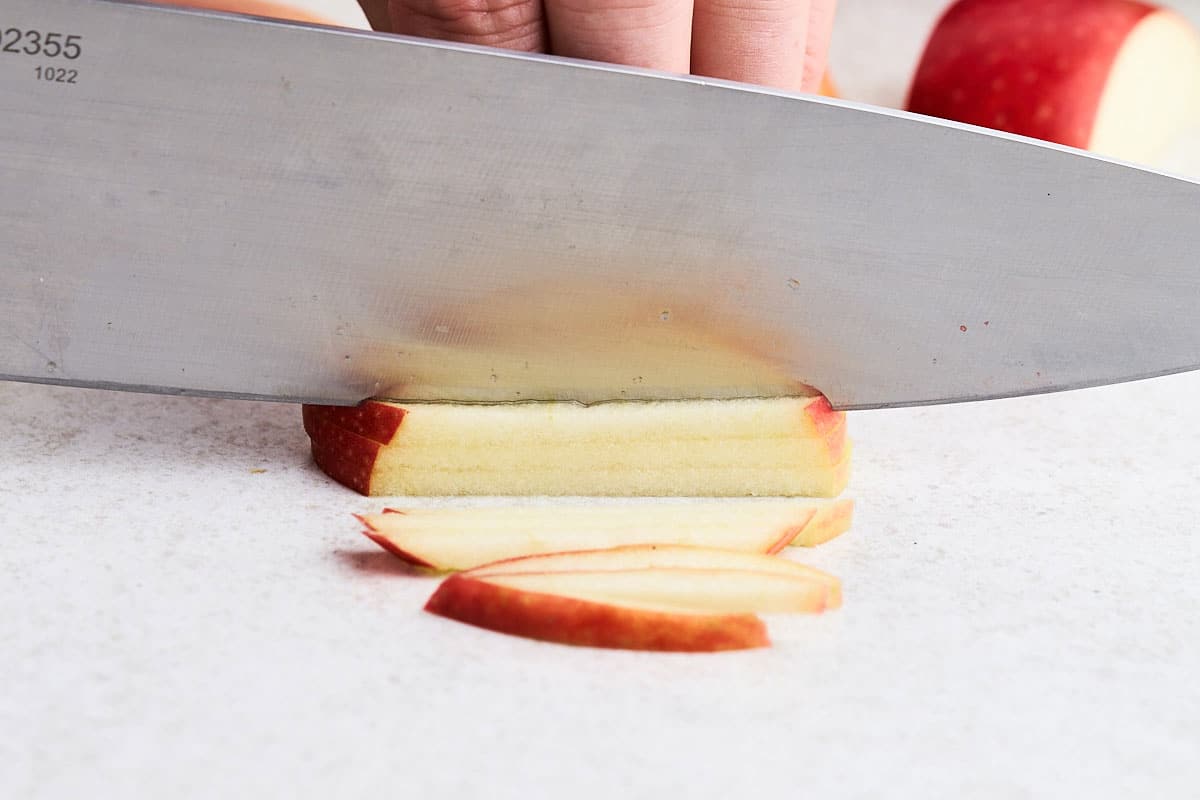
Matchsticks
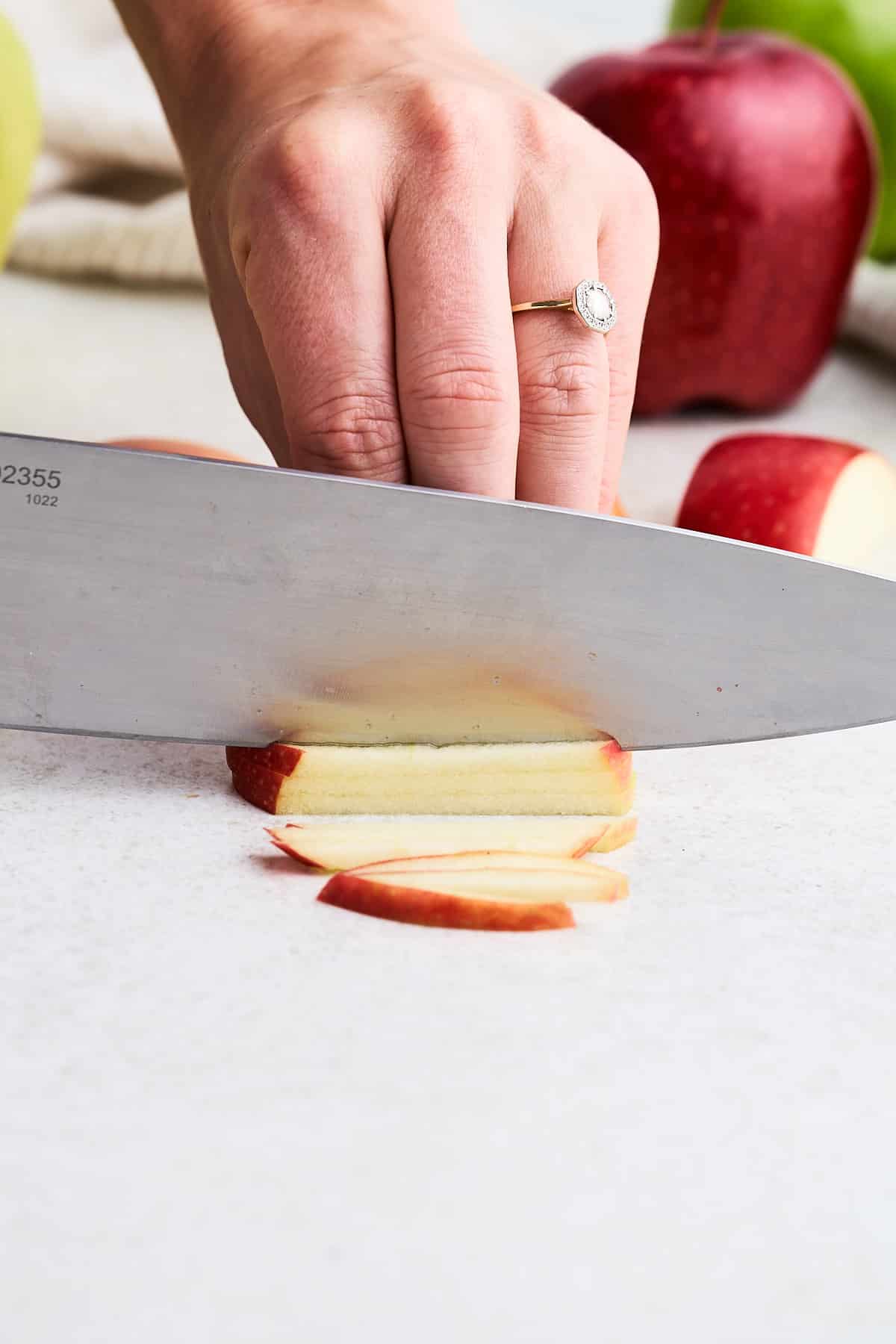
For julienne strips, take a sliced piece (or a few) and lay it flat on the cutting board. Make thin cuts lengthwise to achieve long, thin strips. These are great for slaws and other salads.
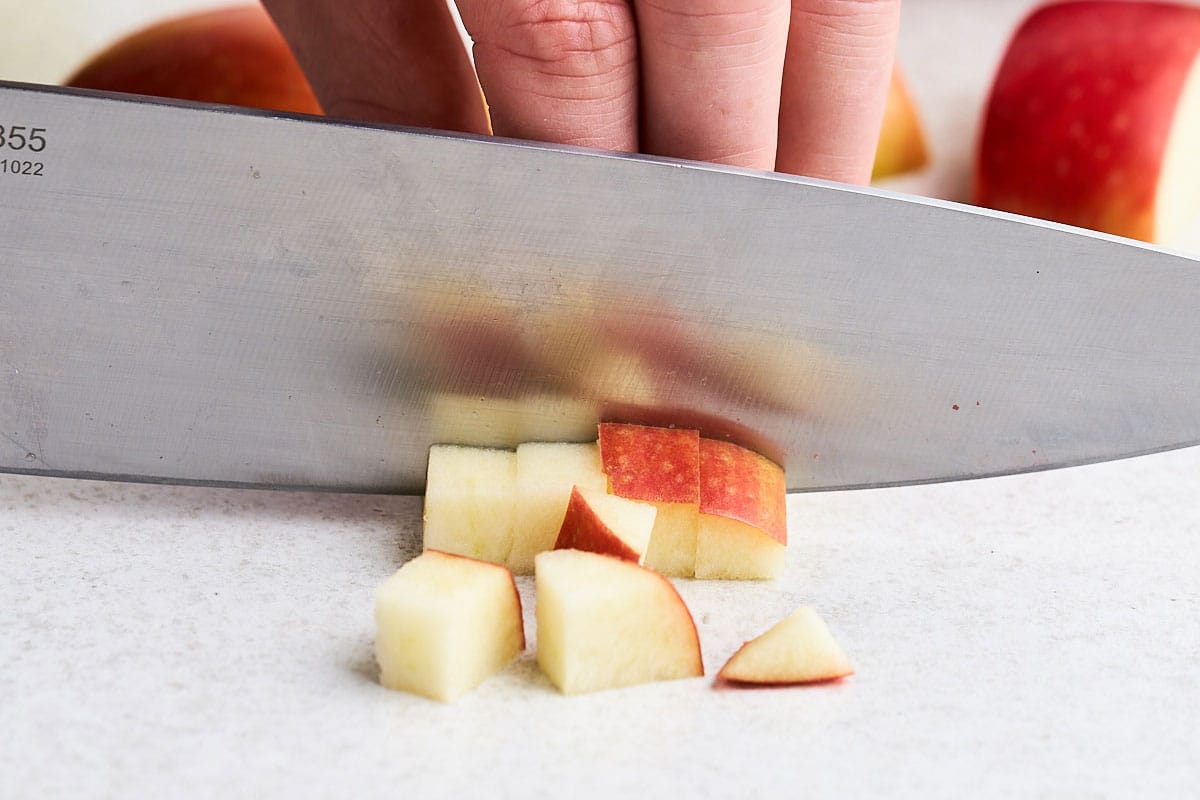
Cubes
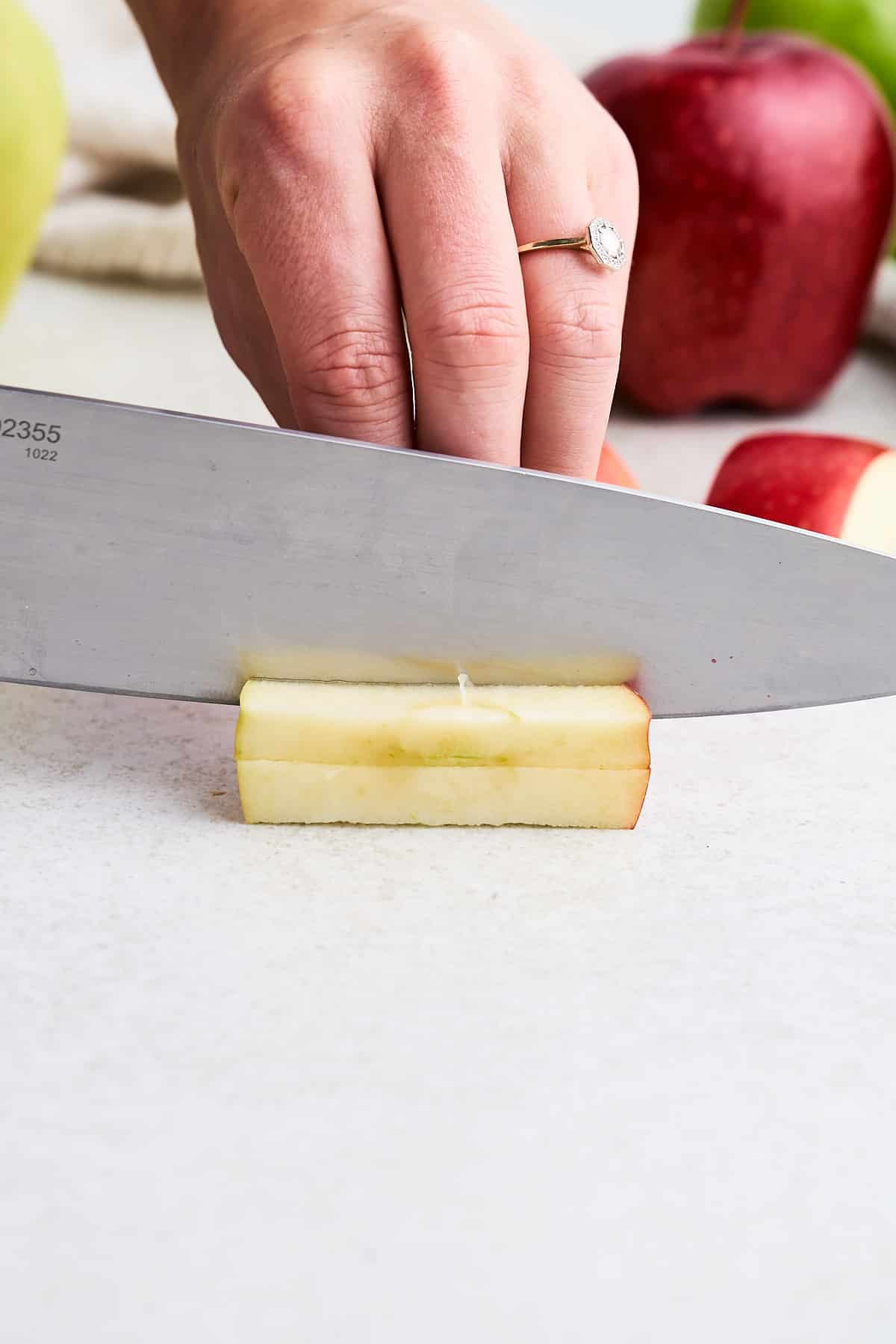
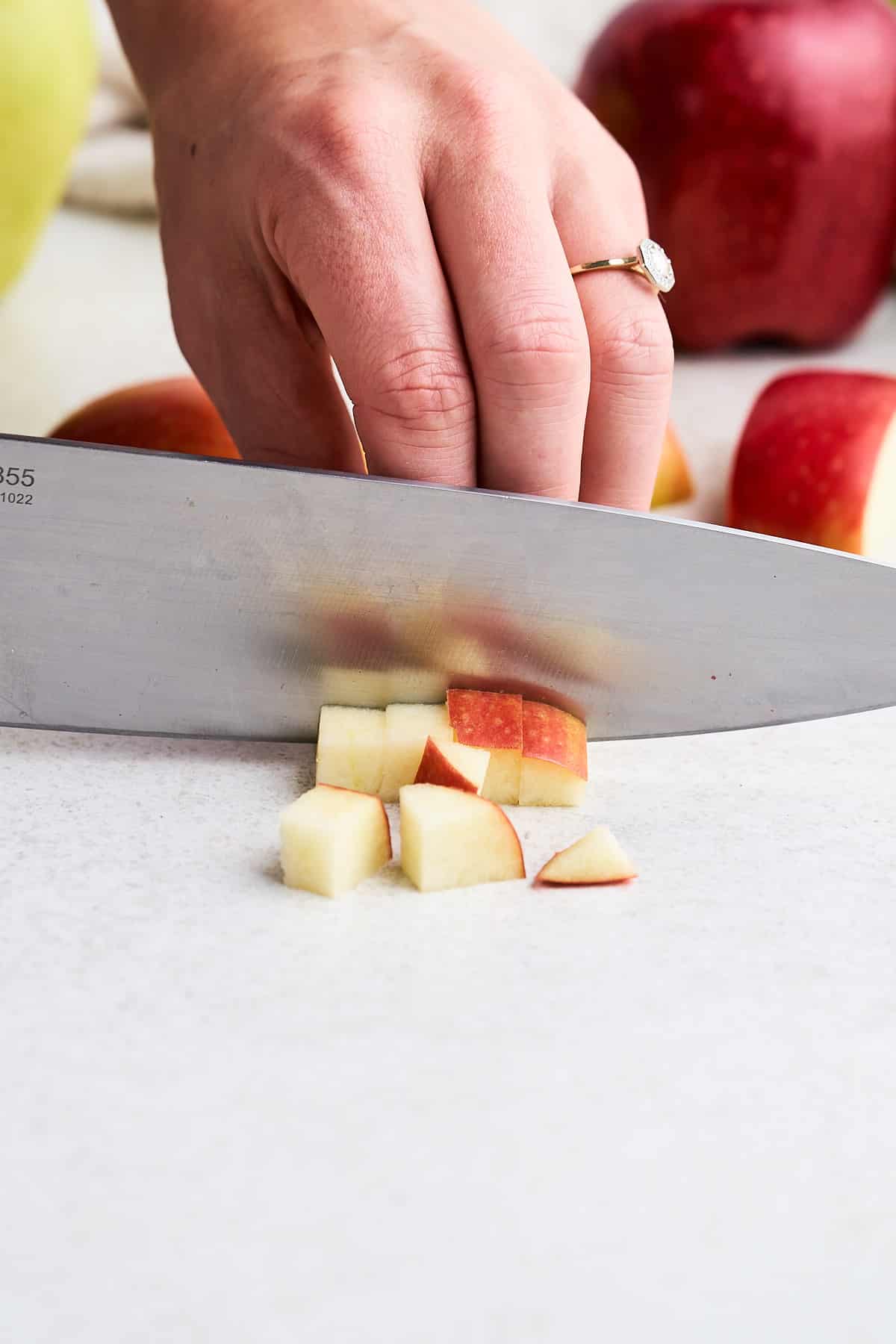
For apple cubes, stack a few julienne strips together and cut them crosswise to produce small cubes. You can also make larger cubes by cutting wider strips. I love to use apple cubes in fruit salads.
How to prevent browning apples
Apples tend to turn brown when they’re exposed to air due to oxidation. To prevent this, squeeze some lemon juice over the cut pieces. The citric acid in lemon juice acts as an antioxidant, preventing the apple from browning too quickly. If you don’t have lemon juice, you can submerge the apple slices in a bowl of water with a pinch of salt to help reduce browning. Just remember to rinse them when you’re ready to eat.
Tips for cutting apples
Choose firm apples: A firm apple is easier to cut and provides crisp slices or cubes. Use a sharp knife: A sharp knife ensures clean cuts without squishing the fruit. To peel the apple: If necessary, use a vegetable peeler or paring knife to remove the skin of an apple. Start near the stem and work your way down in a spiral motion. Stabilize the apple: Before making your initial cuts, you can slice a small piece off the bottom of the apple to create a flat base. This prevents the apple from rolling or moving while you cut, especially if the bottom is uneven.
How to pick a perfect apple
Color: The color should be vibrant red, pink, or green, depending on its variety. A dull appearance may mean it’s past its prime. Firmness: A ripe apple should be firm to the touch without any soft spots or blemishes. Skin: The skin should be smooth without any wrinkles. Smell: A fresh apple will have a fruity smell. If it’s starting to go bad, it may smell slightly fermented.
Storing cut apples
Whether you’re cutting your apples ahead of time or have leftovers, here’s how to store them:
Fridge: Store apple slices in an airtight container, preferably with a splash of lemon juice. They should be good for 1-2 days this way. Freezer: Apples can be frozen, although their texture might change slightly. Freeze slices on a tray, then transfer them to a bag. These are great for smoothies!