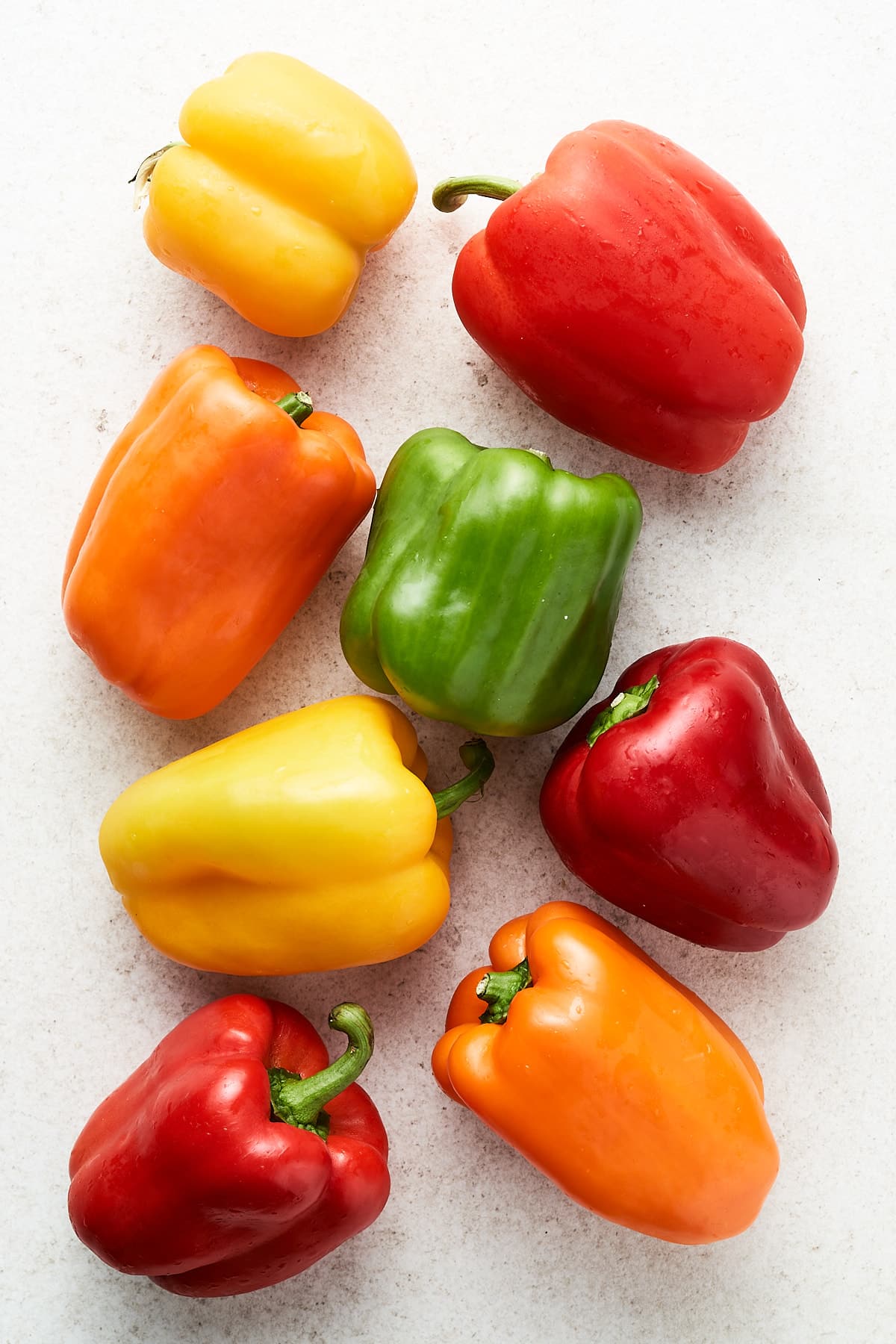
Bell peppers are a type of pepper that belong to the Capsicum annuum species. Whether you see them as circular or oval in shape, they all have crisp skin and a bright green stem. Inside, the stem connects to a bulb with tiny edible seeds attached. Popular in recipes like stir-fries, fajitas, soups, and stews, bell peppers are one of the first choices for recipes due to their versatility. The four most common bell pepper colors are red, yellow, green, and orange, but you can also find white and purple bell peppers! They’re mild compared to their chili pepper relatives, and some even have a hint of sweetness.
How to cut bell peppers
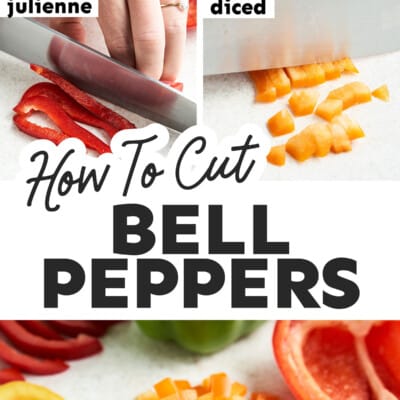
With how versatile this vegetable is, you’re really going to want to know how to cut bell peppers. Whether diced or julienned, you’ll first want to make sure your knife is sharp! Then, choose one of the following methods based on the recipe you’re making:
Option 1: Halves
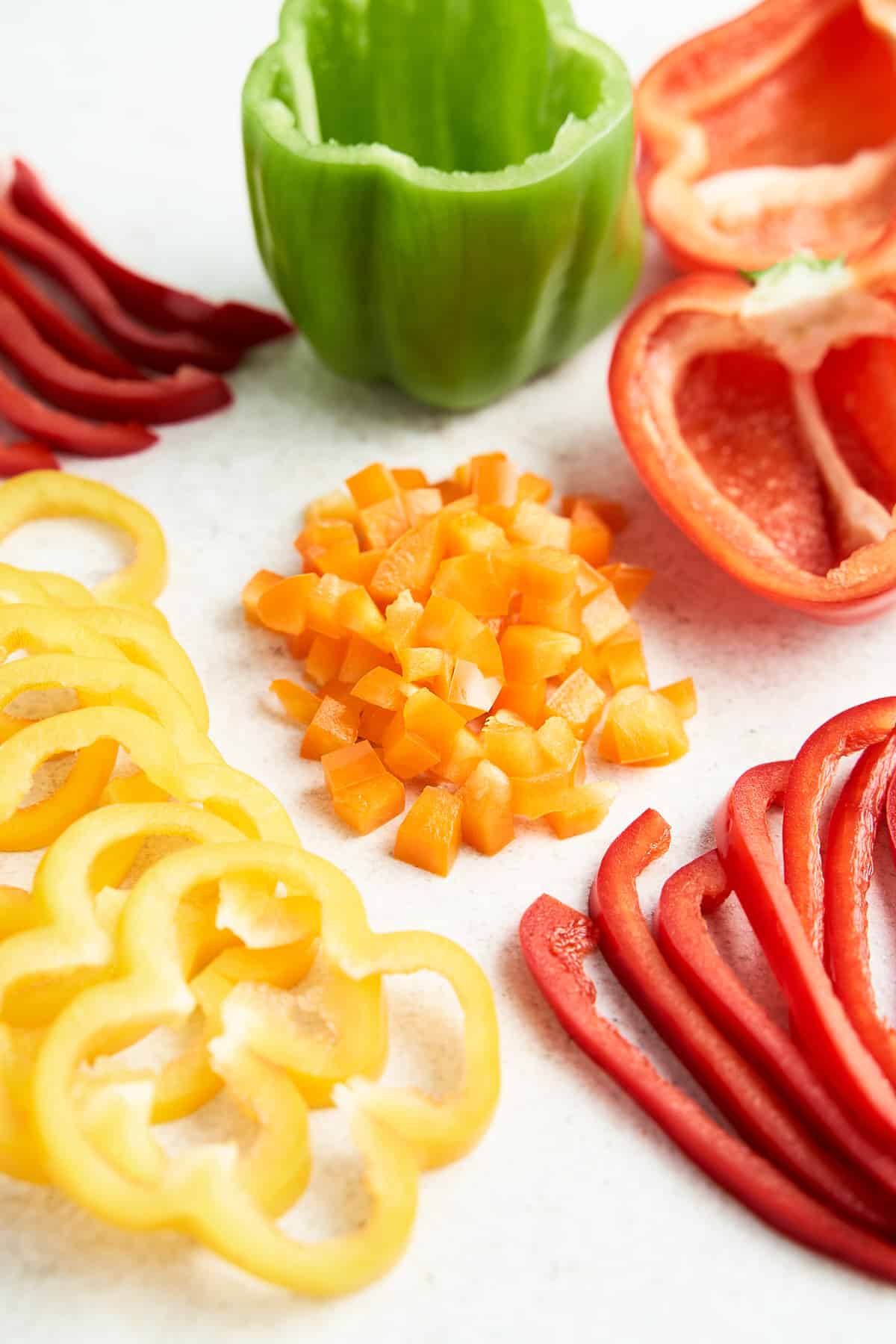
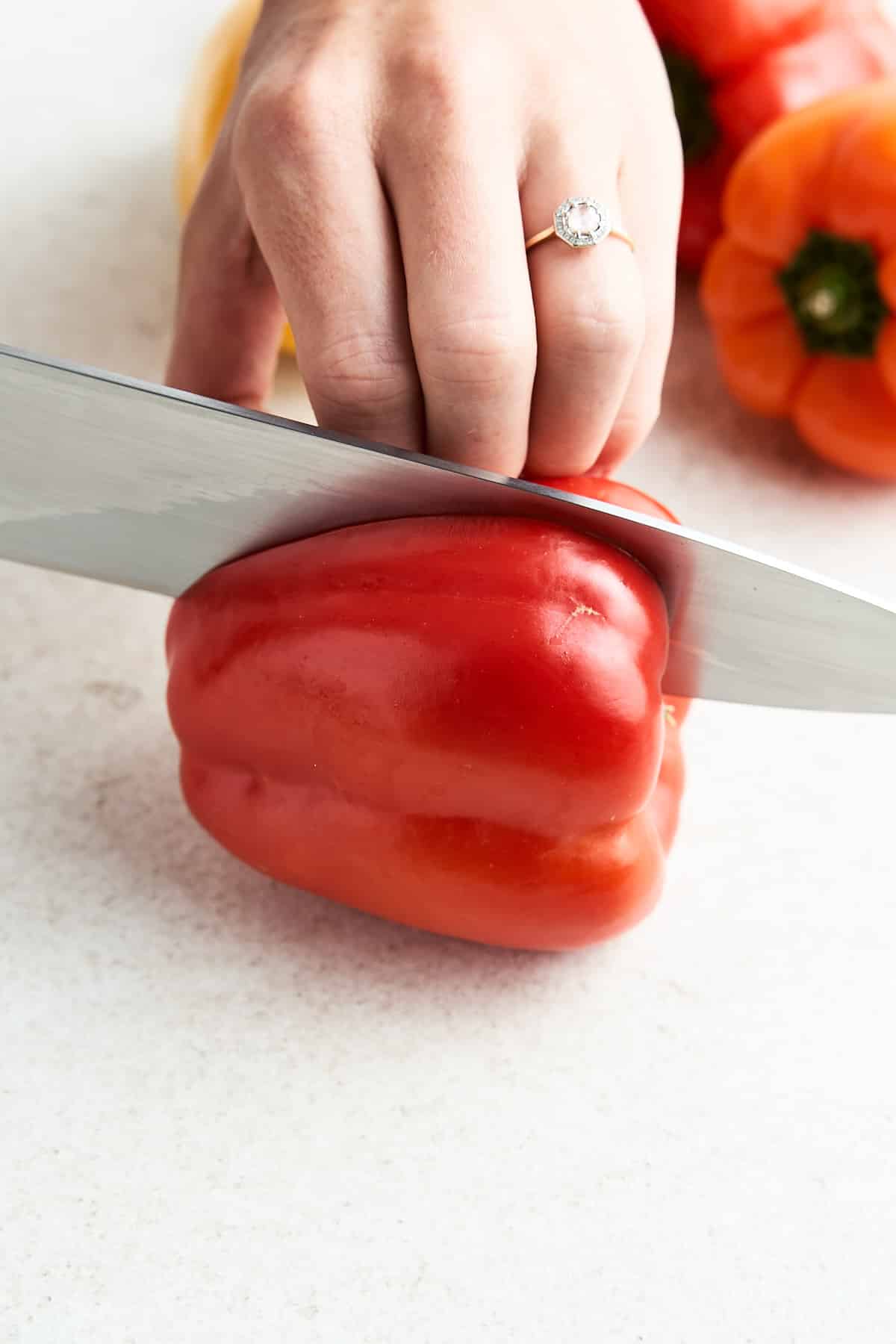
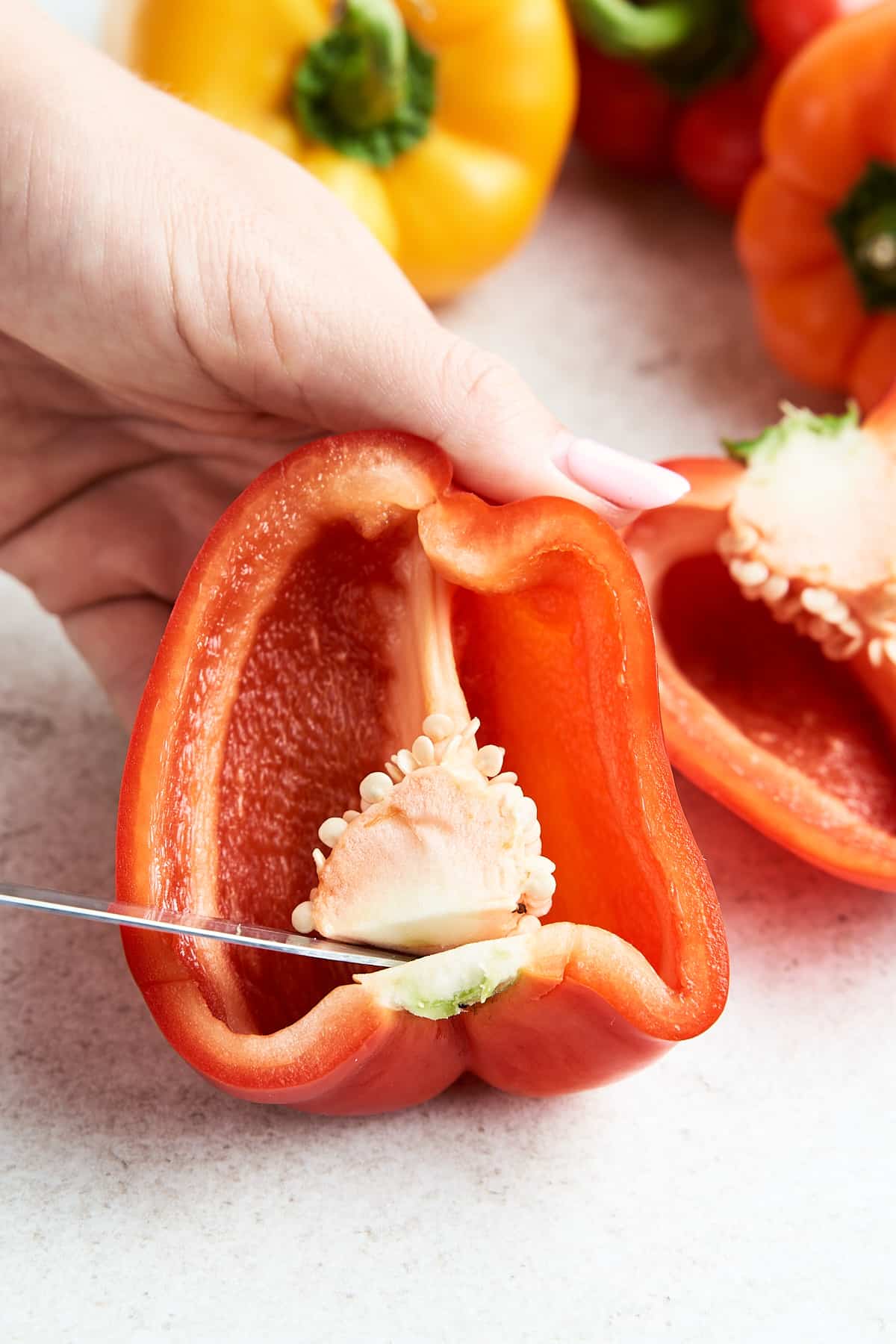
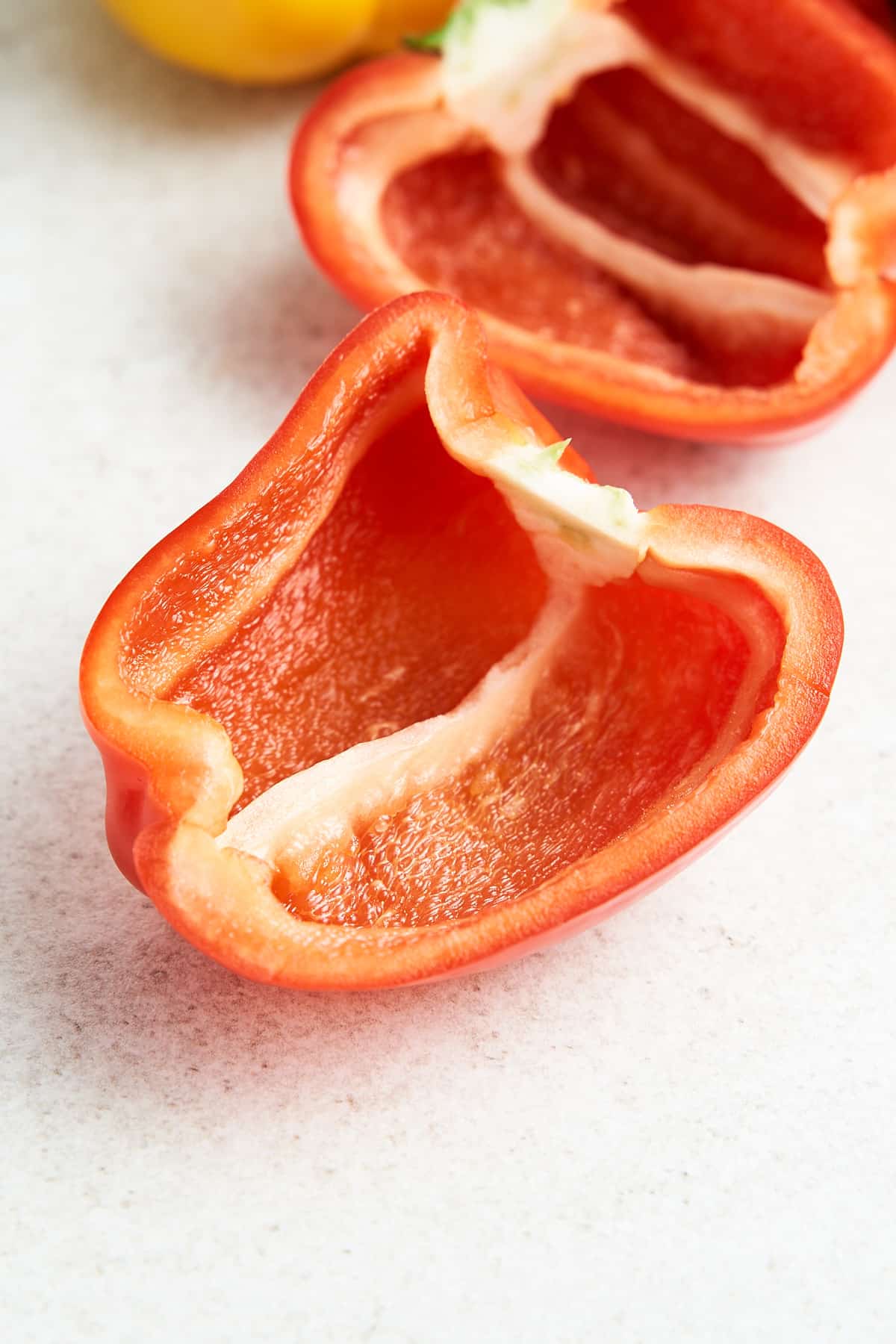
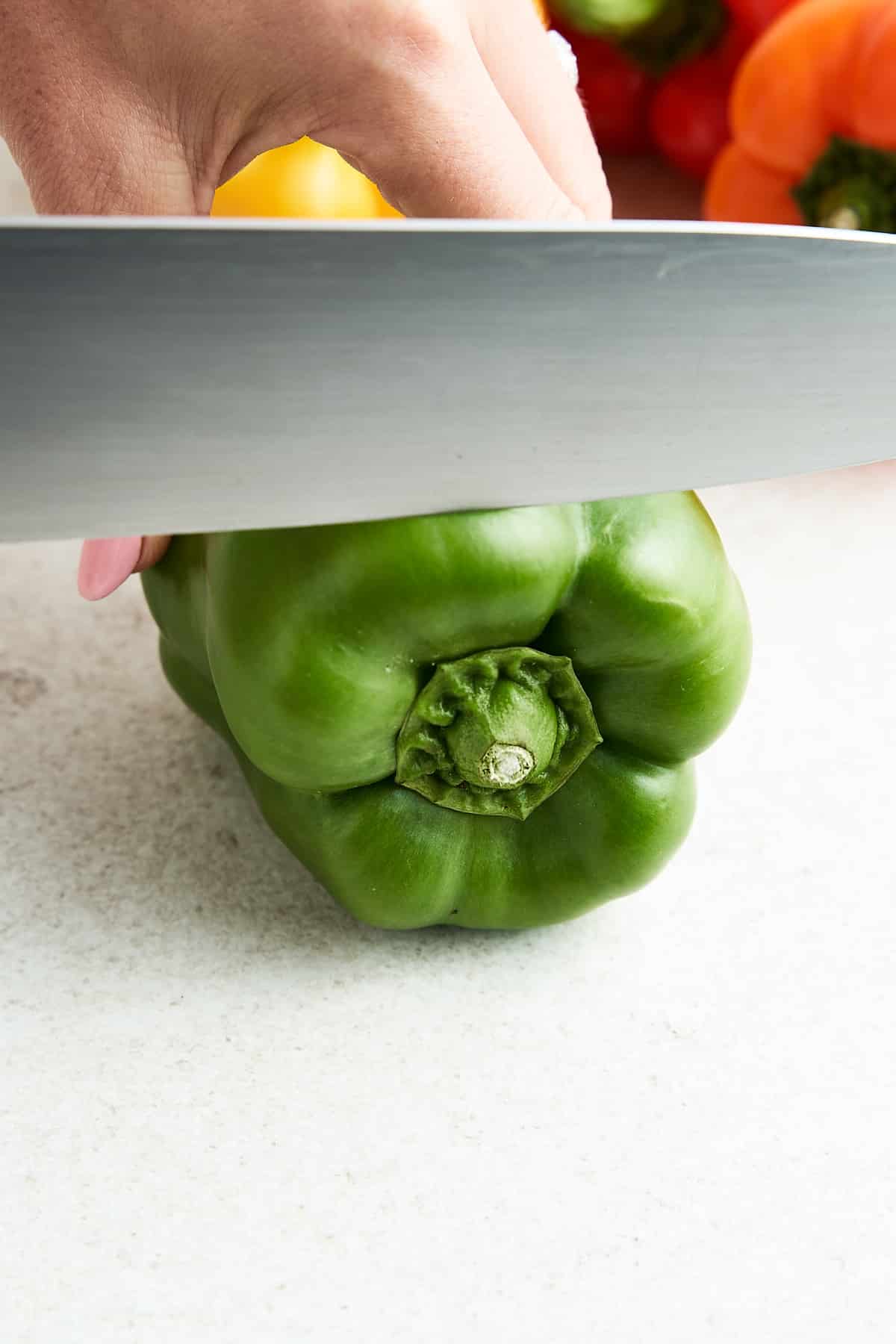
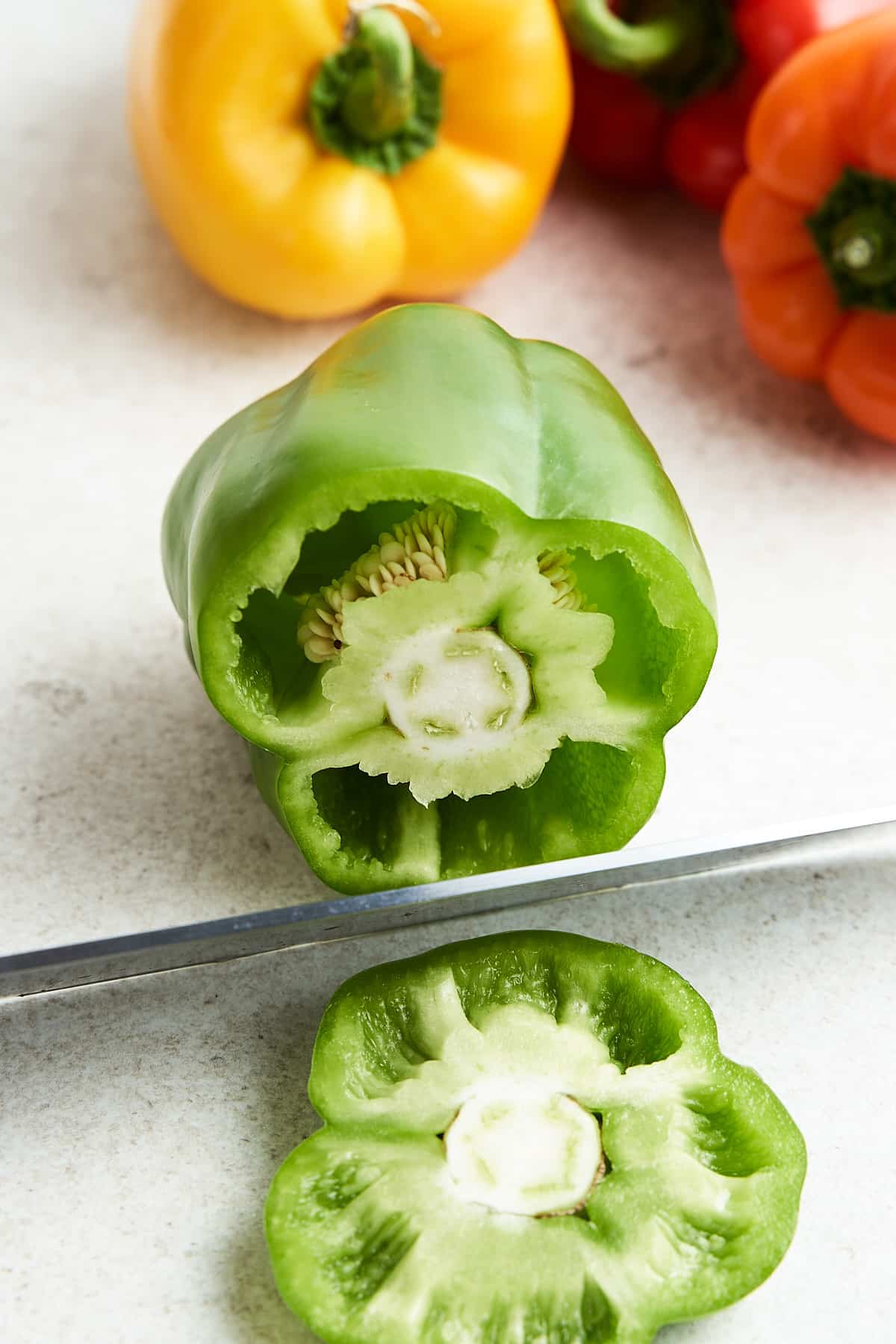
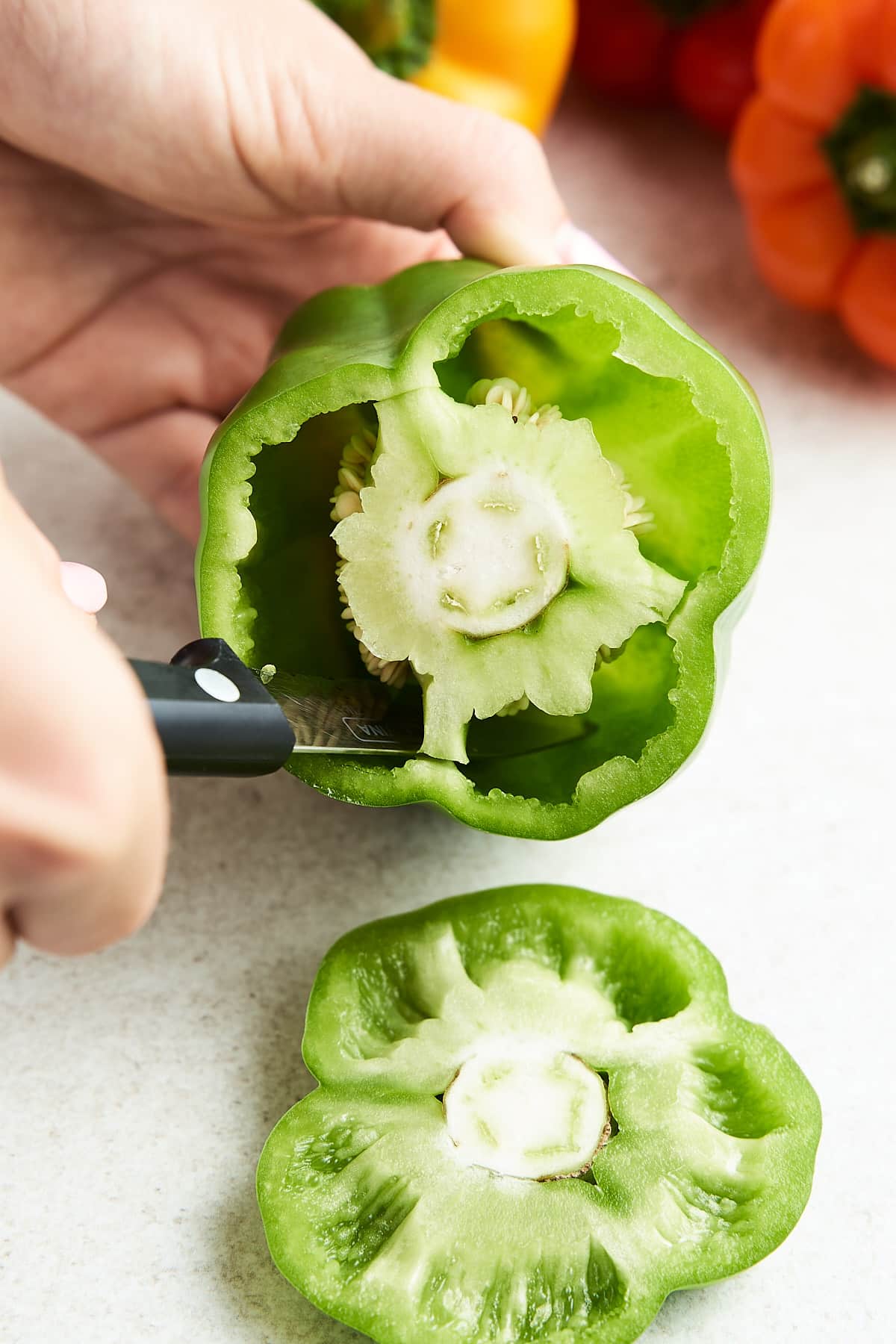
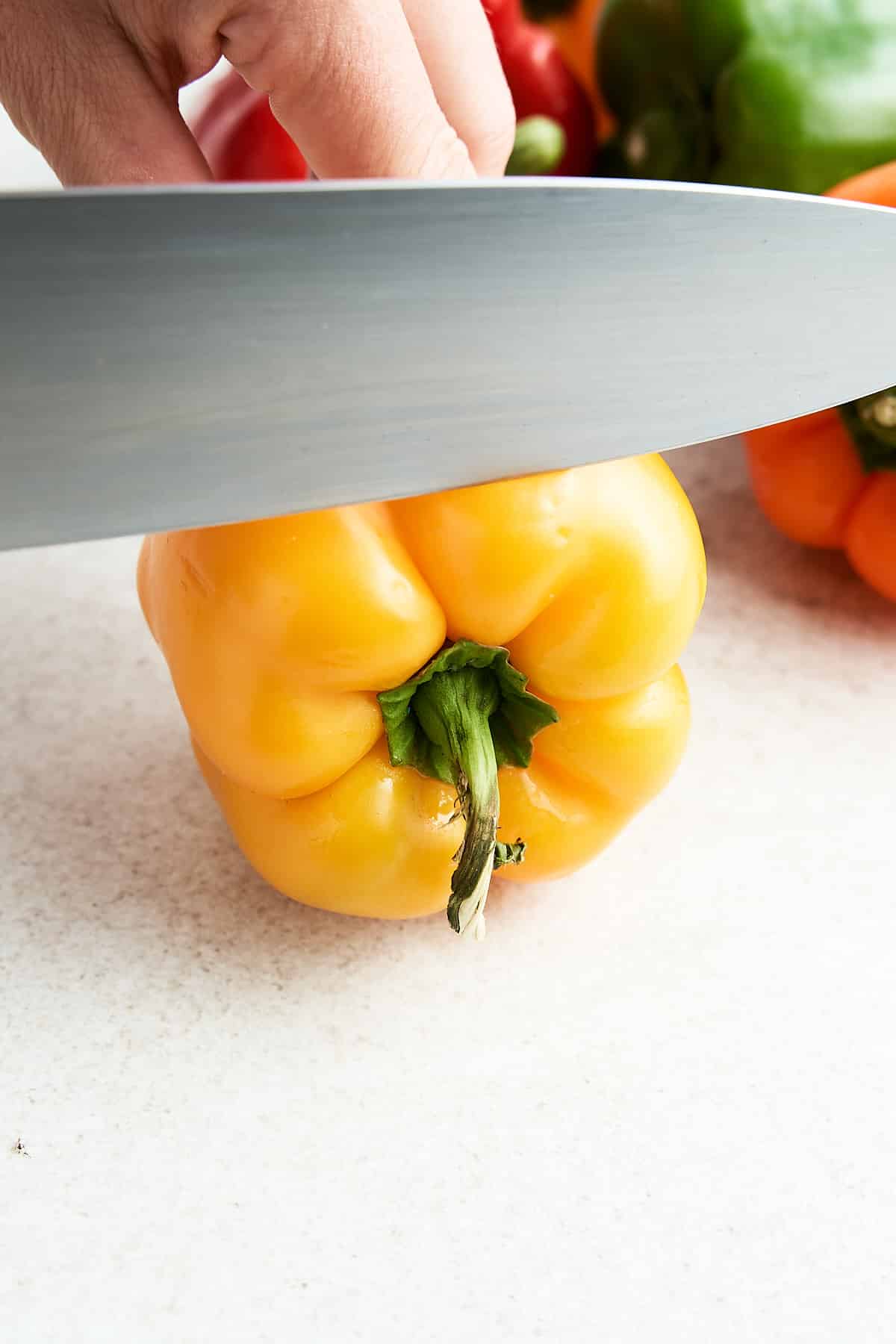
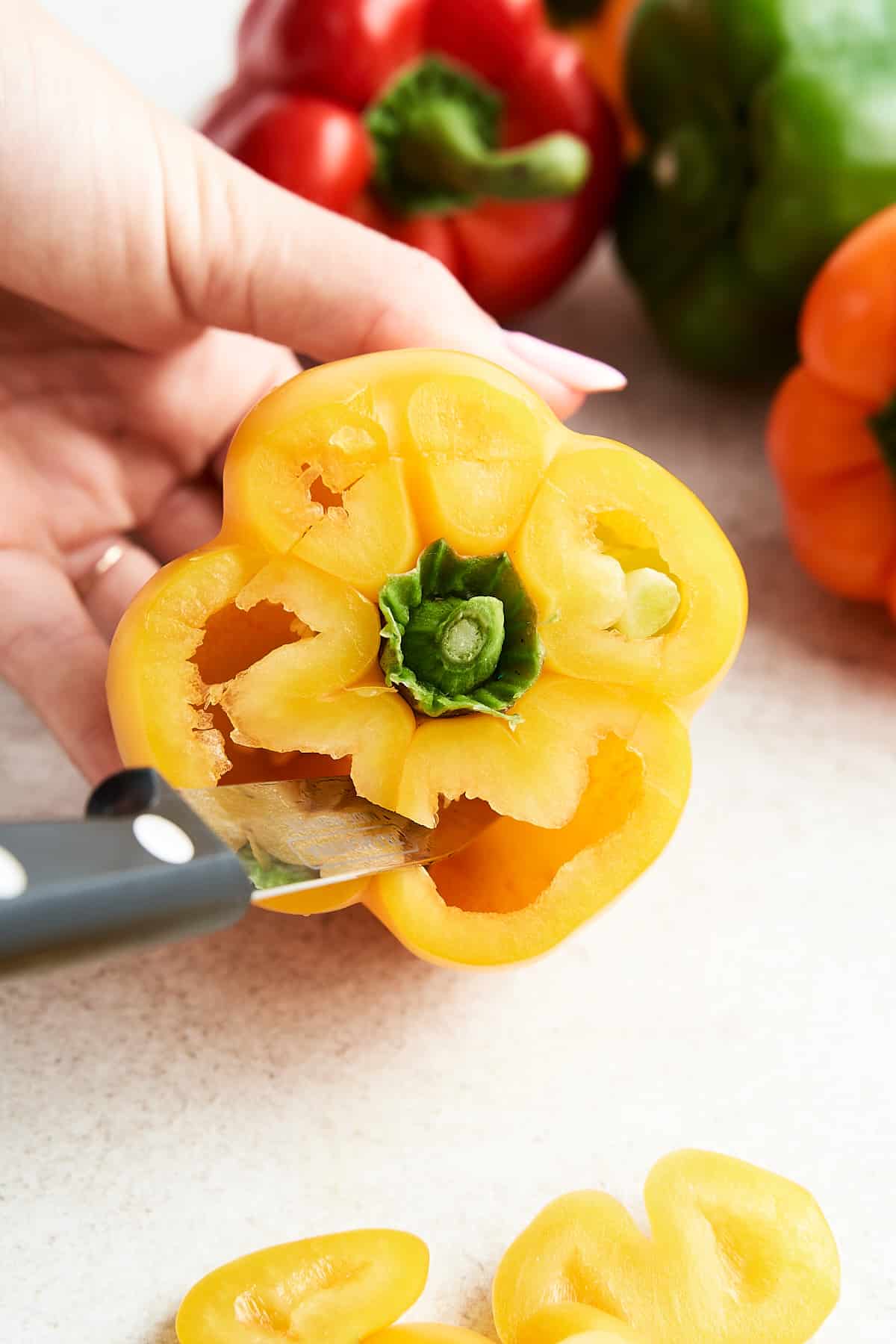
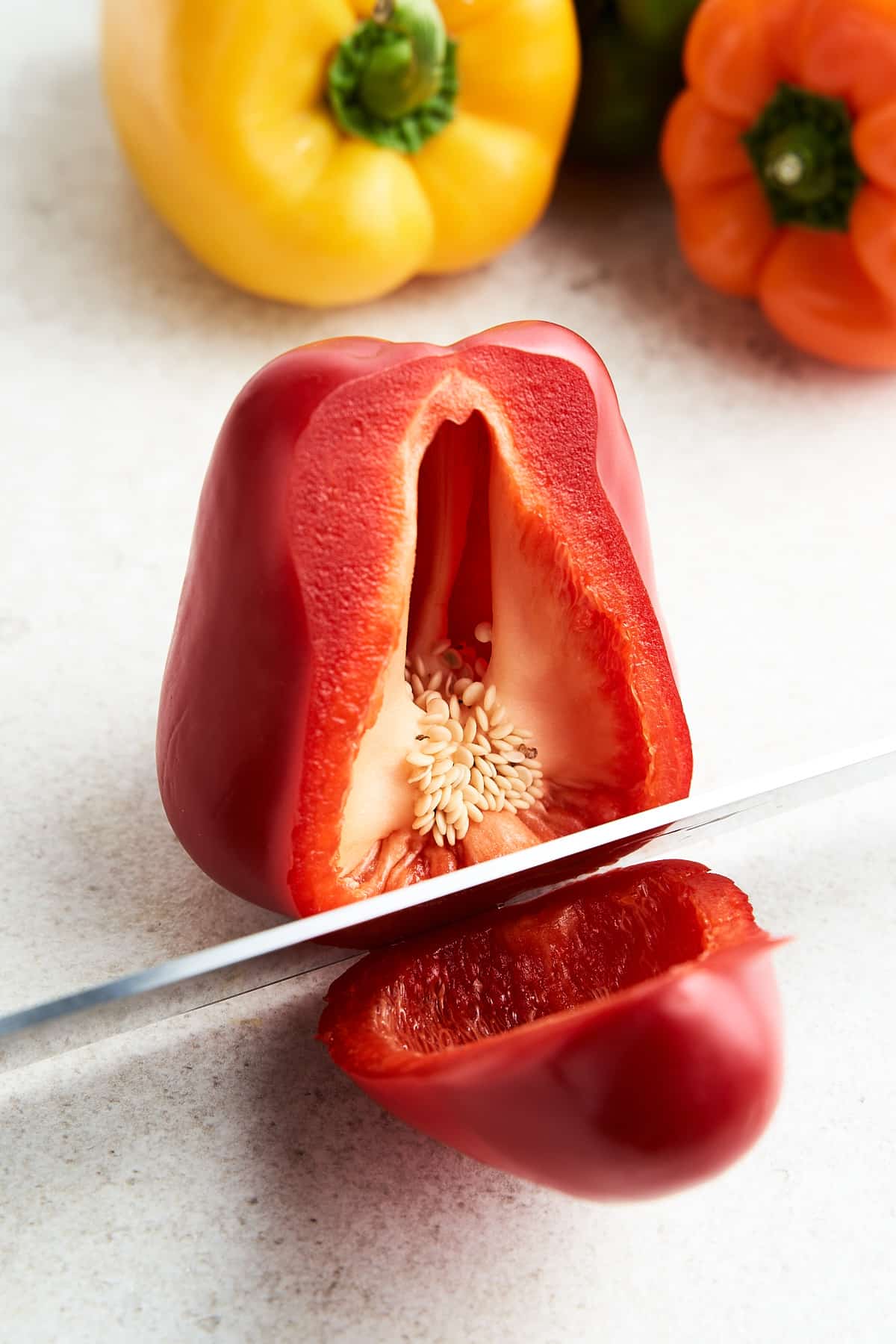
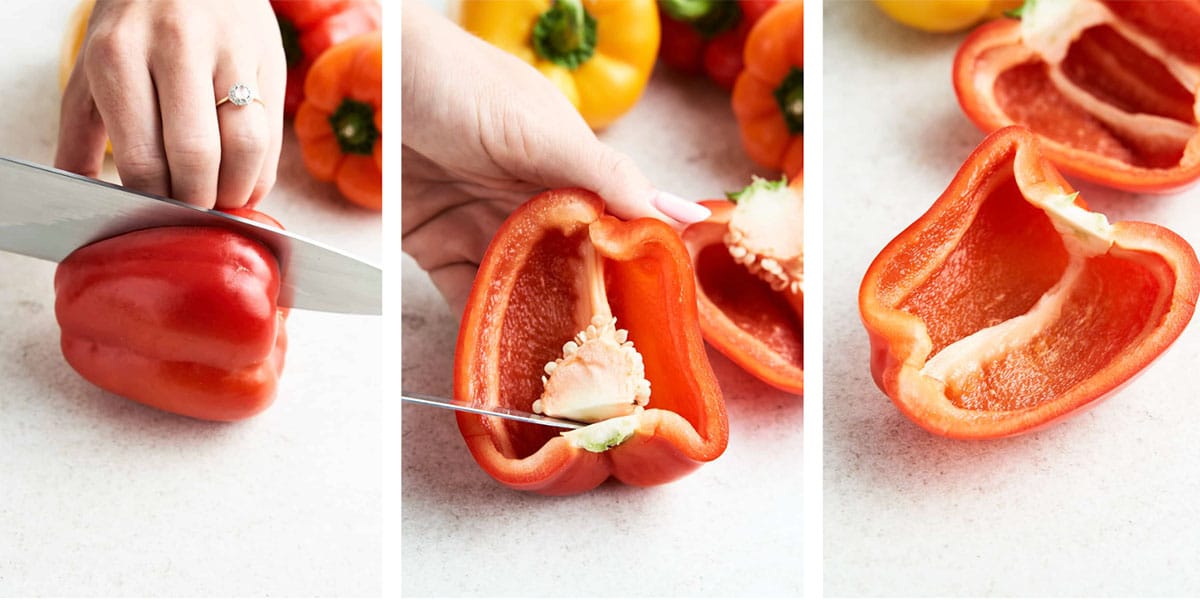
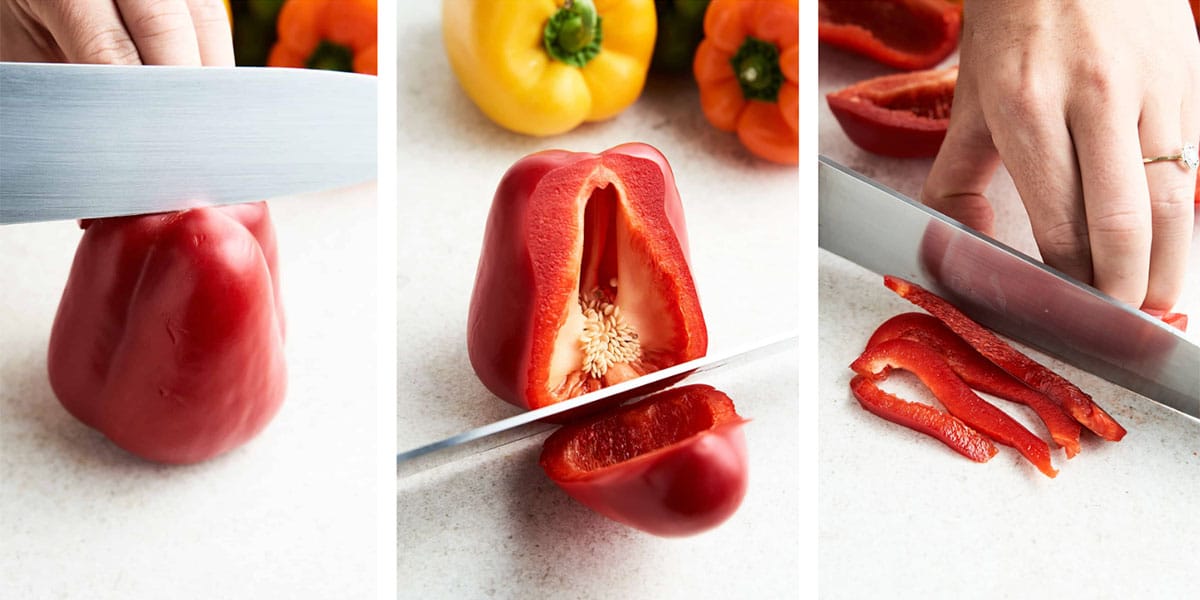
Depending on the bottom of the pepper, you may prefer to cut it lengthwise or trim the top. For peppers that don’t stand up well, turn it on its side and slice it in half lengthwise. Scoop the seeds out with your hands, a knife, or a spoon. You can remove the stems, but they will help keep the filling from falling out. If your pepper bottom is even, trim about a 1/2-inch off of the stem end, and make your way around the edges with a paring knife to break the seeds and veins away. Pull the seeds out with your hand. Roast red bell pepper halves, or stuff any color with a variety of different fillings!
Option 2: Rings
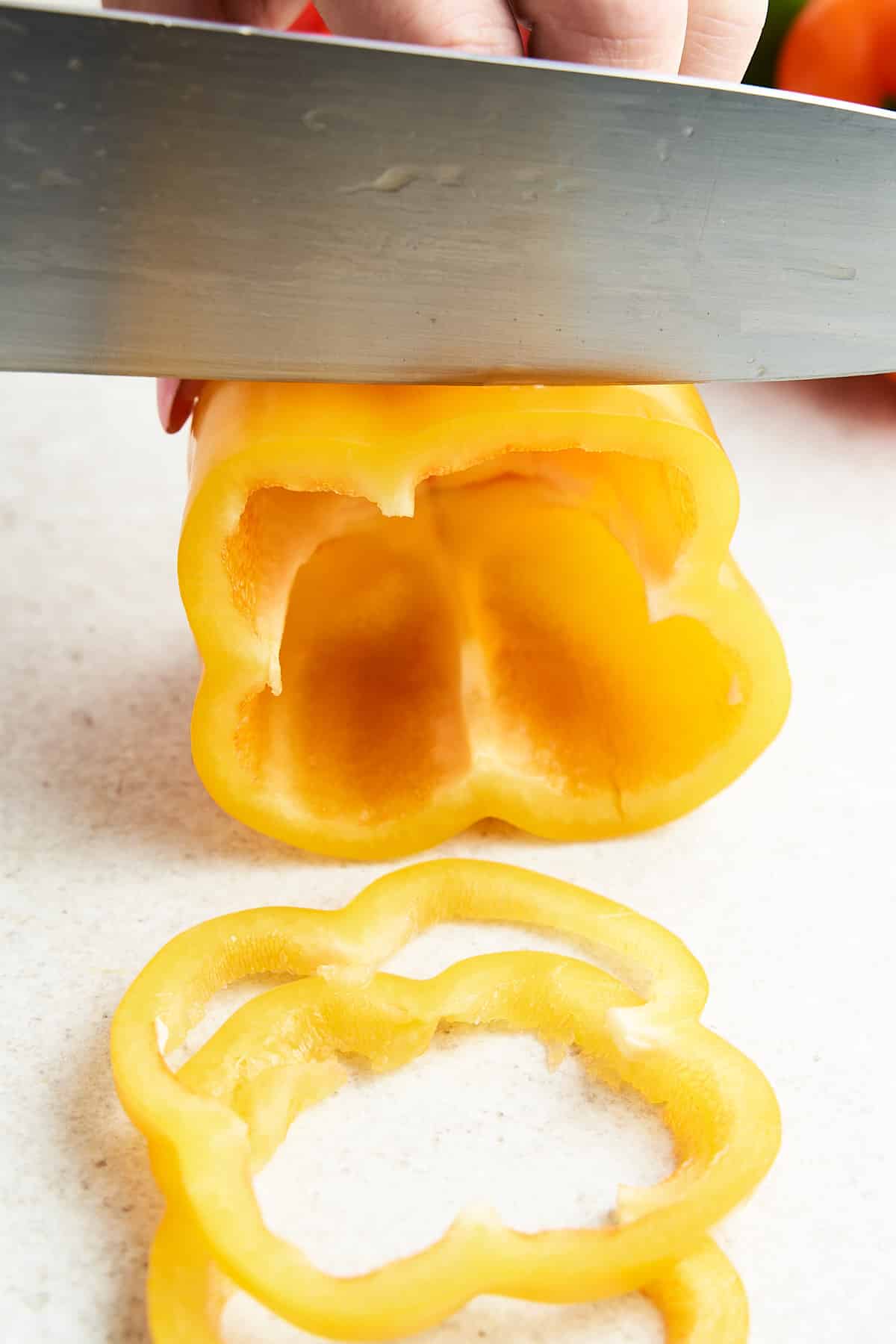
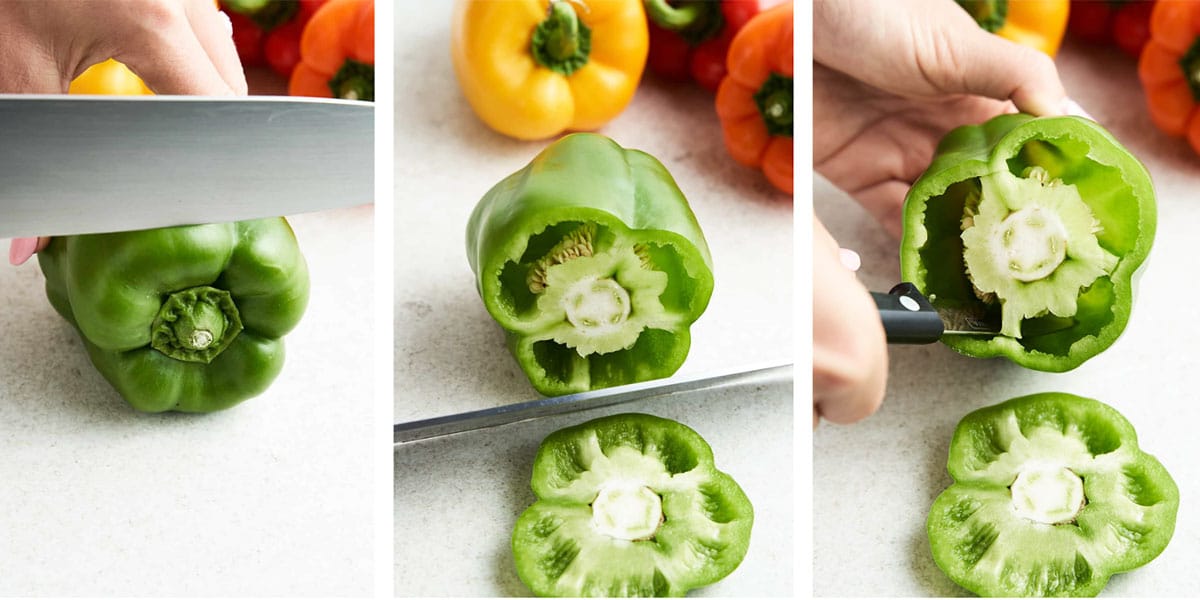
Turn the bell pepper on its side, and trim the stem end off again. Cut around the inside edges where the veins meet the flesh, then pull out the seeds and veins with your hands. Give the pepper a tap upside down to get rid of any straggling seeds. Firmly grasp the pepper with your non-dominant hand, then slice it into rings starting from the stem end. Enjoy the bottom end as a snack, or save it for homemade vegetable stock. Slice the rings as thickly or as thinly as you’d like. Pepper rings are a great addition to veggie sandwiches!
Option 3: Julienned
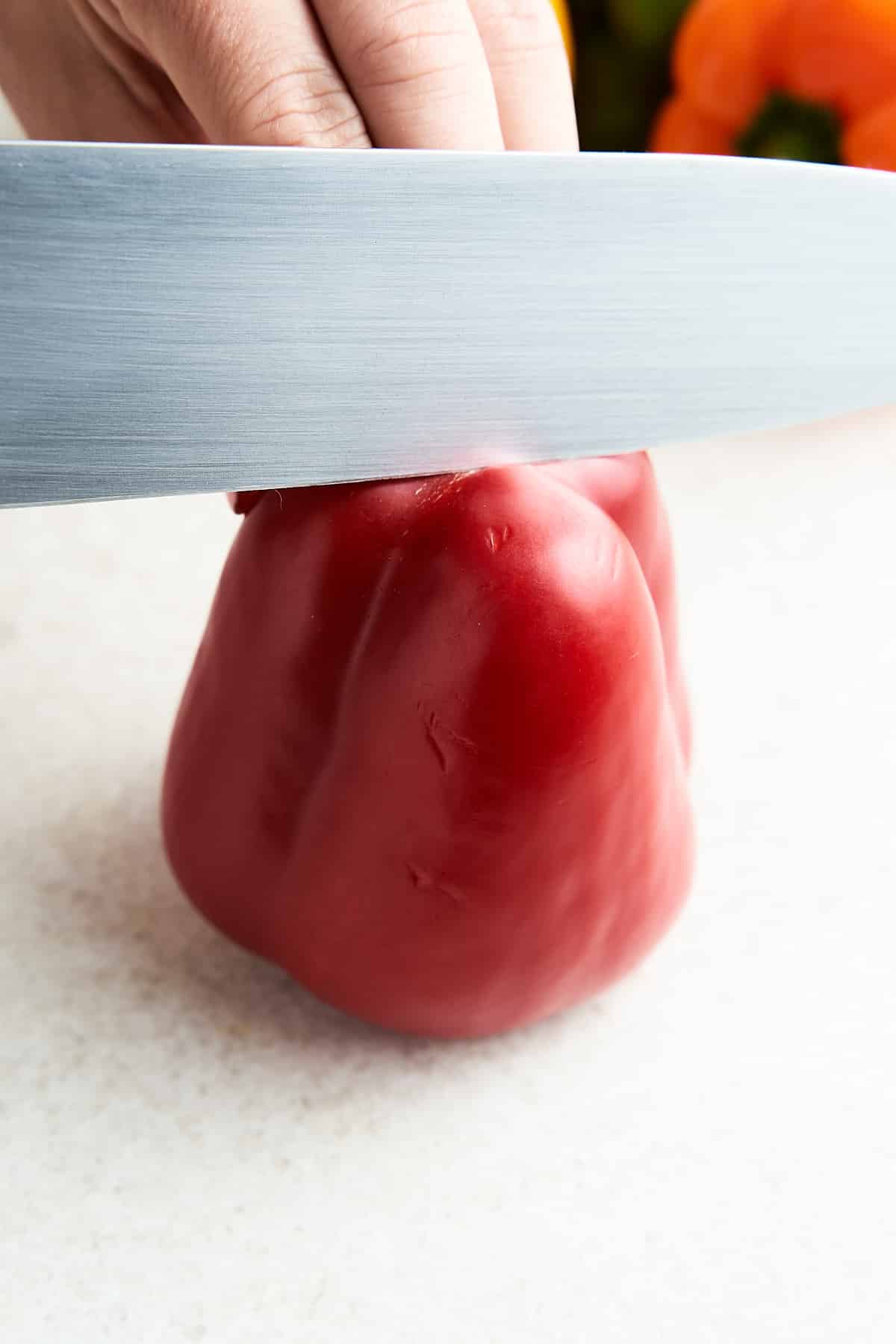
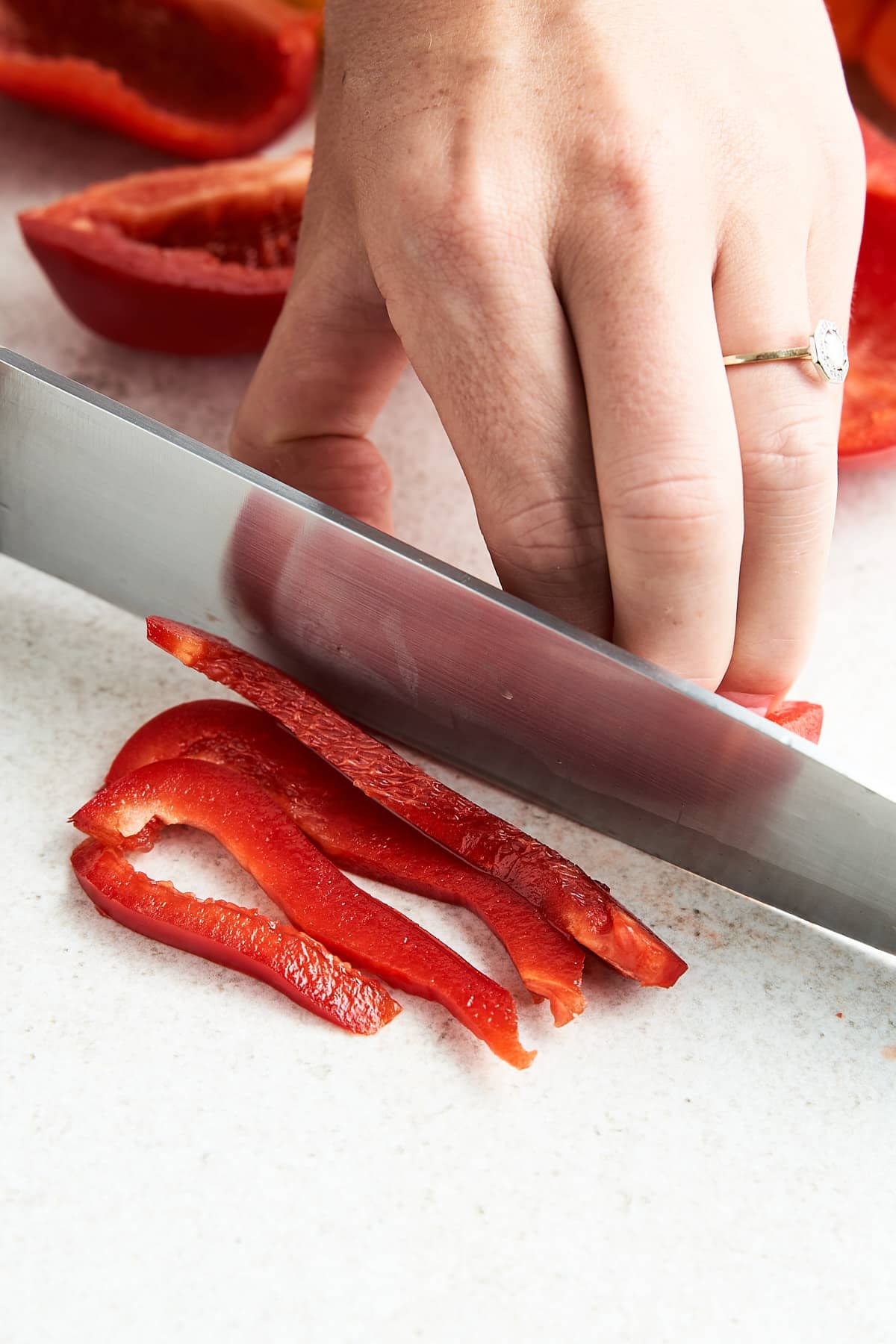
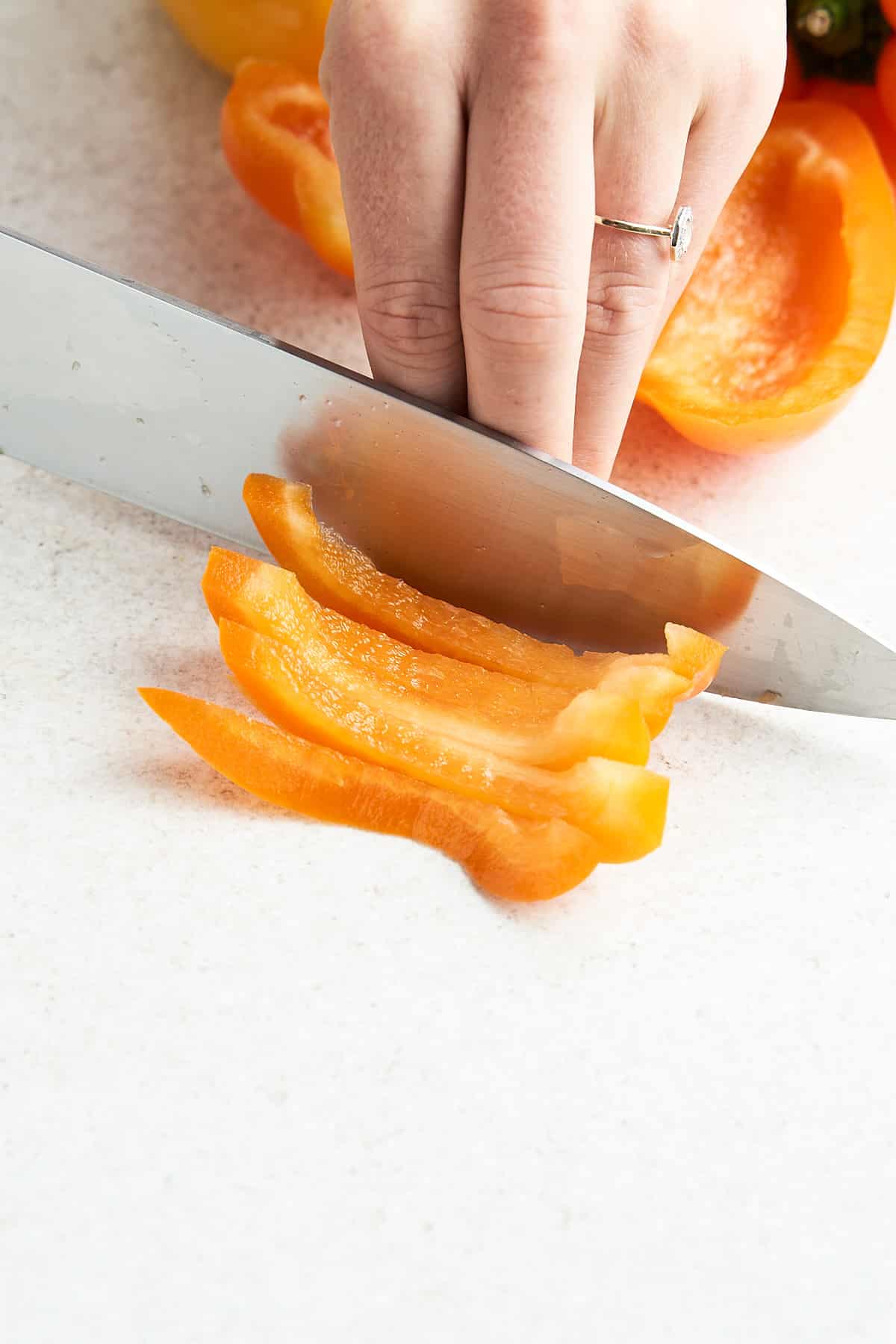
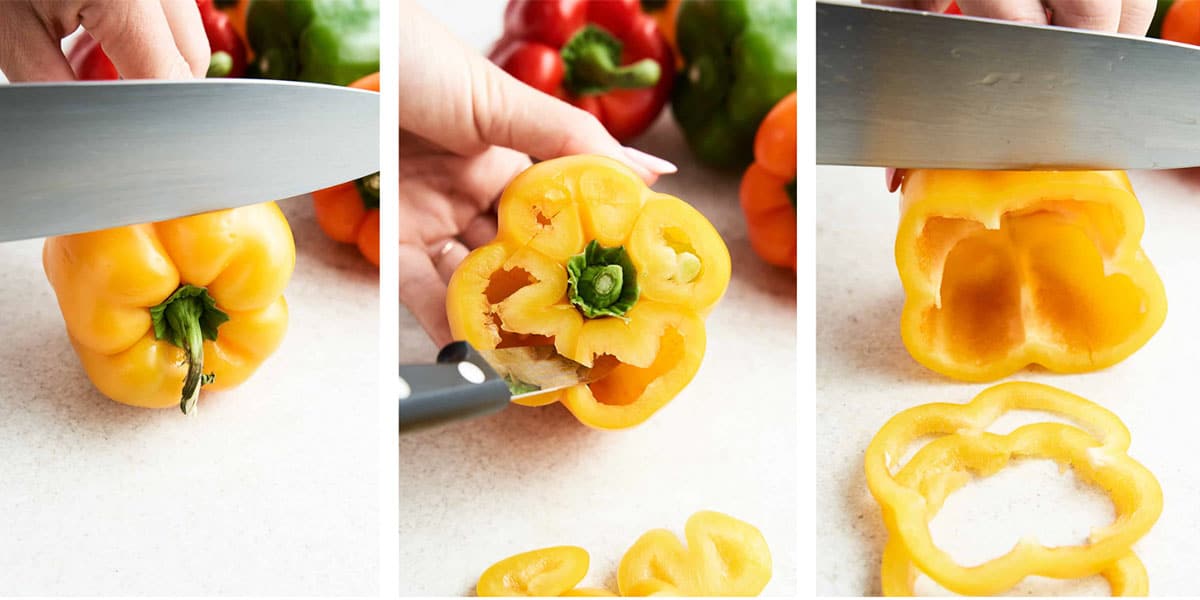
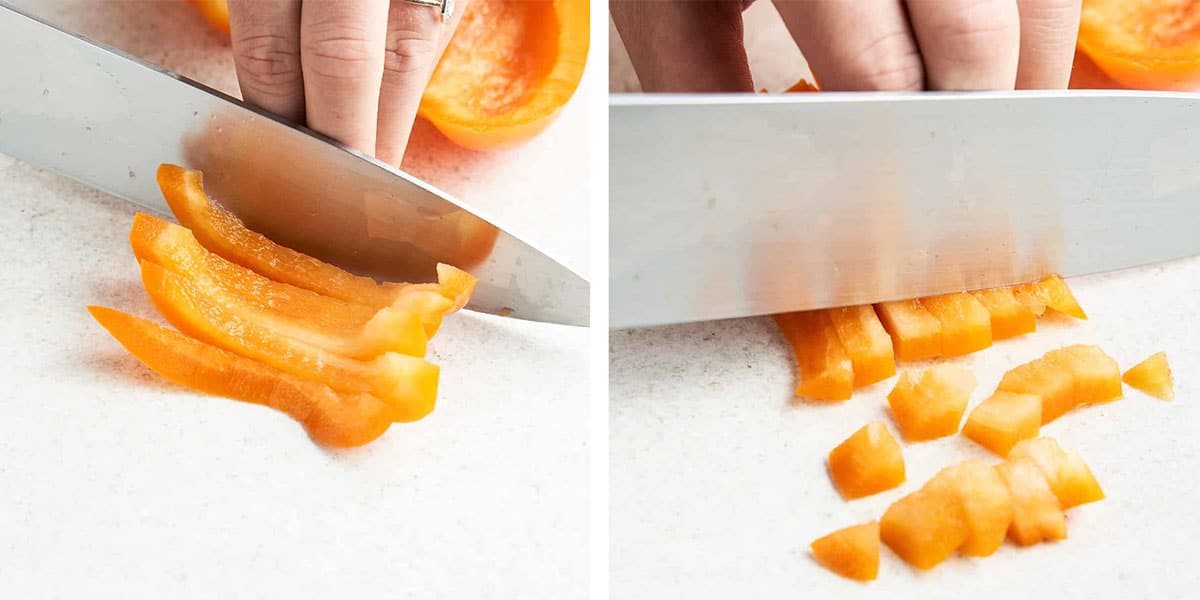
Trim away the stem so it is flush with the rest of the top of the bell pepper. Turn the pepper upside down, then use your knife to cut vertically from the bottom down to the stem end. Make your way around the pepper, following the natural curvature so you don’t hit the veins and seeds. Discard the remaining seeds and veins, and julienne each pepper slab as thickly or as thinly as you need (usually ¼ – ⅛-inch). Make sure to cut the pepper skin side down since it is difficult to cut through when it’s facing up. This cutting technique actually comes from Gordon Ramsey, which I think is absolutely genius! It’s now my preferred method of how to cut peppers without seeds getting everywhere!
Option 4: Diced
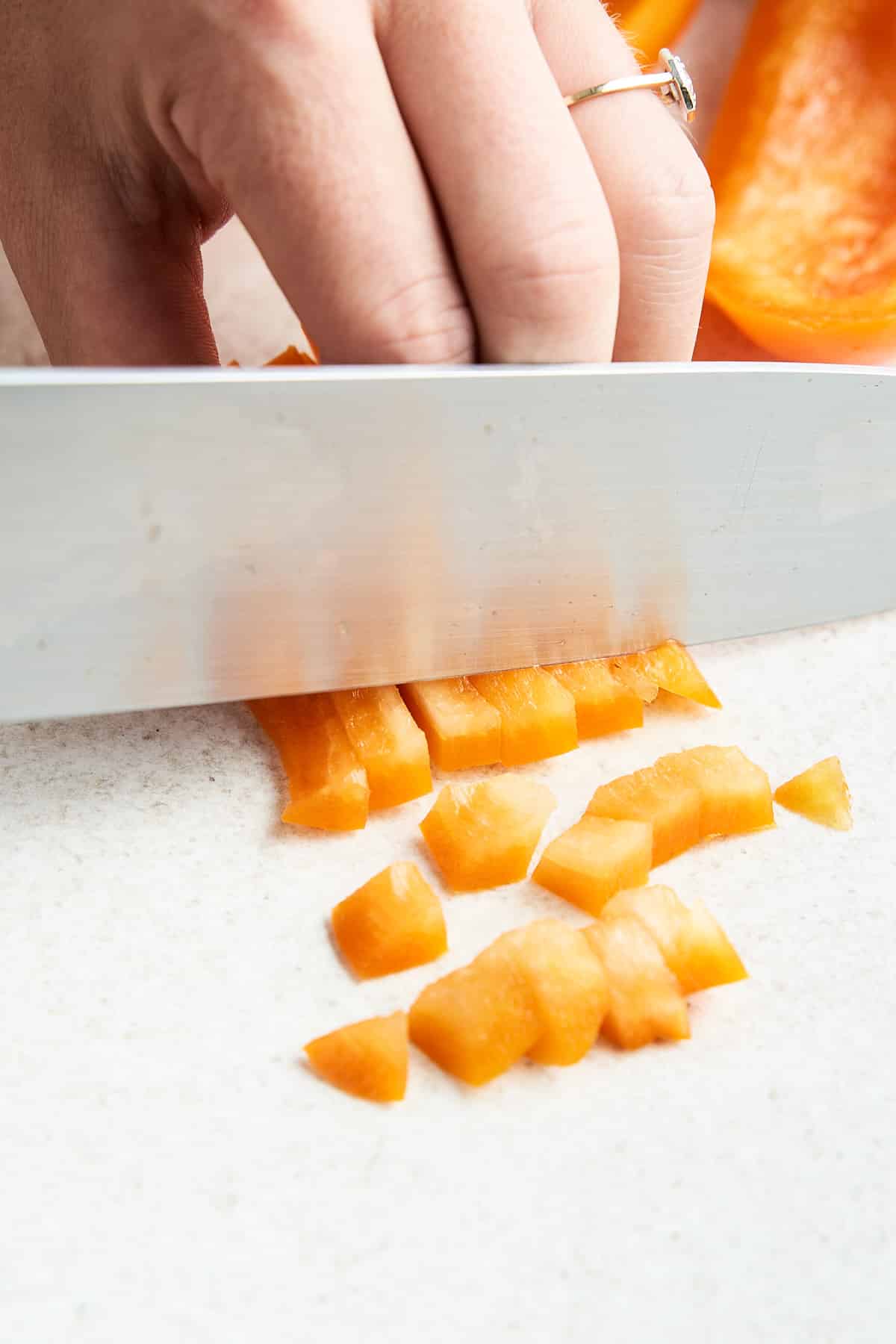
Follow the same steps for julienning, then rotate the strips 90 degrees. Using a rocker motion, dice the peppers into cubes as big or as small as you need them (¼ – ½ inch). Use your non-dominant hand to push the pepper strips toward the knife as you cut. Diced bell peppers make the perfect addition to veggie burgers, dips, soups, and stews.
Tips for cutting bell peppers
Use a sharp knife: Bell peppers have notoriously thick and difficult-to-cut skin. Make sure your knife is freshly sharpened so you can slice through it like butter! Skin side down: Along the same lines, don’t forget to cut the peppers with the skins facing down. Life will be so much easier if you cut them this way! Save the scraps: If you end up with leftover ends and stems, save them for homemade vegetable stock! Keep them in a freezer-safe container or bag with your other vegetable scraps.
How to pick perfect bell peppers
Now that you know how to cut bell peppers perfectly, you don’t want to waste your knife skills on a rotten pick! Follow these guidelines to make sure you’ve hit the jackpot on your haul:
Color: Look for peppers that are vibrant and fairly uniform in color. Some green on a red pepper is okay, but it should be primarily the specific color you’re looking for. Avoid peppers with blemishes, soft spots, or gashes. Weight: Choose bell peppers that feel heavy for their size. This means they contain a higher percentage of water and will have a crisp texture. Firmness: The skin should be shiny and quite firm with no wrinkles present. A wrinkly pepper means an old, less flavorful fruit that’s on its way out. Shape: The shape of a pepper varies greatly, but it doesn’t affect the flavor. The only time you need to be mindful of shape is if you want stuffed bell peppers that stand up on their own. If that’s the case, make sure the peppers have an even, fairly square-looking bottom.
Storing bell peppers
If you find yourself with too many peppers, here are a few simple storage options:
Room temperature: If you’re using them right away, bell peppers will store at room temperature for a day or two. Fridge: The best choice is to store whole bell peppers in the fridge if you’re using them within a week or so. Dry them, place them in a bag with ventilation, and they will store in the crisper drawer for up to two weeks. If you’ve already cut bell peppers, you can wrap them in a paper towel before storing them, which will prevent them from turning slimy. Freezer: If you’re not going to use them within a week or two, dice or julienne the peppers and place them in a freezer-safe bag or container. They will keep in the freezer for at least 6 months this way.