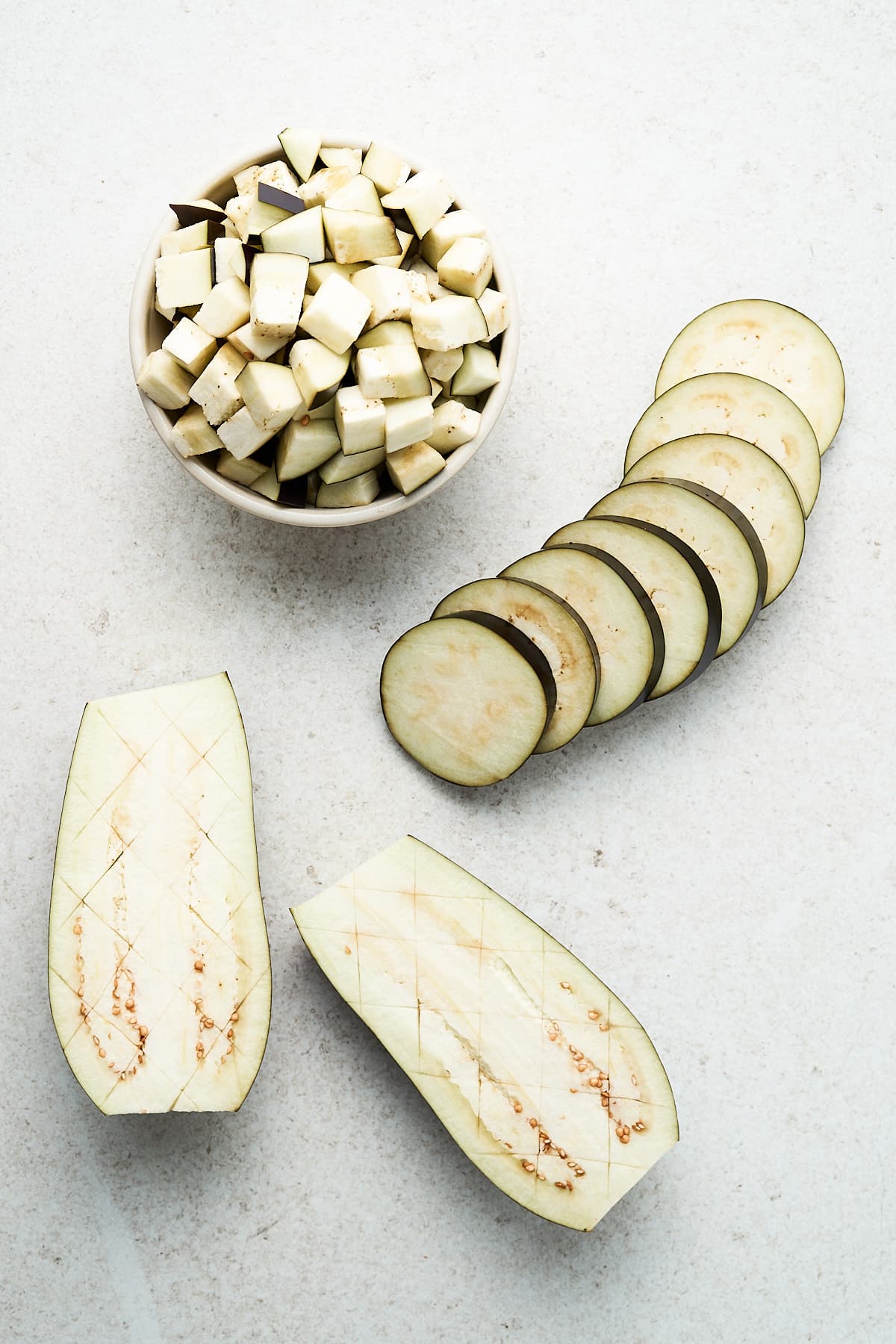
Eggplant is a fruit (yes, fruit) with a wide variety of uses in the kitchen. You may not know this, but there are many different types of eggplants, each with its own unique texture and flavor. Popular in recipes like stuffed eggplant parmesan or eggplant lasagna, this versatile ingredient can change so much just by cutting it differently. Learn how to cut eggplant in different ways like rounds, cubes, slices, and scored to level up your cooking game with this delicious fruit.
How to Cut Eggplant
Cutting eggplant is actually a very simple task. Today, we’re going over three common ways you may have come across in recipes — slicing, cubing, and scoring. Let’s get to it!
Step 1: Slice the top
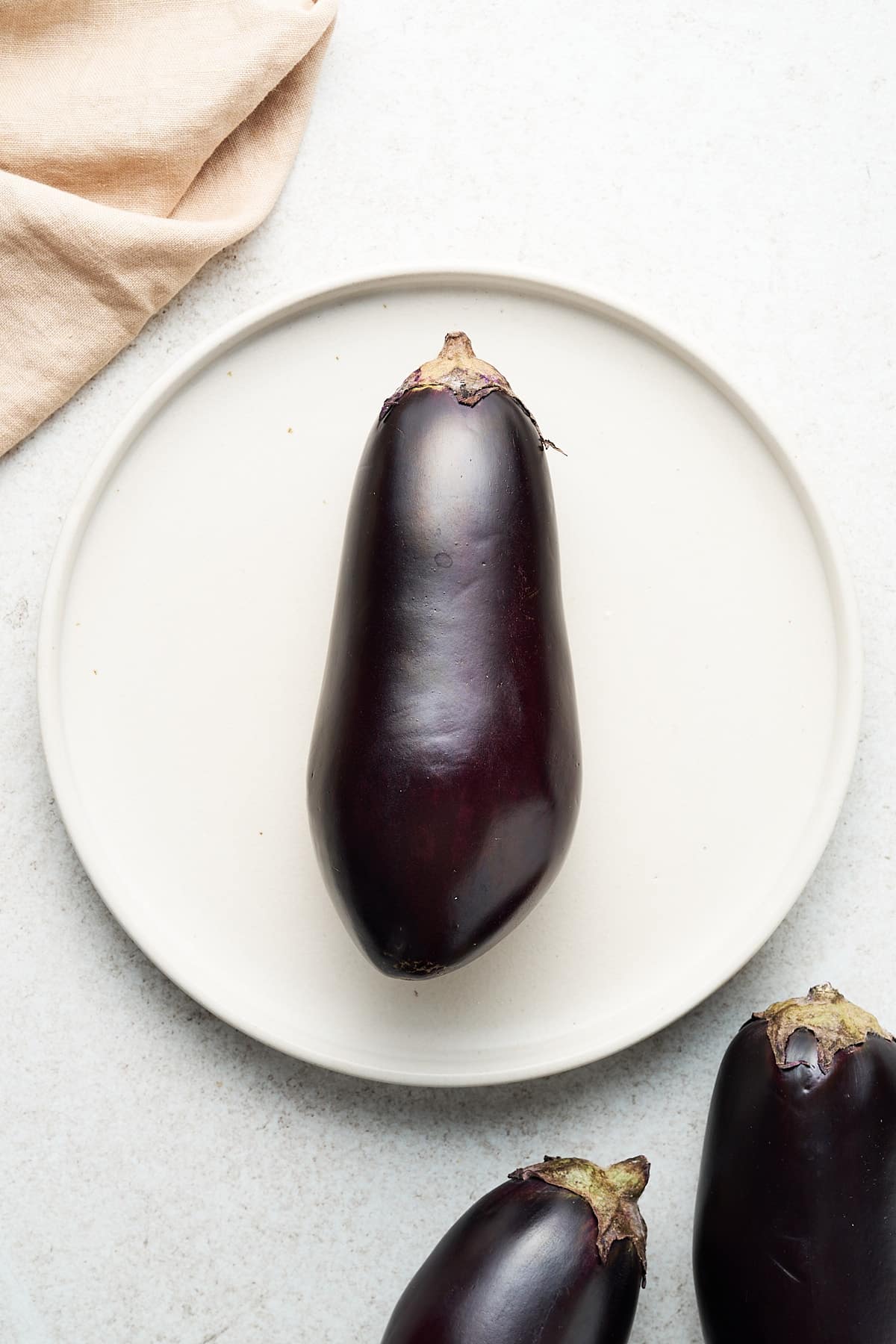
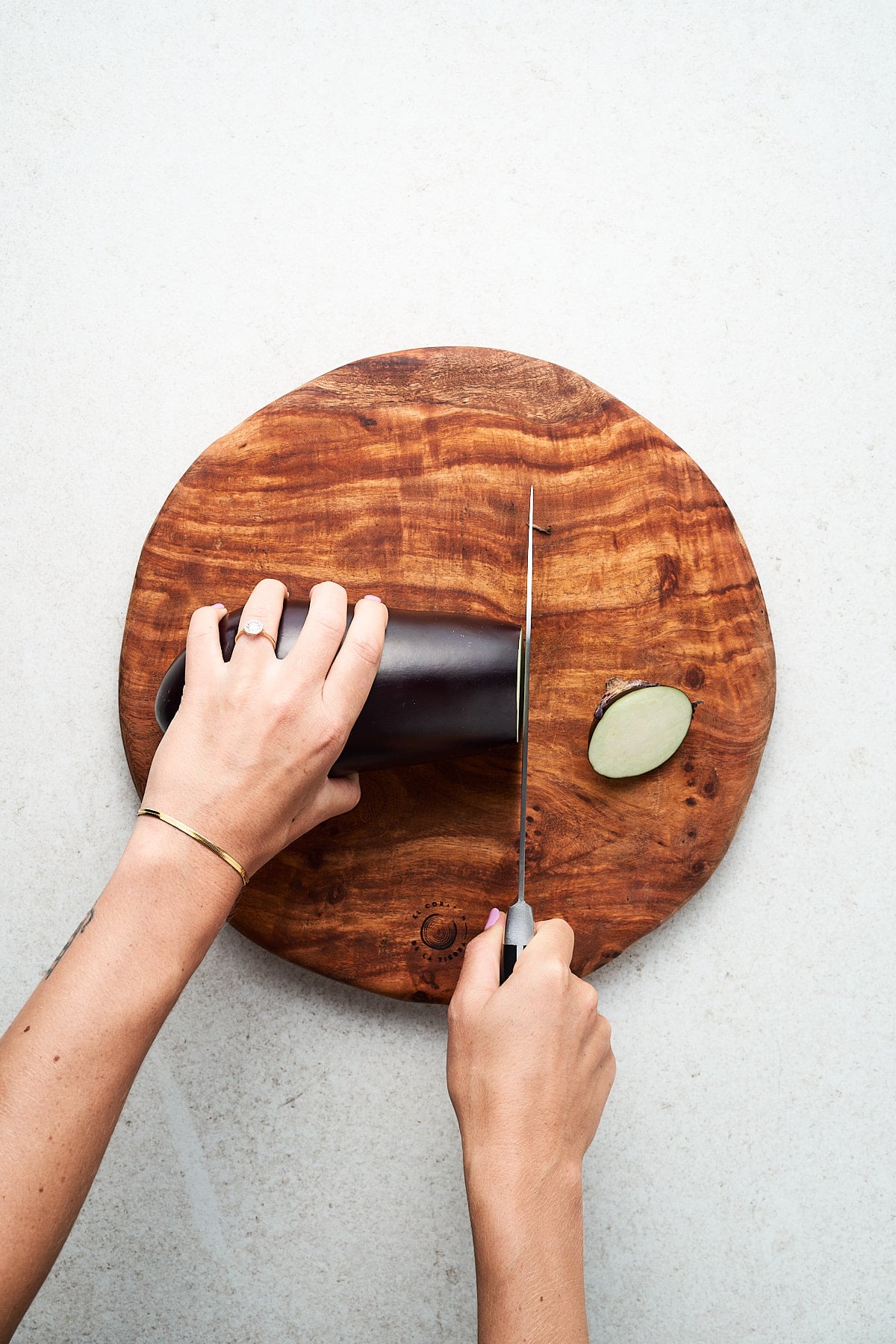
Before you start, you should determine if the recipe is requiring you to peel the eggplant. The skin of younger eggplants and certain other varieties is tender and perfectly edible when cooked. If you have an older eggplant (or a larger one), the skin may taste more bitter and tough. Using a sharpened chef’s knife, cut the top stem of the eggplant off and discard it. Spin the eggplant around and trim off a small piece of the bottom as well.
Step 2: How to cut eggplant (3 ways)
Slice method
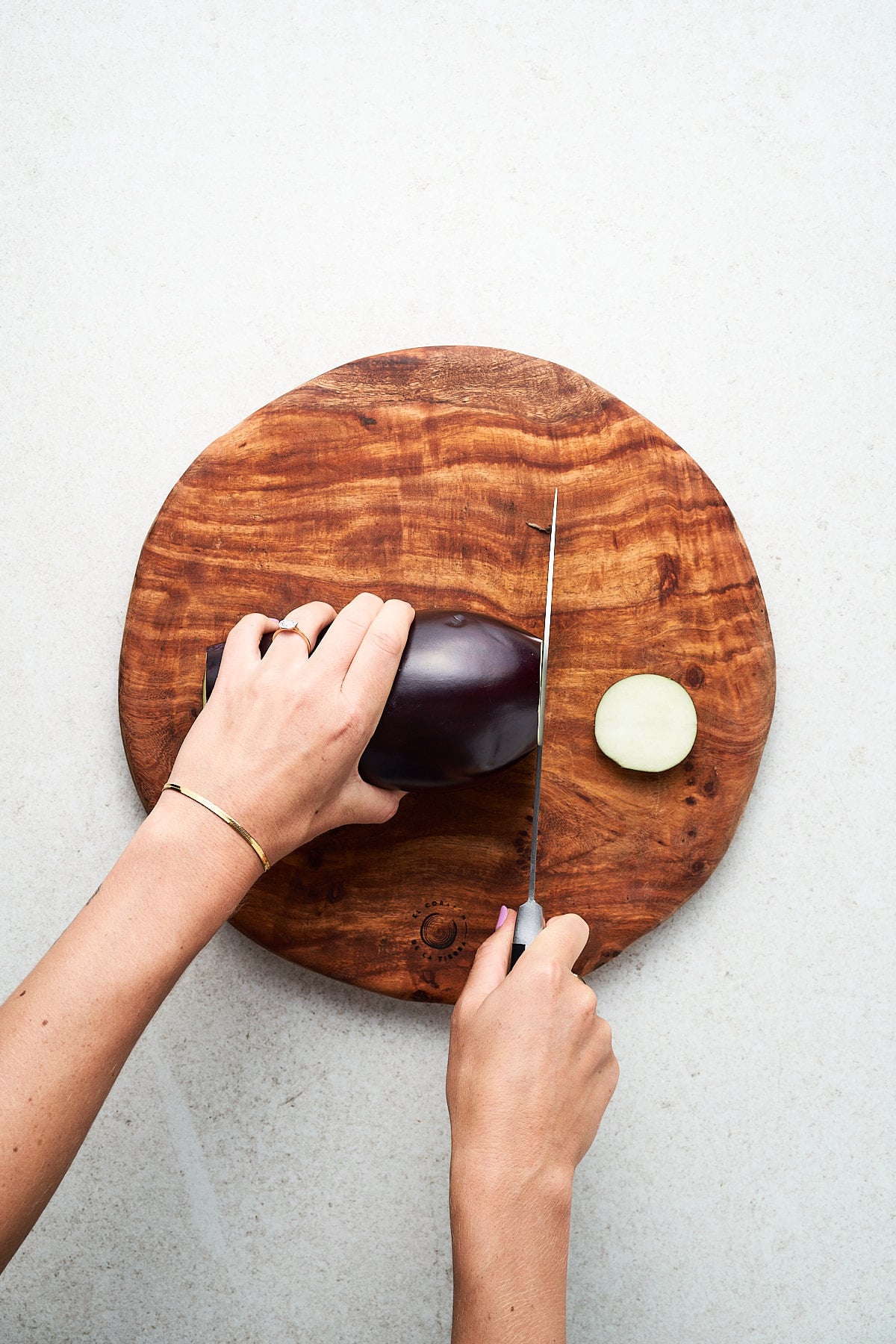
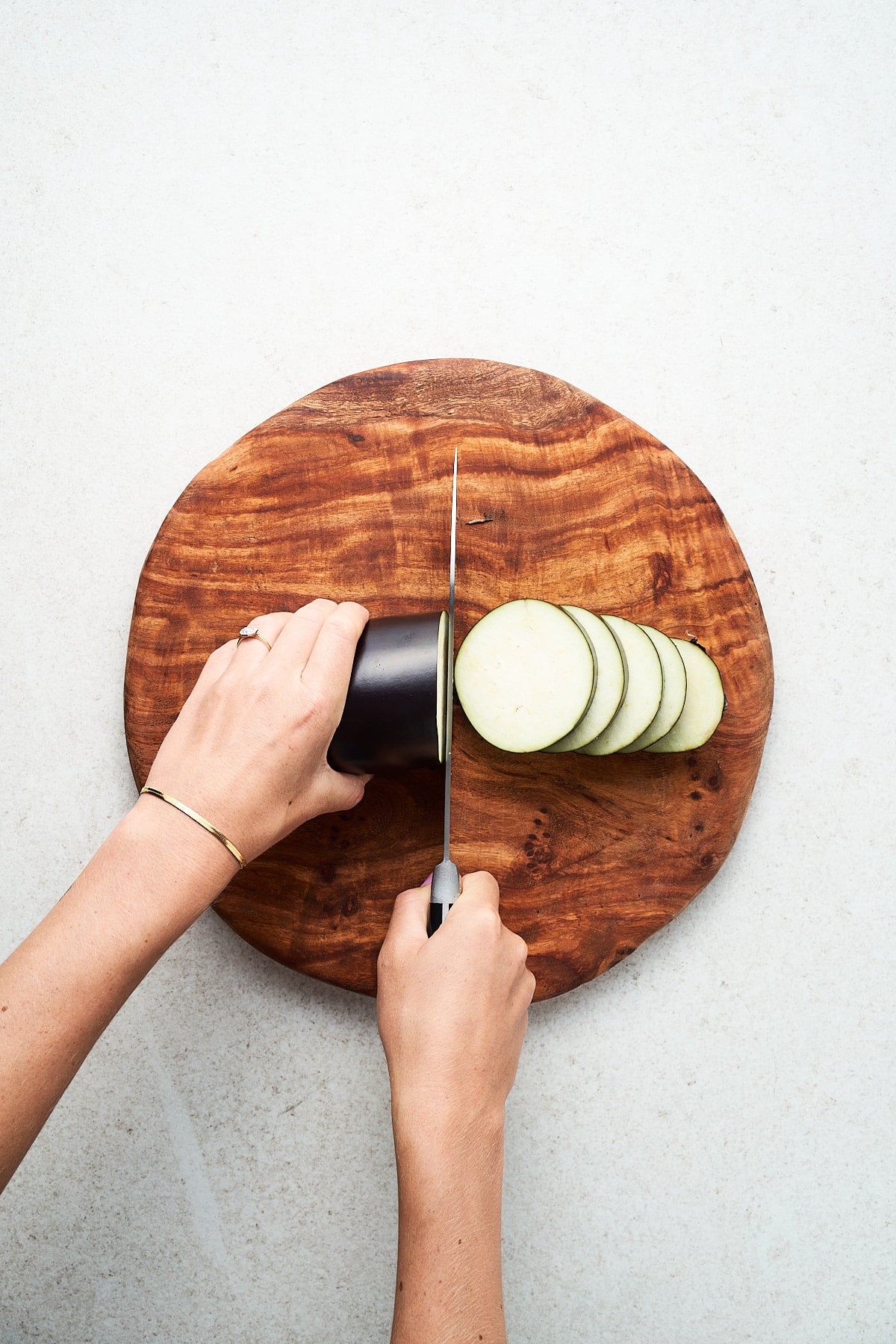
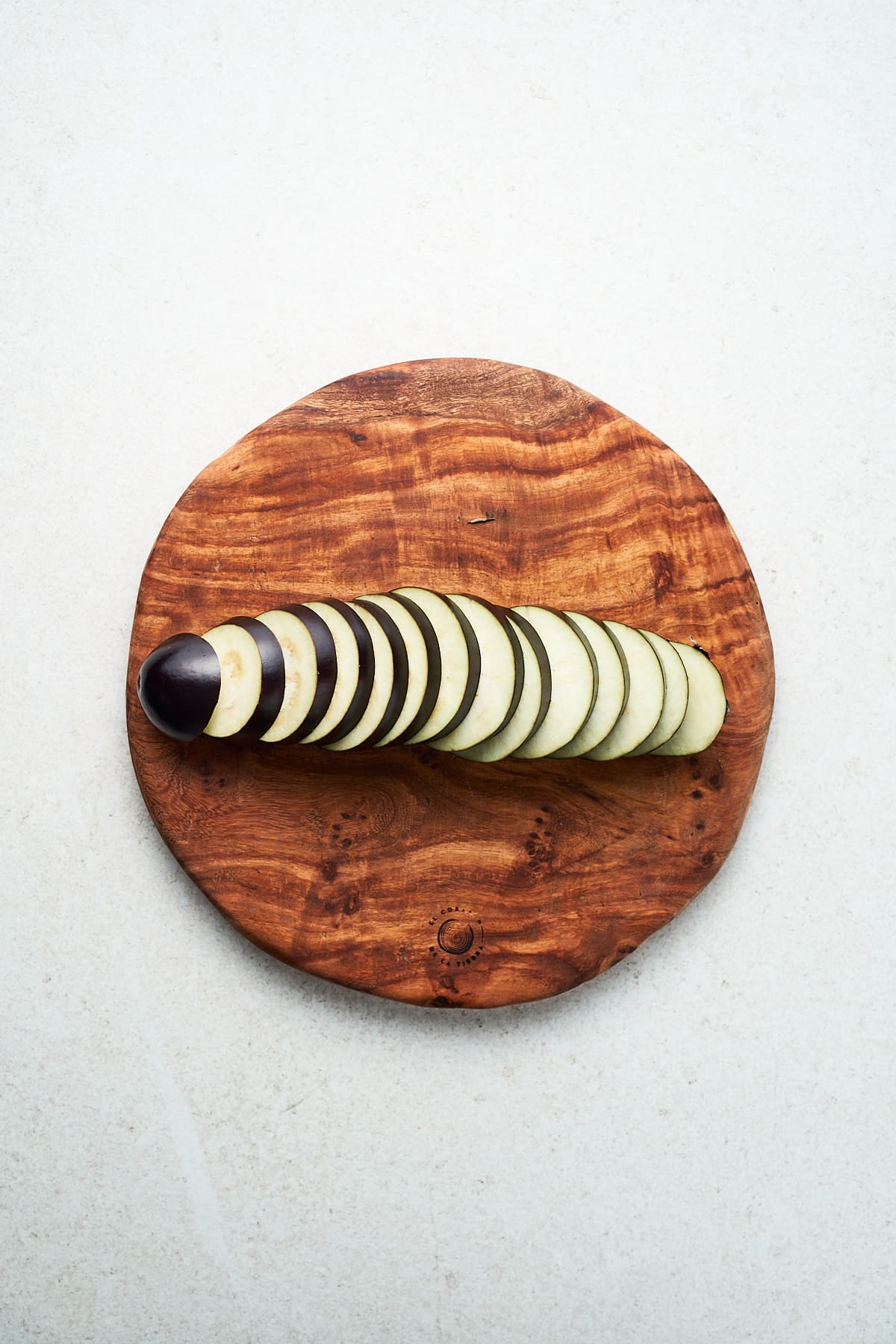
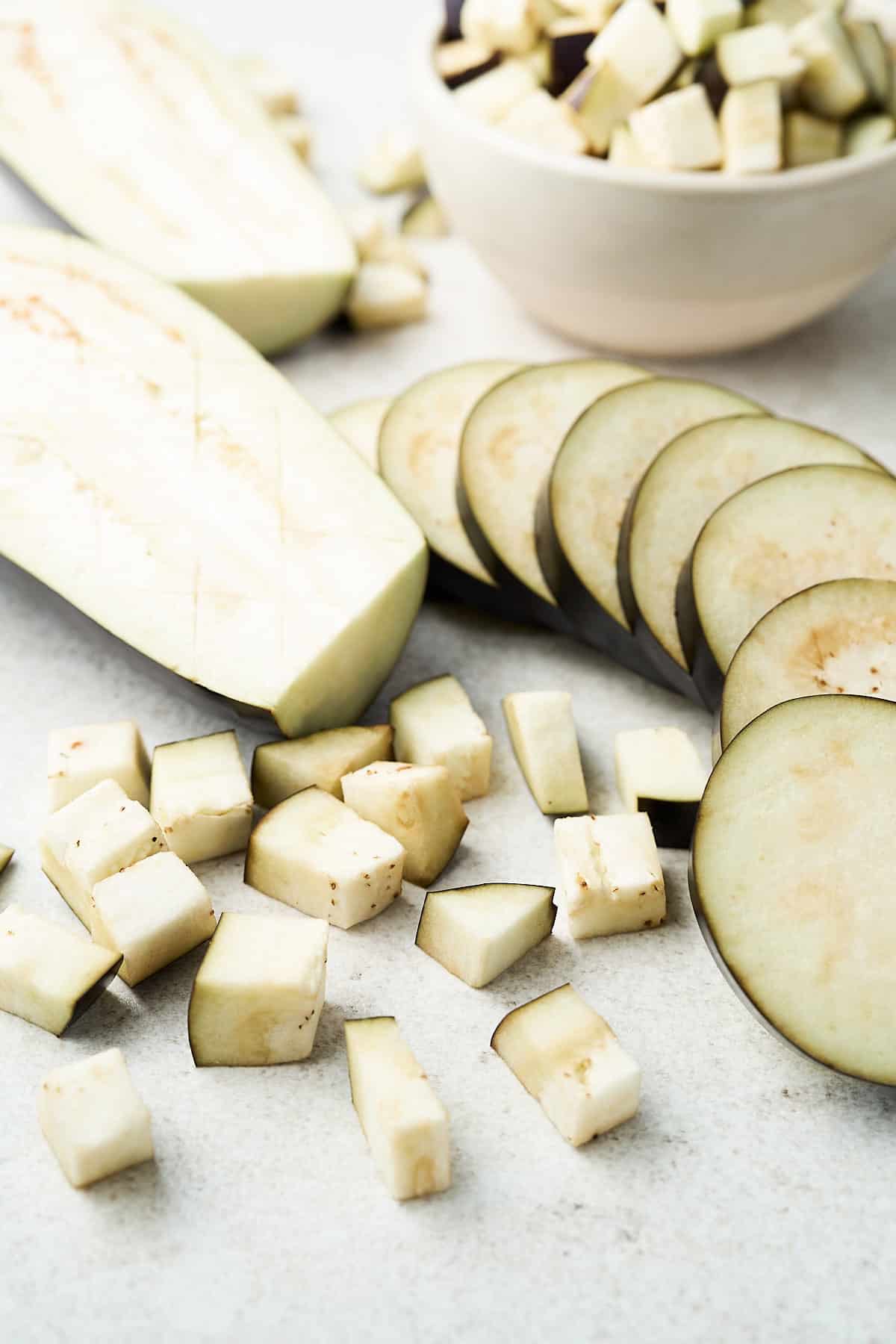
Continue slicing the eggplant into rounds as thick or as thin as you’d like. I generally slice mine into 1/2-inch pieces, but it depends on the recipe. Keep a firm hold on the eggplant while slicing and make sure your fingers are a safe distance away from the knife! Sliced eggplant is perfect in eggplant lasagna or ratatouille!
Cube method
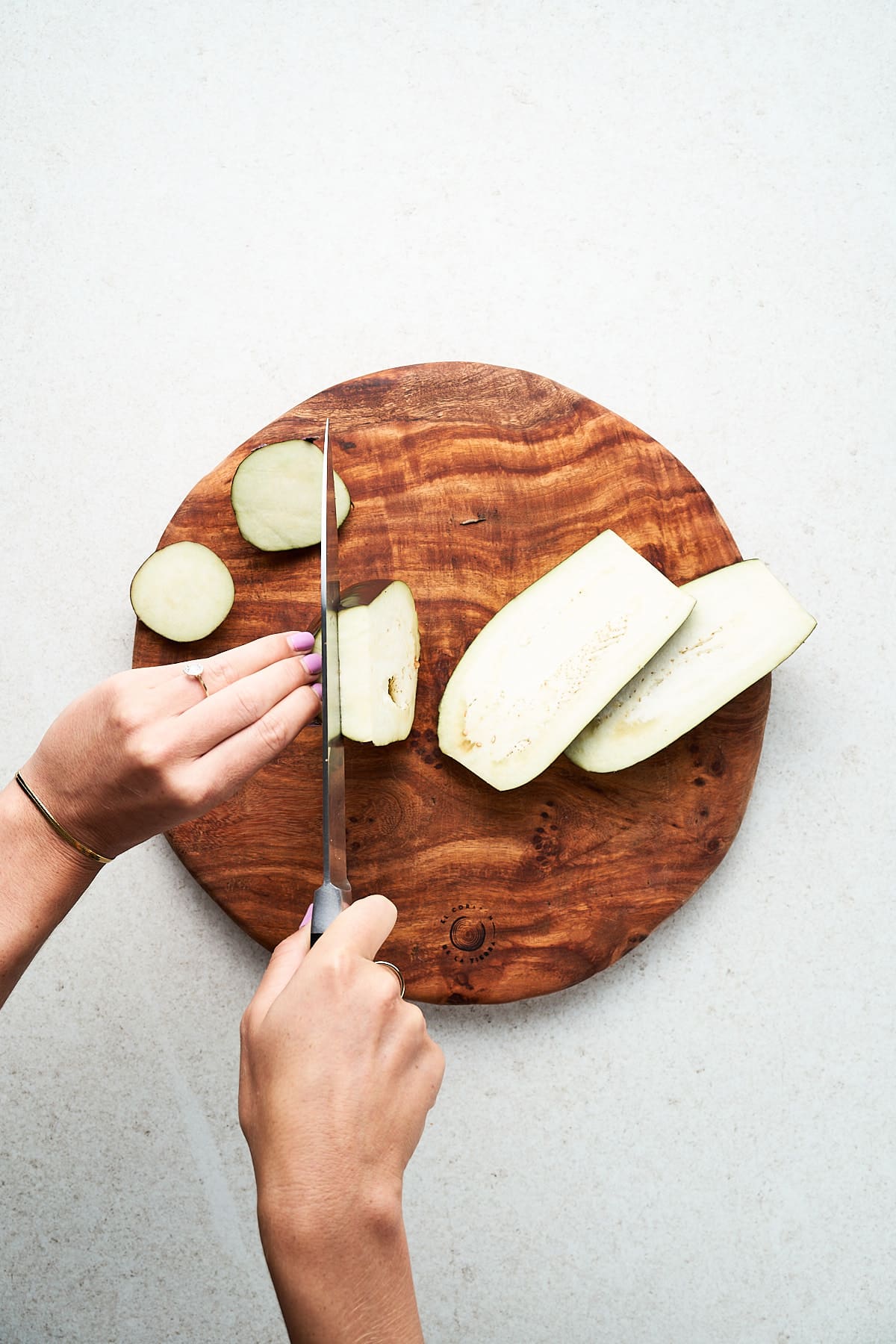
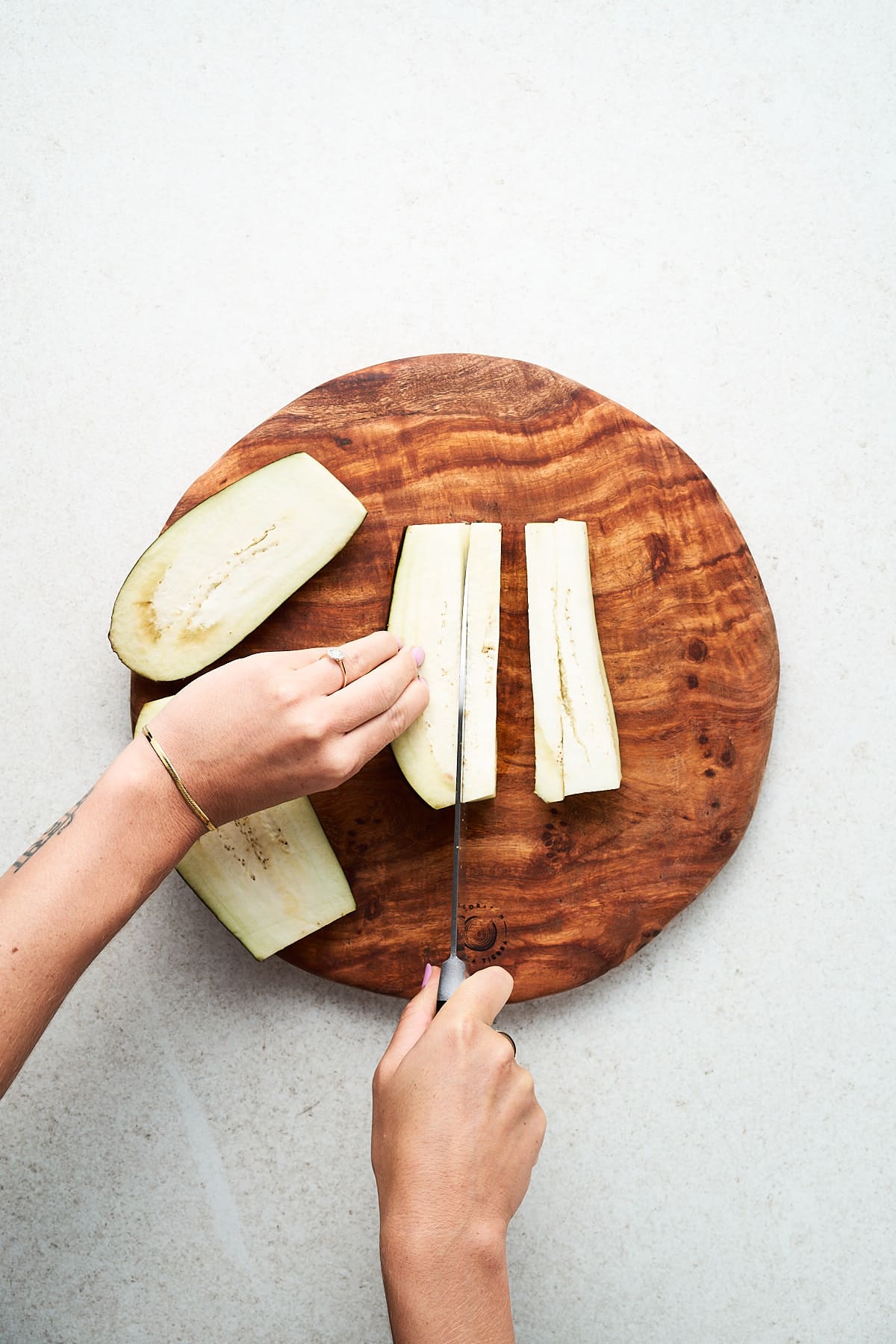
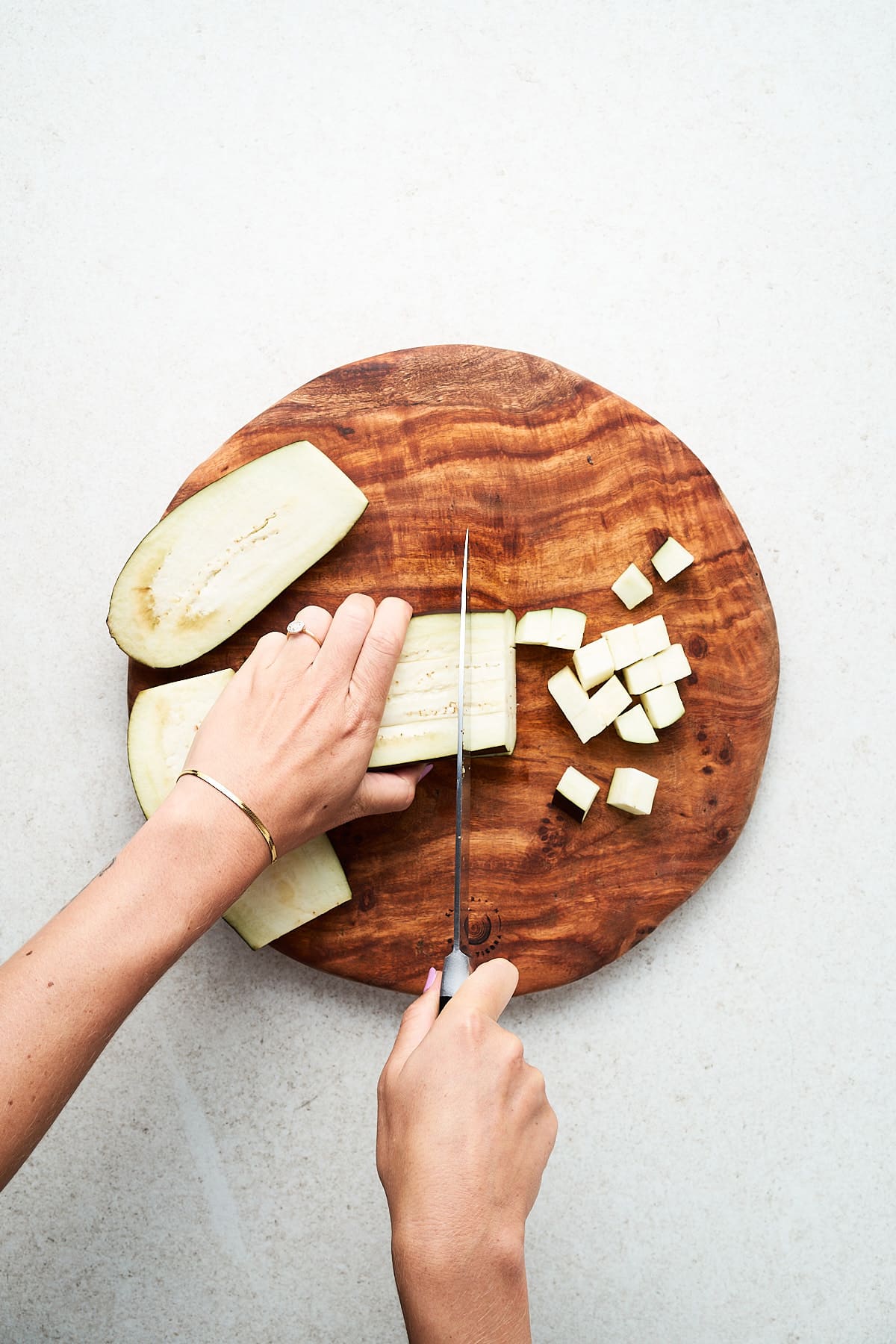
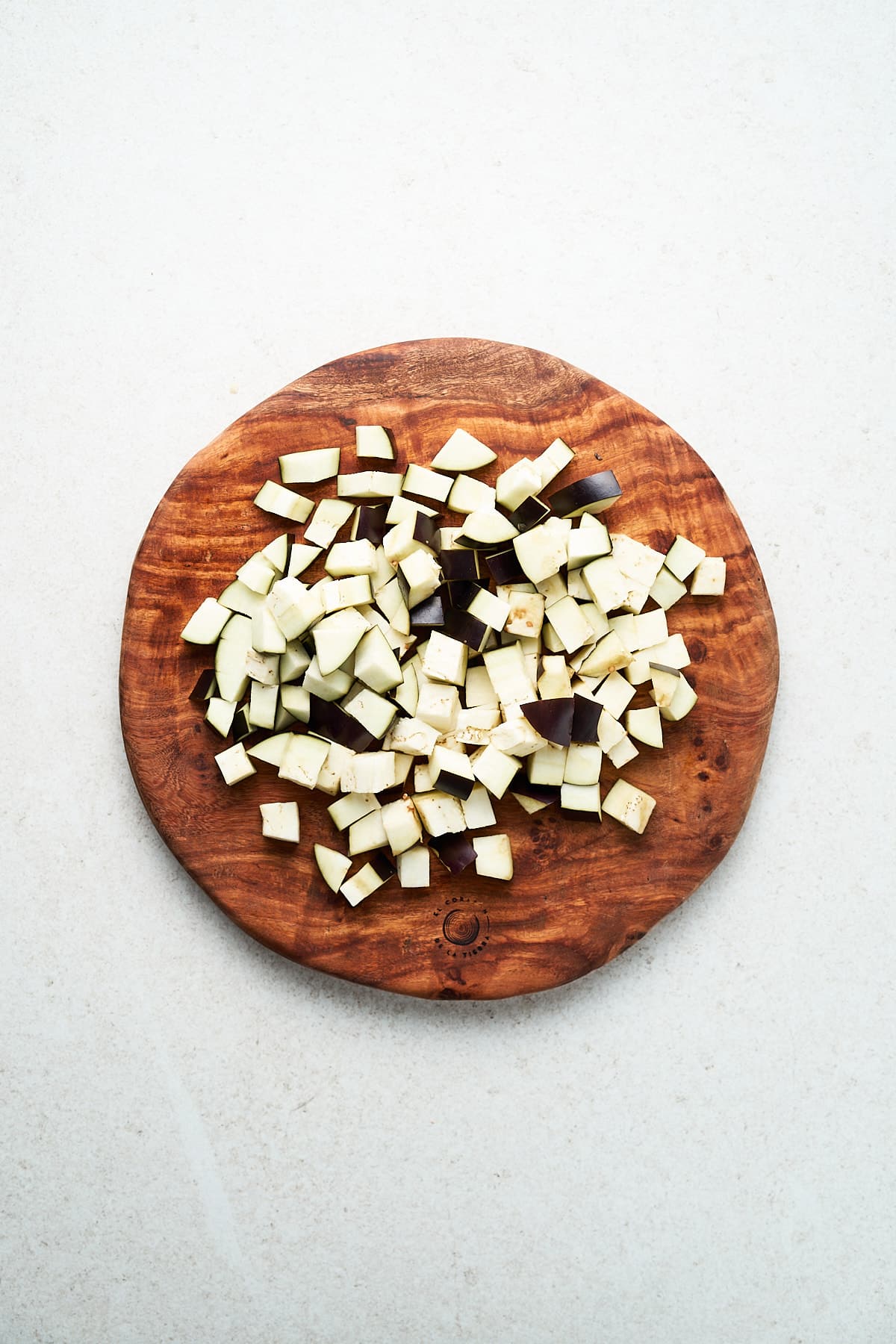
Once the top and bottom pieces are trimmed, stand the eggplant up vertically on your cutting board (see bottom left photo). While firmly grasping one side of the eggplant with your non-dominant hand, slice it lengthwise. You can stop here and use the eggplant sliced lengthwise for a recipe like grilled vegetable sandwiches. If you’d like to continue on and cube it, lay the slices down on your cutting board. Holding one side, cut the slices into even strips. Rotate the slices 90 degrees, then cut them into cubes of your desired size. Cubed eggplant is great in eggplant curry, or simply as sautéed eggplant or air fryer eggplant!
Score method
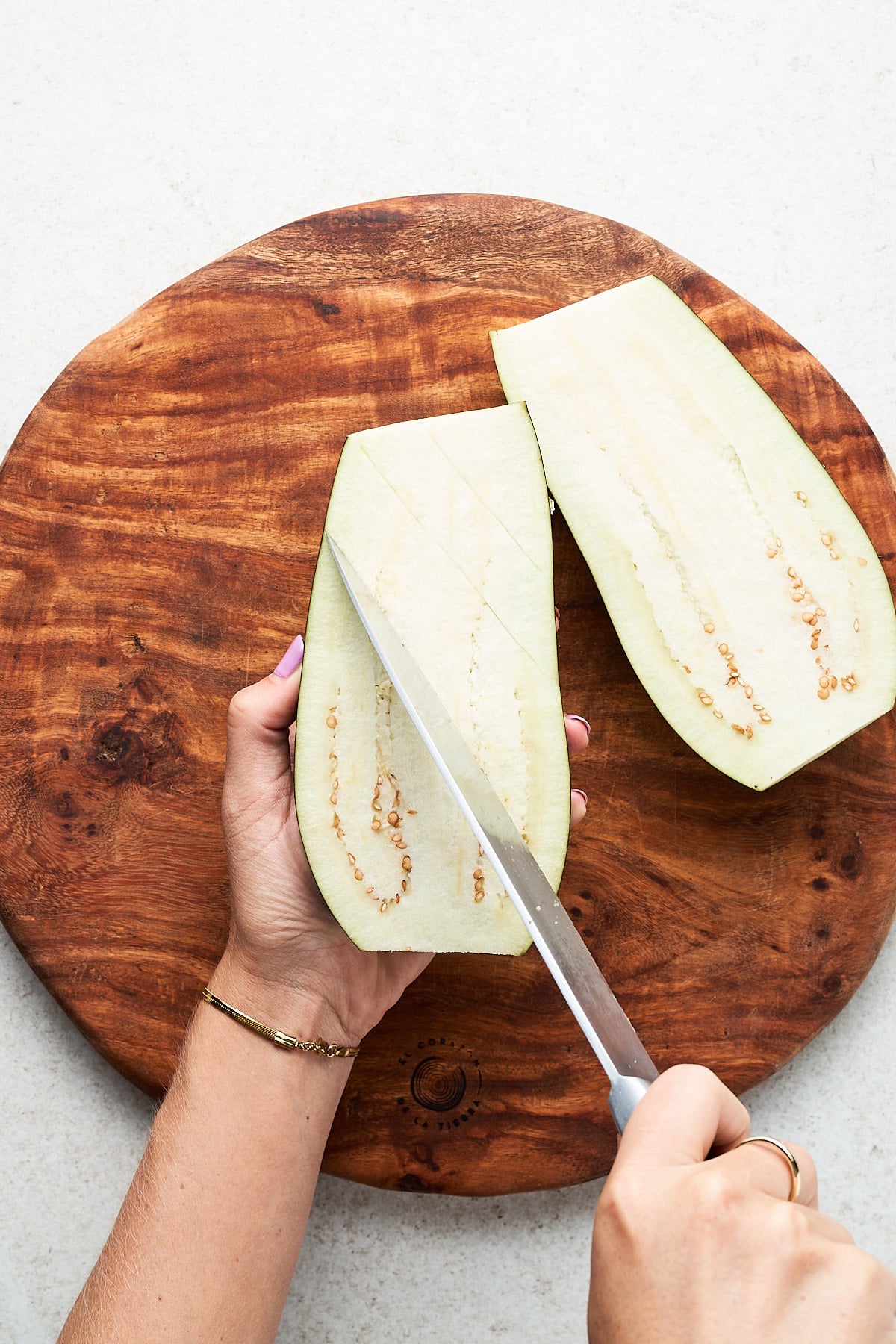
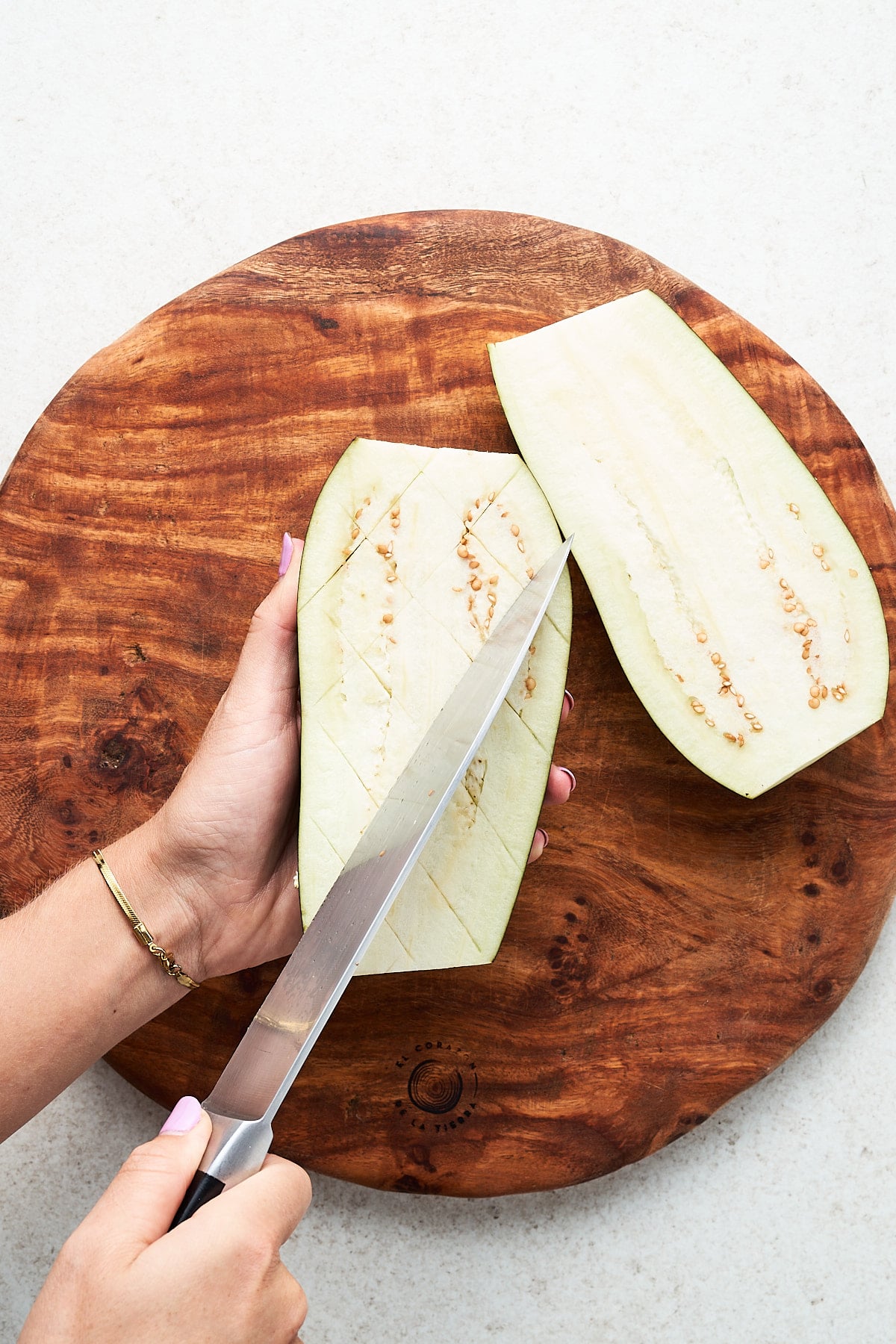
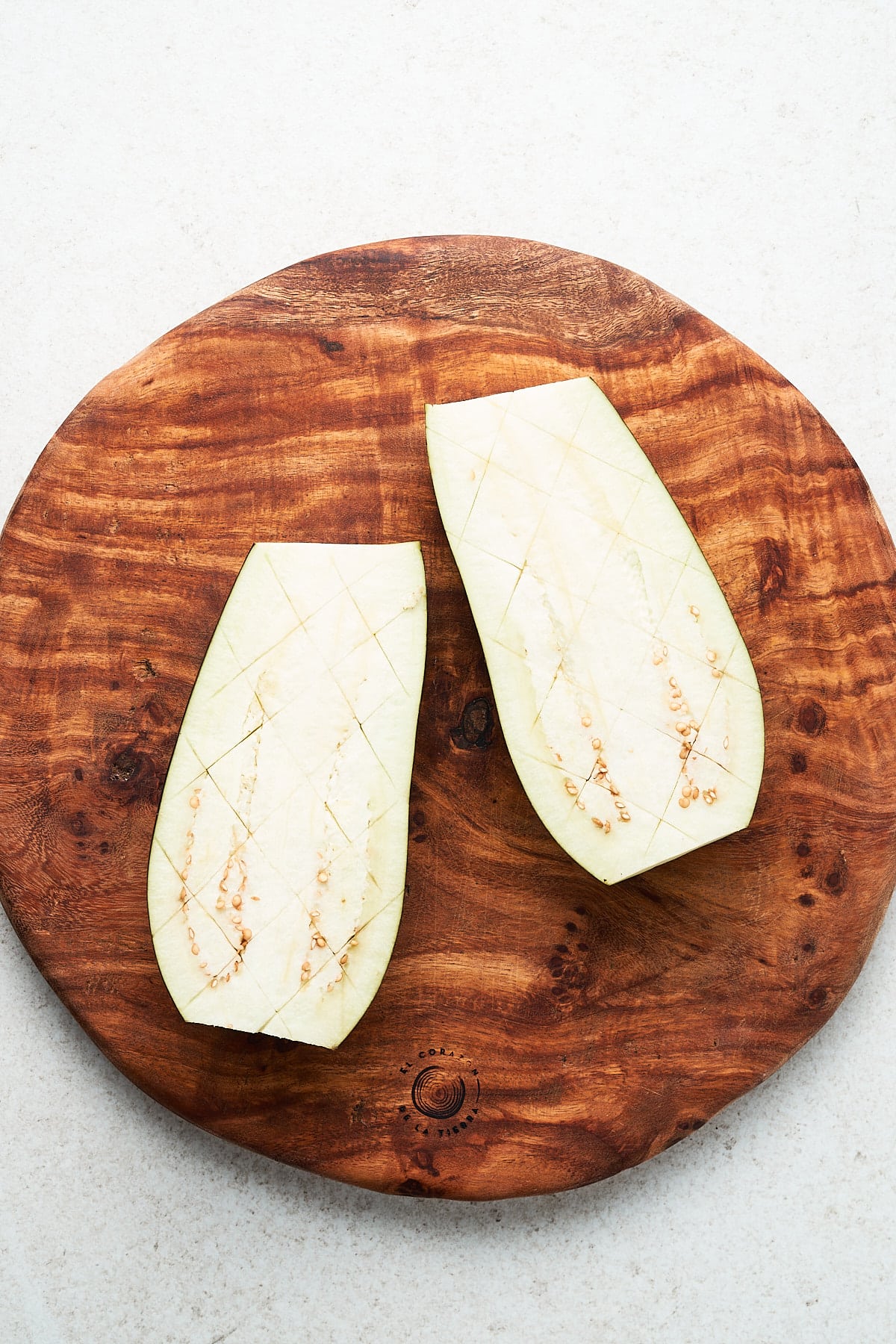
Cut the whole eggplant in half lengthwise. With the cut side facing up, lightly slice on a diagonal all the way along the eggplant. Slice in a diagonal direction the other way as well, making sure to only go about 1/8-inch deep. Depending on the size, either grasp the eggplant in the palm of your non-dominant hand or steady it on your cutting board. Scored eggplant is great for roasting eggplant, because it helps the heat and flavors sink deep into the eggplant. Try it in these Eggplant Meatballs or this Roasted Greek Eggplant Dip!
Storing Cut Eggplant
Cut your eggplant, but don’t need to use it all? No problem! Here are a few storage tips to keep it looking fresh:
Fridge: Once eggplants are cut, store them in the fridge in an airtight container, and they’ll last up to 4 days. Freezer: Before you freeze eggplant, it’s best to cook it beforehand. The high water content makes it suboptimal to freeze when it’s raw. Bake it first, then freeze it in freezer-safe bags for the best storage technique.
Tip: Combat your eggplants from turning brown by spraying all of the pieces with lemon juice!
How to Use Eggplant
After you learn how to cut eggplant, you need to decide which method works best for the dish you are preparing. Here are a few tips on which style to use and when:
Cubed: Use cubed eggplant in recipes like eggplant parmesan poppers, eggplant tacos, or eggplant curry. Rounds: Typically, eggplant rounds are used in recipes like eggplant lasagna. Sliced: Sliced eggplants are perfect for pressed eggplant sandwiches. Scored: Score your eggplant and use it in recipes like roasted eggplant with mint sauce.
How to prevent a bitter eggplant
Some varieties of eggplants are more bitter than others. The best way to prevent any bitter flavors from coming through is to salt your eggplant. Once it’s cut, add the slices, cubes, or scored halves to a colander. Sprinkle with a generous amount of salt and leave it to sit for a few minutes. The salt not only draws out excess water, but it also creates a more pleasant taste once the eggplant is cooked.