Romaine lettuce is a crisp, nutrient-rich leafy green that forms the base of many salads (hello Caesar), wraps, tacos, sandwiches, and other dishes. Knowing how to cut romaine lettuce properly not only improves the look of your meals but also ensures that you can easily incorporate this healthy vegetable into your diet. Romaine lettuce is high in vitamins C and K, both of which are important for a healthy heart! Find more health benefits and fun facts in our romaine lettuce 101 post. In the steps below, you’ll find some practical tips and tricks on how to properly cut, wash, and dry romaine lettuce.
How to cut romaine lettuce
Before cutting your romaine lettuce head, have a good look at the leaves. You may want to remove the very outer ones that look super wilted and blemished. Once you have those out of the way, it’s time to move on to the cutting!
Prepare the lettuce head
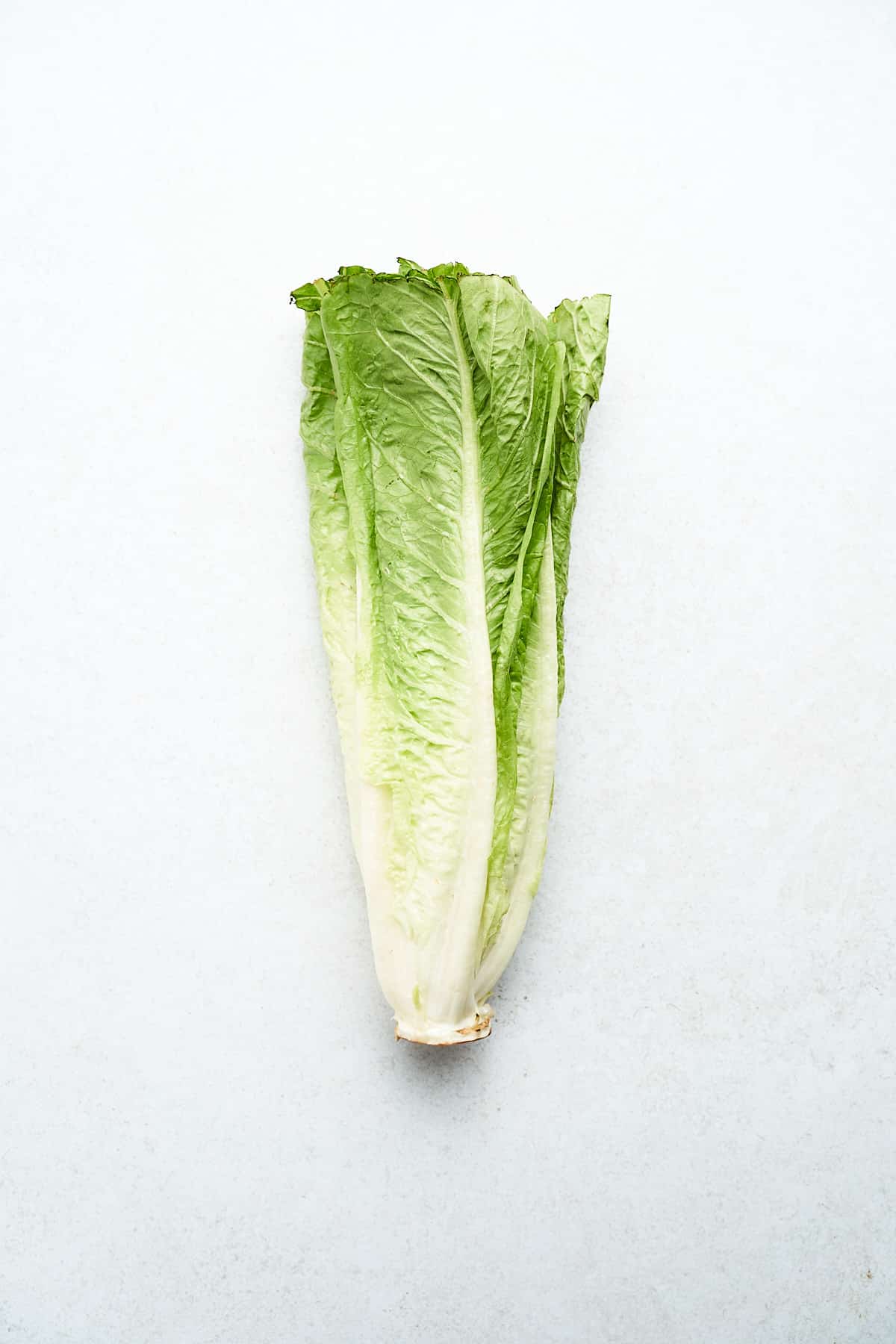
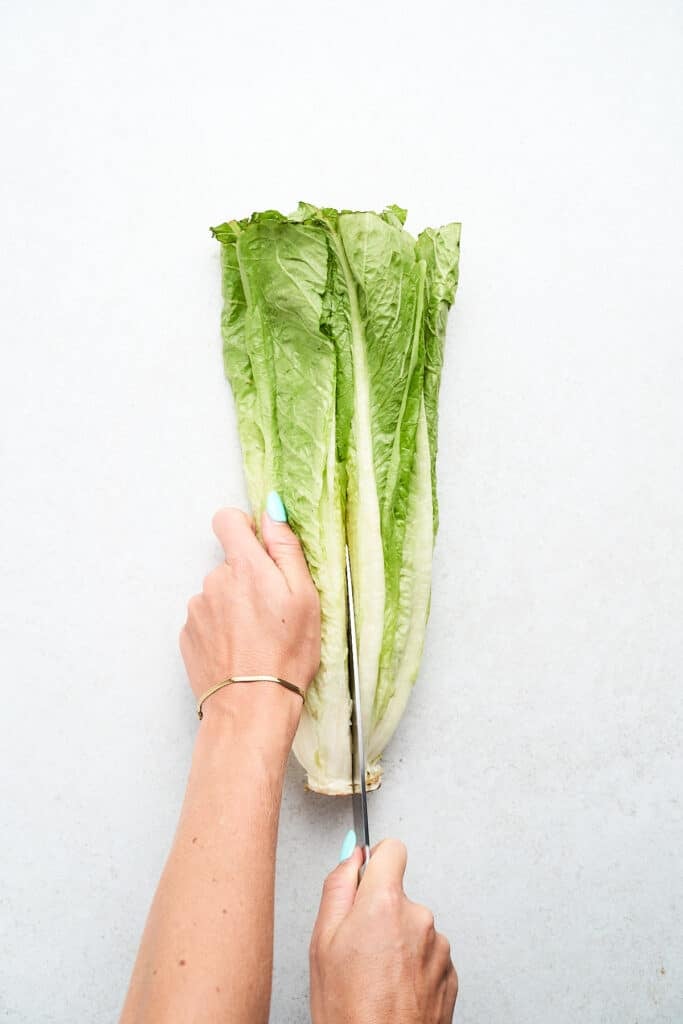
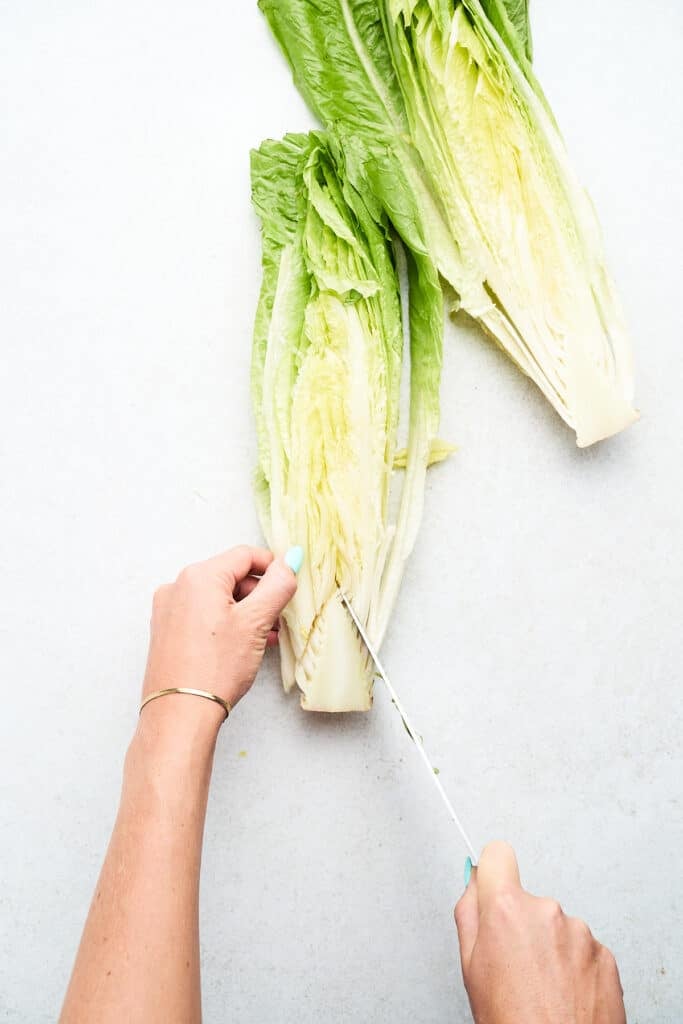
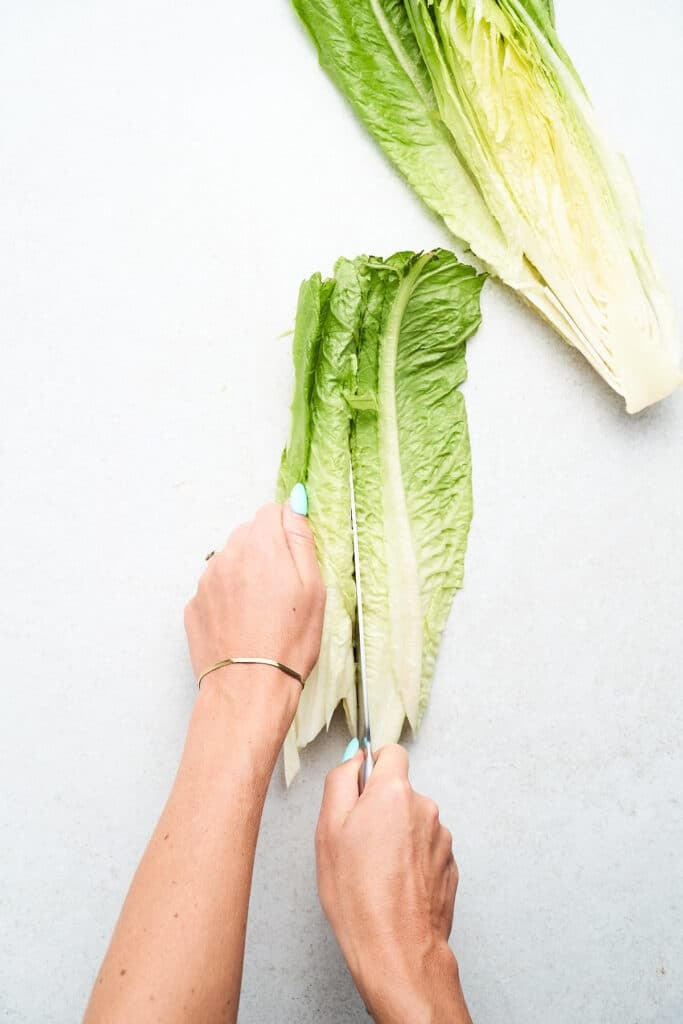
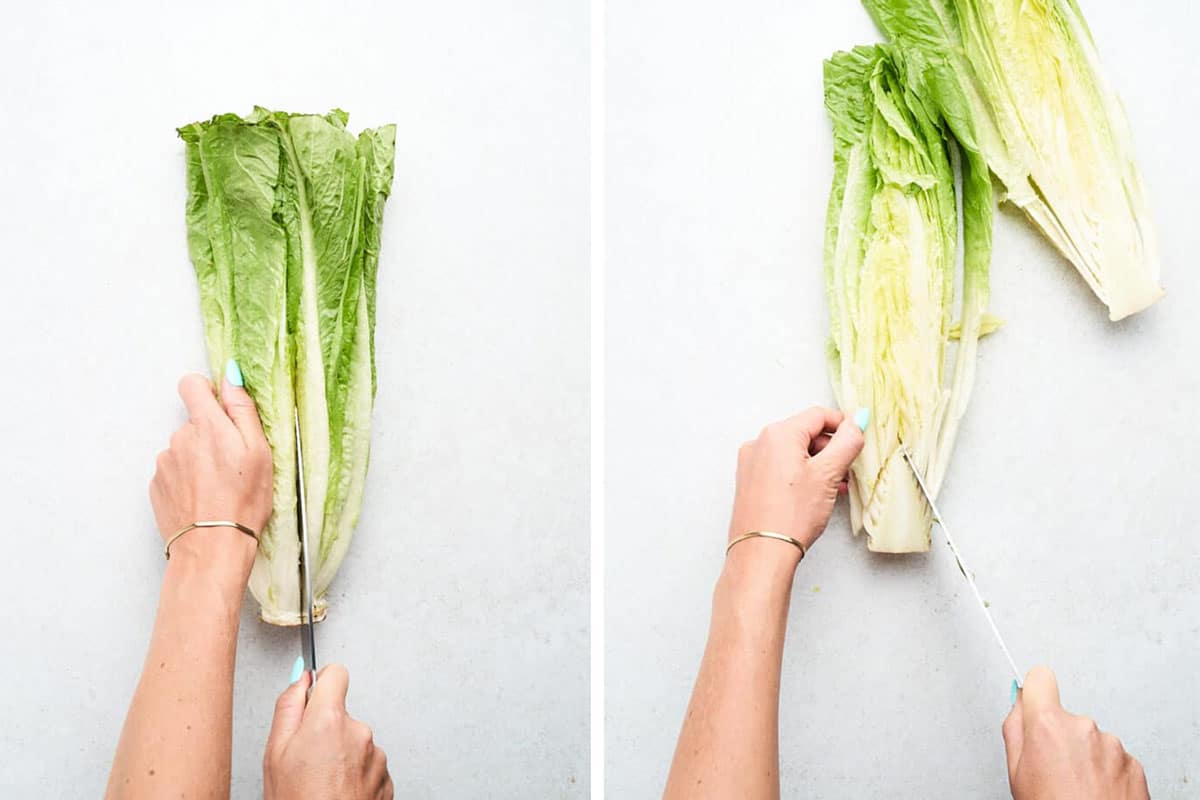
Place the romaine lettuce on a cutting board with the stem end facing you. Slice the lettuce head in half lengthwise, then lay each half facing up on the cutting board. Make diagonal cuts to remove the core, then turn both halves to face down.
Large strips
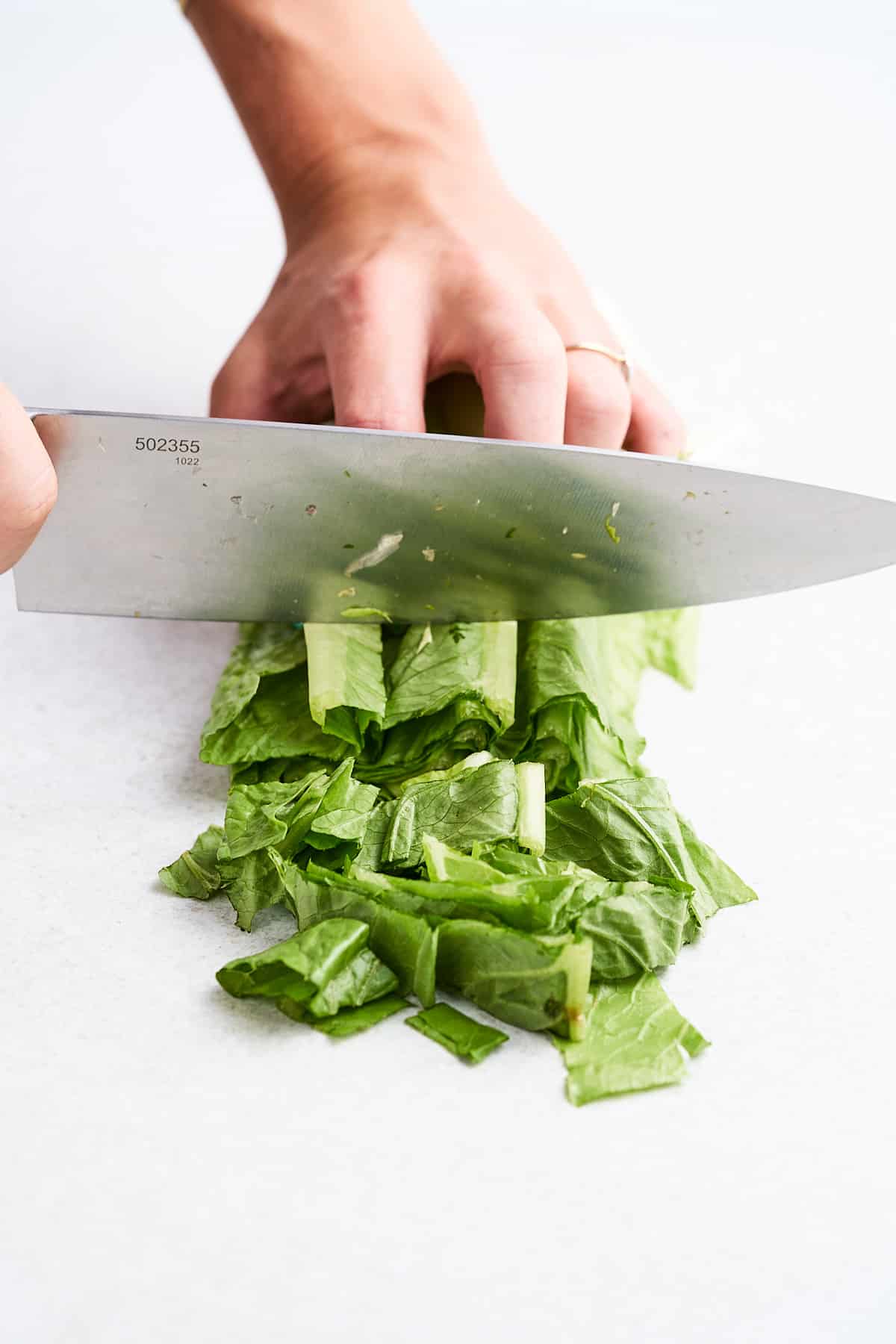
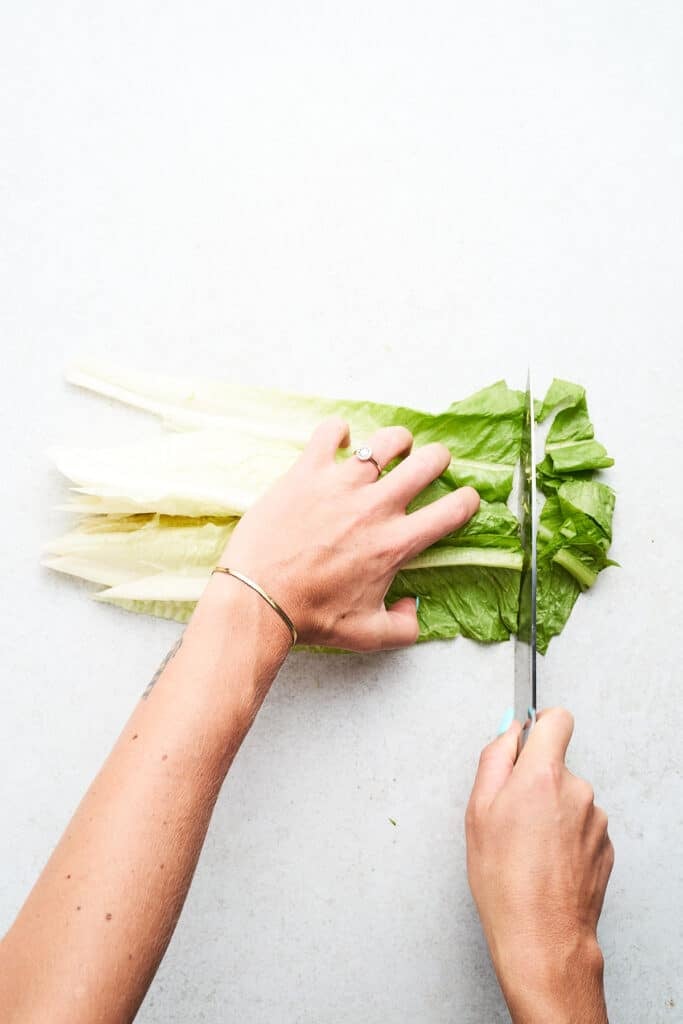
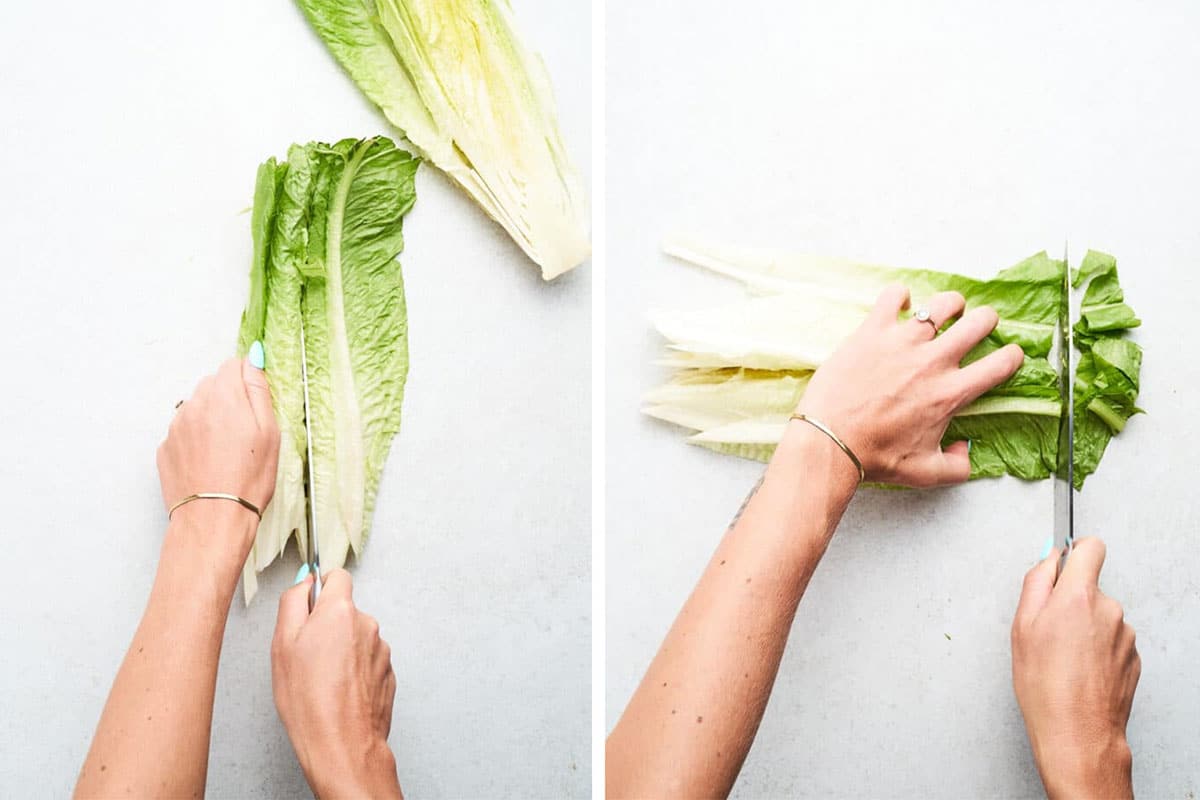
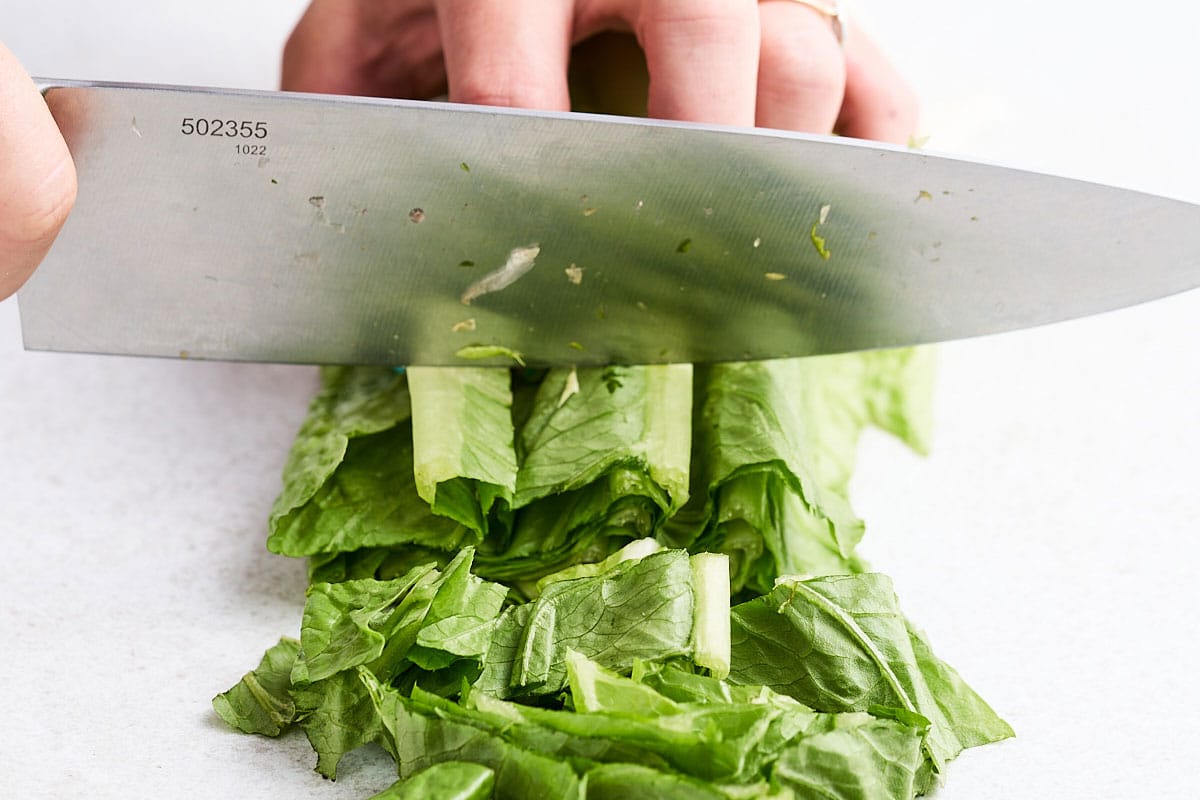
Cut each half lengthwise one more time so you end up with quarters. Rotate and slice the lettuce crosswise into thick strips, about 1/2-inch wide. Use large romaine lettuce strips for Caesar salad, sandwiches, etc.
Shredded
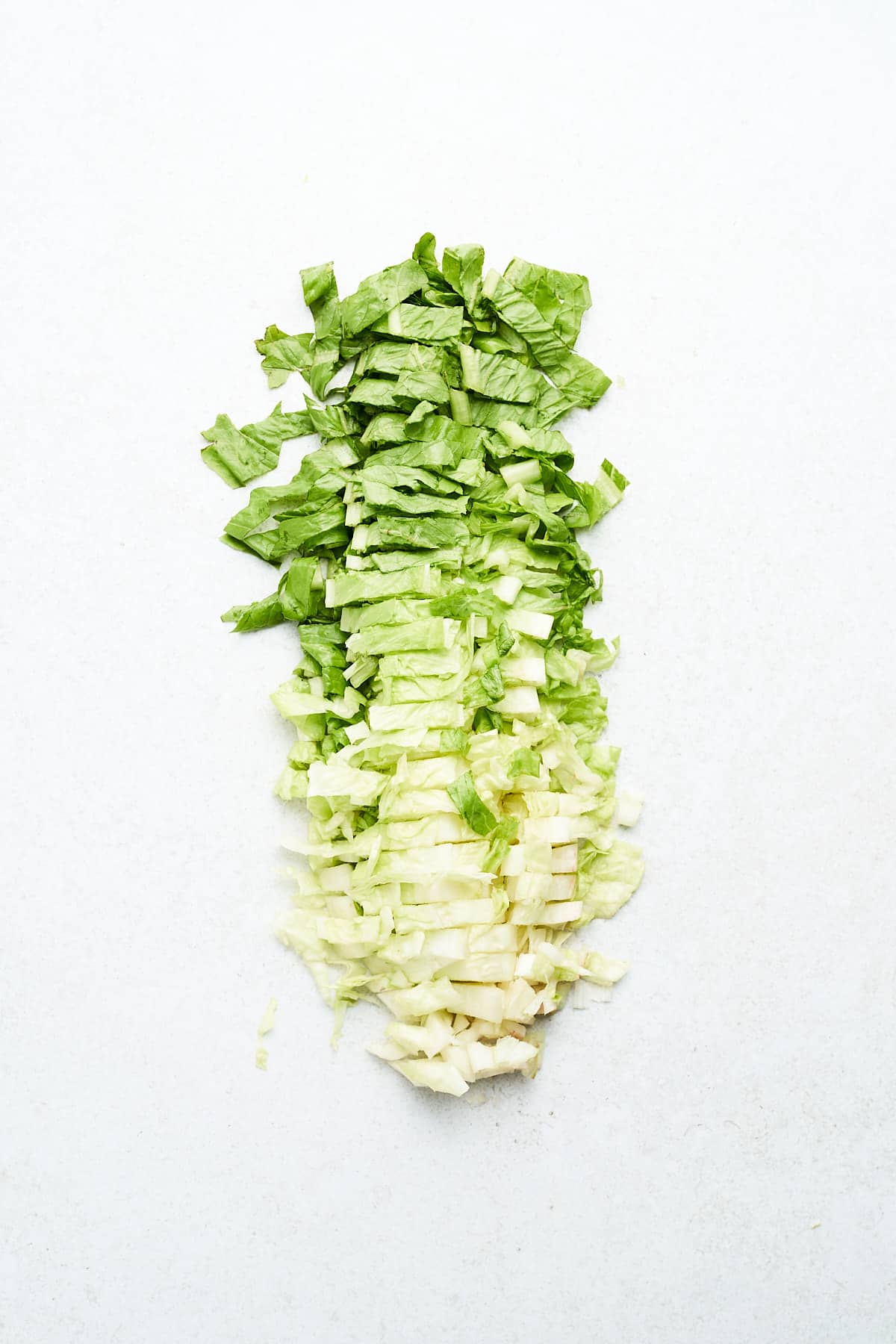
Cut each half lengthwise two more times into thirds. Rotate and slice the lettuce crosswise into thin strips, about ⅛-inch wide. Use shredded romaine lettuce for taco bowls, enchiladas, wraps, etc.
Washing romaine lettuce
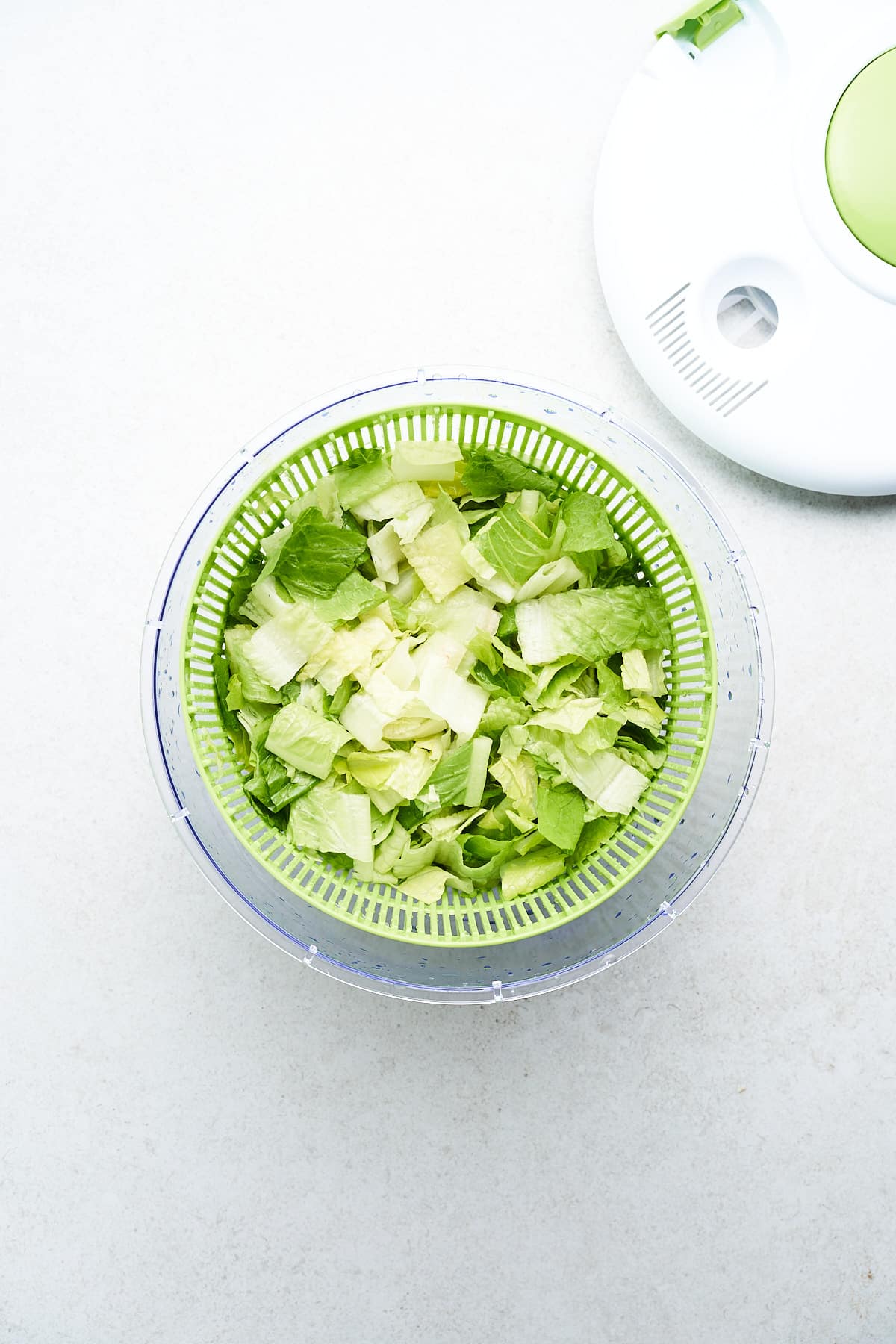
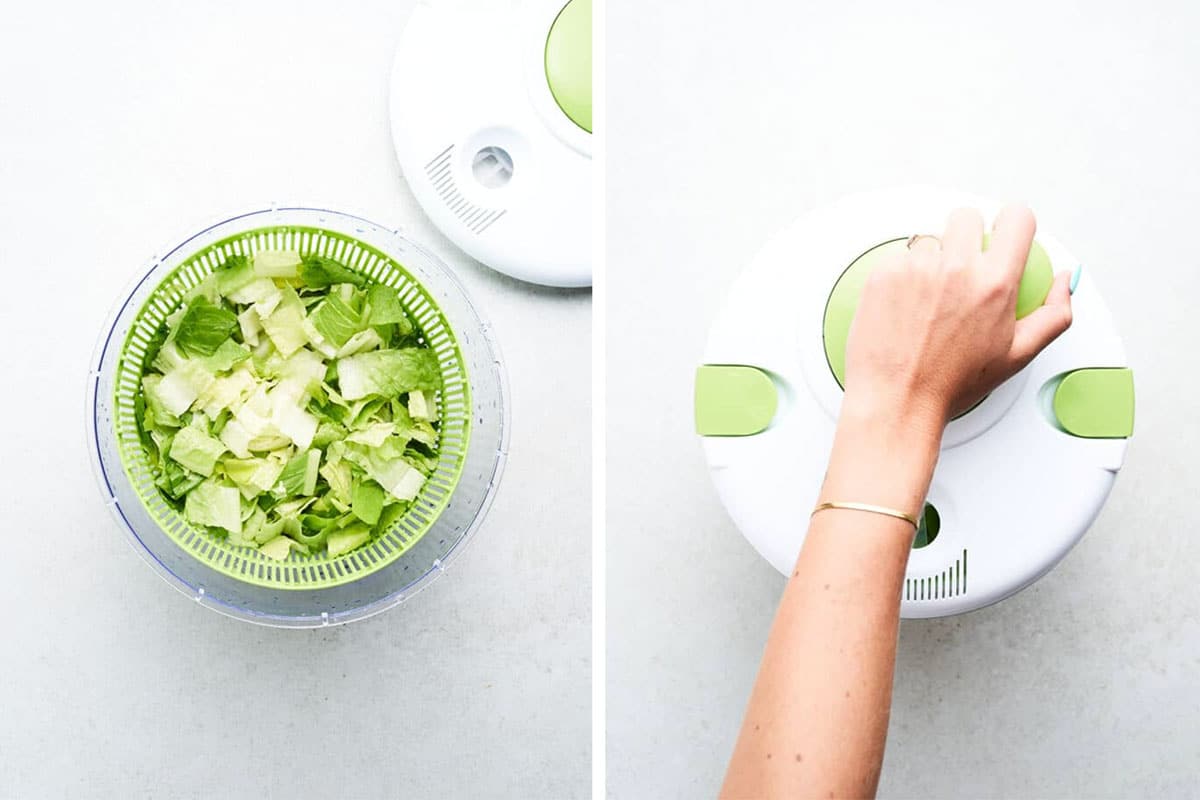
After cutting romaine lettuce, it’s essential to wash it thoroughly to remove dirt, debris, and any tiny little bugs. Follow these steps to clean your lettuce:
Choosing the perfect romaine lettuce
When shopping for romaine lettuce, keep these tips in mind to ensure you’re picking out high-quality produce:
Color: Look for vibrant green leaves with little-to-no signs of wilting or browning. Freshness: Fresh romaine lettuce should have crisp, firm leaves, that snap when they’re bent. Avoid anything that’s wilted or limp. Damage: Skip it if you see any holes, tears, or sliminess. Anything like this can indicate insect damage or decay. Base: Check for a clean-cut and healthy-looking base. Avoid anything that’s dark or discolored.
Storing romaine lettuce
Whole lettuce: To keep your romaine lettuce fresh, store it in a perforated plastic bag in the crisper drawer in the fridge. Another option is to wrap the lettuce in a damp paper towel and place it in a plastic bag or container. Using either of these techniques, your romaine lettuce should last for up to 10 days. Cut lettuce: Once your lettuce is cut, layer an airtight container with a paper towel and set the lettuce on top without packing it too much. Add another layer of paper towel on top, which will help absorb excess moisture. Seal the container, and it should stay fresh for about 1-2 days.
Tips for cutting romaine lettuce
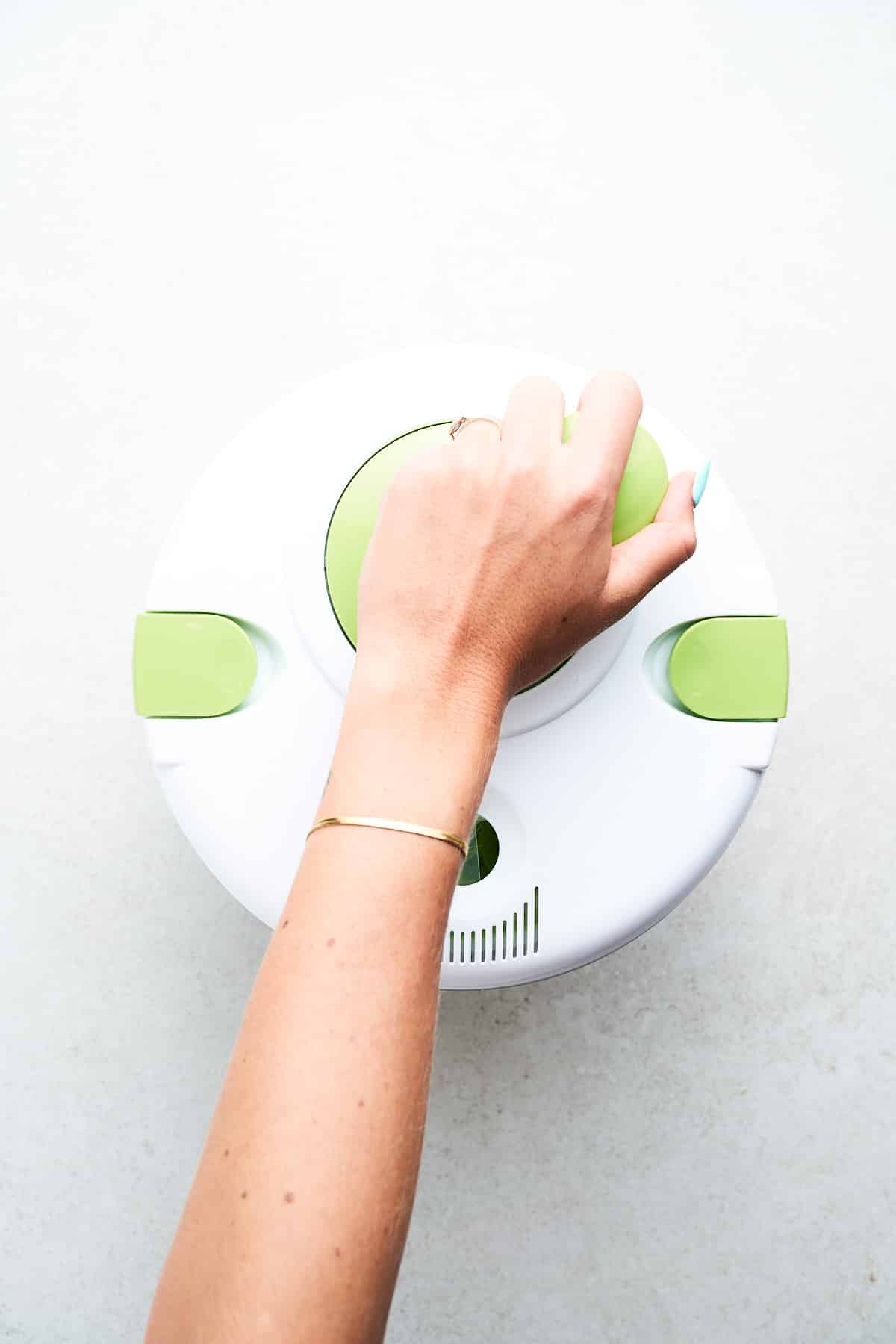
Wash it thoroughly: Don’t skip washing and rinsing the lettuce in cold water to remove dirt and debris. Dry your lettuce: Make sure the lettuce is completely dry before adding it to your recipe to prevent any sogginess. Use a sharp knife: A sharp knife will ensure clean and even cuts, improving the appearance of your lettuce and reducing the risk of bruising. Cut just before use: Only cut romaine lettuce right before you’re going to use it. This helps maintain a fresh and crispy texture.