Shallots are a part of the allium family, which is closely related to garlic, green onions, chives, and onions. Unlike most types of onions that grow individually, shallots grow in bunches, much like garlic. They’re often used in recipes to impart a mild onion and soft garlic flavor. Just like onions or garlic, they can be used raw or cooked. You may find them sliced, roasted whole, sautéed with vegetables, or minced to give salad dressings a little oomph. Whichever way you decide to use shallots, you should know how to separate them, remove the skin, and implement the preferred cutting techniques.
How to cut shallots
So, you want to know how to cut shallots without crying, right?! Stay tuned for instructions on dicing, mincing, slicing, and julienning them. They really do bring a whole new meaning to the saying “good things come in small packages!”
trim & peel
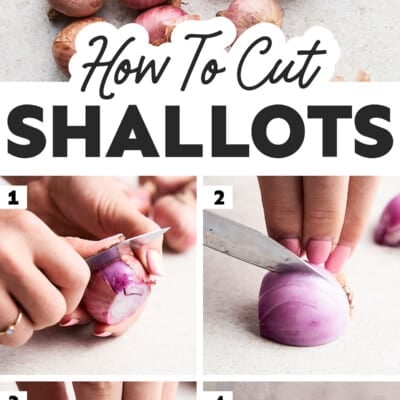
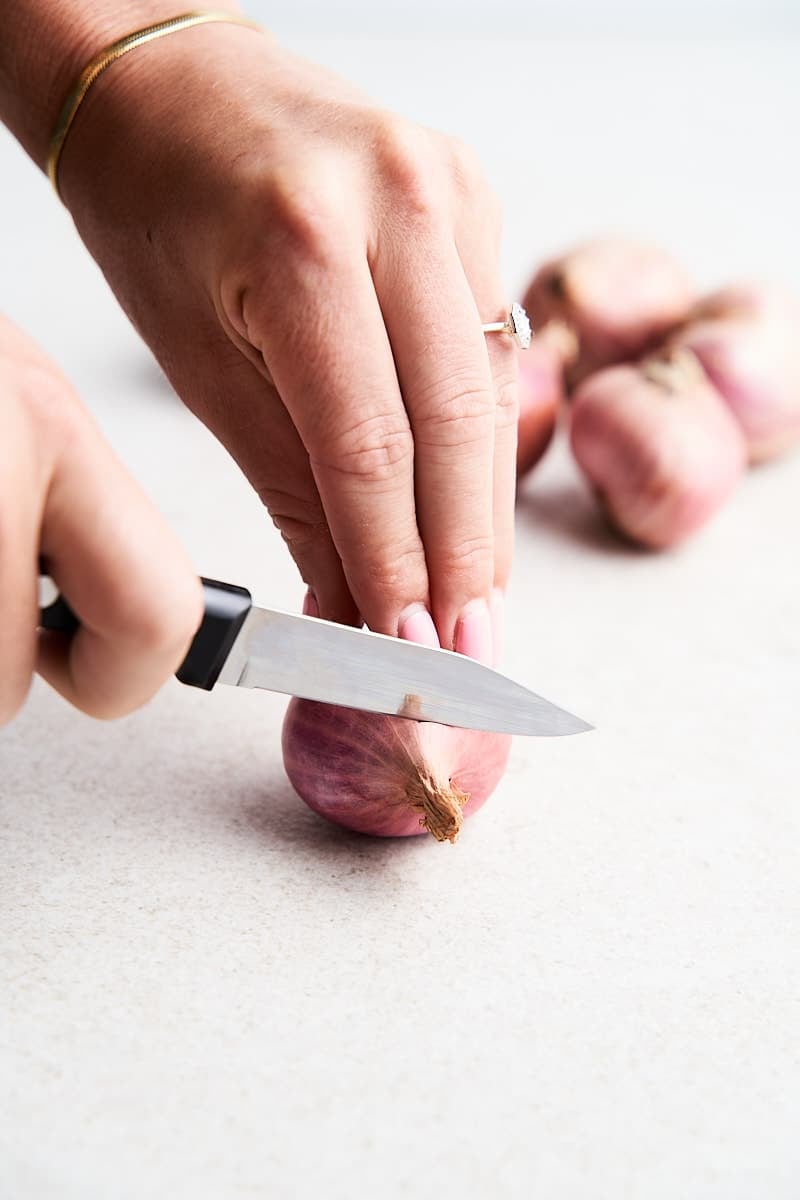
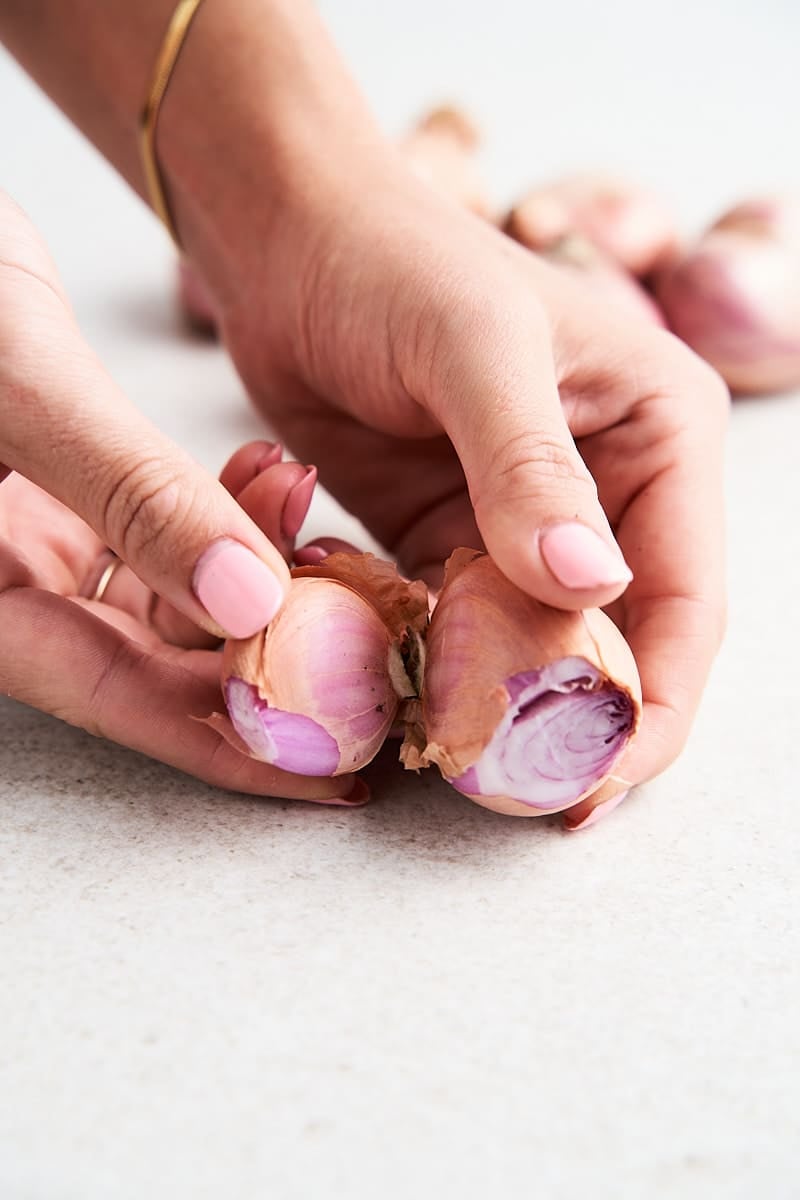
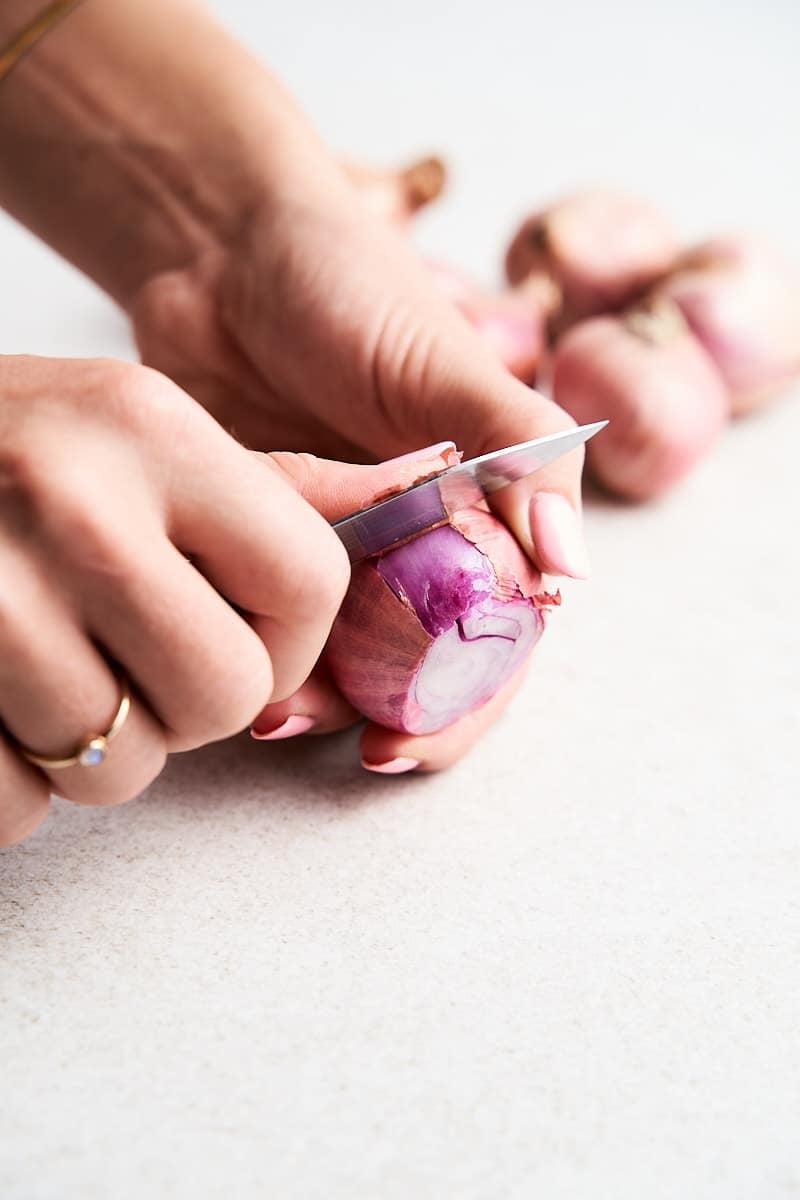
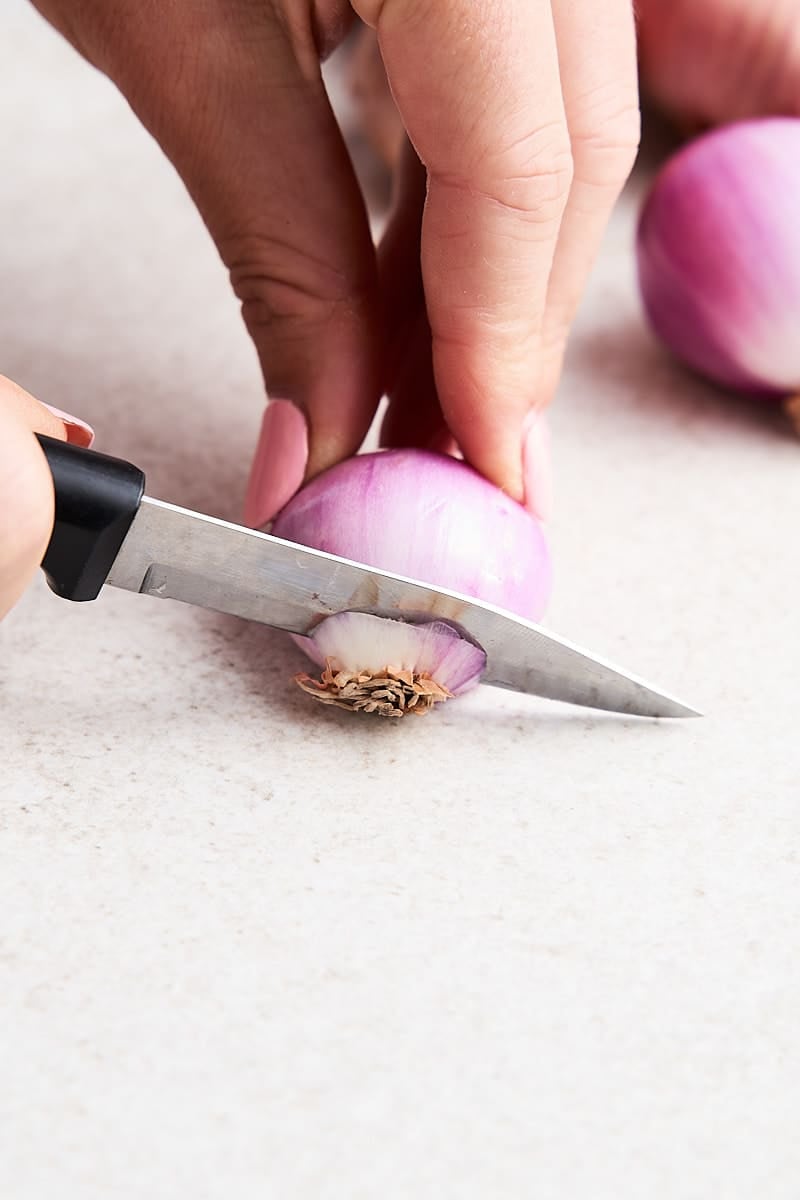
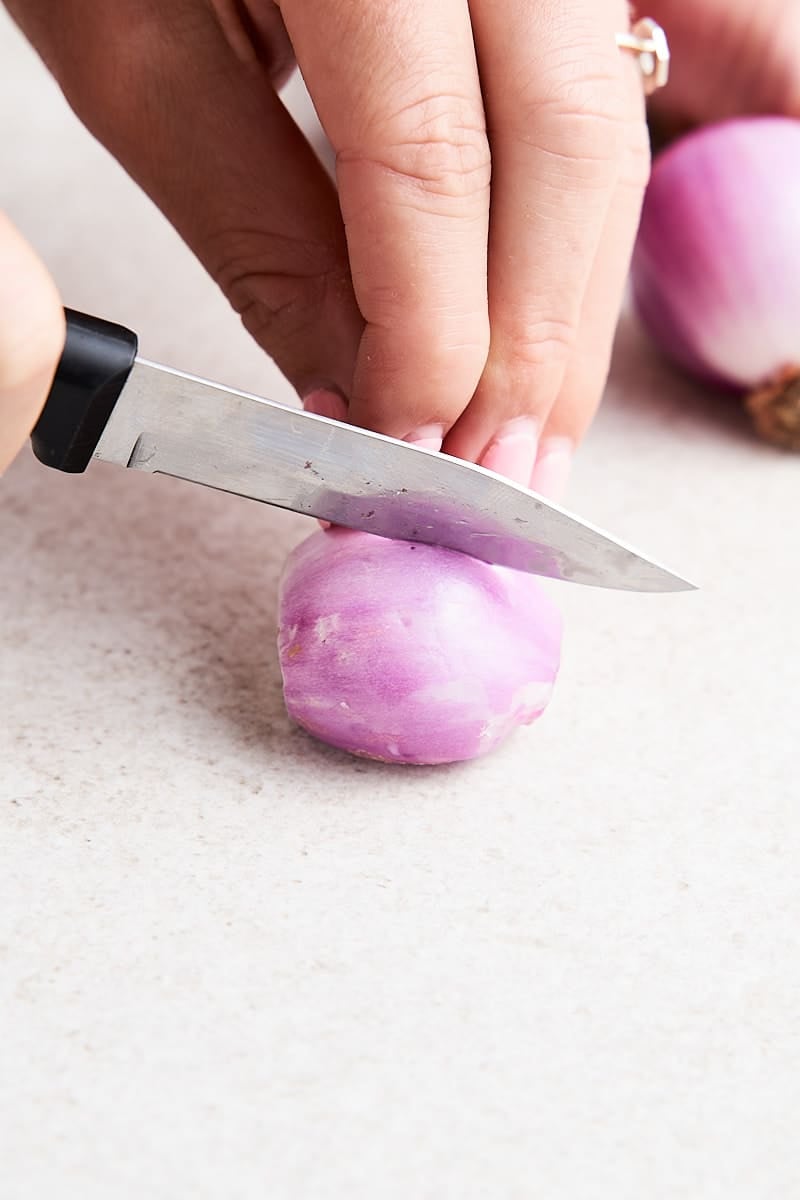
With a paring knife or utility knife, cut the top off of the shallot. Make sure to leave the root end intact (just like you would an onion) as this will help prevent the layers from slipping all around. Using the paring knife, make a vertical score down the shallot and peel the papery skin away. Then, break the bulb into separate pieces — there are usually two per shallot.
Option 1: Sliced
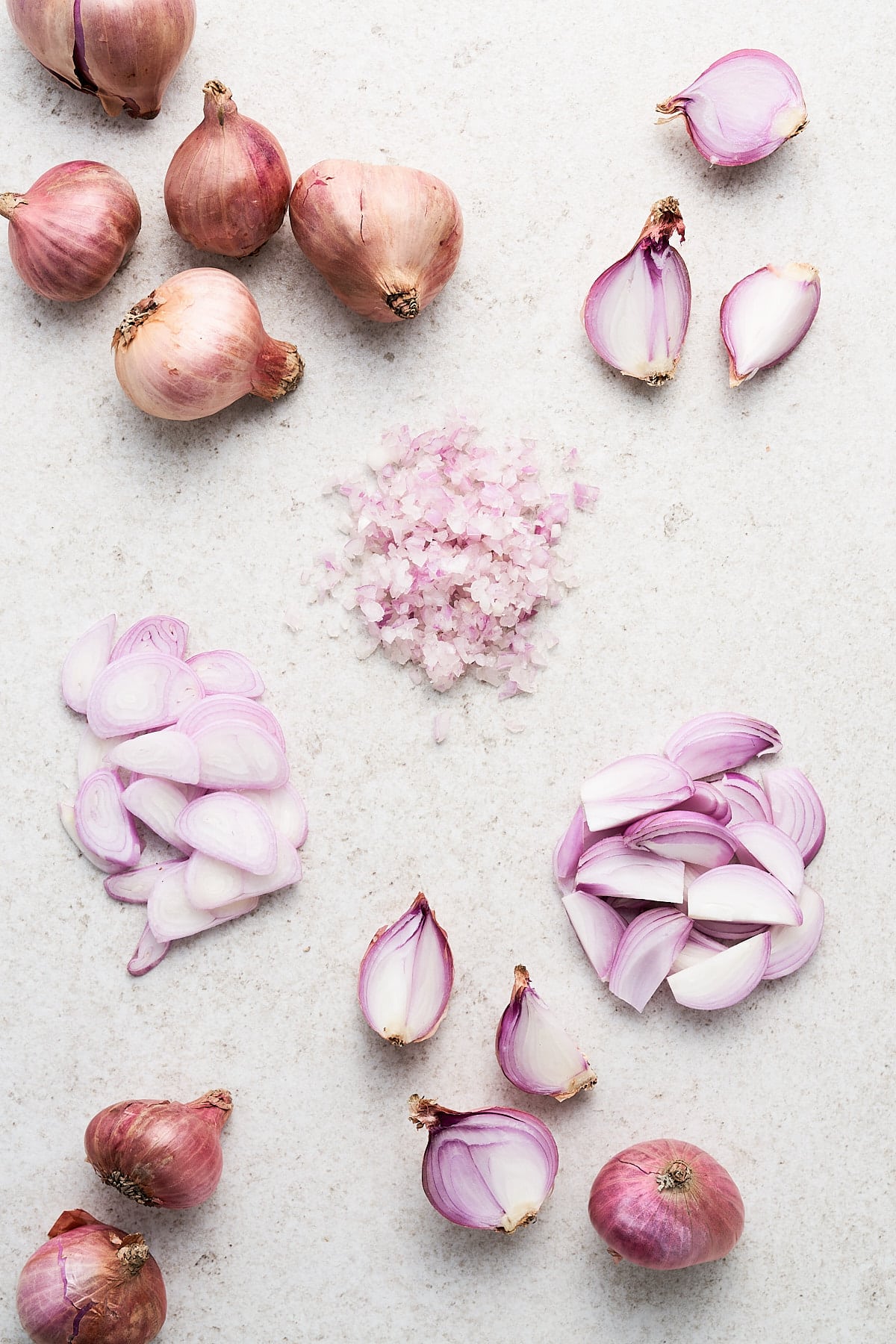
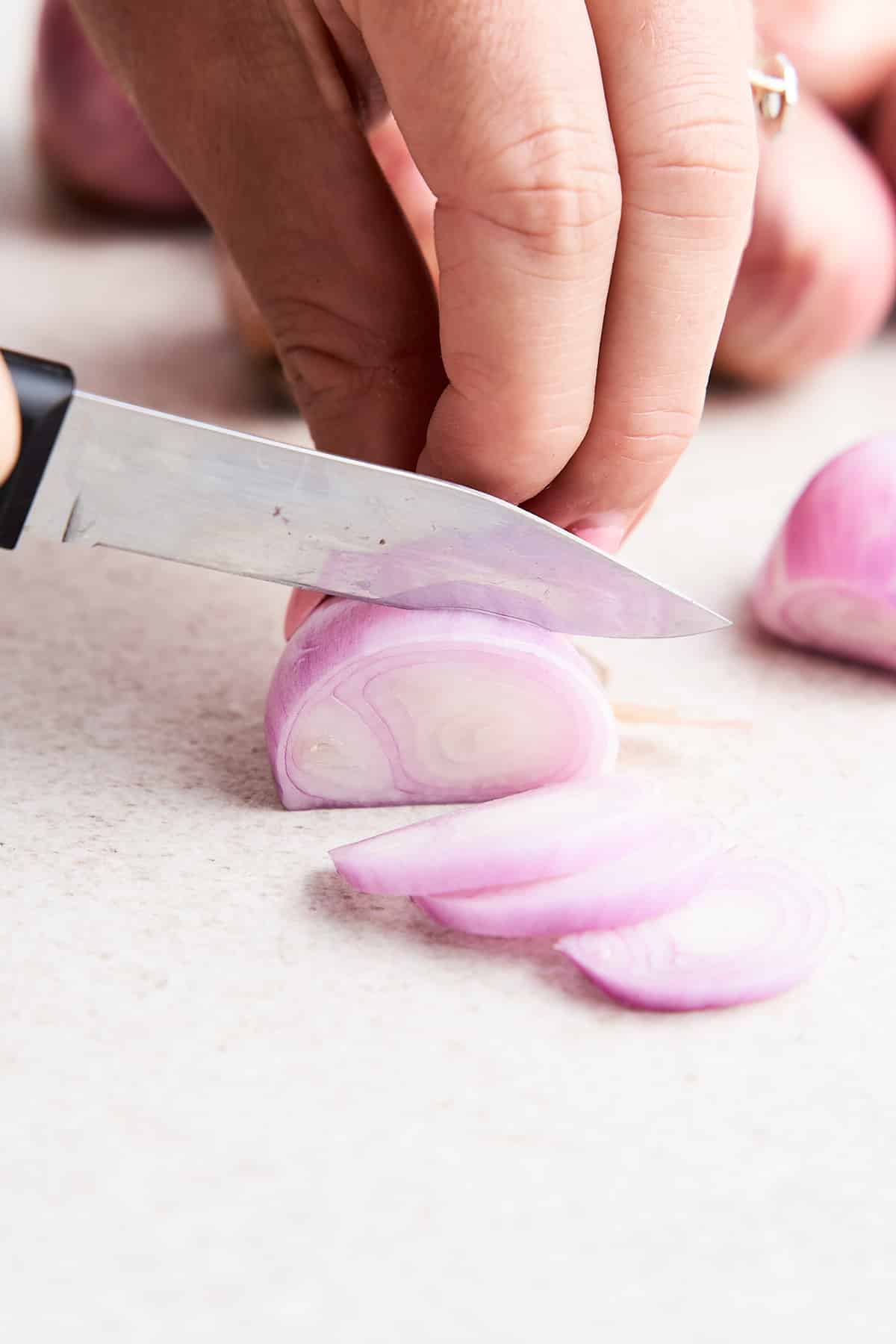
Once you’ve peeled the shallot, lay it on a flat side. Slice it crosswise into rings. You can cut these as thickly or as thinly as you’d prefer (1/8 or 1/4-inch is usually perfect). Sliced shallots are great for adding to salads and stir-fries. You can also try breading them to make crispy fried shallots!
Option 2: Diced or minced
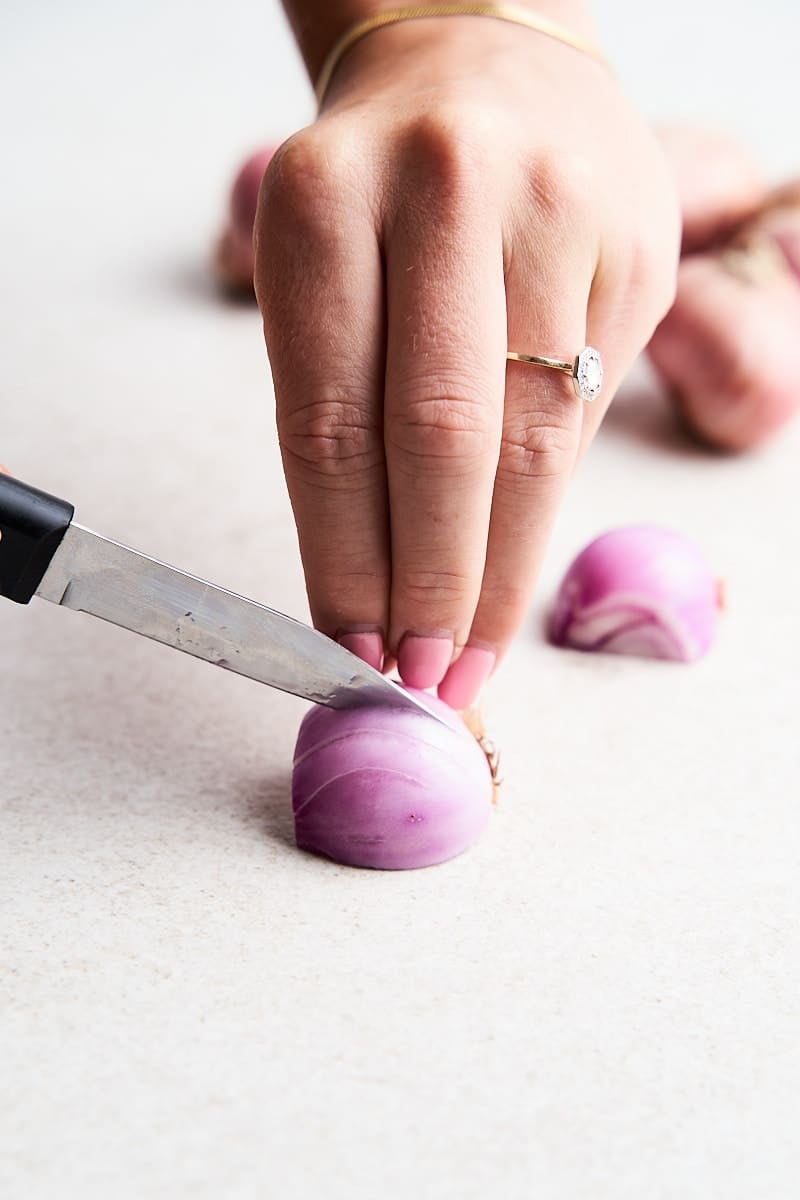
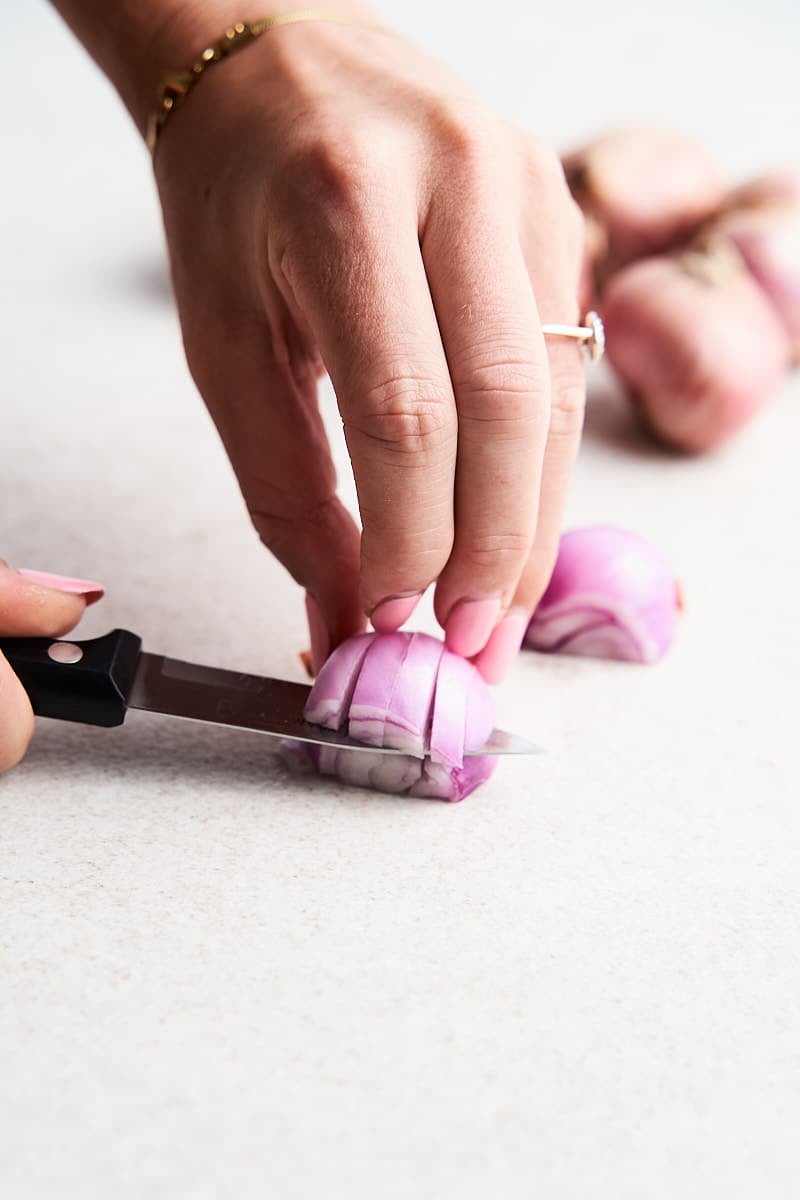
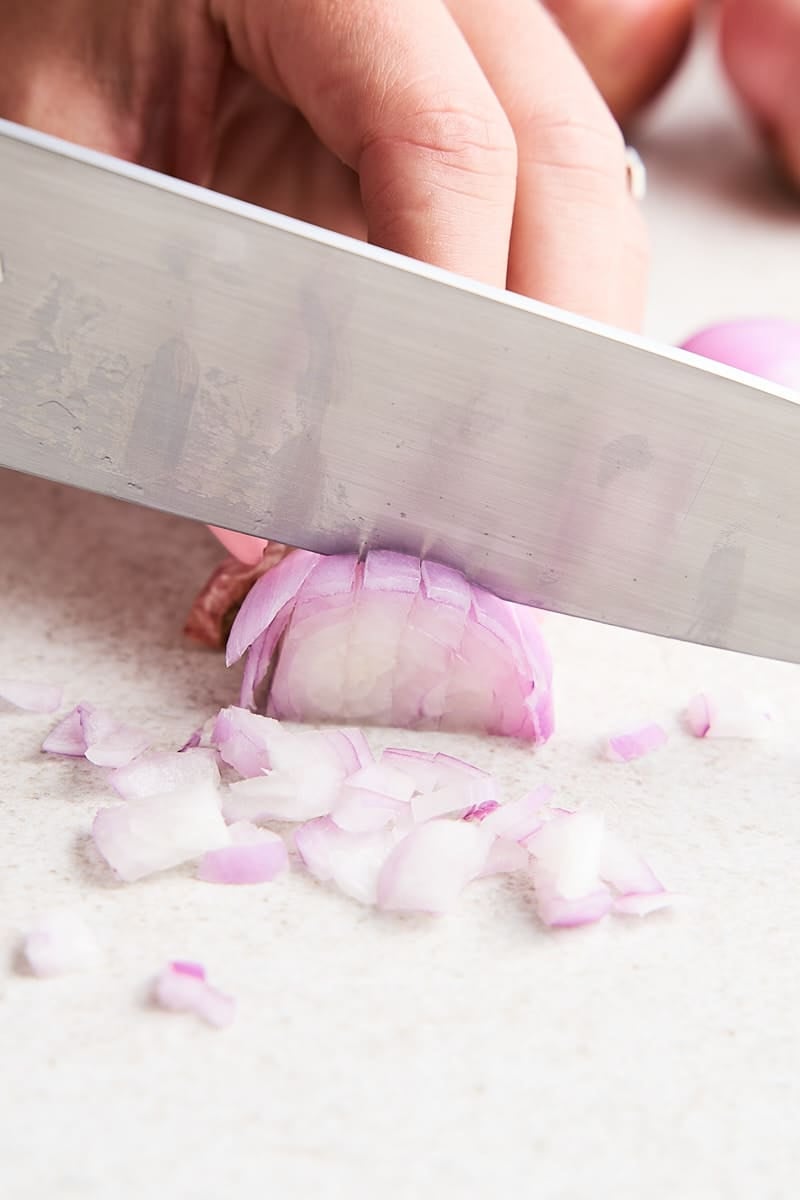
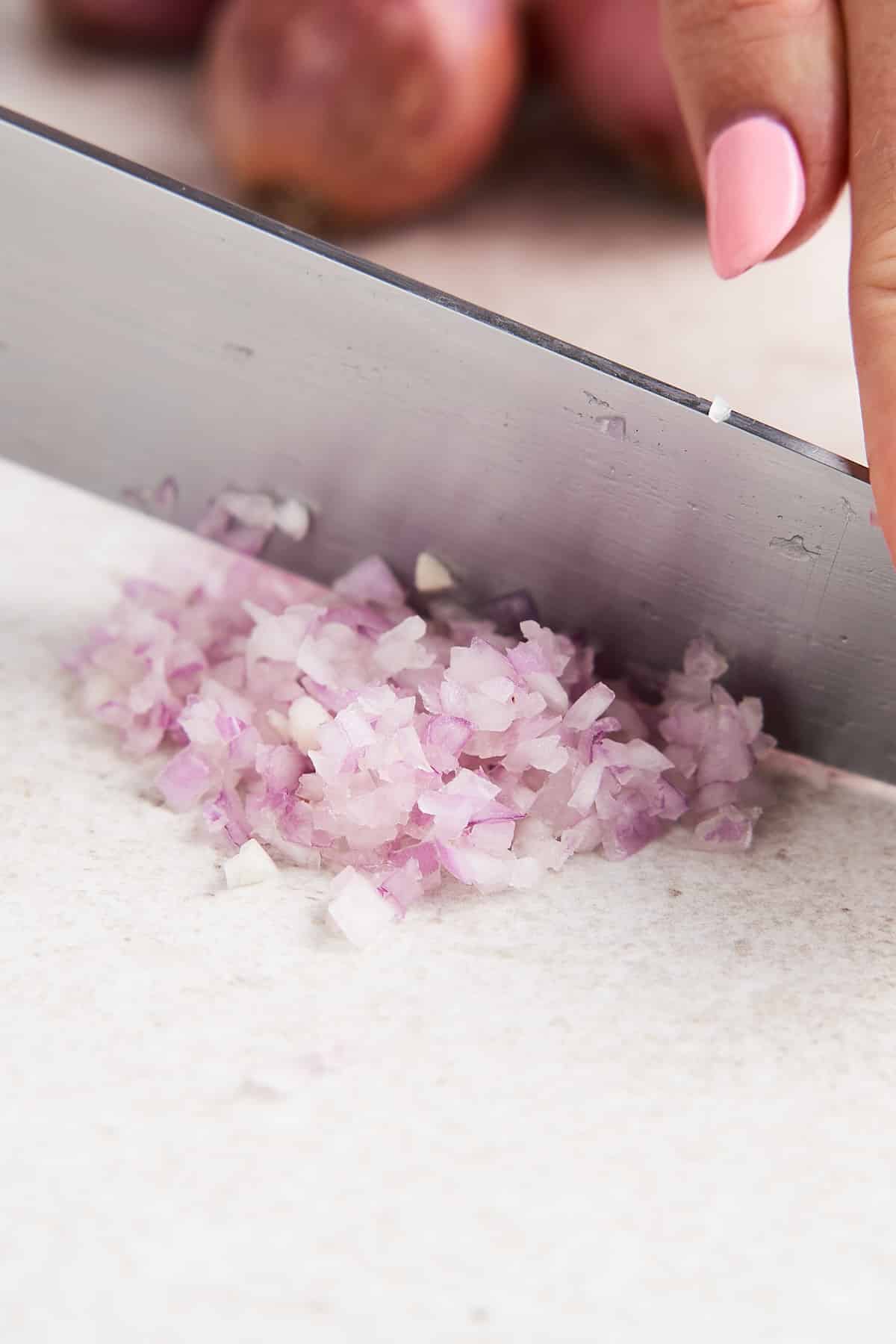
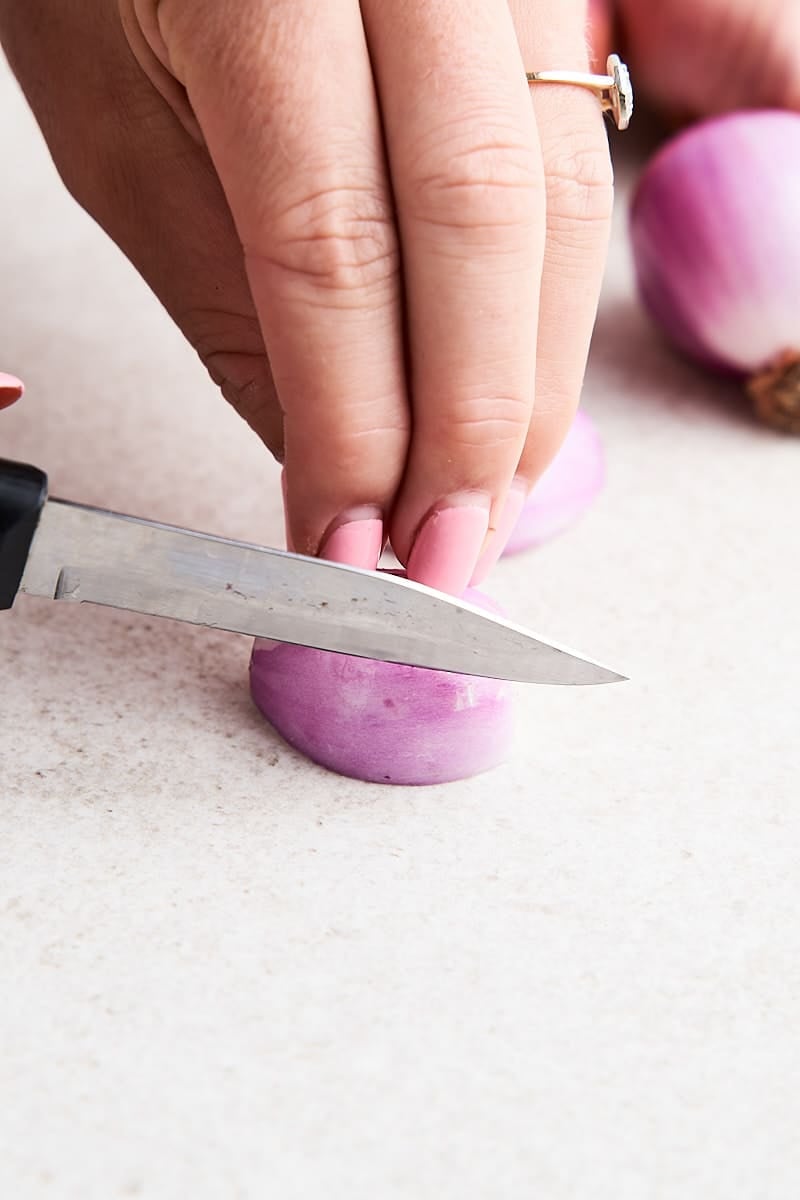
Cut the peeled bulbs in half lengthwise, then turn the halves to face flat-side down. Secure the shallot with your non-dominant hand. Make lengthwise cuts (about 1/4 to 1/8-inch thick) up to the root end, but not all the way through. Make a parallel cut (see middle photo), then rotate the shallot and cut crosswise up to the root end. Once you reach the root, cut it away and discard it, making sure not to waste any shallot. I prefer to use a chef’s knife for the last part, but you can absolutely use a paring knife. It just comes down to personal preference here. To mince the shallot, repeat the same process as dicing, but with thinner lengthwise slices and crosswise slices. Once the root end is removed, use a back-and-forth rocker motion with a chef’s knife to finely mince the shallots. Minced shallots are the perfect addition to salad dressings, veggie burgers, or sauces. They impart flavor without being overly pungent like raw onions can sometimes be!
Option 3: Strips
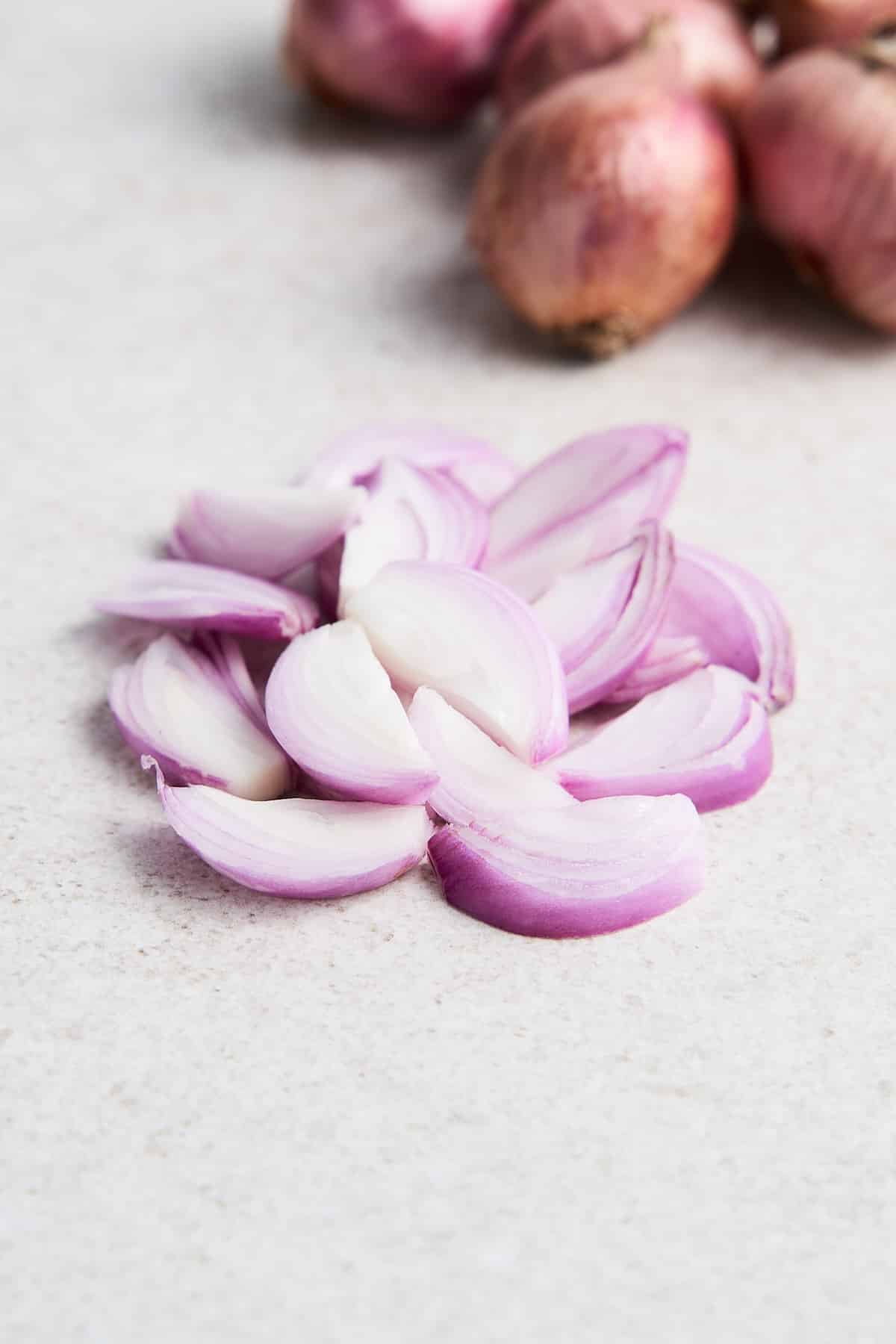
Peel and separate the bulbs the same as before. Then, cut away the root end. Cut it in half lengthwise, then lay each half flat-side down. Make vertical slices as thickly or as thinly as you’d like. Make thinner slices for julienned shallots, which are delicious in stir-fries. Add thick shallot strips to a sheet with other vegetables, and roast them together! They make a sweet and caramelized companion to broccolini, squash, carrots, peppers, and zucchini.
Tips for cutting Shallots
Much like onions, shallots are notoriously slippery. To prevent any accidents, keep these tips in mind:
Choose an appropriate knife: Due to their small size, shallots can be cut with a chef’s knife or a paring knife. Choose one that gives you the most control, and that you feel the most comfortable using. Either way, just make sure it’s extra sharp! Keep the root end intact: To prevent the layers from slipping around too much, keep the root end intact whenever possible. Peel with a knife: The easiest way to remove the paper-thin peel on a shallot is with a paring knife. Spare your fingernails, and use the knife! Use goggles: If you really want to know how to cut shallots without crying, whip out the onion goggles! Works like a charm every time! (Alternatively, if you are a contact lens wearer, pop them in! They prevent you from crying while chopping shallots and onions.)
How to Pick perfect shallots
Before you learn how to chop shallots, you need to know how to pick them! They are typically available year-round, but their main season runs from April to August. Just like onions, there are some key indicators to help you pick the perfect shallots:
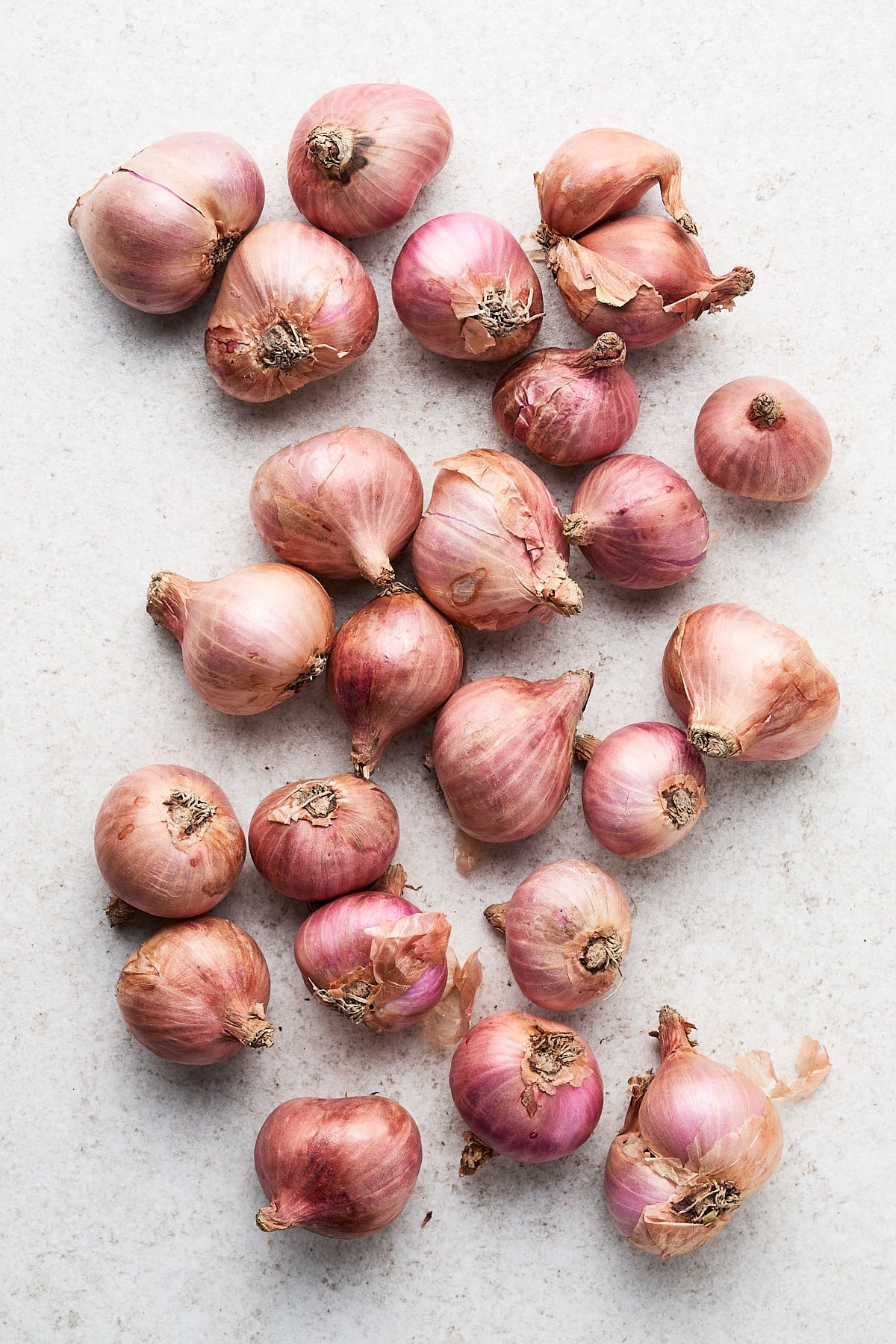
Color: The overall color should be a uniform light copper-purple. Look for shallots with smooth, firm, and dry skin, and avoid those that appear wrinkly. Check for any deep cuts, slits, discolorations, or soft spots. Weight: Similarly to onions, you want shallots that feel firm and heavy for their size. Stay away from those that feel light and dry. Sprouts: Avoid shallots with sprouts coming out of the top. This indicates they are more mature and will taste bitter. Shape: Shallots can be short and round or long and skinny. Either variety will work! Just note that the larger the shallot, the more it will taste like a regular onion.
Storing Shallots
If you find yourself with too many shallots, here are a few simple storage options:
Room temperature: Like other members of the allium family, shallots should be stored in a cool, dark place. If stored correctly, they will last for up to 3-4 months. Fridge: Once cut, store chopped shallots in the fridge for up to 1 week. Freezer: If you can’t use the cut-up shallots in time, it’s best to store them in the freezer. Chopped shallots will last for up to 3 months in the freezer. They may not have the same crunch factor, but they will help save time in future recipes.