Let’s hop in a time machine and go back to 2014, folks, because for the next two weeks we’re going kale crazy. But first, as always, today we’re running through the “learns” of this KALE-r veggie.
kale Varieties
There are many types of kale out there! A few of the most popular varieties are:
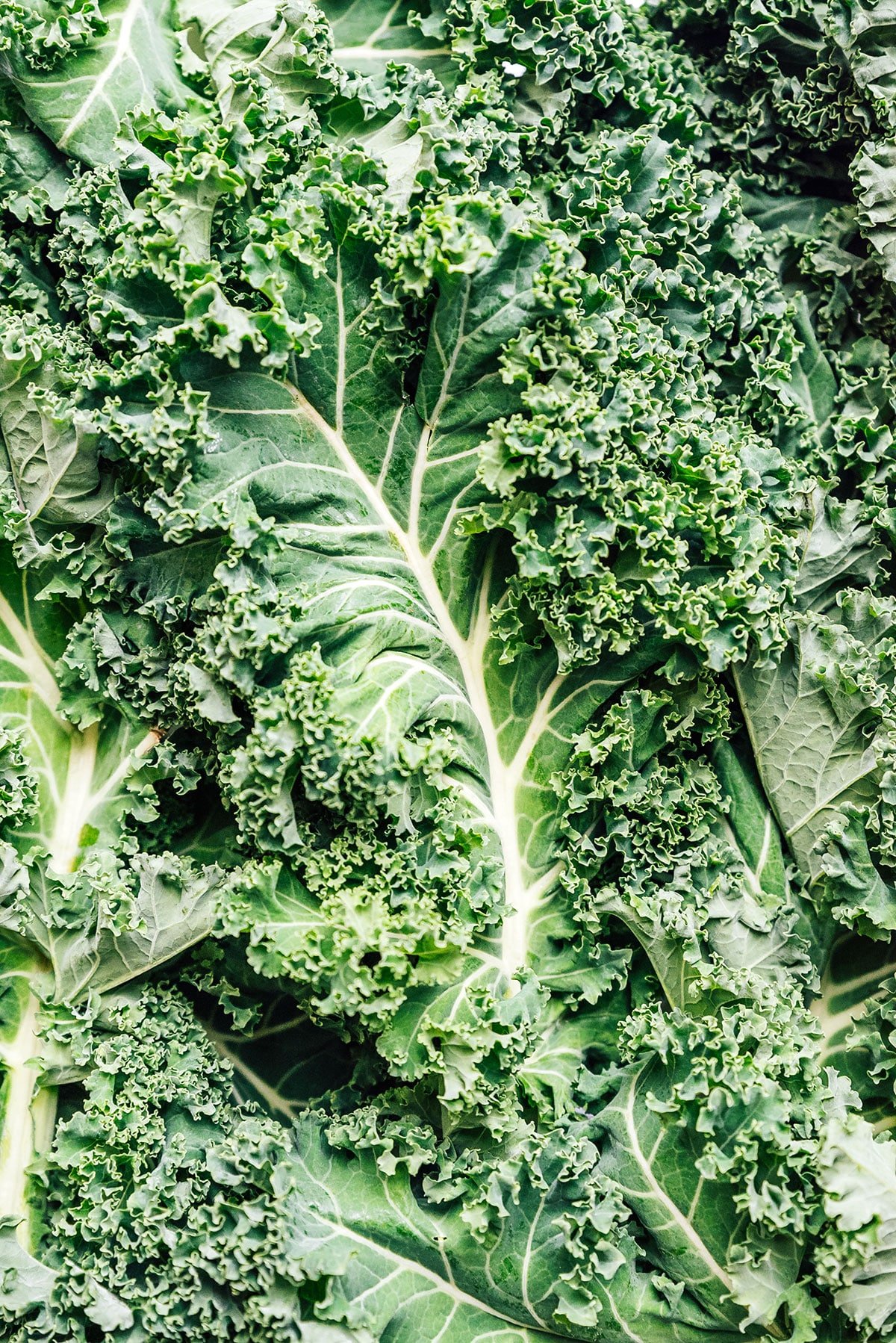
Curly Kale: Bright green and frilly, this variation has a hearty texture that makes it better for cooked dishes than eating raw. Sauces and flavors cling to the tiny ridges in the leaves, making this variation great for kale chips or in cooked pasta dishes. Red Kale: Identical to curly kale in most ways, but with the addition of a red-ish hue. Dinosaur Kale: Also known as Tuscan or Lacinato kale, this variety is more tender and less curly, so it’s tasty eaten raw.
How to buy kale
Pick dark colored kale free from brown or yellow spots. Kale is in season through the cold fall and winter months, though you’ll find it available year round in many places.
How to store kale
The key to storing kale well is to keep it away from moisture. Wrap unwashed kale leaves in paper towels and place in a plactic grocery or ziploc bag. Store in your vegetable crisper drawer for 5 to 7 days. (Only wash kale right before you intent to use it, as the moisture will cause it to go bad quicker!) To freeze kale (for longer term storage), wash and dry kale, then remove thick ribs and chop the leaves. Freeze in a single layer on a baking sheet or plate, then transfer to an airtight container of baggie. You can throw frozen kale right into smoothies or soups without thawing!
How to prepare kale
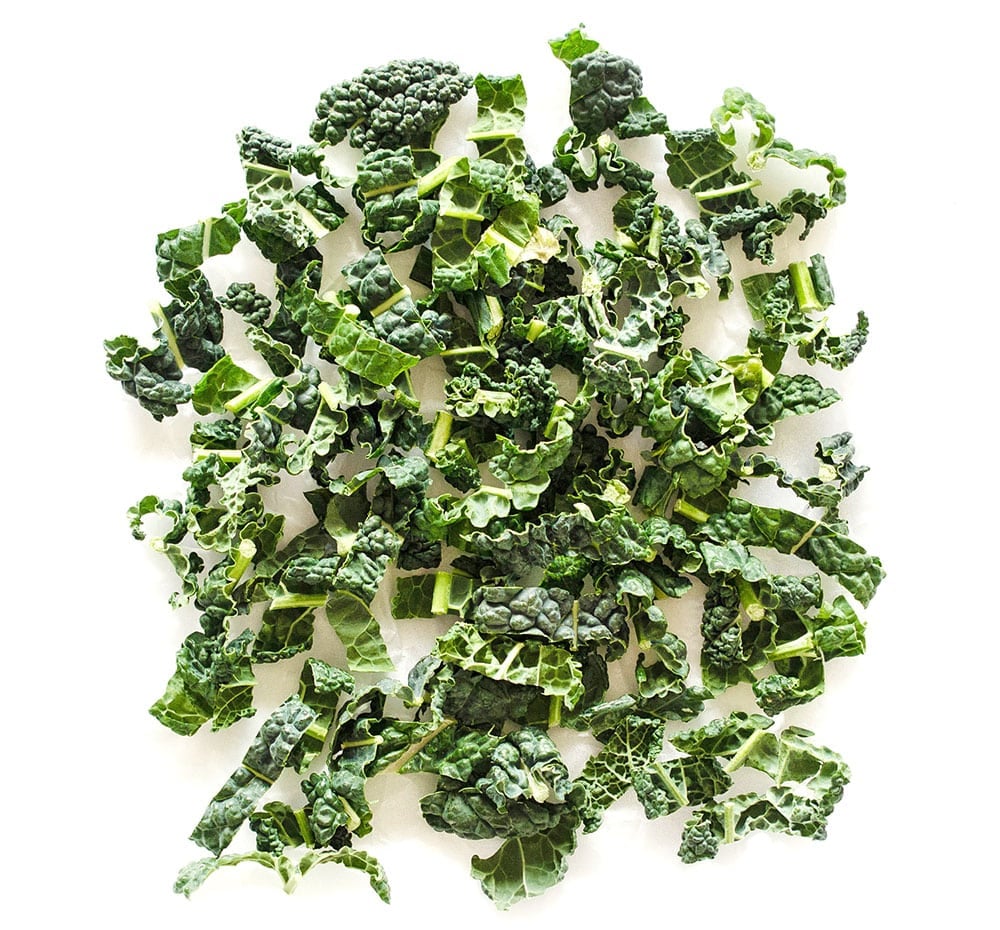
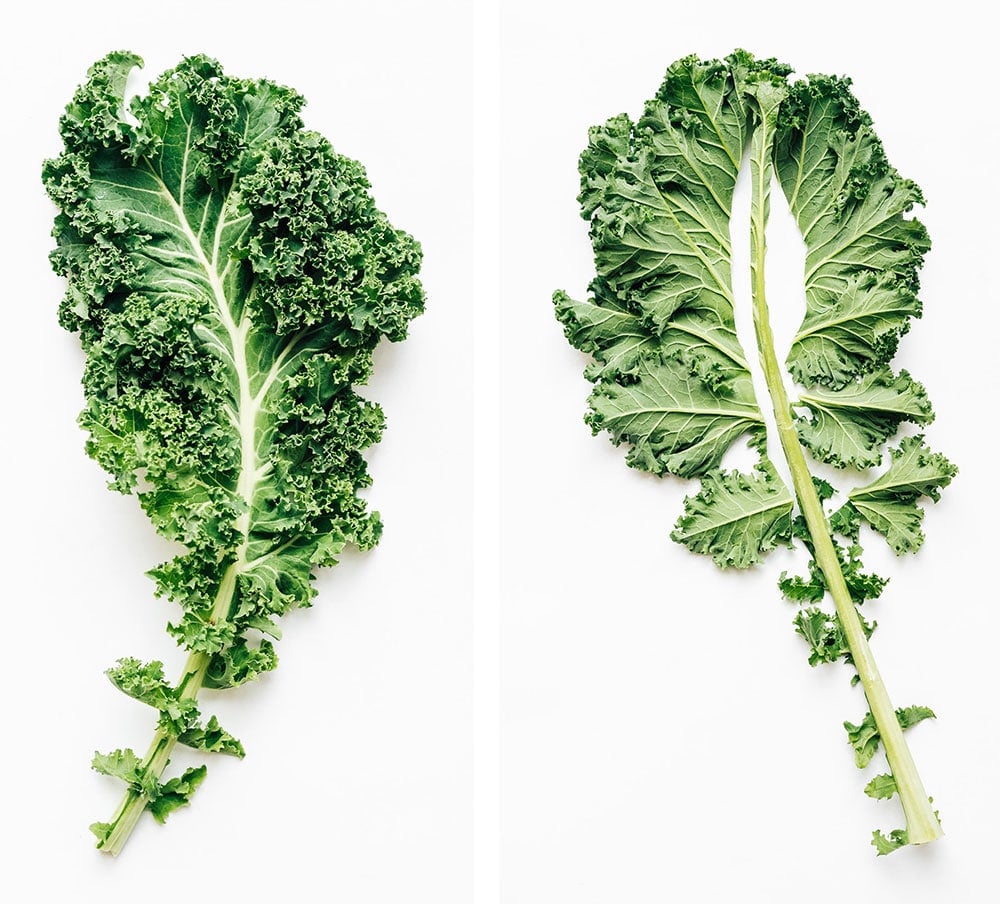
Kale isn’t quite like other leafy greens, like spinach, when it comes to preparation. It needs a little work to truly shine! Cut the kale leaves form the thick stem. The stem is bitter and not good eaten raw. Either discard it or throw it into a soup! Then simply cut the kale leaves to the desired size (larger for kale chips, smaller for kale salad). Wash the kale leaves in a colander, drying well. Then comes the final step…massage the kale! Massaging kale is basically just squeezing and rubbing the kale leaves for a few minutes to break the hard-to-eat fibers, making the kale much easier to chew and digest.
Our favorite kale recipes
Kale is one of our favorite leafy greens, and we have a ton of kale recipes here on Live Eat Learn! These are a few of our favorites.
Kale Chips TropiKale Smoothie Roasted Veggie Buddha Bowls Everyday Kale Salad
Kale nutrition information
per 1 cup of raw kale leaves (67 g)
Calories: 33 Carbohydrates: 7 g Fiber: 1 g, 5% of DV (Daily Value) Protein: 2 g Fat: 0 g 684% DV of Vitamin K: A fat-soluble vitamin that allows for activation of enzymes in the clotting cascade, which is responsible for blood clotting. Also builds bone by modifying osteocalcin so that it may bind calcium, thus building the bone matrix. 206% DV of Vitamin A: Provides the provitamin version of this fat-soluble vitamin, meaning it comes from a plant source and your body converts the plant pigment into active Vitamin A. It is essential in many components of healthy vision, as well as immunity and cell growth/differentiation. 134% DV of Vitamin C: A water-soluble vitamin that acts as an antioxidant to fight against potentially damaging free radicals (molecules with unshared electrons that float around wreaking havoc) and an important cofactor in collagen synthesis. 10% DV of Vitamin B6 (Pyridoxine): A water-soluble vitamin that works behind the scenes as a coenzyme in many important reactions within your body, including protein metabolism and red blood cell formation, among countless other functions. 10% DV of Calcium: 1% of the calcium in your body plays a vital role in vascular contraction/dilation and nerve transmission and signalling. The other 99% supports teeth and bone structure and function.