Kale and Spinach: What’s The Difference?
Are spinach and kale different varieties of the same plant? Well, no not at all. They are actually from totally different families. At first glance, kale and spinach seem to be brother and sister, but actually they’re not even in the same family. Kale is a member of the Brassica family and is related to broccoli, cauliflower, and cabbage. Spinach, on the other hand, is in the same family with beets and chard. Spinach is native to Southwest Asia, and is believed to have been first cultivated in Persia, modern day Iran, over 2,000 years ago. Records show that It appeared in China in the 7th Century, and came to Europe in the 11th Century. It was introduced to Europe by the Moors, Muslims who inhabited modern day Spain from the 8th to 16th Century. Kale is an ancient cultivar of cabbage that originally came from the Eastern Mediterranean region, primarily modern-day Turkey. The name was spelled “Cale” in Medieval Britain, and prior to this, it came from the Latin term for cabbage “Caulis”. Kale has been cultivated for thousands of years and was eaten in Greece as early as the 4th Century BCE. Kale didn’t make its way to the US until the 1800s where it became popularized in dishes like kale salads. Kale smoothies would come a bit later.
Appearance
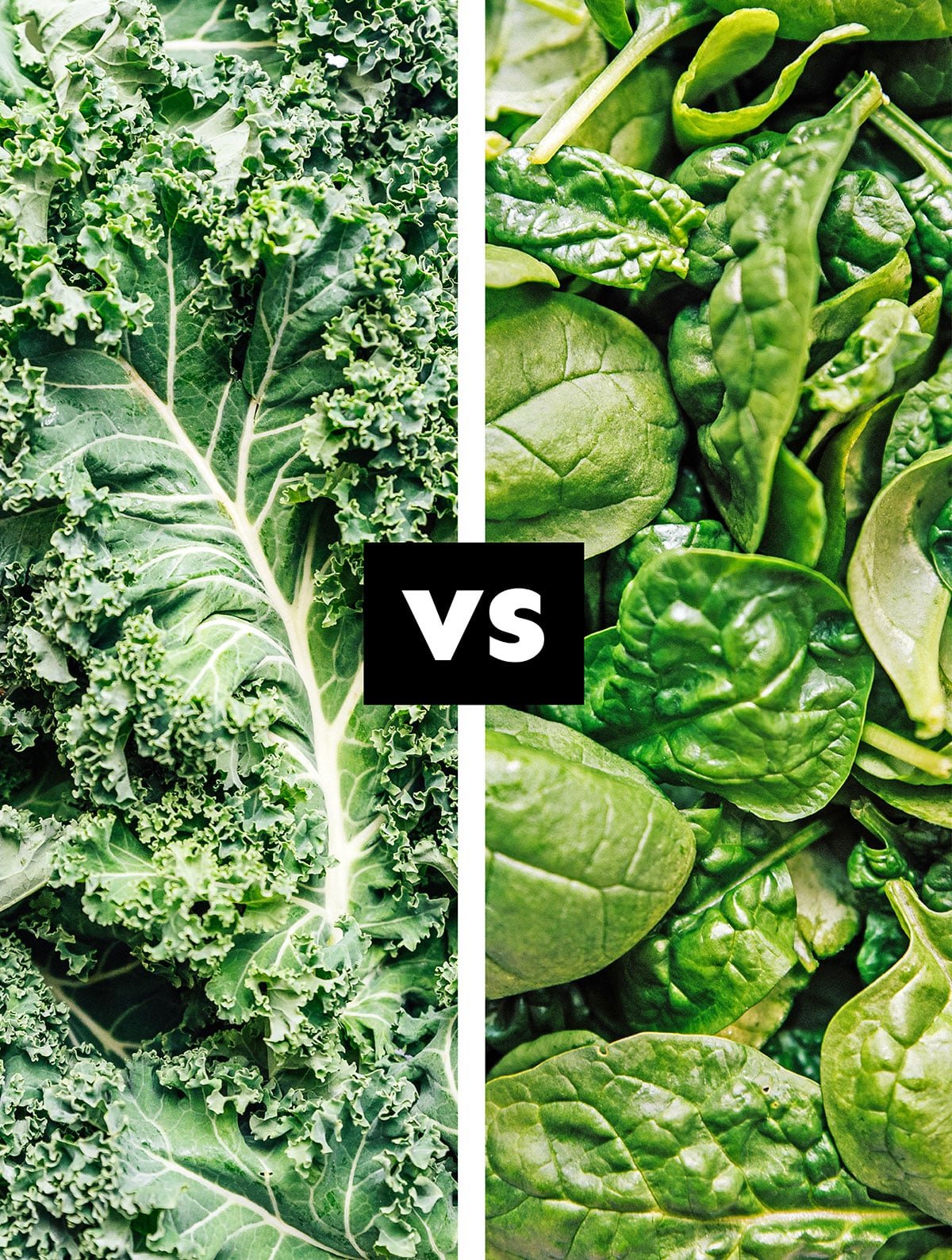
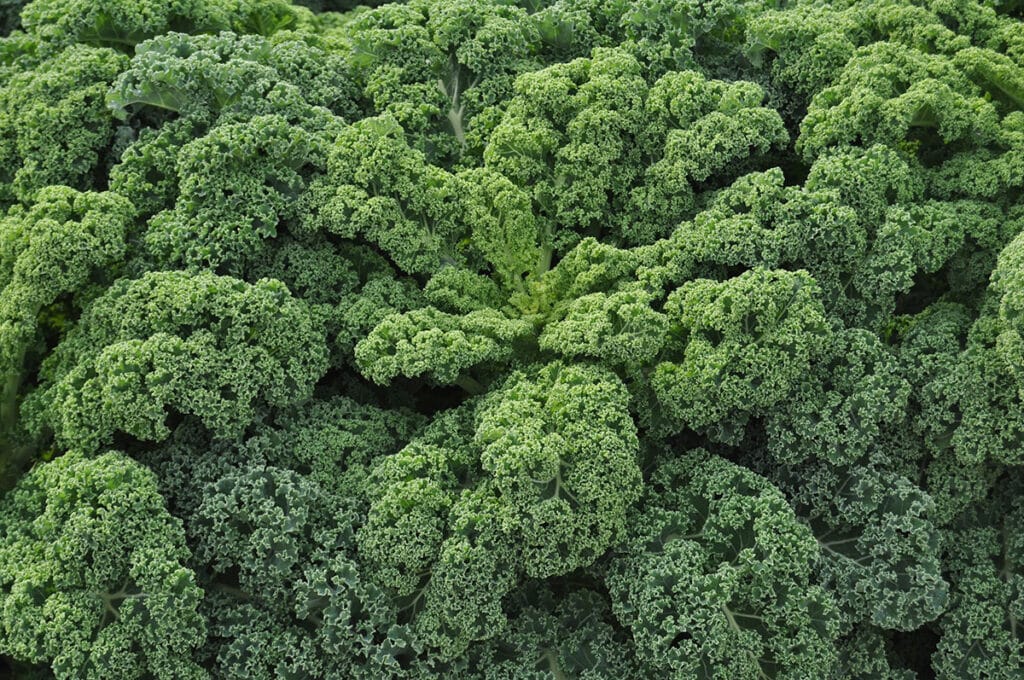
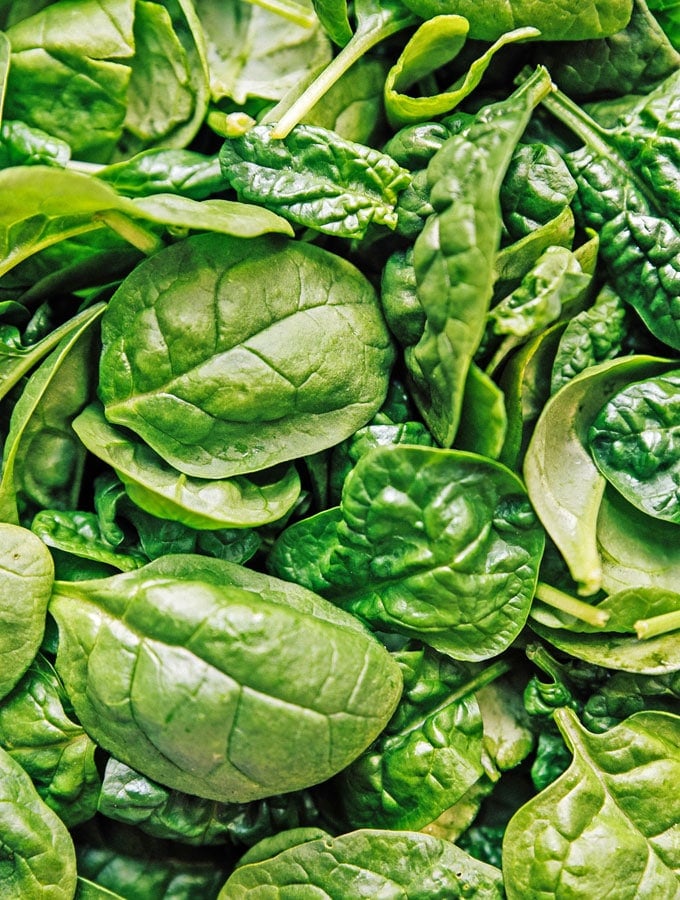
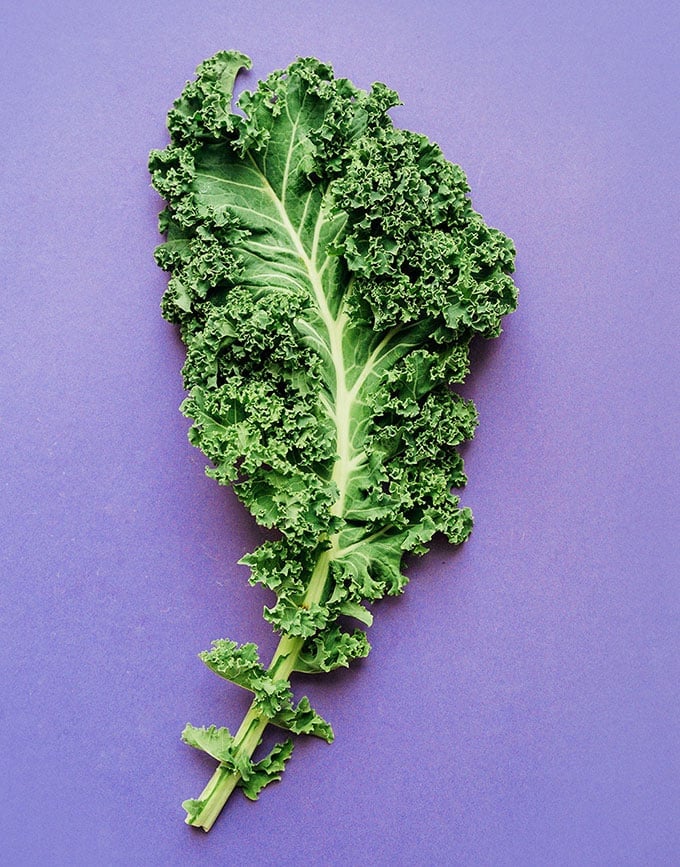
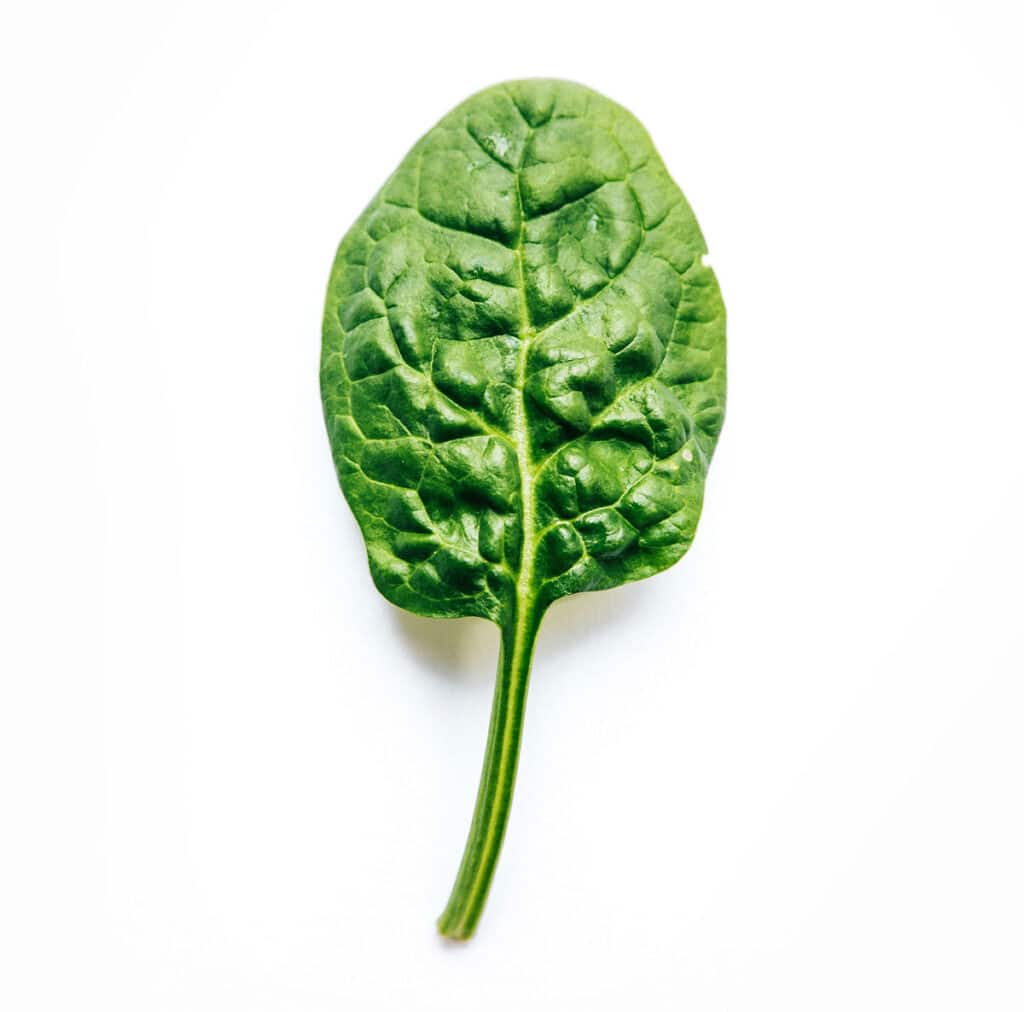
Spinach has broad flat leaves that are green and smooth. The 2-3 inch leaves are thin and much more delicate than a kale leaf. Spinach is used raw in salads, but is great cooked which dramatically changes its appearance as the leaves shrink and become limp and wet. Kale, on the other hand, has very dark green leaves that are curly to almost frilly. They are thicker and tougher than spinach leaves with a rough texture. Depending on the type of kale, the leaves can grow up to 10 inches long. When cooked, kale leaves retain their shape and remain firm which is a major difference between kale and spinach.
Smell
Spinach has a sort of earthy sweet aroma which gets a little stronger when cooked. It isn’t overpowering, and is fairly unique. If you cook spinach often, you can recognize the smell. Kale, on the other hand, has a more distinct and pungent aroma. Kale has an almost peppery smell, which like spinach, becomes more intense when cooked. Most people don’t find the smell of either to be overwhelming.
Taste
Spinach’s mild and slightly sweet flavor makes it a great salad green. It won’t overpower the other ingredients. Kale, on the other hand, has a stronger, a bit bitter flavor. It is also a great salad green, but we would assert that you are more apt to spot the taste of kale in a salad than you are spinach. You will definitely notice the coarse leaves of kale when you put a forkful of kale salad in your mouth. Some people prefer the taste of spinach, while others prefer the taste of kale. It really comes down to personal preference and what you are using the greens for.
Nutrition
Spinach and kale are pretty similar nutrition-wise, which is to say they are both healthy. We don’t like to say that anything is a “superfood”, but if we were to do so…..kale and spinach would both be it.
Spinach Nutrition
Grab our full guide to the health benefits of spinach here. According to the USDA, a 100 gram serving of raw spinach provides:
23 Calories 312% of the RDA of Vitamin A 46% of Vitamin C 402% of Vitamin K 15% of Iron 3.0 grams of protein 2.2 grams of fiber
Kale Nutrition
Kale is very similar in nutrient profile to spinach. You can get our full guide to the health benefits of kale here, but generally the nutrient breakdown for a 100 gram serving of raw kale is:
33 Calories 308% of the RDA of Vitamin A 200% of Vitamin C 1,021% of Vitamin K 11% of Iron 3.3 grams of protein 2 grams of fiber
Cooking
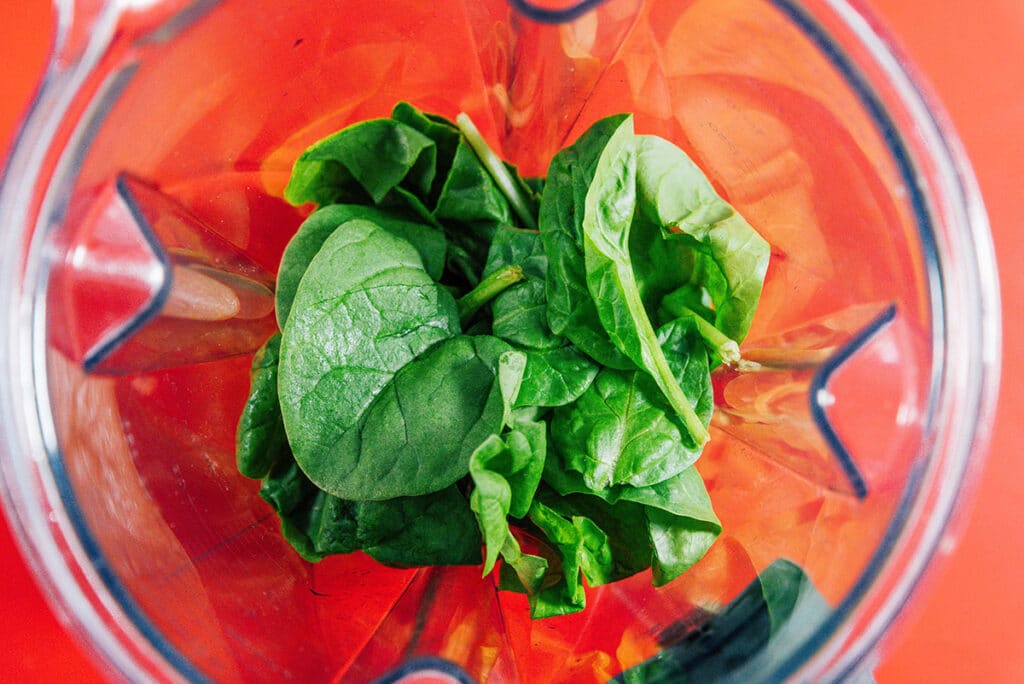
Spinach is a great leafy green for raw or cooked uses. Raw spinach can be used in salads, smoothies, and sandwiches, while cooked spinach can be used as a side dish or added to soups and stews. Spinach is also a great ingredient in quiches and frittatas. See all of our spinach recipes here or our favorites below!
How to Make Green Smoothies People Will Like Leafy Greens Pesto with Spinach Greek Spanakopita Triangles Hidden Spinach Guacamole
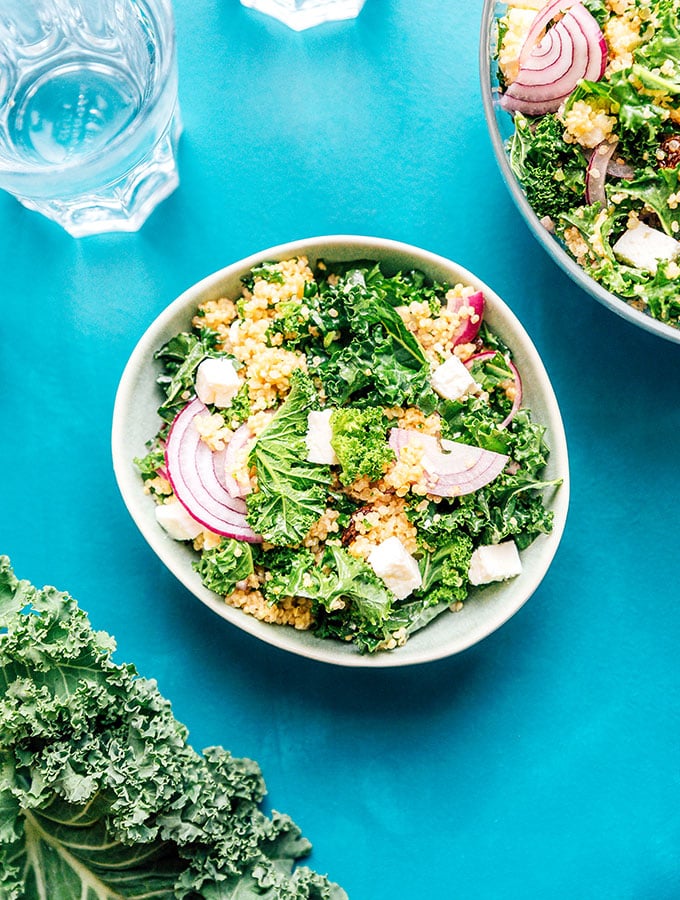
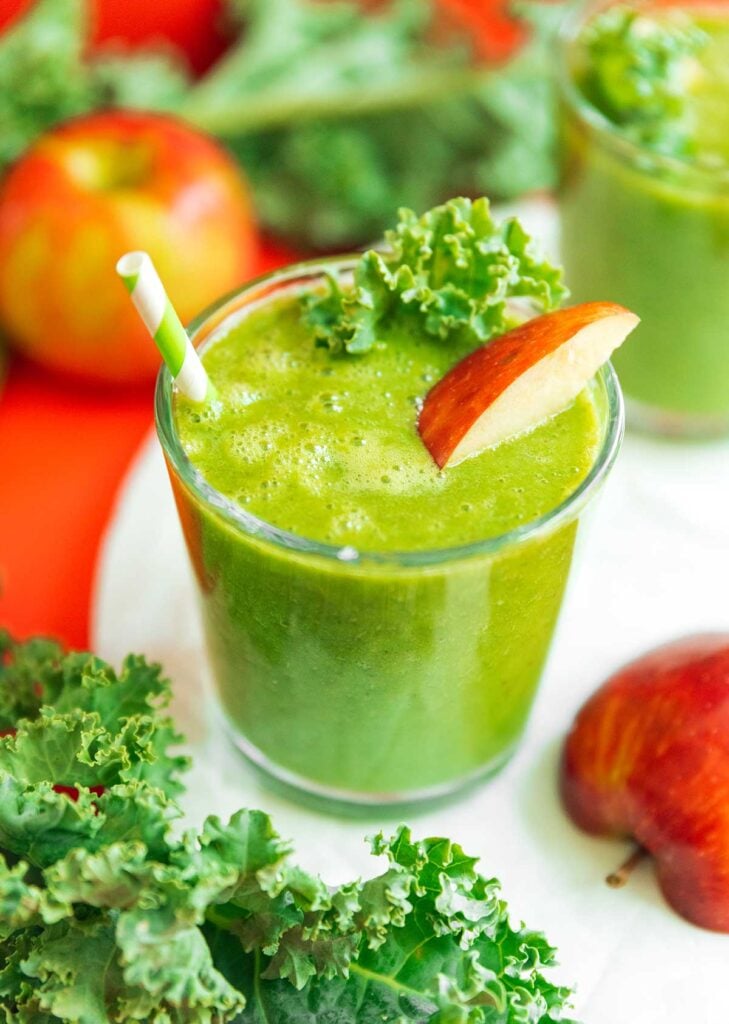
Kale is similarly a good leafy green either raw or cooked. Raw kale can be used in salads or as a base for smoothies, though many people prefer spinach in smoothies due to kale’s slight bitterness. Cooked kale can be used as a side dish or added to soups, stews, or stir-fries. See all of our kale recipes here, or our favorites below!
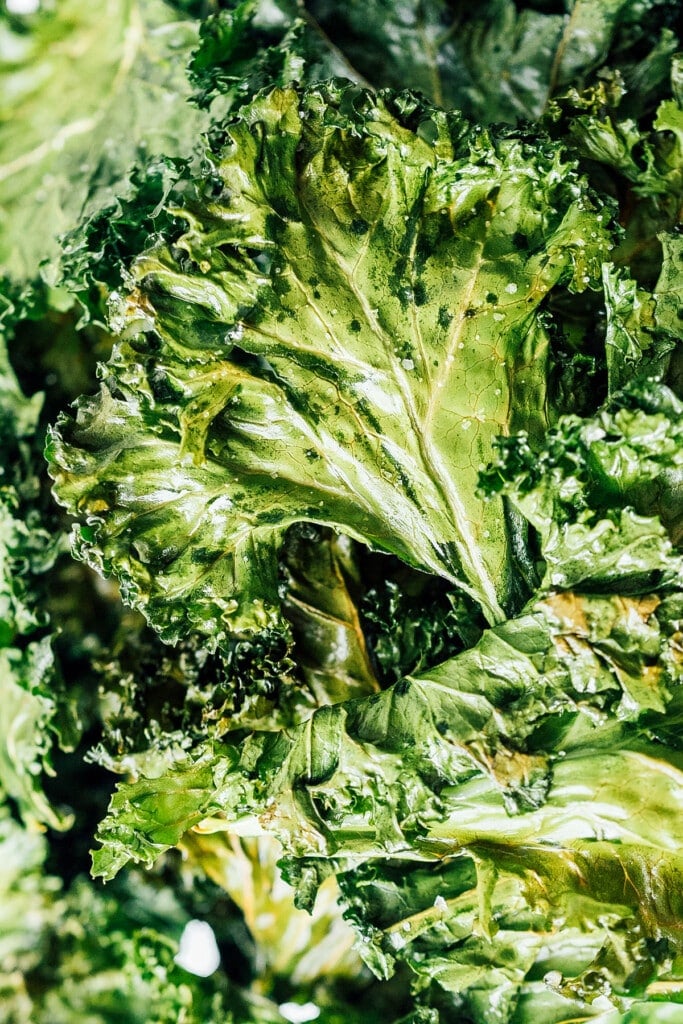
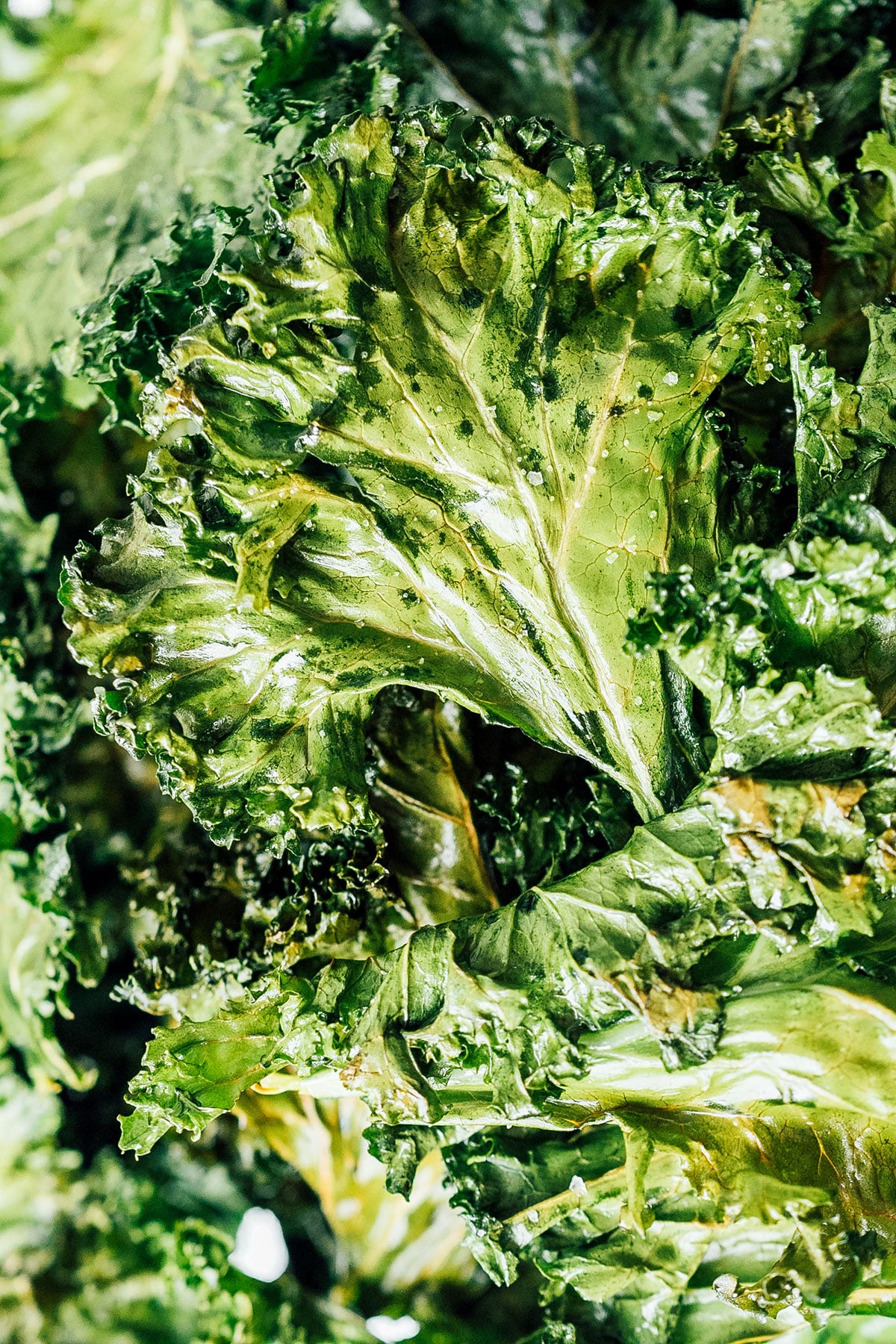
Kale Chips Tropi-Kale Smoothie Roasted Veggie Buddha Bowls Everyday Kale Salad
So which is better, spinach or kale?
Ultimately, the choice between spinach and kale boils down to personal preference and desired taste! Spinach, with its mild taste and soft texture is our favorite for salads. It is just as nutritious as kale, but lacks the sharp curls and rough texture of kale in your salads. Either works great in smoothies, and you can buy bags of chopped frozen spinach or kale for just this purpose. For cooking there is no clear better or worse. Each works into a LOT of great recipes. Both are nutritional superfoods, and neither are going to appeal to your kids. So, just deal with that. Both greens offer an abundance of health benefits, so why not embrace the best of each? We hope this article was helpful, and always happy eating!