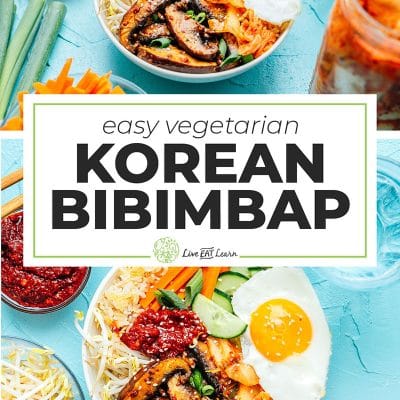
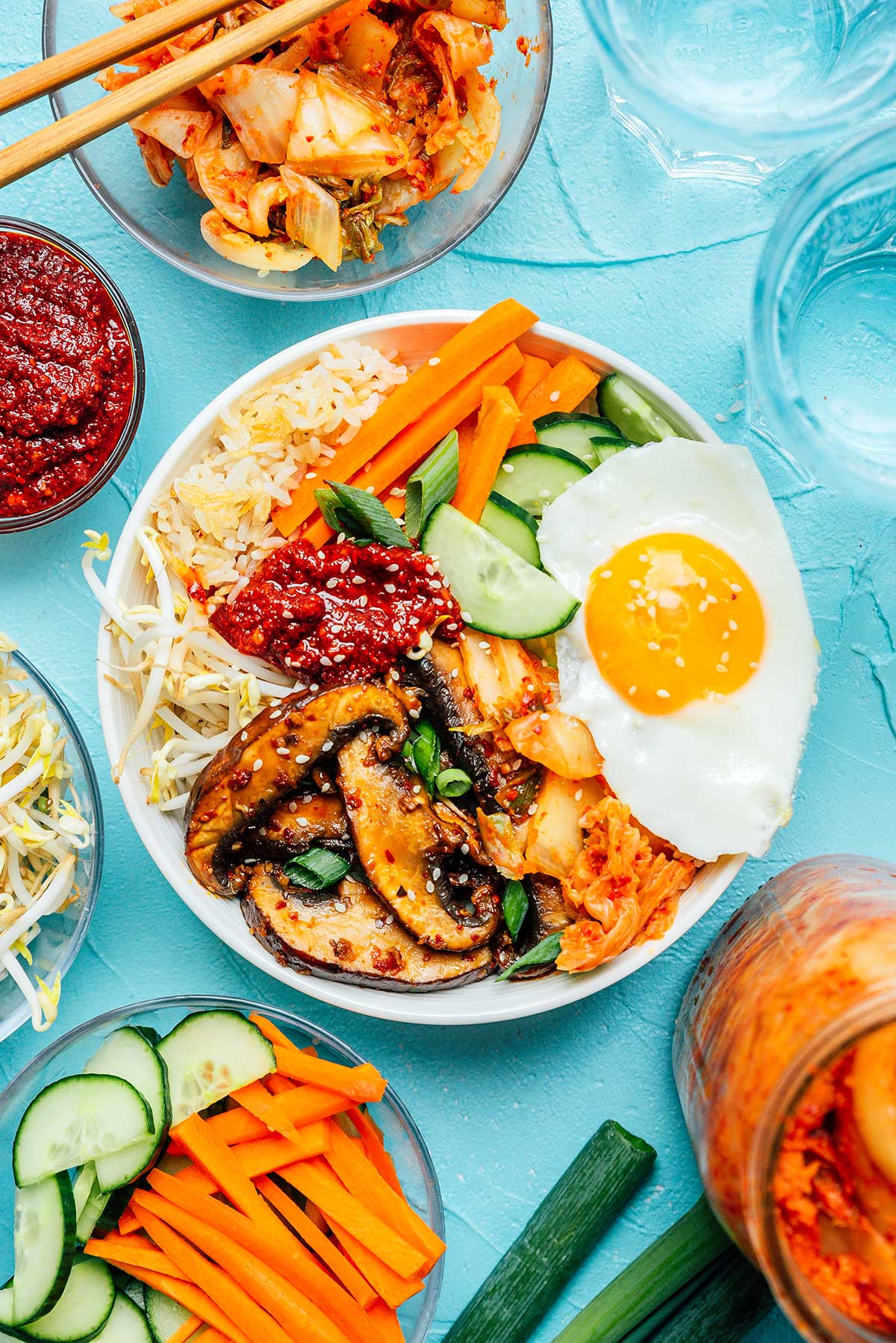
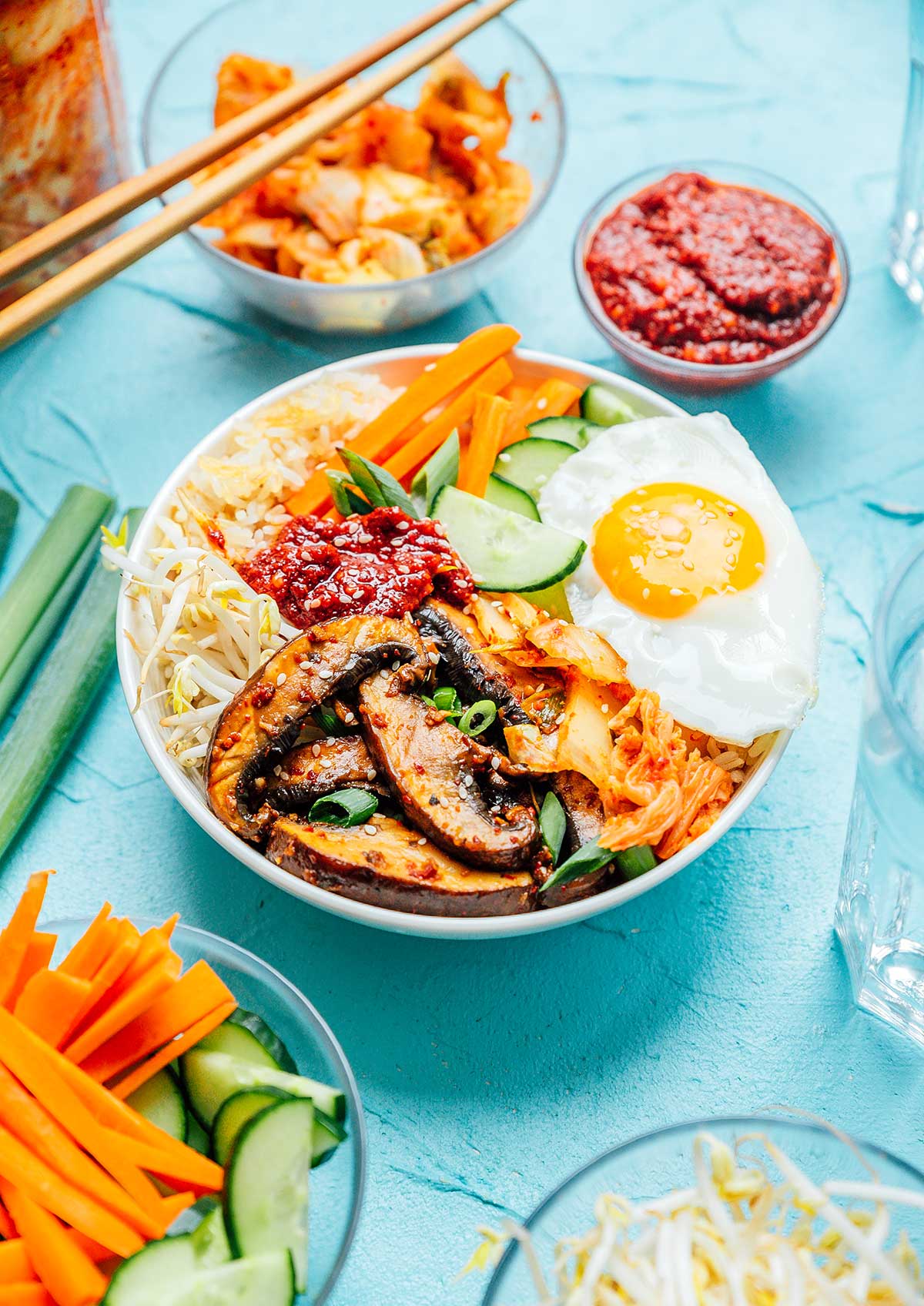
Ahhh, kimchi bibimbap. One of my favorite dishes ever, bibimbap is a Korean recipe that follows along with my current kimchi obsession. What is bibimbap, exactly? Basically, bibimbap is a rice dish with a bunch of veggies on top. You could probably say it’s a bit like stir fry, the main difference being that the vegetables aren’t necessarily sautéed. Instead, they’re sliced and diced and placed on top of the rice in their raw form (though you can sauté them if you want to). Throw on some fried eggs, some marinated vegan bulgogi (the “beef” mushrooms), and gochujang sauce, and you’ve got yourself a bowl of vegetarian bibimbap.
Components to this vegetarian bibimbap
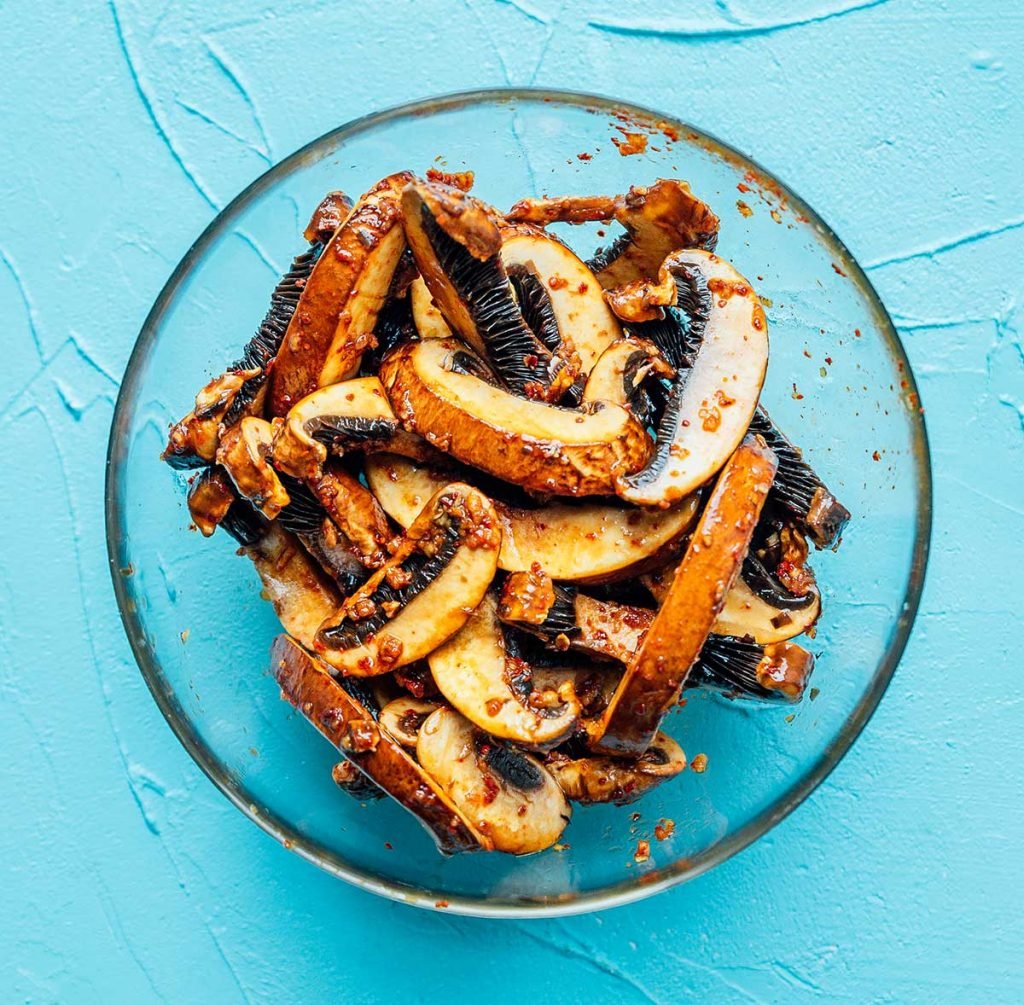
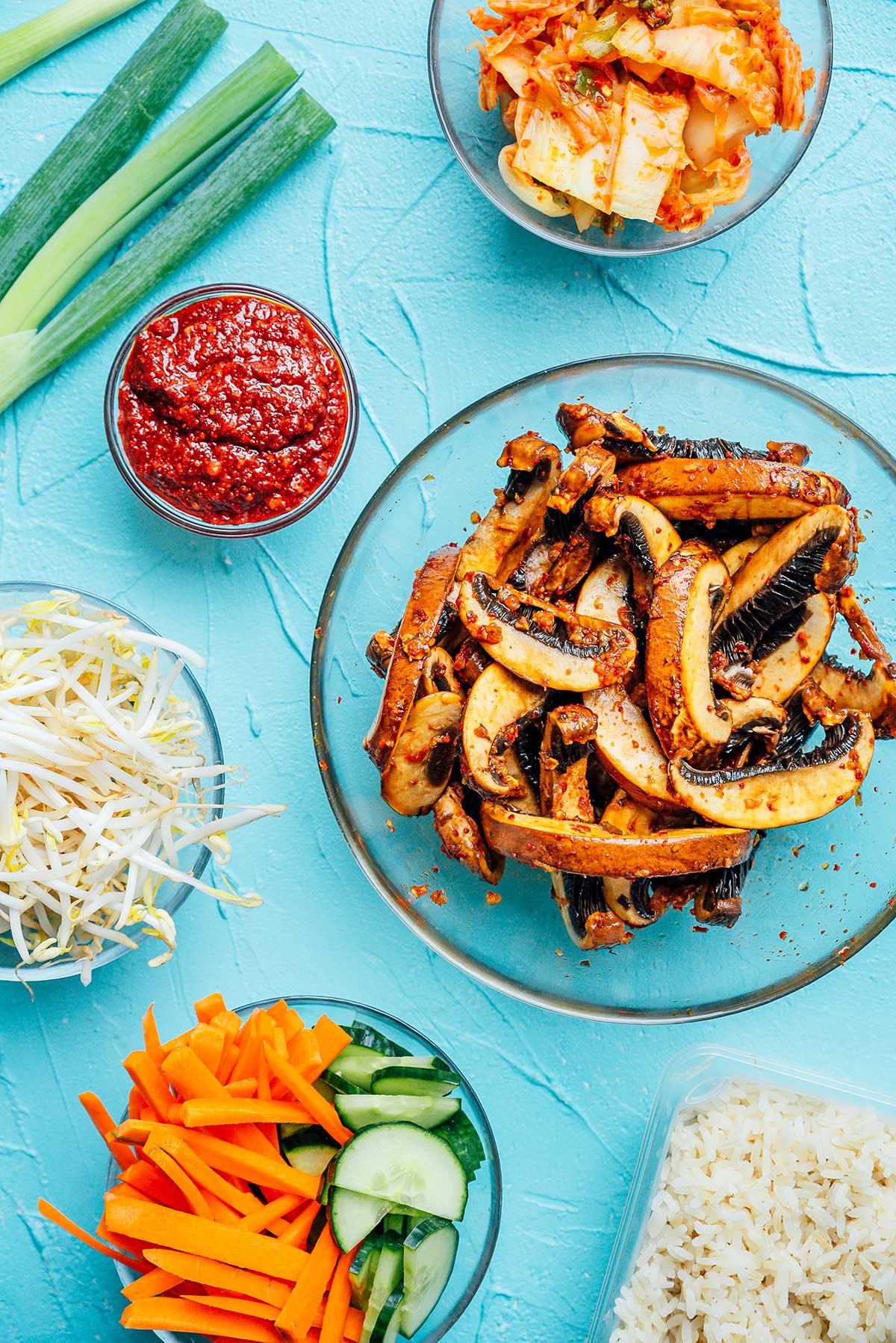
Each part of this recipe consists of vastly different ingredients. In total, it’s made up of three distinct sections: bulgogi, fillings, and gochujang sauce! Here is what’s required for each part of this recipe: Mushroom Bulgogi: To make the mushroom bulgogi, we’ll start by marinating it in a mixture of soy sauce, rice vinegar, toasted sesame seed oil, garlic, and gochugaru flakes! This mixture combines flawlessly to create the tastiest mushrooms (…ever). Fillings: Next, we have the fillings. The fillings make up the bulk of this recipe, so we’ll want to make sure they’re perfect! This recipe calls for white or brown rice (your preference), bean sprouts, kimchi (check out my homemade kimchi recipe for details), cucumbers, carrots, green onions, and eggs. You can really go crazy and add anything else you might want (this Thai Cucumber Salad or this Thai Cabbage Salad would be delish!) Gochujang sauce: Finally, we have our gochujang sauce! This sauce is made up of a variety of liquids and seasonings. You’ll need gochugaru flakes, toasted sesame seed oil, sugar, water, rice vinegar, soy sauce, and garlic. If you can’t find gochujang flakes in your grocery store, feel free to nix the gochujang sauce and use sriracha instead!
How to make mushroom bibimbap
Kimchi bibimbap has a lot of ingredients, but it’s pretty easy to put together. To make things easier, start by dividing your ingredients into the three sections as outlined above. We’ll start by making the sauce and marinating the bolgogi. Then, we’ll cook the fillings, mushrooms, and eggs! That’s it. Here is how it’s done:
More delicious bowl ideas to try
This dish is a truly hearty, filling bowl of goodness. I love “bowl” style recipes because they call for many different ingredients. More ingredients = more flavor, variety, and nutrition (usually)! If you liked this bibimbap, you’ll love these recipes too!
15 Minute Buddha Bowls Tomato Tuna Sushi Bowls Vegan Burrito Bowls Green Goddess Sushi Bowls Roasted Veggie Buddha Bowls