Mango and Papaya: What’s The Difference?
Are mangoes and papaya different varieties of the same plant? Surprisingly, no not at all. They are actually from totally different families. At first glance, mangoes and papayas look a lot alike, but actually they’re not even in the same family. Mangoes grow on a tree that is a member of the Anacardiaceae family which is also called the cashew family. Other “family” members include cashew, pistachio, sumac, poison ivy, and poison oak. It is sort of the Adam’s Family of fruits, nuts, and itchy things. Papayas are of the Caricaceae family which includes Pawpaws, Achene, and Jacaranda. Most people haven’t heard of all these, but you can reference our 129 Tropical Fruits Guide for a whole lot more on tropical fruits.
Origins
Mangoes are native to Southern Asia, but they made their way across the tropics and into America around 1880. Mangoes are now among the most commonly eaten fruits in the world with over 40 million metric tons grown commercially every year. India is the leading producer, but not a big exporter as they eat most of what they grow. Hey, India has 1.4 billion people who know a good thing. Grab our guide to buying and storing mango here! Papayas originated in Central America thousands of years ago, but like mangoes, were too good to stay put. They came to Florida around 300 CE brought by nomadic native tribes. In the 16th Century, Spanish explorers brought them back to Europe, where the climate wasn’t really conducive to planting them. Today only Spain grows them in Europe. They have pretty much taken hold in all the tropical regions of the world, however, and are grown in Africa, Australia, Hawaii, and India, which is the world’s leading grower of this tasty fruit.
Appearance
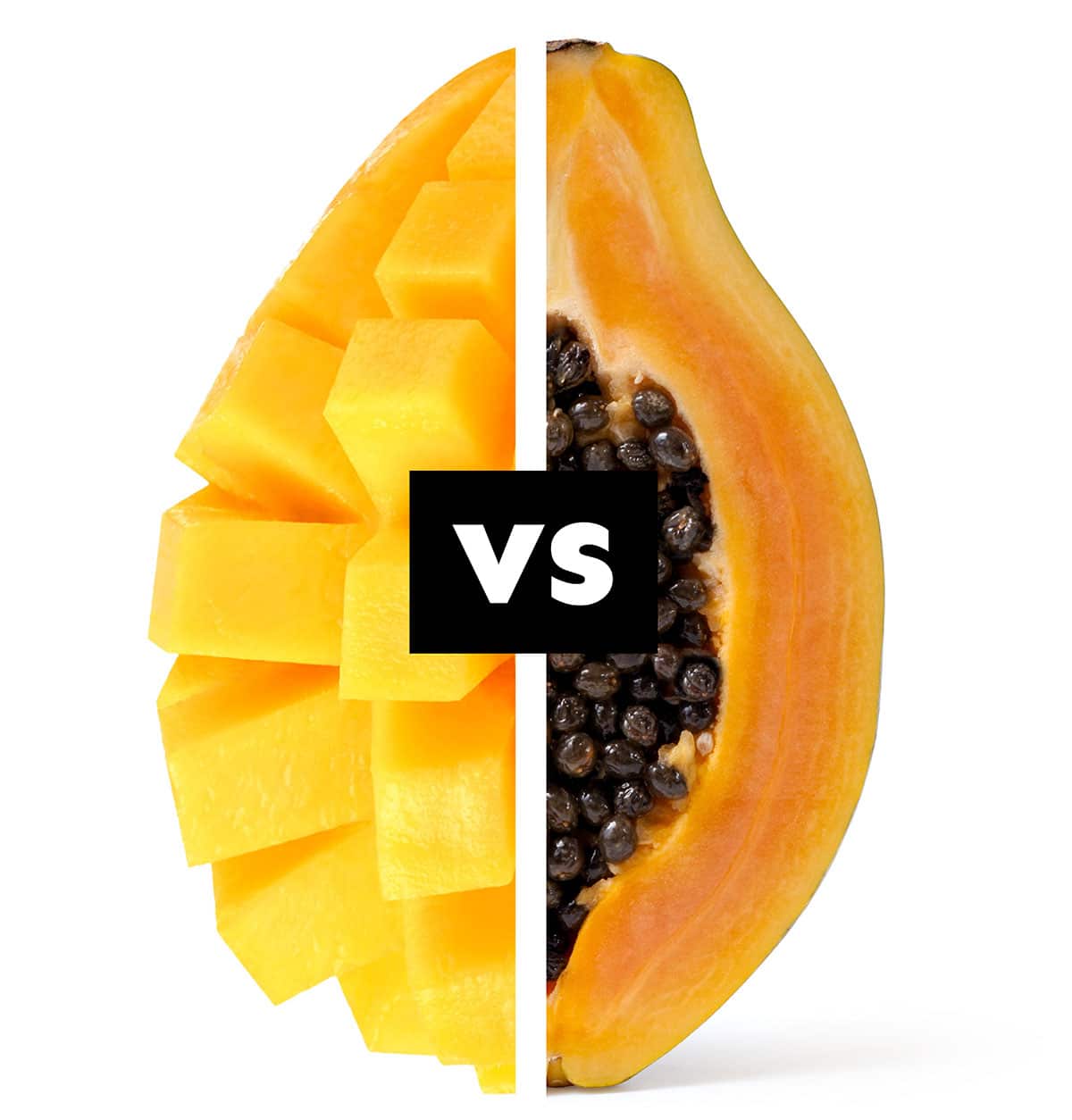
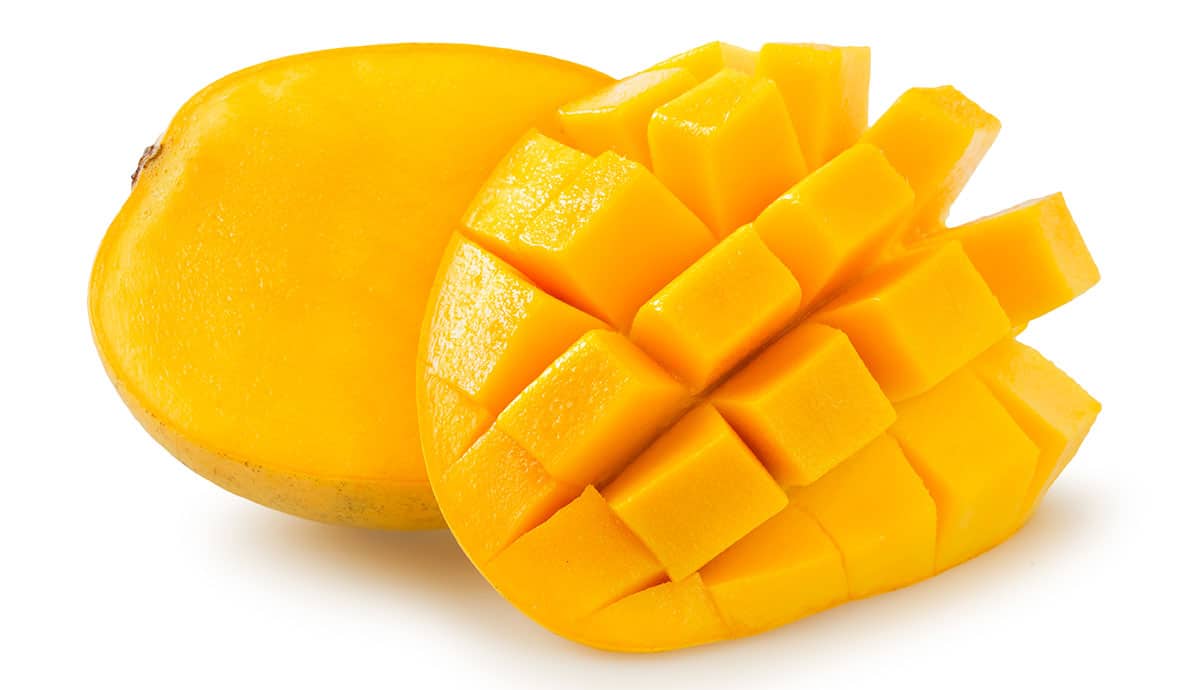
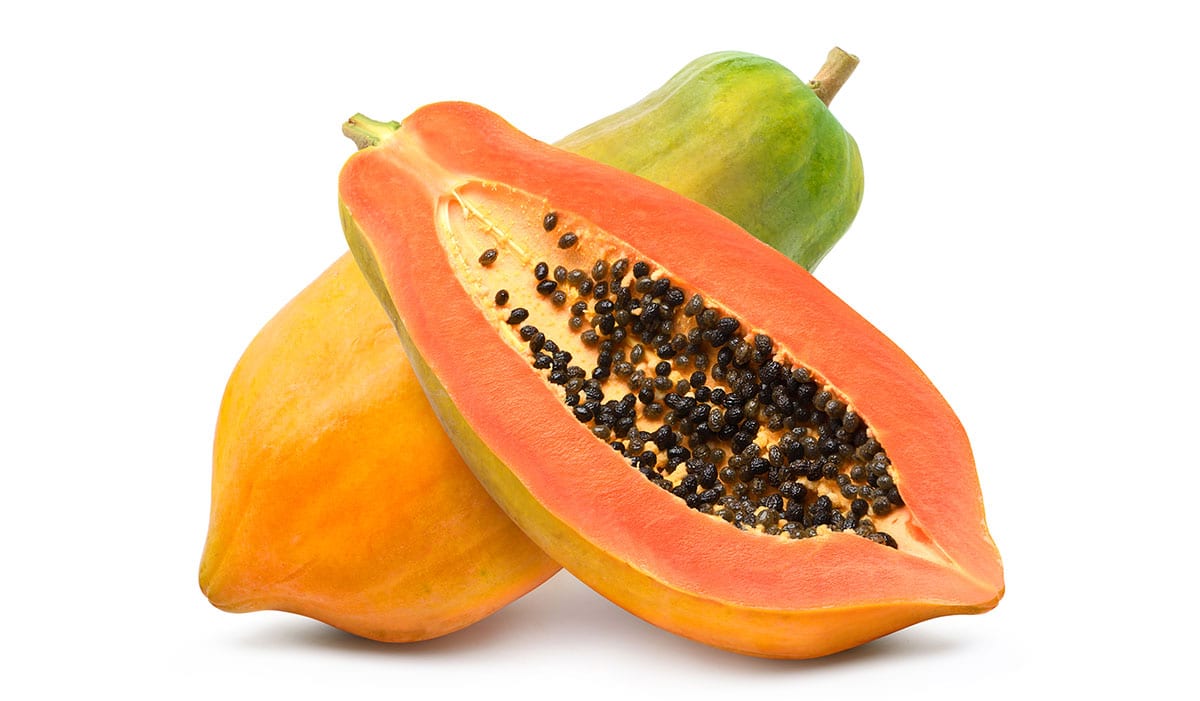
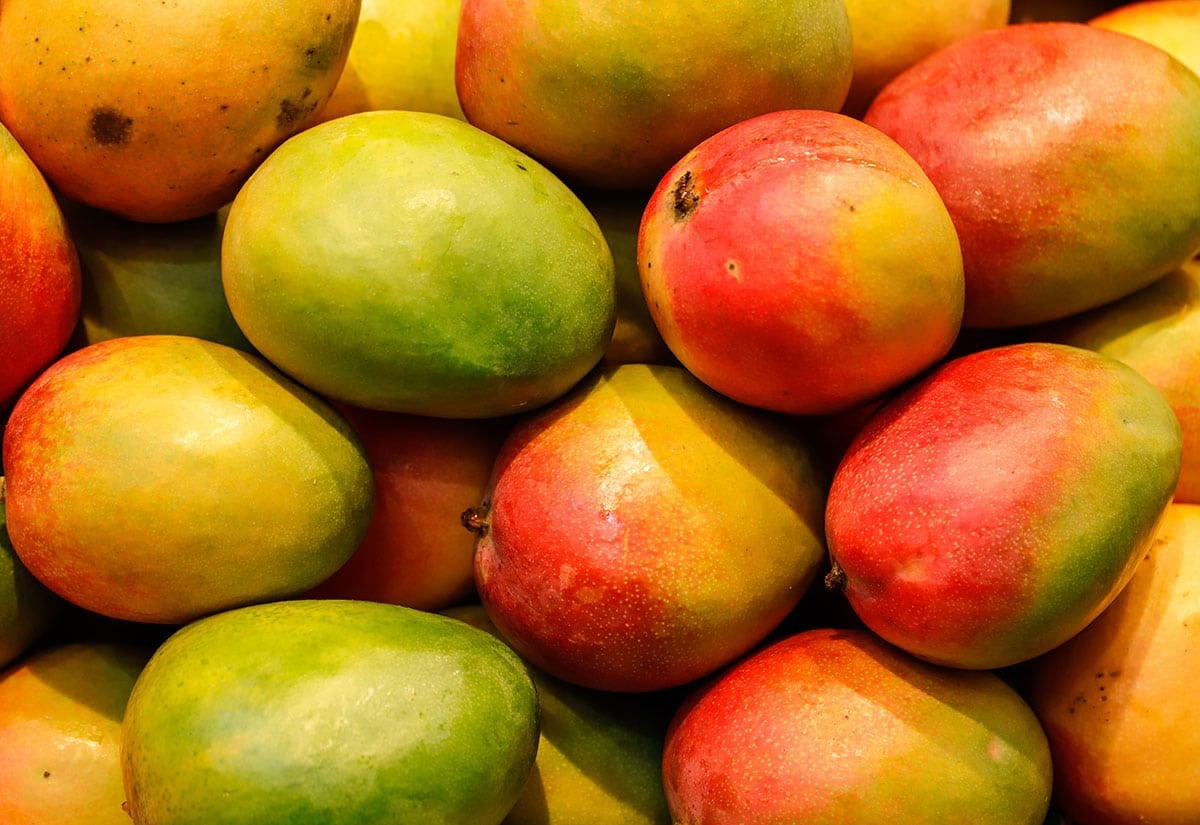
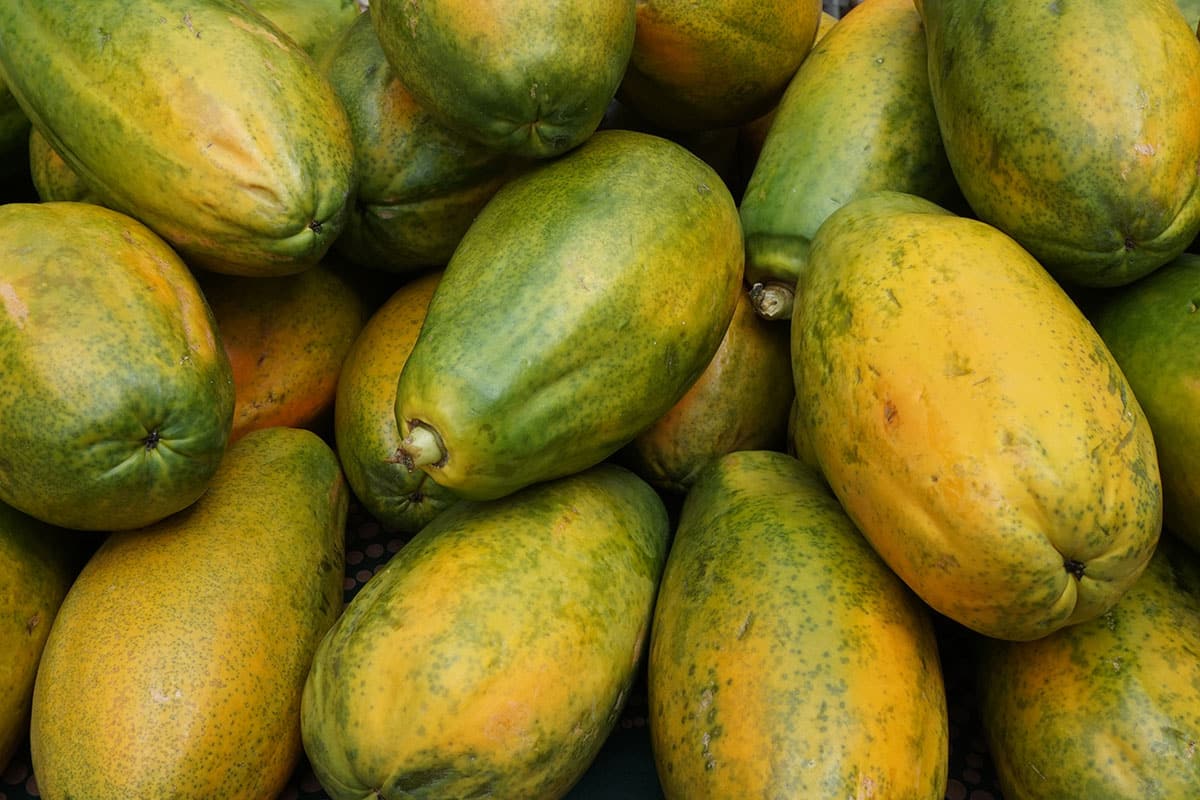
Mangoes are about the size and sort of the shape of large pears. They are smaller than papayas and have an oval or oblong shape. They are typically about 2 to 6 inches long and 1.5 to 4 inches in diameter. A mango’s skin is smooth and thin and is generally a mix of green, yellow, orange, and red, as the photos here show. The skin is also slightly waxy, and can be peeled easily with a knife or vegetable peeler. The inner pulp is deep orange-yellow colored and contains a single large flat seed at the center. It is a stone fruit meaning just that, one large seed. Papayas are a good bit larger than mangoes and have a pear-like shape. They are about 4 to 8 inches long and 2 to 4 inches in diameter. Like mangoes, they have a thin smooth skin which can range from green to yellow or orange. Their skin, however, is even thinner than the mango’s and can almost be peeled with your hand. The inner pulp, however, is consistently orange and contains a bunch of small black seeds.
Smell
The aroma of a mango is one of the fruit’s best features. If you hold a ripe mango to your nose, you find a sweet scent similar to that of a peach or apricot except with a vaguely tropical scent. Papayas don’t have quite the strong aroma as mangoes. They have a sweet scent to be sure, and it smells something like cut melons. It just isn’t as strong as a mango’s but it is still noticeable and pleasant.
Taste
Mangoes are sweet and tangy with a balance between sweetness and acidity. The inner pulp is juicy, but also pretty fibrous and clings to the pit like it is holding on for life. It is, however, worth scraping off the pit as you won’t want to waste it. Papayas have a milder flavor than mangoes. The taste of a ripe papaya is sweet and perhaps just a bit musky. That may not be the right word, but once you eat papayas you will recognize the taste. Their inner pulp is soft and smooth and can be almost creamy.
Nutrition
Mangoes and Papayas are fairly similar nutritionally as both are vitamin dense, but also contain quite a bit of sugar. Mango Nutrition Info: According to the USDA, a 1 cup serving (about 6 ounces) of raw mango contains:
99 Calories 25g of Carbohydrates 2g of Fiber 23g of Sugar 1.4g of Protein 66% of the RDA of Vitamin C 11% of the RDA of Vitamin A 11% of the RDA of Folate
Papaya Nutrition Info: Papayas are very similar to mango. The USDA data shows 1 cup (about 5 ounces) provides:
62 Calories 16g of Carbohydrates 2.5g of Fiber 11g of Sugar .7g of Protein 100% of the RDA of Vitamin C 9% of the RDA of Vitamin A 12% of the RDA of Folate.
Uses
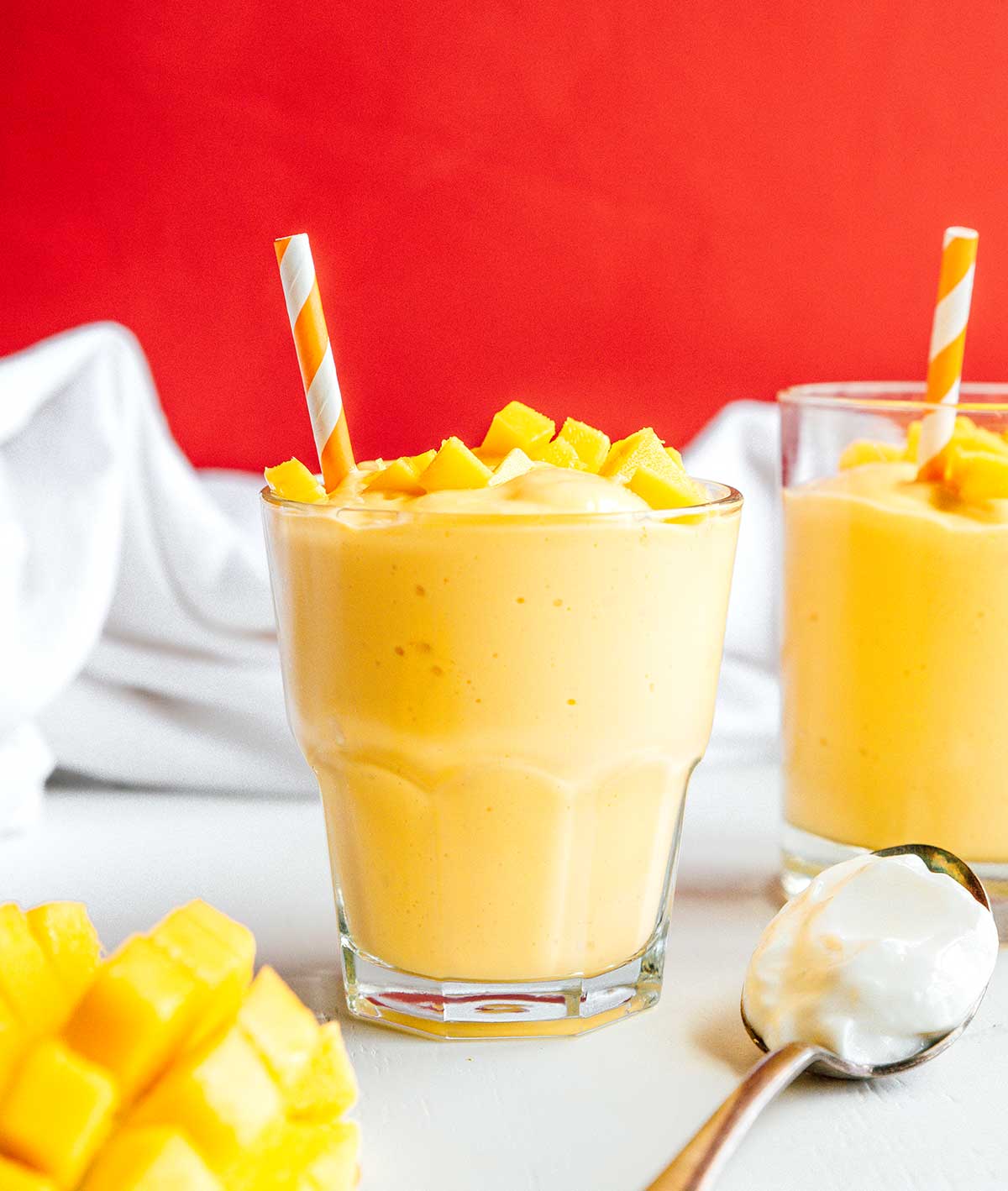
Mangoes are probably most often just eaten fresh out of hand. They can, however, be used in both sweet and savory recipes. In many tropical countries mangoes are a staple food. They are great in mango salads, mango chutney, mango salsa, and sauces. Mangoes are also a popular ingredient in mango smoothies, fruit salad, desserts, and baked goods, such as mango sorbet, mango cheesecake, and mango bread, and always popular with the kids as refreshing mango popsicles. Papayas can be used in just about as many ways including just sliced and eaten fresh or chilled and put in a fruit salad. The soft and sweet flesh of papayas makes them an excellent addition to smoothies and desserts, such as papaya sorbet, papaya mousse, and papaya pie. In savory dishes, papayas are often used in salads, salsas, and curries. The sweet and slightly musky flavor of papayas pairs well with spicy ingredients such as chili peppers and ginger.