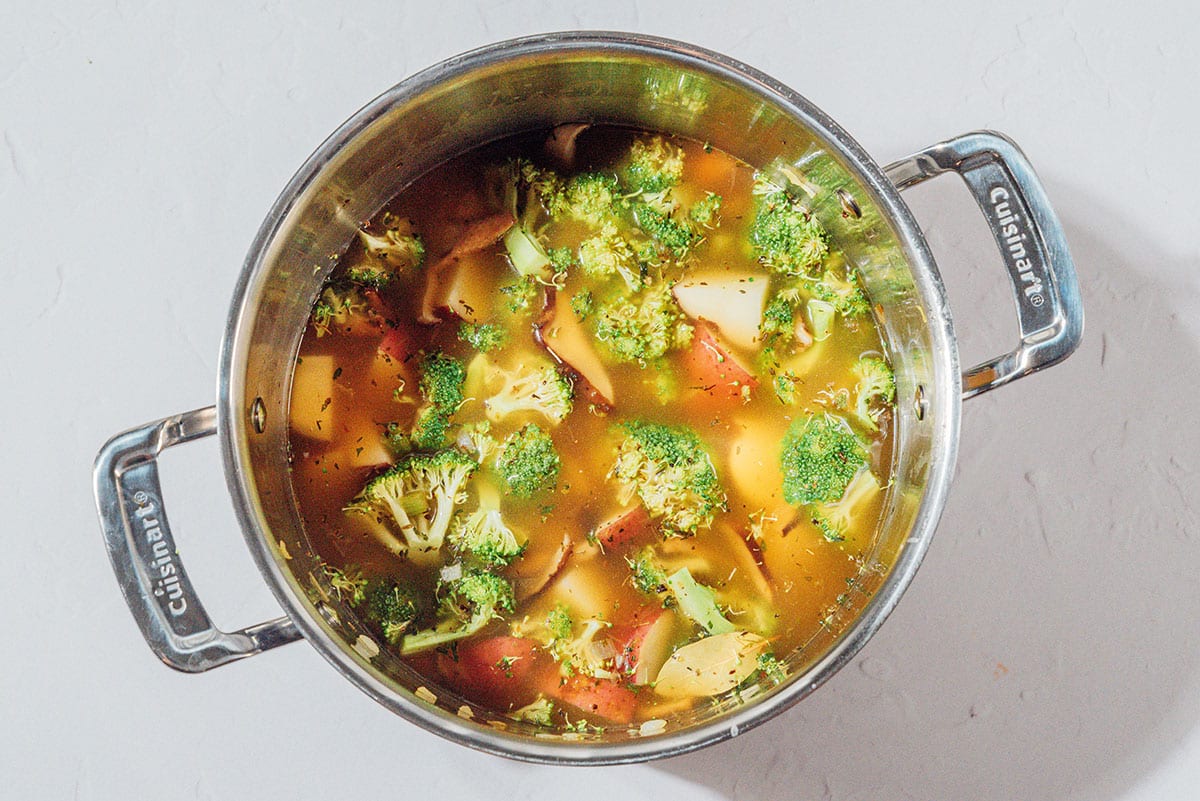
This is the ultimate guide to making soup without a recipe, and we’re breaking it all down for you step-by-step. Let’s cook!
What is soup du jour?
“Soup du jour” is a French phrase that you might have come across in restaurants. It simply means “soup of the day.” It’s a way for eateries to offer a freshly prepared soup option that changes daily. This phrase gained popularity outside of France, especially in English-speaking countries, where it added a touch of continental flair to menus. It became associated with a certain kind of culinary sophistication, suggesting that the soup was prepared with care and with the freshest ingredients available. So is there a soup du jour recipe? Well, no. Given the meaning of soup du jour, there isn’t any one recipe that can be described as soup du jour. Which is why today, we’re showing you how to make virtually any type of soup! This is a choose-your-own-adventure of soupy deliciousness, so grab a pot and let’s cook!
Types Of Soup
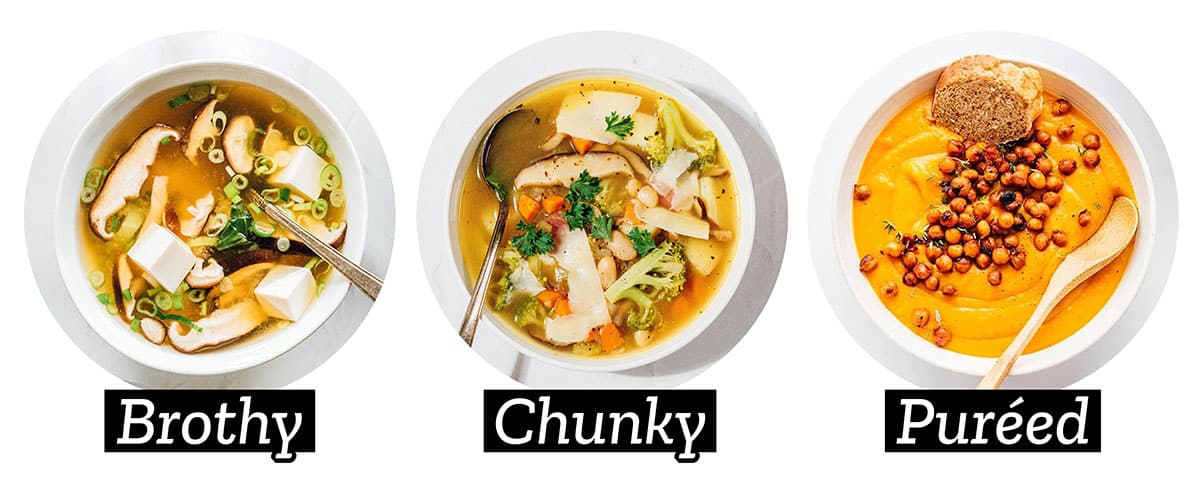
The very first step in building your perfect pot of soup is to determine what texture you want the finished soup to have:
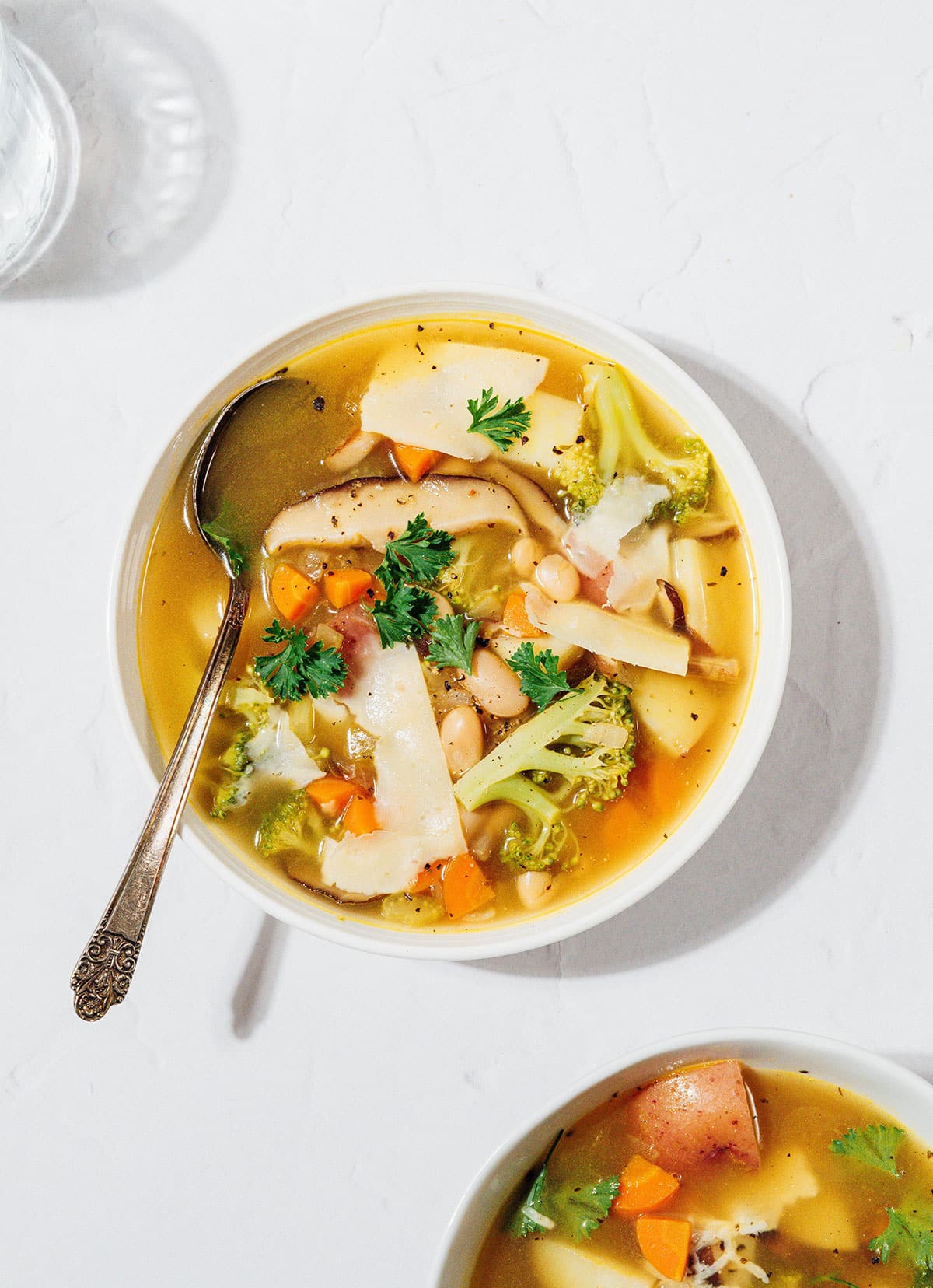
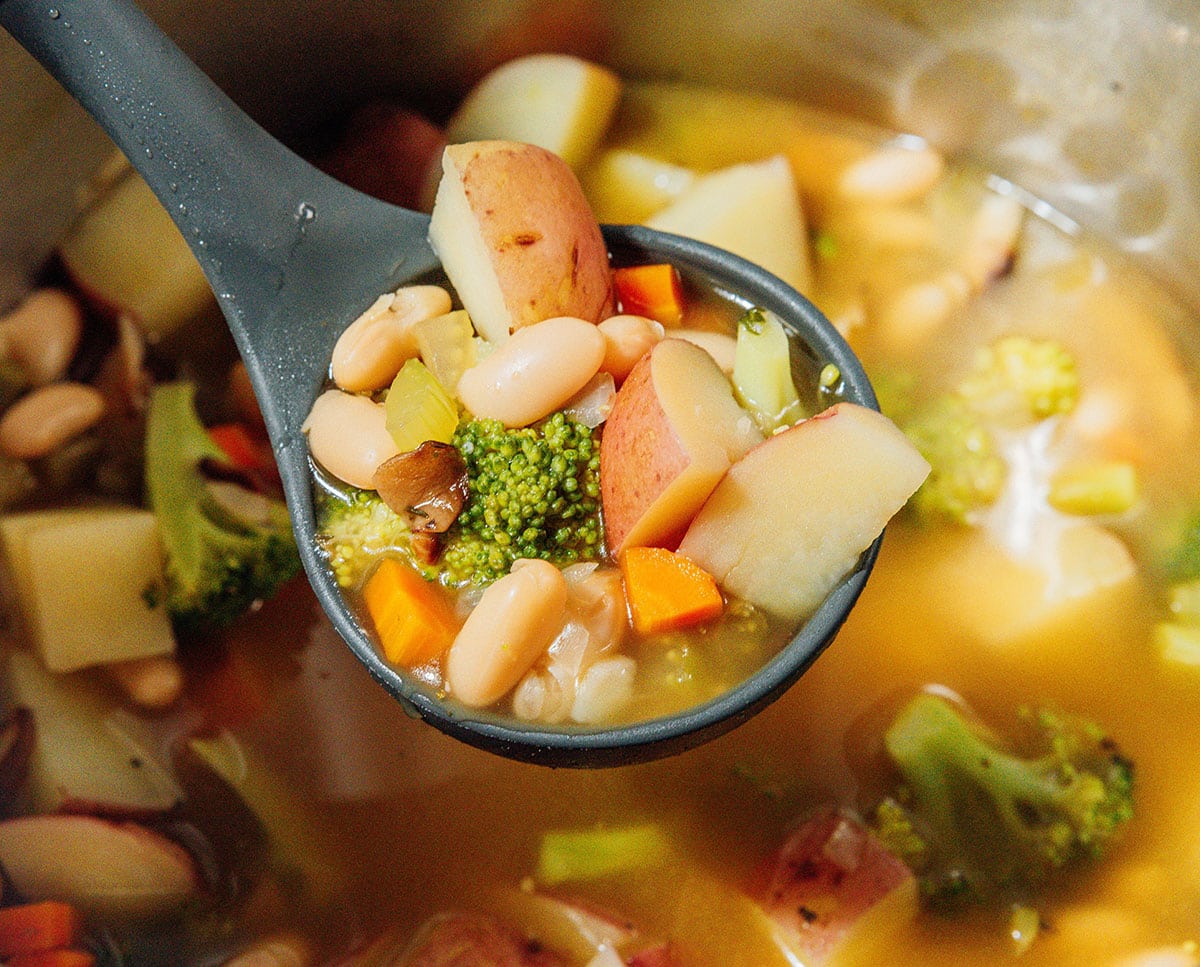
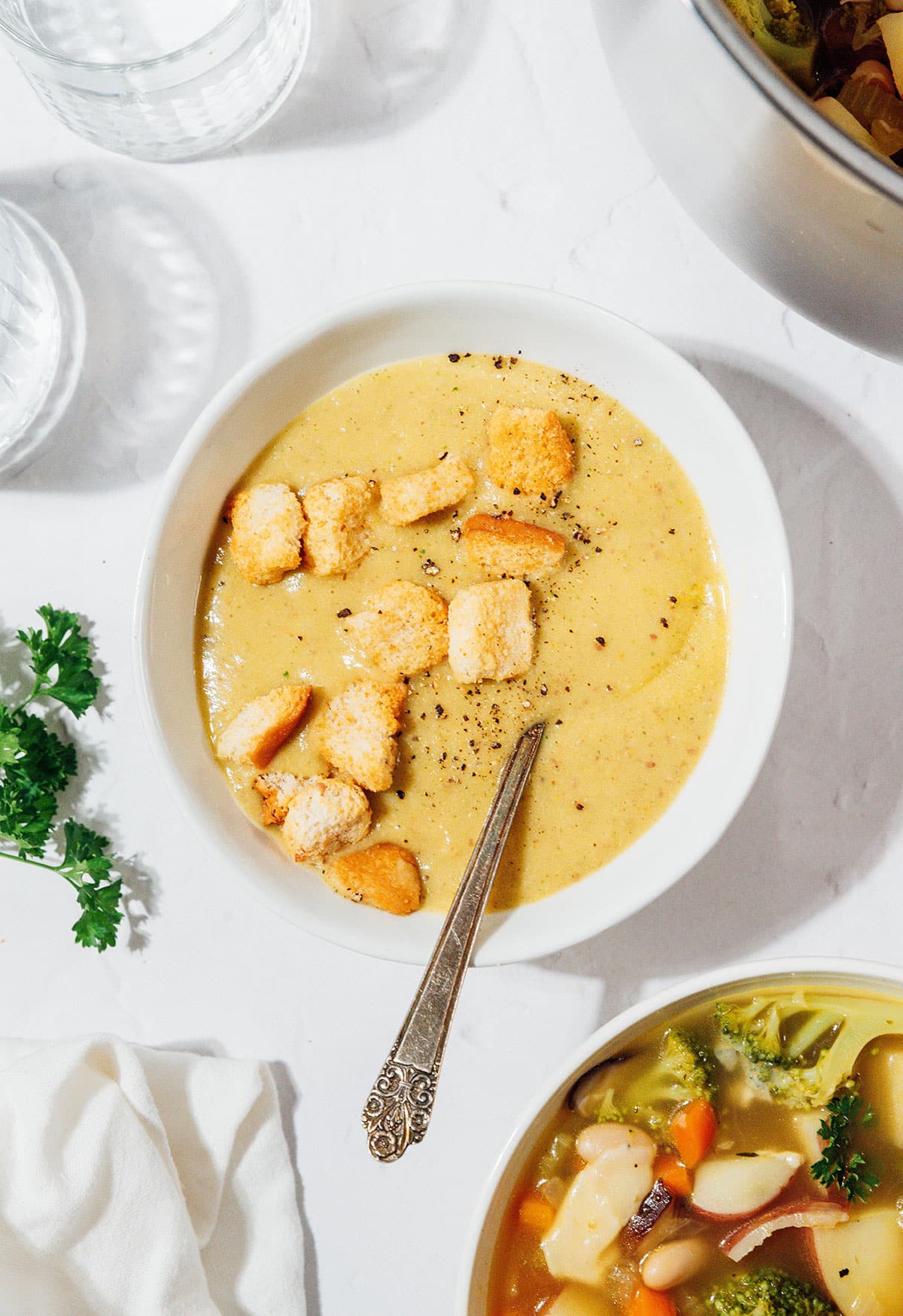
Brothy Soup: These are usually more delicate soups that rely on having a great broth or stock. They have a higher proportion of liquid to fillings. Examples of brothy soups include miso soup or egg drop soup. Chunky Soup: These soups have more fillings that simmer together for a while, creating a dynamic but easy to make soup. Vegetable soup or minestrone soup are examples of chunky soups! Pureed Soup: After simmering away on the stove, these soups are pureed until silky smooth – think tomato soup or pumpkin soup.
How To Make Soup
Regardless of which type of soup you pick, they’ll all have these foundational elements.
Step 1: Aromatics Step 2: Protein Step 3: Seasonings Step 4: Vegetables Step 5: Broth or Stock Step 6: Quick Cooking Ingredients Step 7: Garnishes & Toppings
Step 1: Aromatics
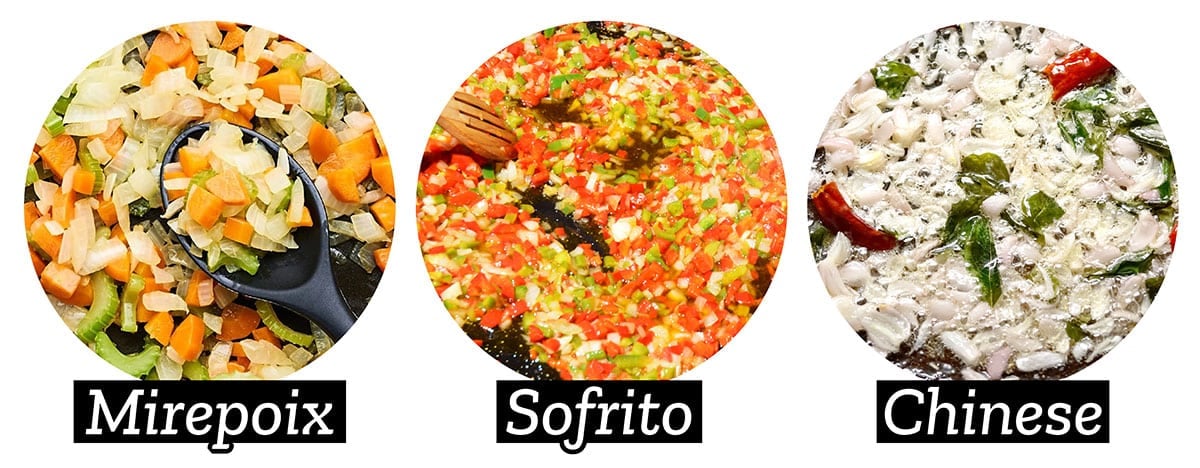
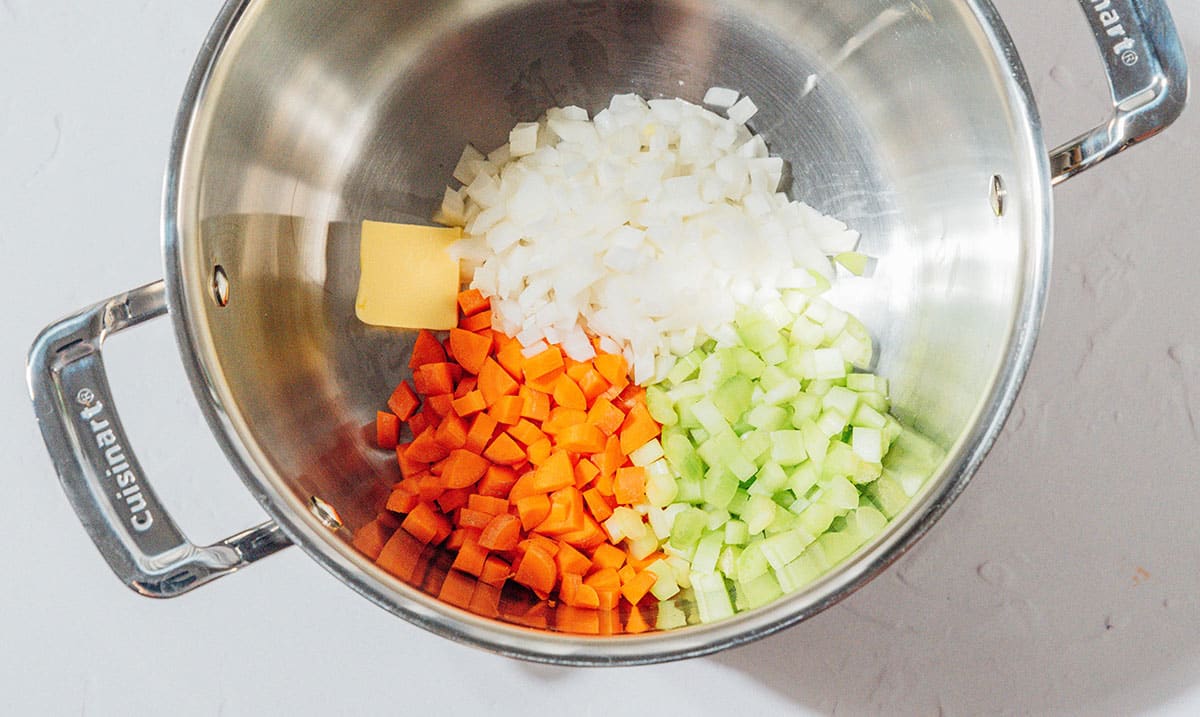
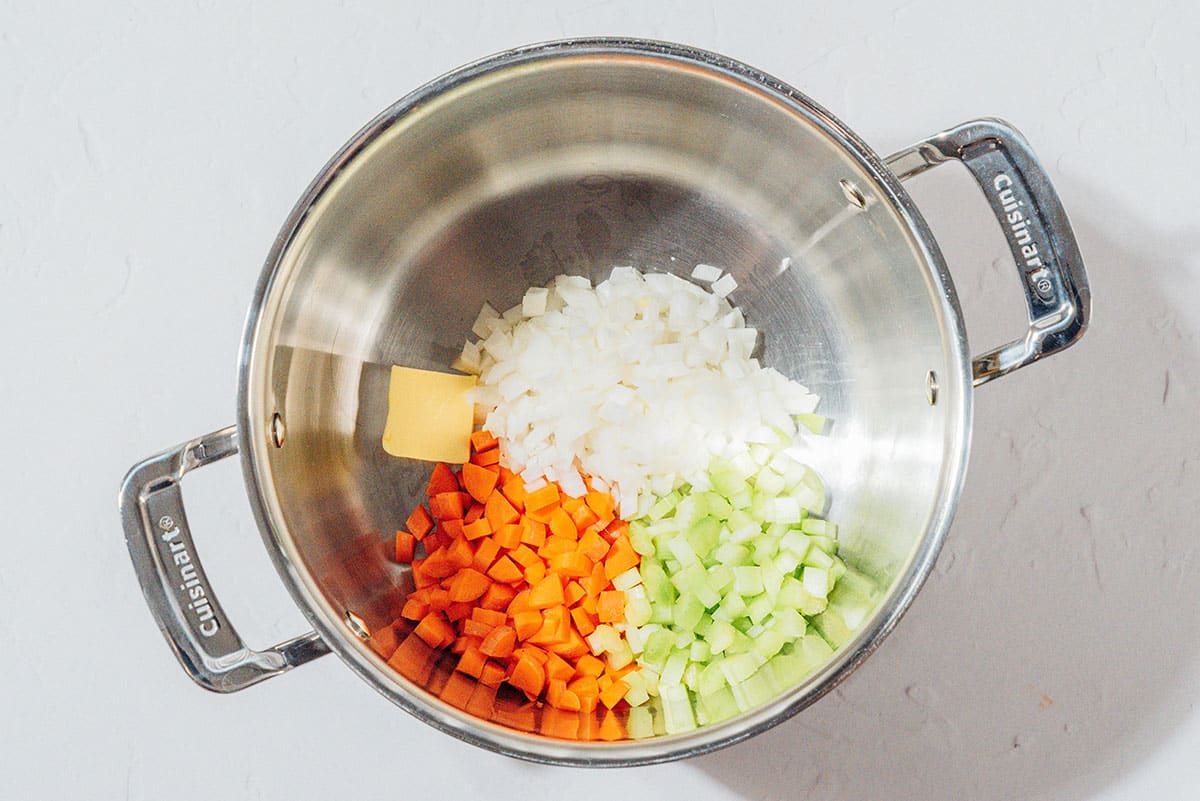
The first step is to create a flavorful base for your soup! You’ll heat a pat of butter or a drizzle of oil in your pot, then add your aromatics and cook until they’re soft, about 5 mintues. You’ve got a bunch of options here, depending on which direction you want to take your soup.
Mirepoix
For most basic soups, mirepoix is the best flavor base!
Formula: 2 parts onion / 1 part carrot / 1 part celery Servings: Use 1/4 cup of onion per serving (for example, if you are making soup for four people this equals 1 cup of onions, 1/2 cup of carrots, and 1/2 cup of celery) Variations: Make it Cajun by replacing the carrot with green bell pepper
Sofrito
For South or Central American soups, sofrito is a great base.
Formula: 2 parts onion, 1 part tomatoes, 2 cloves garlic Servings: Use 1/4 cup of onion per serving Variations: Make it Italian by adding 1 part celery
Chinese Trinity
For Asian-inspired soups, this trifecta is a must.
Formula: 1 green onion, 1 tsp ginger, 1 clove garlic Servings: Use 1 green onion per serving Variations: Make it Thai by adding 1 tsp of lemongrass, galangal, or shallots, or by adding a few kaffir lime leaves
Step 2: Protein
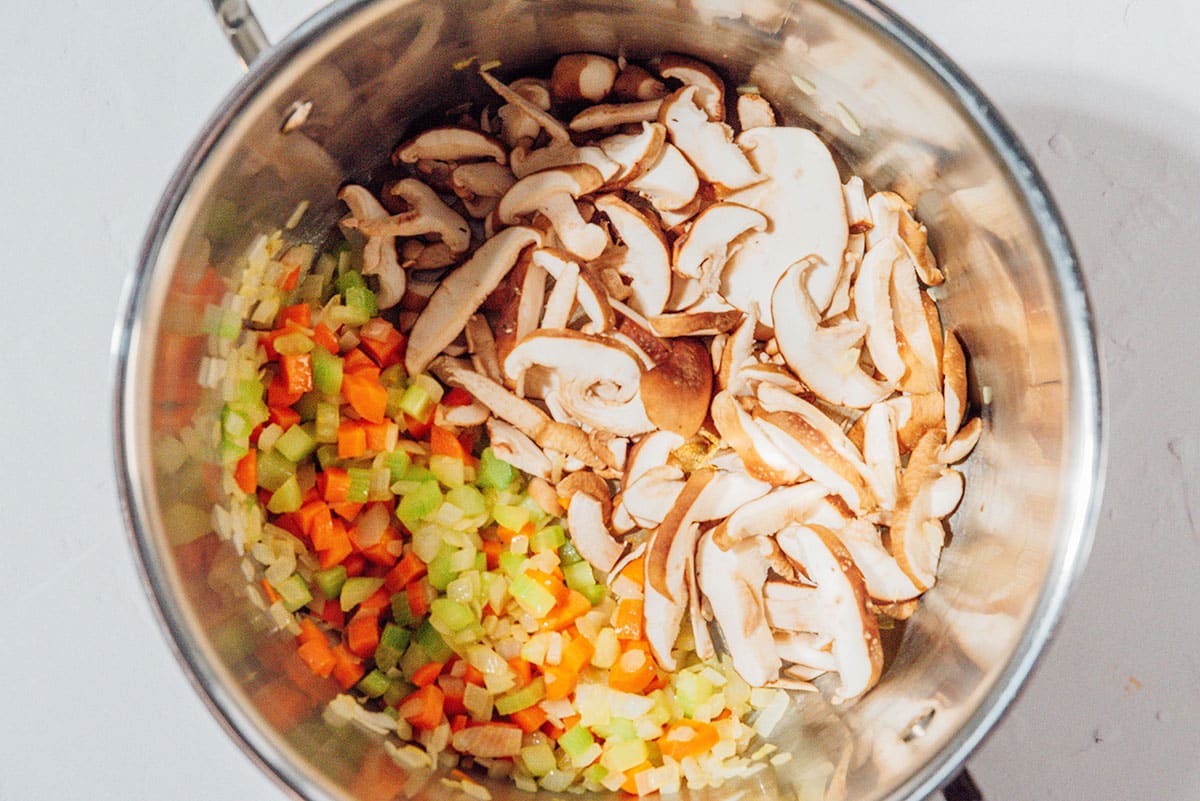
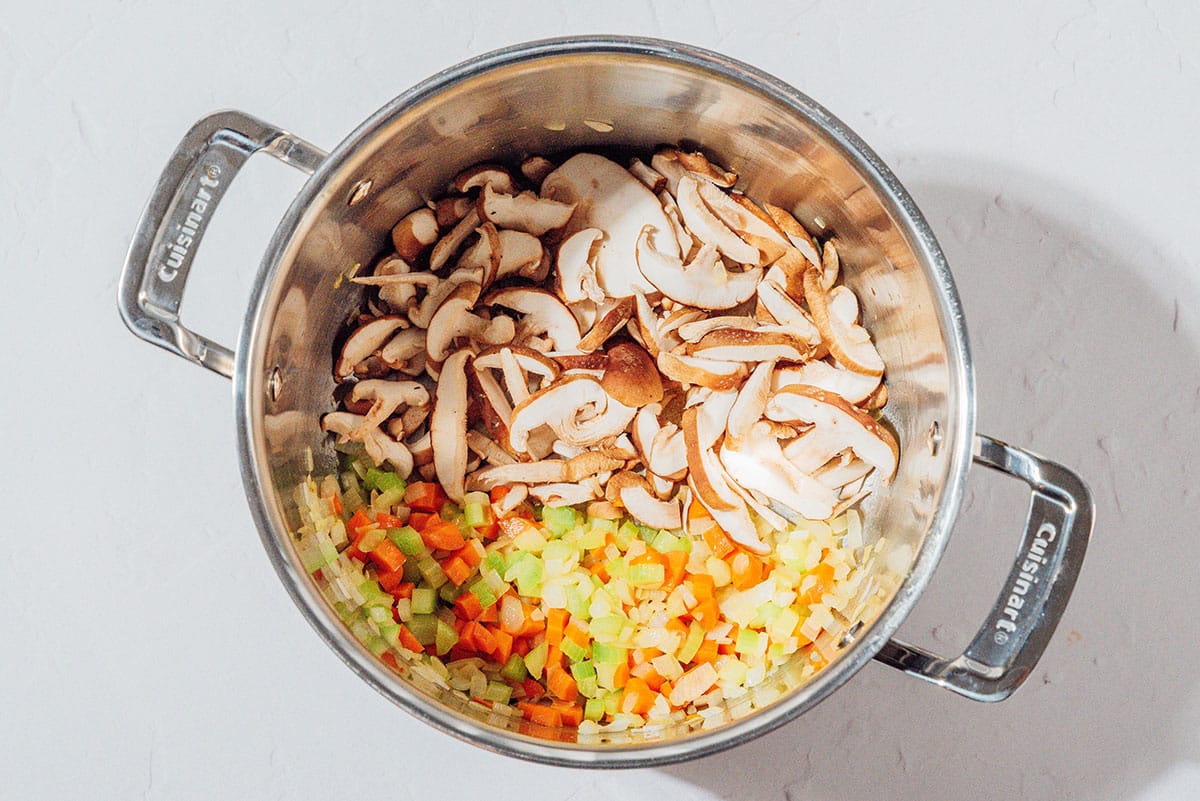
Once your aromatics have cooked into fragrant deliciousness, it’s time to add your protein! You’ll cook the protein to brown it, which will provide so much flavor for your soup! We’re a vegetarian food site, but for the sake of this post we’ll provide options for all eaters. Servings: You’ll need about 1/4 pound of protein per serving.
Mushrooms: cook until the sweat out their moisture and begin to brown Tofu or Tempeh: crumble and cook until crispy and browned Meat Alternatives: cook to sear until brown Poultry, Pork, or Beef: cook to sear until brown
Step 3: Seasonings
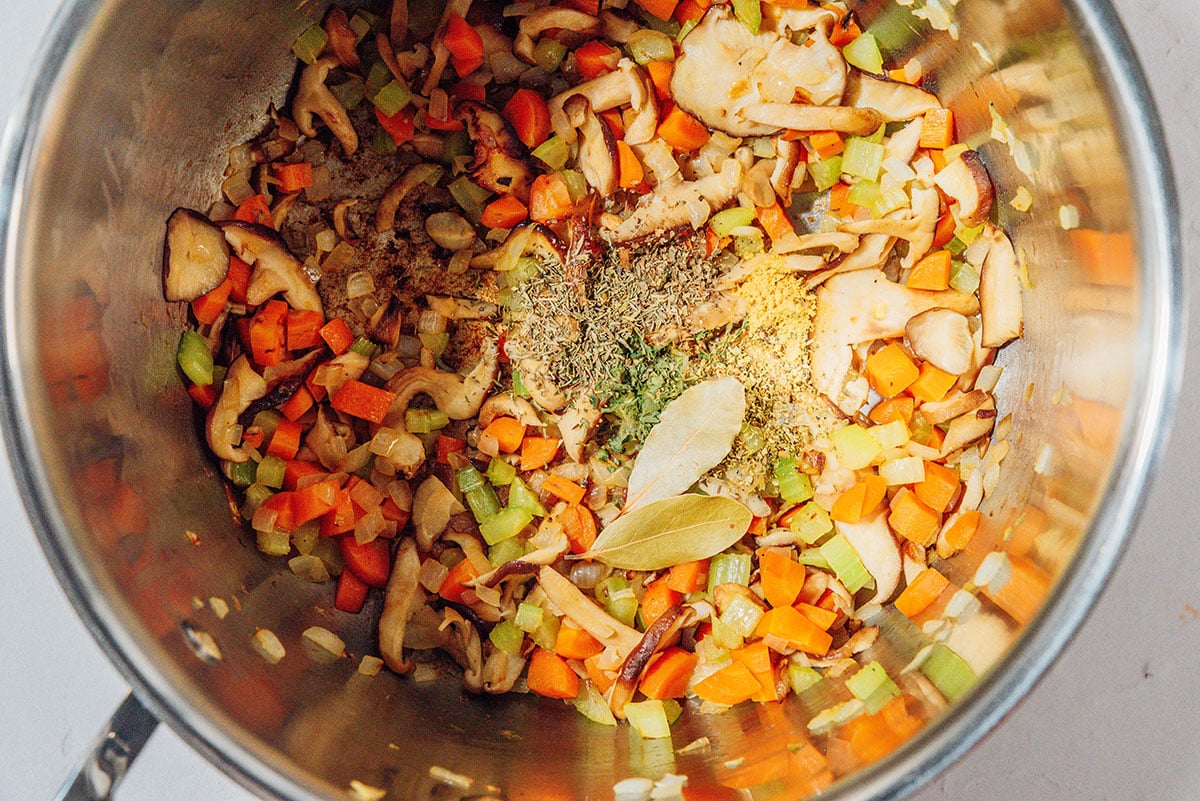
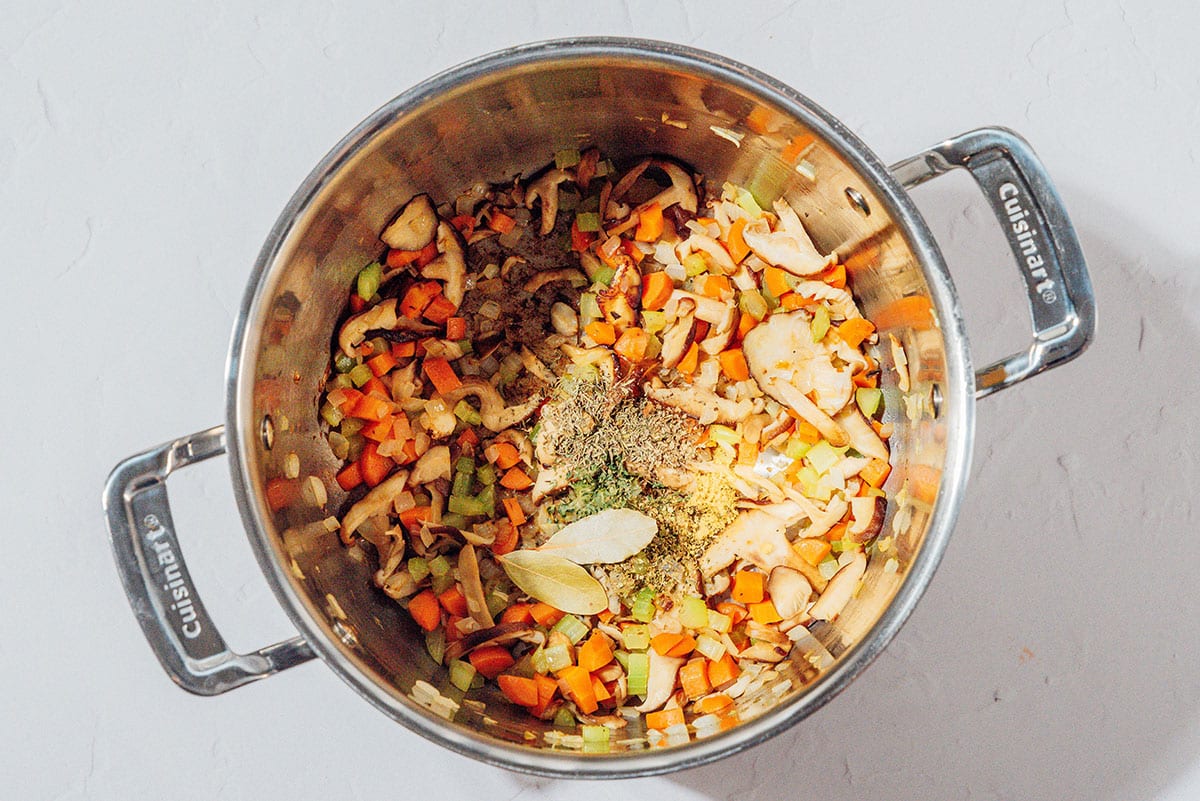
Next up are your seasonings! These are either your dried herbs or your fresh hardy herbs (like fresh rosemary or thyme). This is not the step for adding tender herbs (like fresh parsley or basil). Servings: While these differ based on seasonings used, aim for about 1 teaspoon of seasoning per serving.
Italian Seasoning Blend: dried basil, oregano, thyme, rosemary, marjoram, sage, bay leaves Mexican Seasoning Blend: cumin, chili powder, coriander seed, Mexican oregano, paprika, garlic powder Chinese Seasoning Blend: star anise, Chinese five spice, dried ginger, white pepper, Sichuan peppercorns Thai Seasoning Blend: dried kaffir lime leaves, ginger, turmeric, dried red chilies, cumin, coriander seed, lemongrass
Step 4: Vegetables
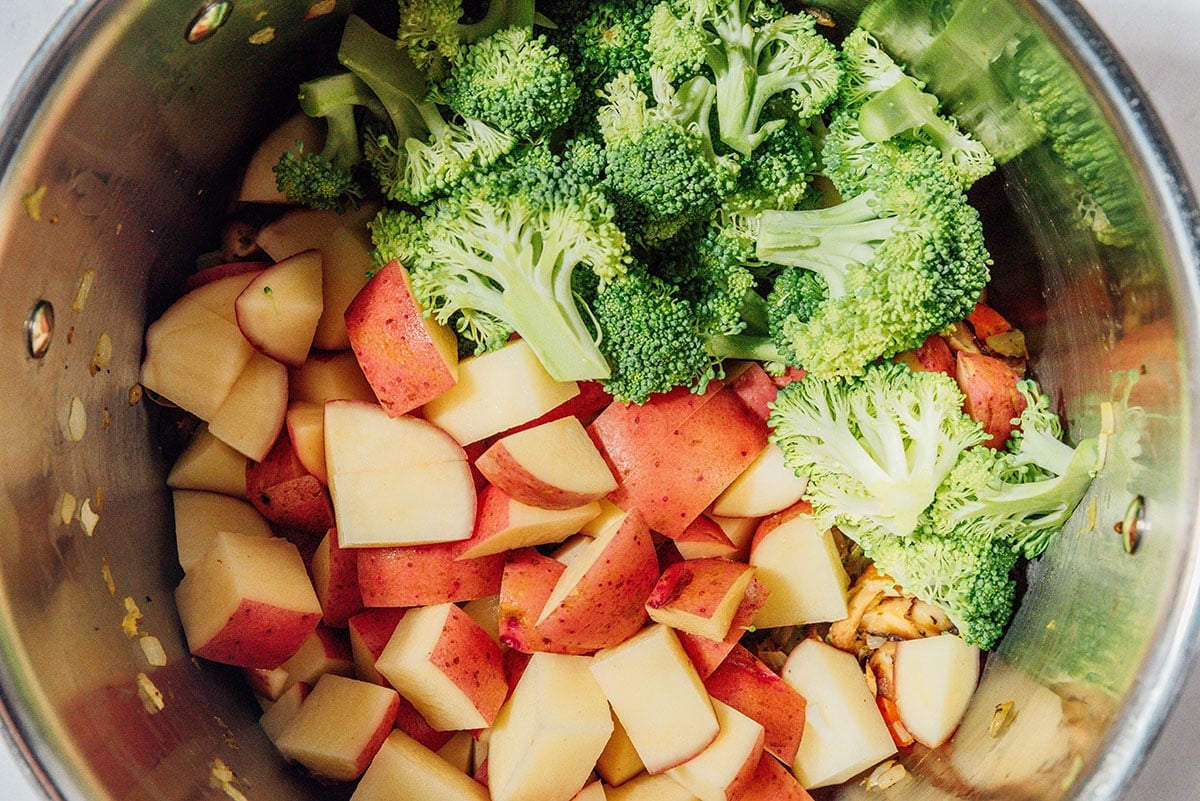
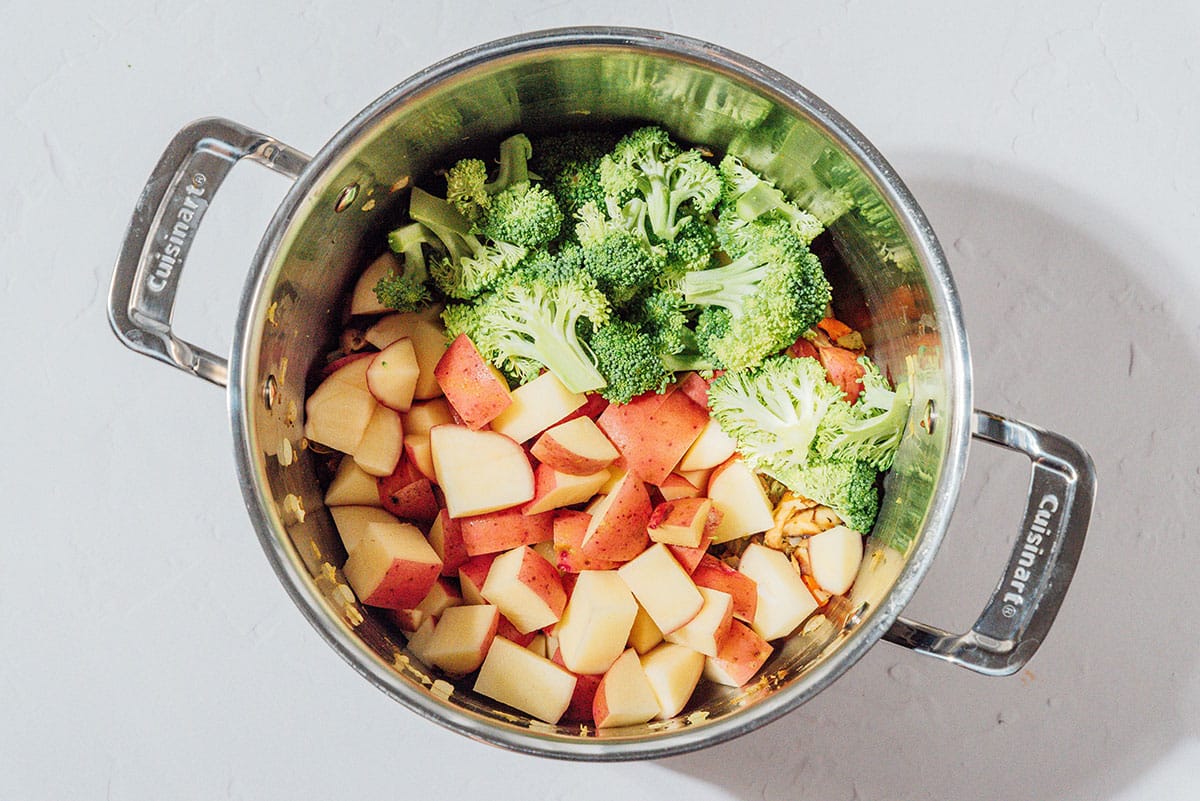
Time to add some bulk to our soup with vegetables! Choose up to 3 vegetables from this list. Be sure to cut them into bite-sized pieces. Servings: You’ll need about 1 cup of vegetables per serving of chunky or pureed soups. For brothy soups, add less vegetables.
Bell pepper Bok choy Broccoli Brussels sprouts Butternut squash Cabbage Carrot Cauliflower Eggplant Kale Parsnip Potatoes Pumpkin Sweet potatoes Tomato Turnips Zucchini Yellow squash
Step 5: Broth or Stock
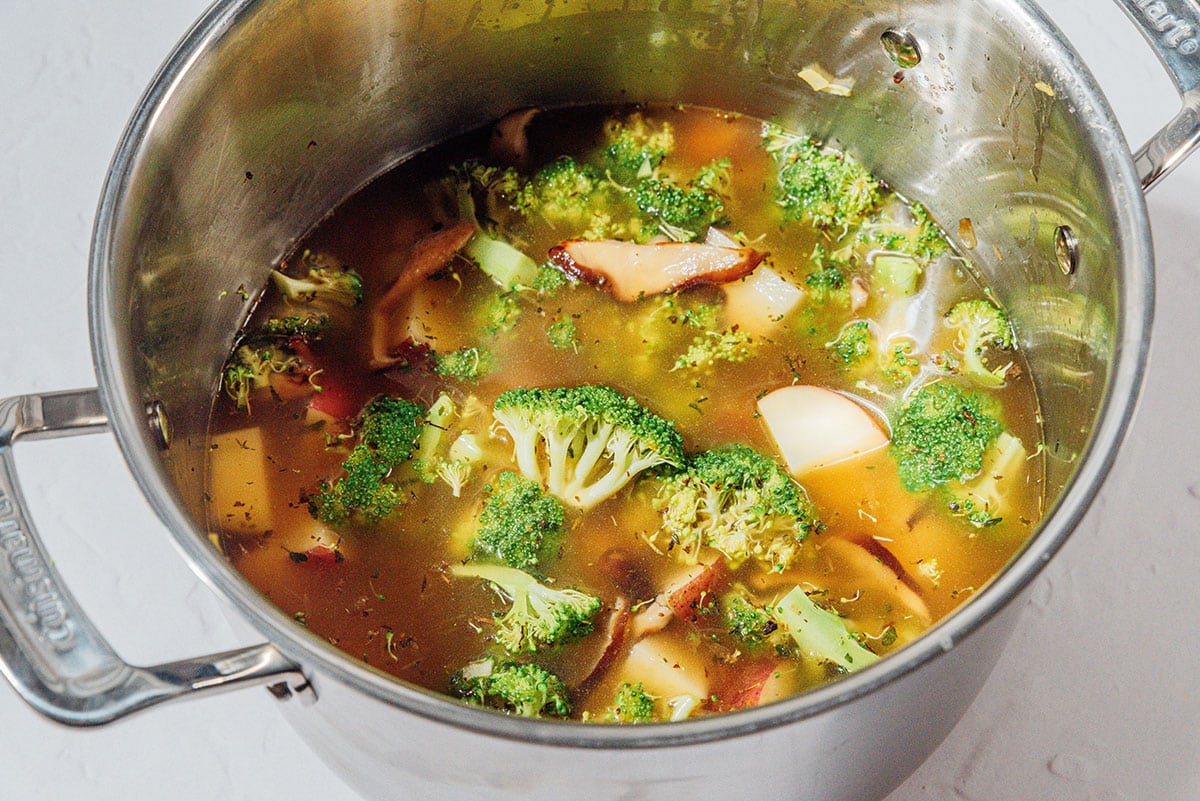
Add your favorite broth or stock, whether it be vegetable, beef, chicken, or something else (grab our guide to homemade vegetable broth here!) Cover and let simmer for at least 20 minutes, or until vegetables are tender. Generally, the longer it simmers, the better the flavors will be. Servings: You’ll need about 2 cups of broth per serving.
Step 6: Quick Cooking Ingredients
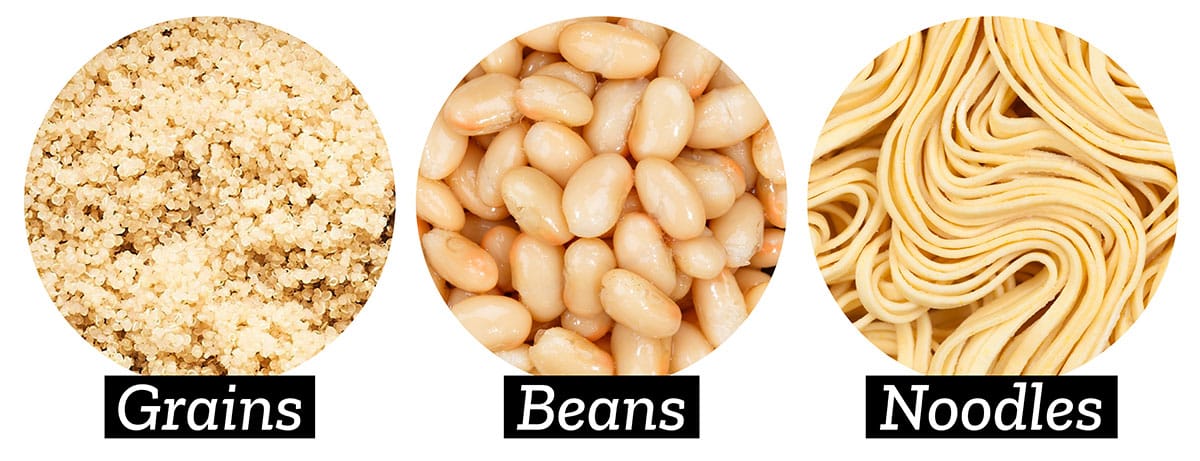
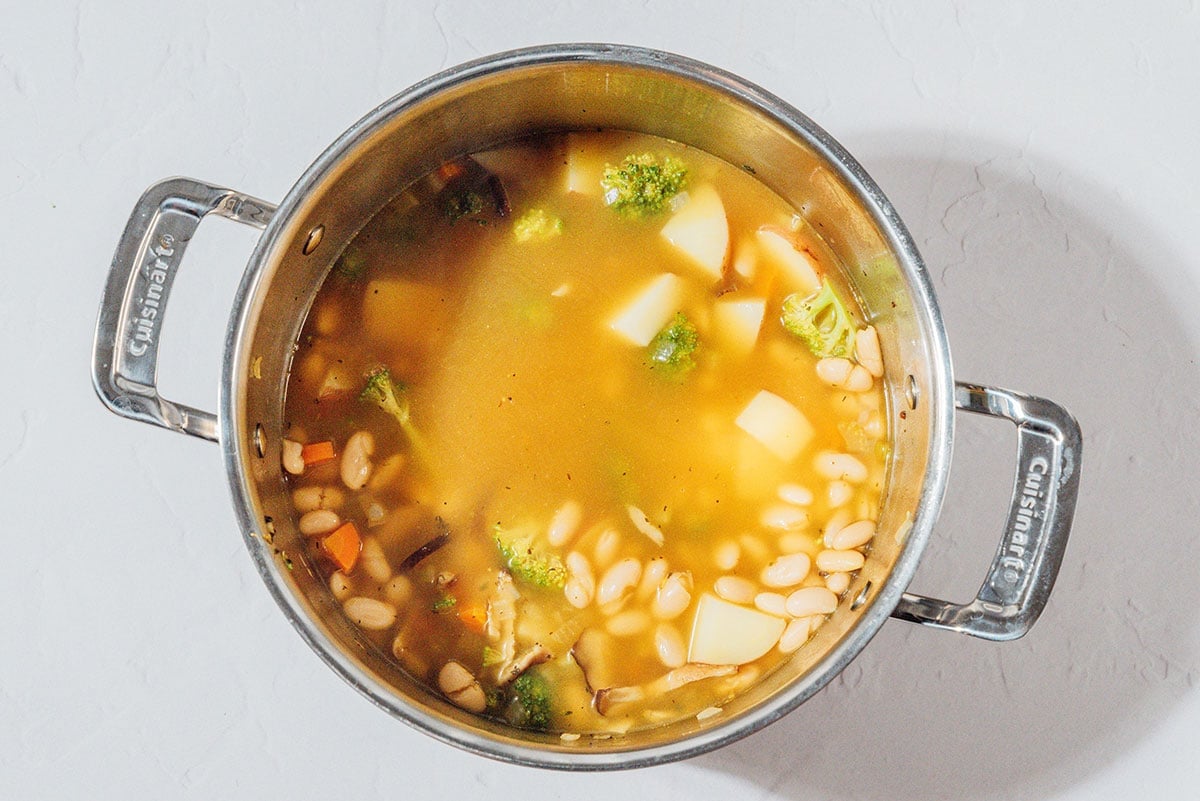
Once your soup is just about ready to serve, you can add a quick cooking ingredient to add a tasty textural element to your soup! Cook these ingredients separately before adding them to your pot of soup. Your soup can be served right after adding them! Servings: While it depends on the ingredient, about 1/4 cup of the cooked ingredient per serving is a good guideline.
Cooked Grains: quinoa, farro, bulgur, barley, wild rice Cooked Beans: white beans, black beans, pinto beans, kidney beans, chickpeas Cooked Noodles or Pasta: udon noodles, egg noodles, rice noodles, couscous, semolina, elbow pasta, orzo, mini farfalle
Step 7: Garnishes & Toppings
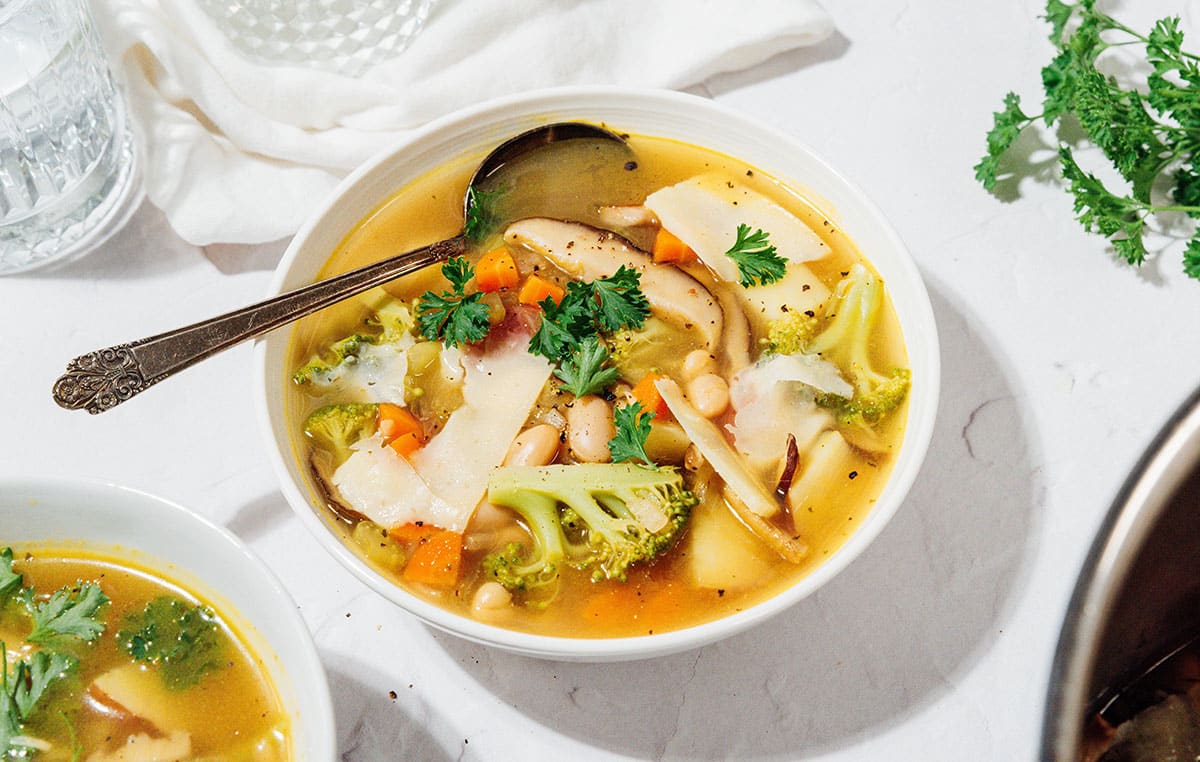
The best soups are the ones with lots of toppings and garnishes! After portioning your soup into bowls, try adding any of the following:
Cheese: cheddar, parmesan, goat cheese, feta Crunchies: croutons, crackers, tortilla chips, popcorn, fried onions Herbs: fresh parsley, fresh basil, green onions, chives Dairy: sour cream, plain Greek yogurt Spice: hot sauce, kimchi, jalapeño slices
Adjusting your soup
The great thing about soup is you can almost always fix it if you’re not liking the flavor!
How To Fix Salty Soup
Add a creamy element, like heavy cream or coconut milk. You can also balance out the soup by adding something sweet, like a pinch of sugar or honey. When all else fails, simply dilute the soup with a little water or cream!
How To Fix Bland Soup
Try adding a splash of apple cider vinegar, which will add a flavorful element to the soup. You can also add something salty (like salt, soy sauce, or bouillon), which will elevate all of the savory flavors in the soup.
Optional: Blended Soup
After adding your broth and simmering until the vegetables are tender, you can optionally blend your soup using either a handheld immersion blender or by carefully transferring to a countertop blender. If you choose to puree your soup:
Puree before adding quick cooking ingredients. If adding a bulky proteins (like meat or meat alternatives), add those after pureeing. Mushrooms can be blended.
Favorite Soup Recipes
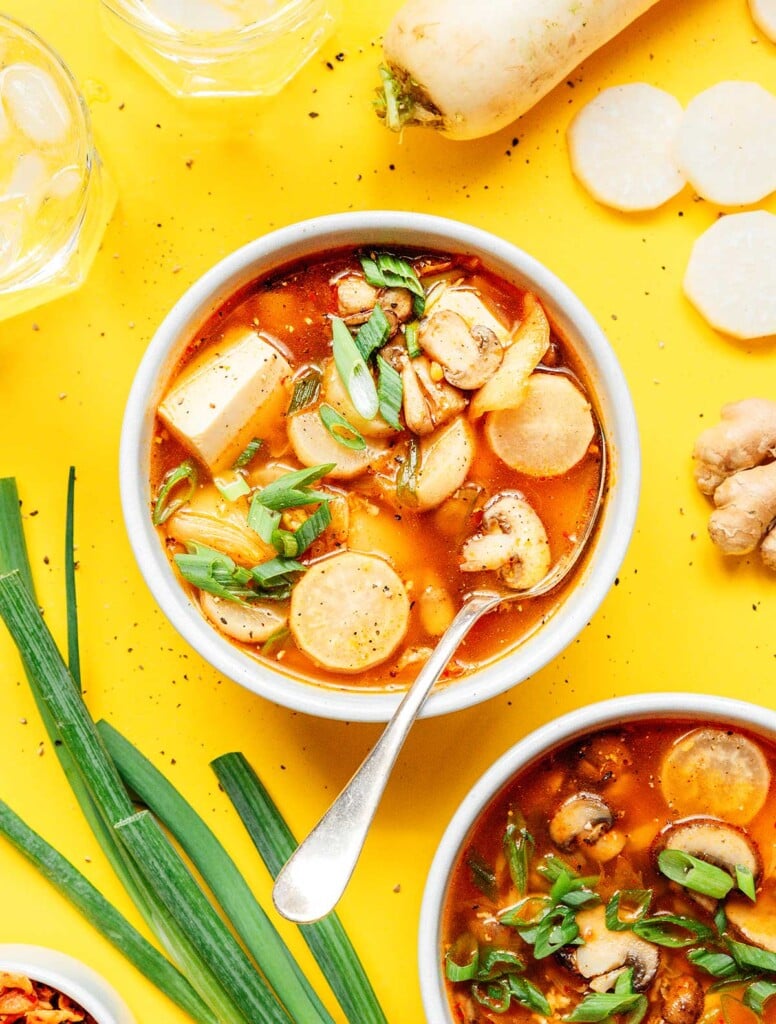
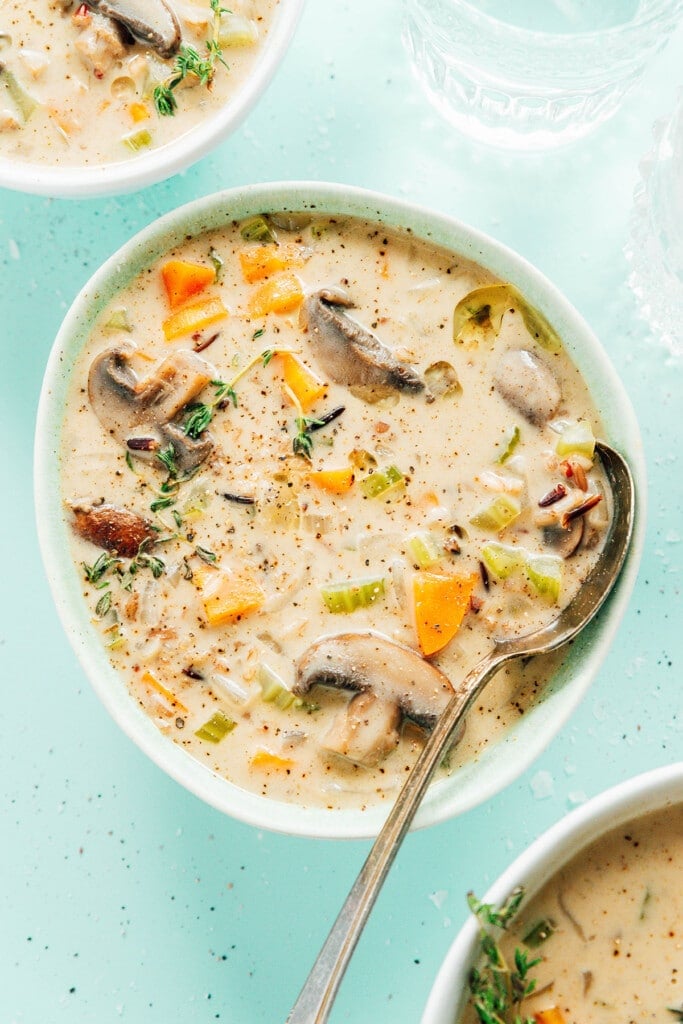
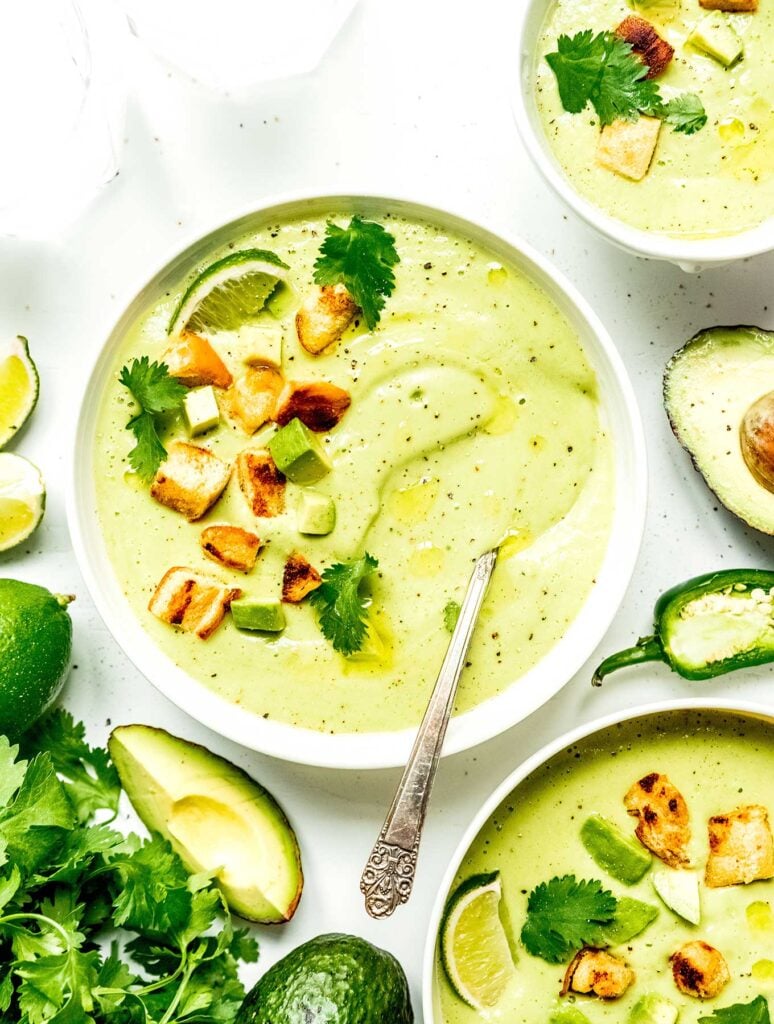
And that, friends, is how to make soup without a recipe! For more soup deliciousness, check out all of our soup recipes here! Some of our favorites are:
Kimchi Soup Wild Rice Soup Pumpkin Soup Avocado Soup 20-Minute Vegetarian Chili Creamy Chickpea Soup