What’s the difference between sweet and white potatoes?
Answer: A lot. The sweet potato is distantly related to the white potato. While both originate in Southern Peru (not Ireland!), their nutrient compositions are pretty different. Sweet potatoes, while having the same amount of carbohydrates as white potatoes, have more fiber, twice the vitamin C, and WAY more vitamin A. Read more about the nutrients in sweet potatoes at the bottom of this post!
Okay but are sweet potatoes the same as yams?
The difference between sweet potatoes and yams? Now that’s a bit trickier. Though sweet potatoes and yams are in almost no way related (yams native to Africa and Asia), we have a tendency to call sweet potatoes “yams” in the U.S. True yams are very starchy and dry and can be pretty difficult to find in your everyday grocery. So why do we call sweet potatoes “yams”? (Can you sense the food history coming?!) Well there are two general varieties of sweet potatoes, firm (lighter color) and soft (deeper golden color). The firm variety established itself in the U.S. first, dubbing the name “sweet potato”. So when the soft variety began to gain traction, they needed a way to distinguish it from its firm counterpart, hence we call the soft variety “yam”…regardless of the fact that there is near to no relation. So although the United States Department of Agriculture now requires all true sweet potatoes to be labelled “sweet potatoes”, be aware of this misnomer next time you’re rounding up sweet potatoes for your mashed sweet potato casserole.
Types of sweet potatoes
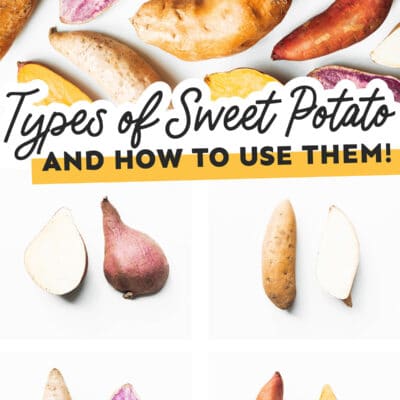
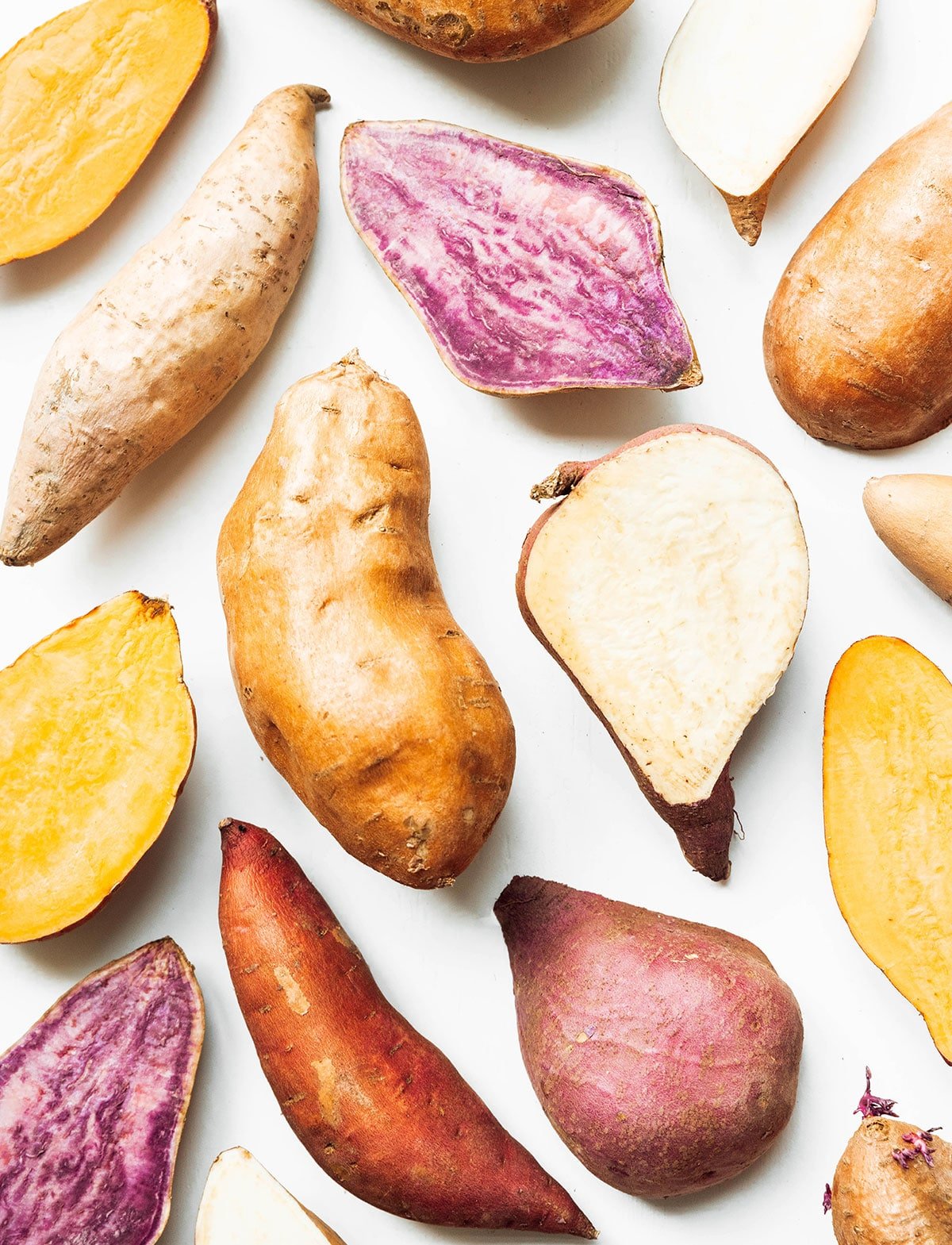
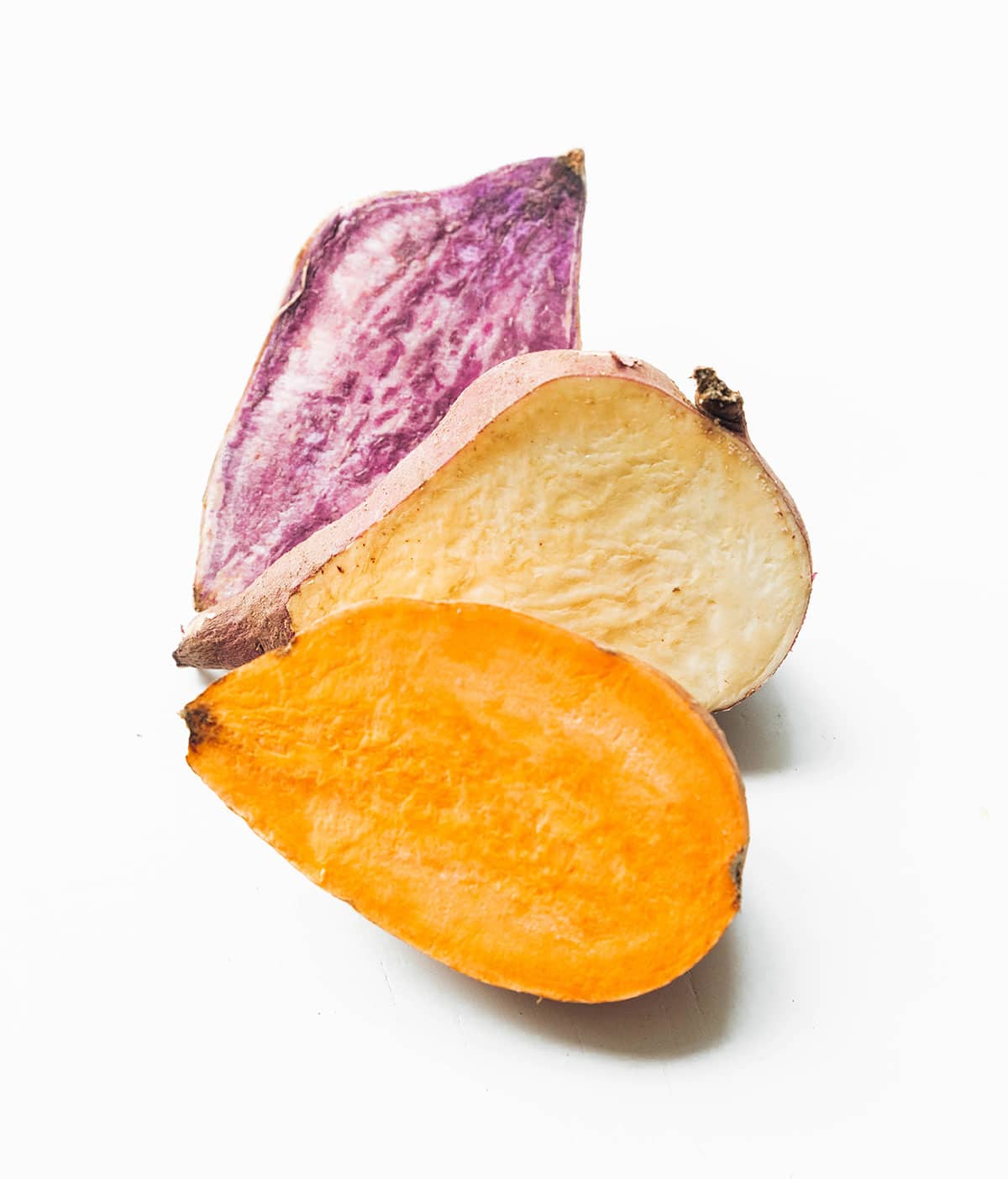
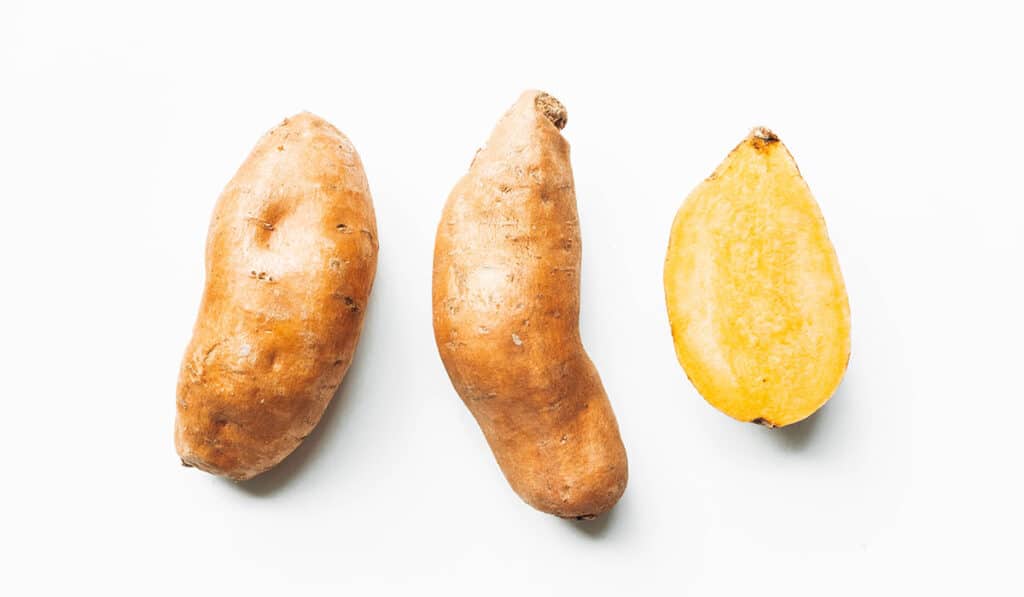
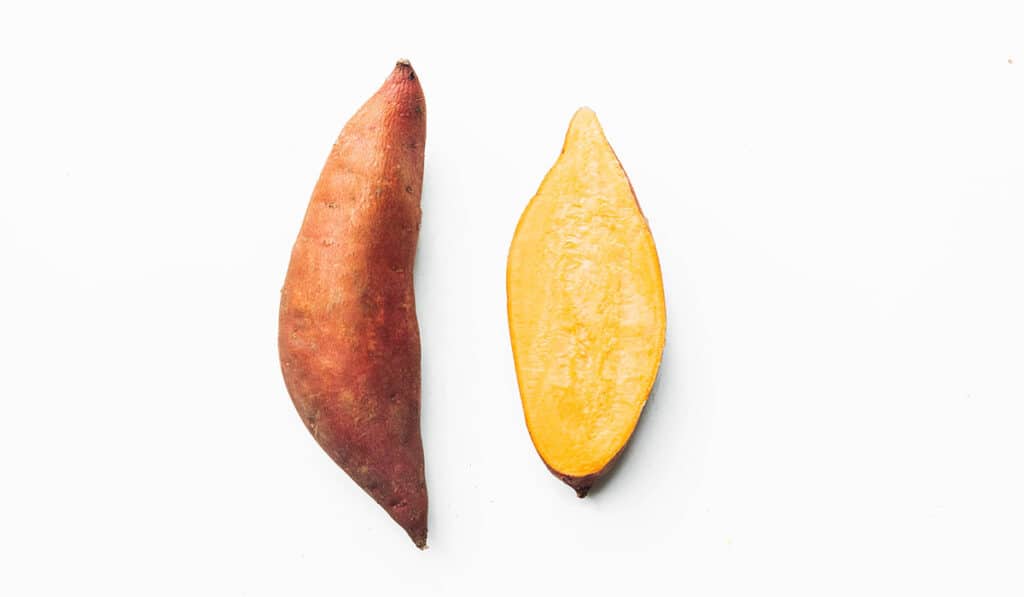
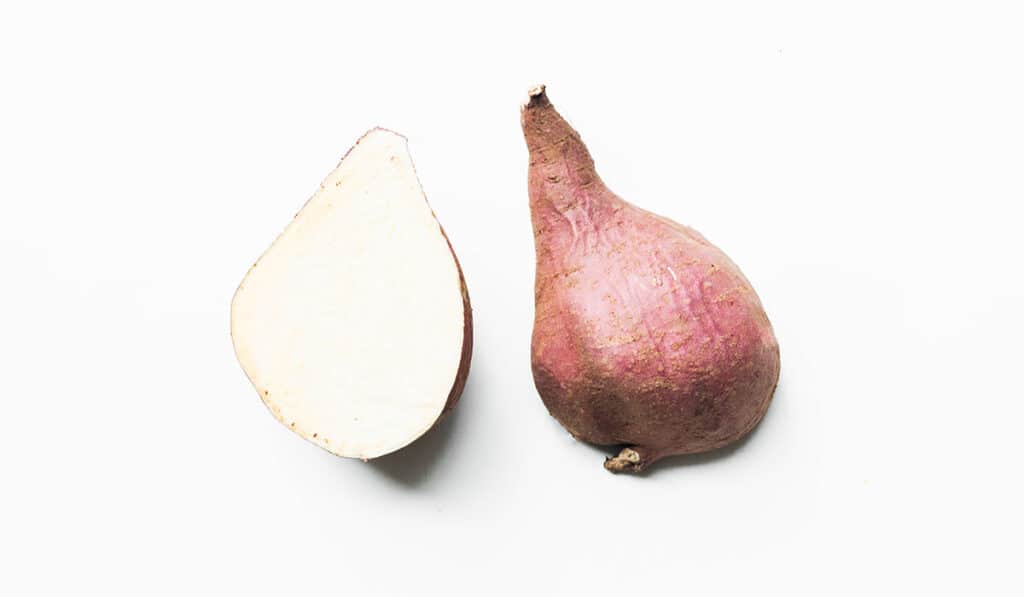
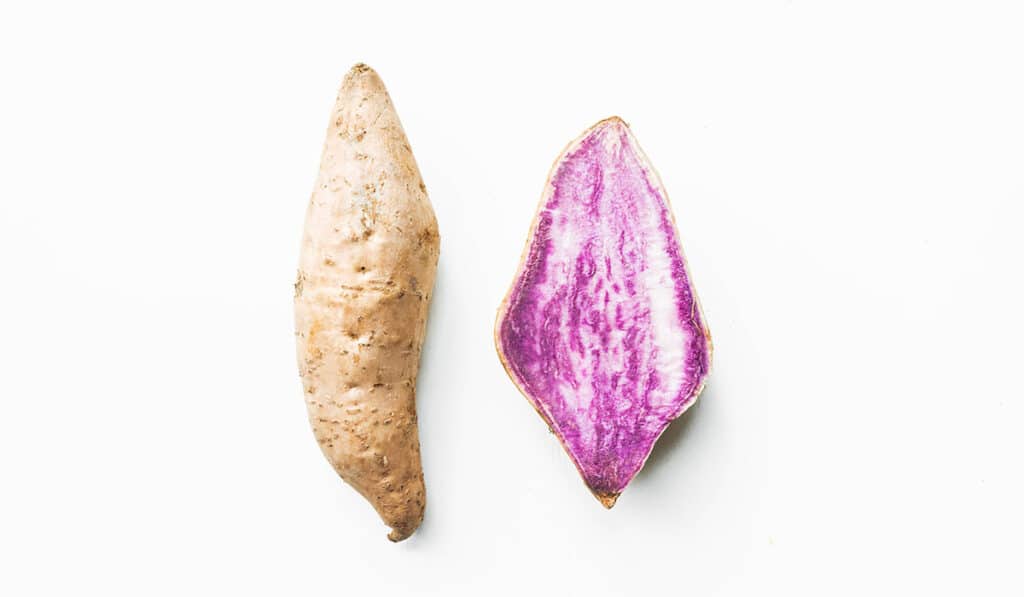
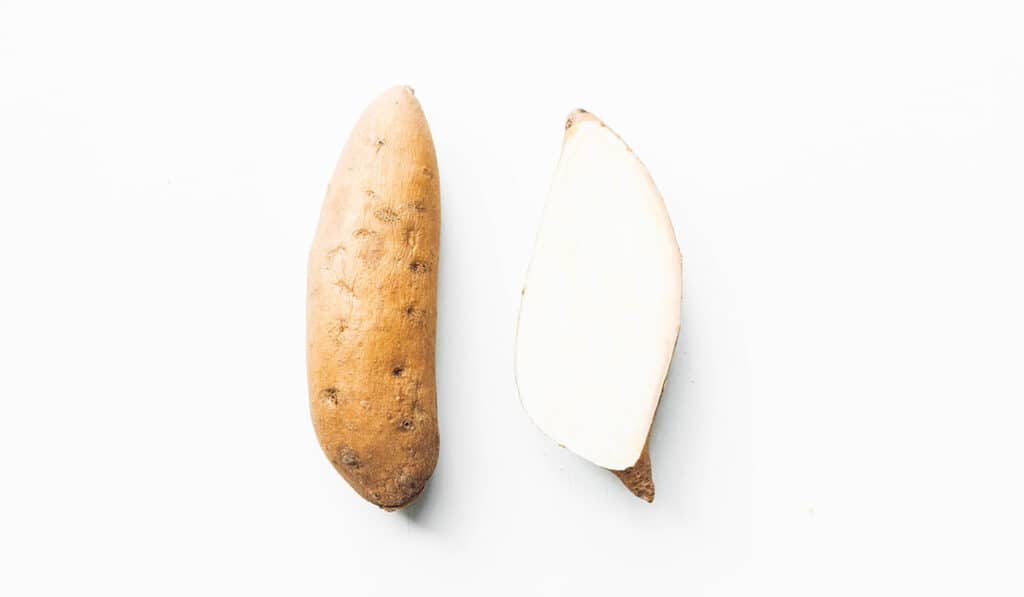
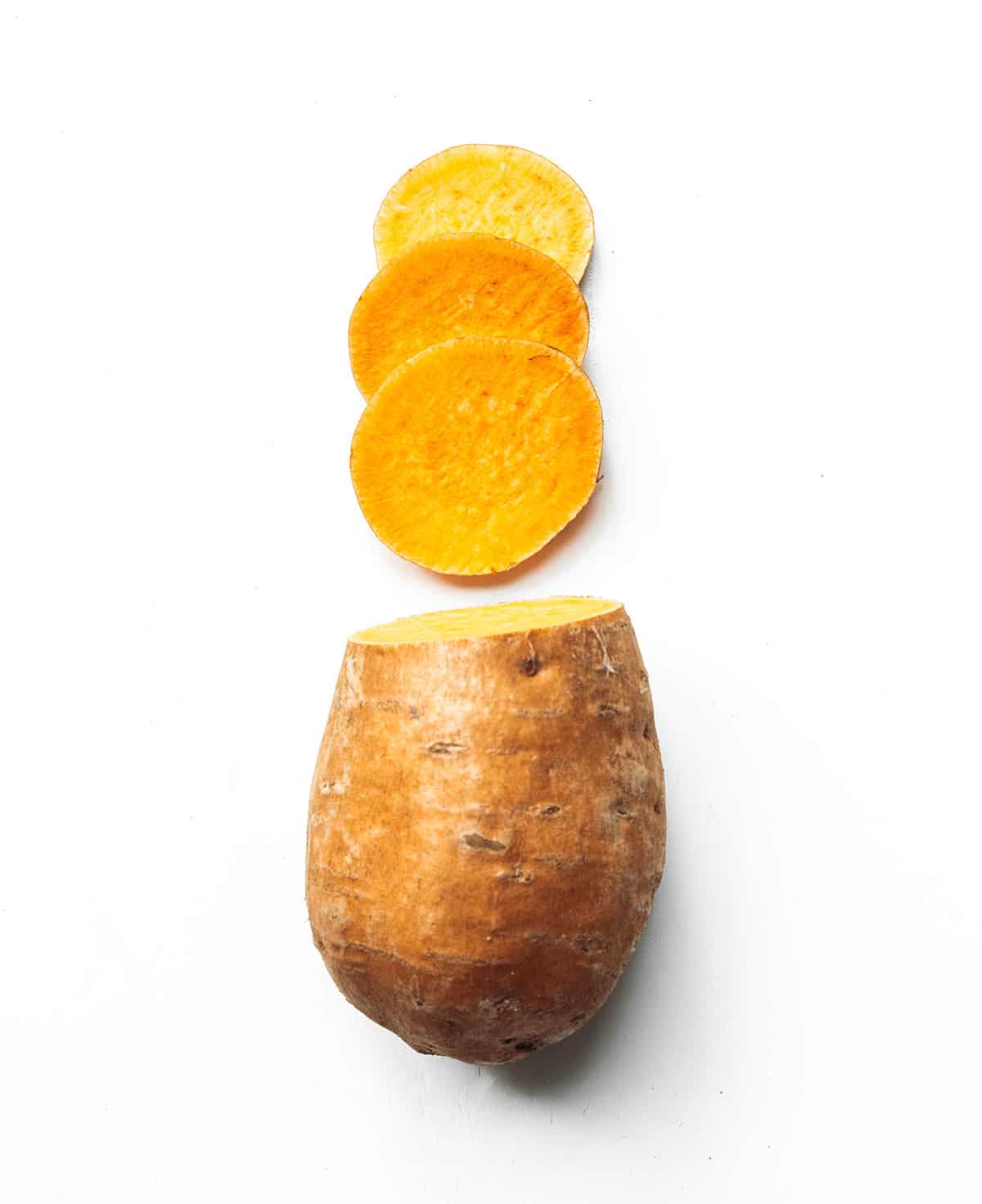
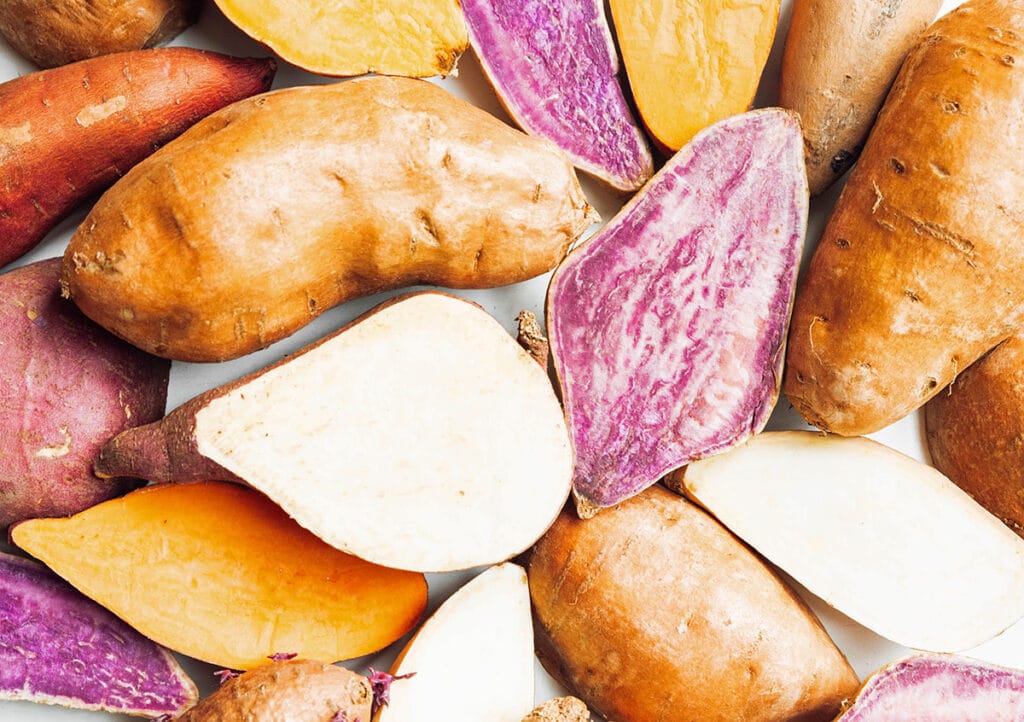
There are two general categories in which a majority of the hundreds of varieties of sweet potatoes fall under: soft and firm. (Grab our full guide to sweet potato varieties here!) Soft Sweet Potatoes: Reddish/copper colored skin and orange/golden flesh. These are great for baking and mashing! Variety includes: Jewel, Garnet, Covington. Firm Sweet Potatoes: Light/golden skin and pale/white flesh (these can sometimes be purple too). These hold their shape well, making them great for soups or fries. Variety includes: Hannah, Japanese (though the skin is purple with this one), Purple (the whole thing is, well, purple), O’Henry.
How to pick the perfect sweet potato
When choosing a sweet potato, look for a small to medium sized sweet potato. Generally, the larger the potato the starchier it is. A deeper orange color alludes to higher vitamin A content. Note that these aren’t as hardy as white potatoes, so avoid choosing any with cuts and bruises, as these will deteriorate more quickly. Store ‘em in a cool dry place, like the pantry (not the refrigerator), for about 2 weeks. (We’ve got a guide on how to cut sweet potatoes into every shape here!)
Our favorite sweet potato recipes
We love sweet potatoes around here, and have a ton of sweet potato recipes to choose from! Here are some of our favorite:
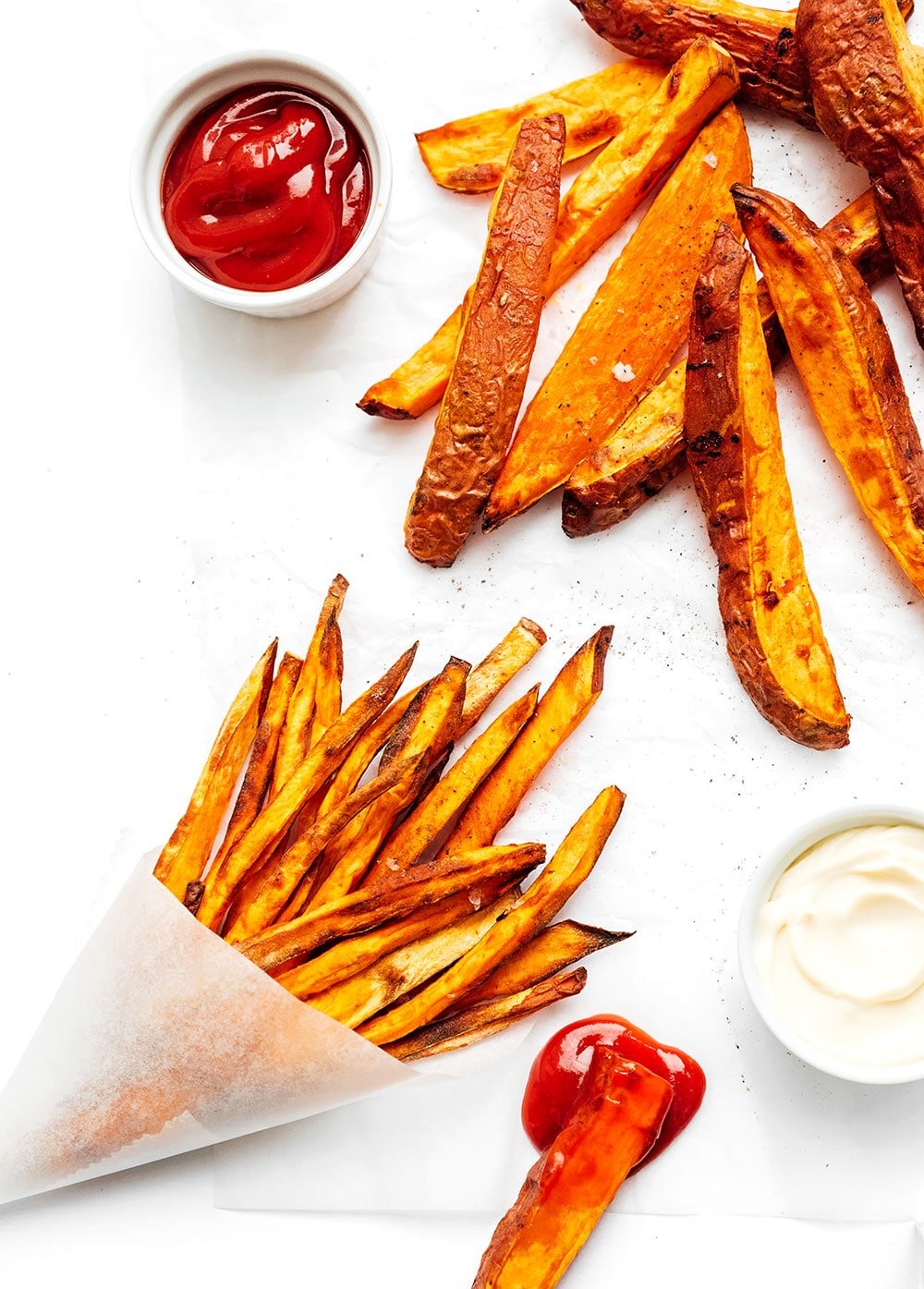
Sweet Potato Black Bean Tacos Sweet Potato Gnocchi Sweet Potato Fettuccini Noodles Sweet Potato Fries
Nutrition information for sweet potatoes
Sweet potatoes contain a host of vitamins and minerals. Here is the nutrition information for 1 cup of raw sweet potato (133 g).
Calories: 114 Carbohydrates: 27 g Fiber: 4 g, 16% Daily Value (DV) Protein: 2 g Fat: 0 g 377% DV of Vitamin A: Provides the provitamin version of this fat-soluble vitamin, meaning it comes from a plant source and your body converts the plant pigment into active Vitamin A. It is essential in many components of healthy vision, as well as immunity and cell growth/differentiation. 17% DV of Manganese: A trace element that plays a role in healthy brain and nervous system function. 14% DV of Vitamin B6 (Pyridoxine): A water-soluble vitamin that works behind the scenes as a coenzyme in many important reactions within your body, including protein metabolism and red blood cell formation, among countless other functions. 13% DV of Potassium: A key mineral and electrolyte involved in countless processes, including healthy nervous system functioning and contraction of the heart and muscles.
Are Sweet Potatoes Keto?
No, sweet potatoes are not suitable for keto diets. 92% of the calories in sweet potatoes come from carbs, and a small ½ cup serving (about 4 ounces) contains 24g of carbs.
Can You Eat Sweet Potato Skins?
Yes, and you absolutely should. The skin contains as much fiber as the rest of the potato and is loaded with vitamins and minerals.