You’ll Be Making This On Repeat
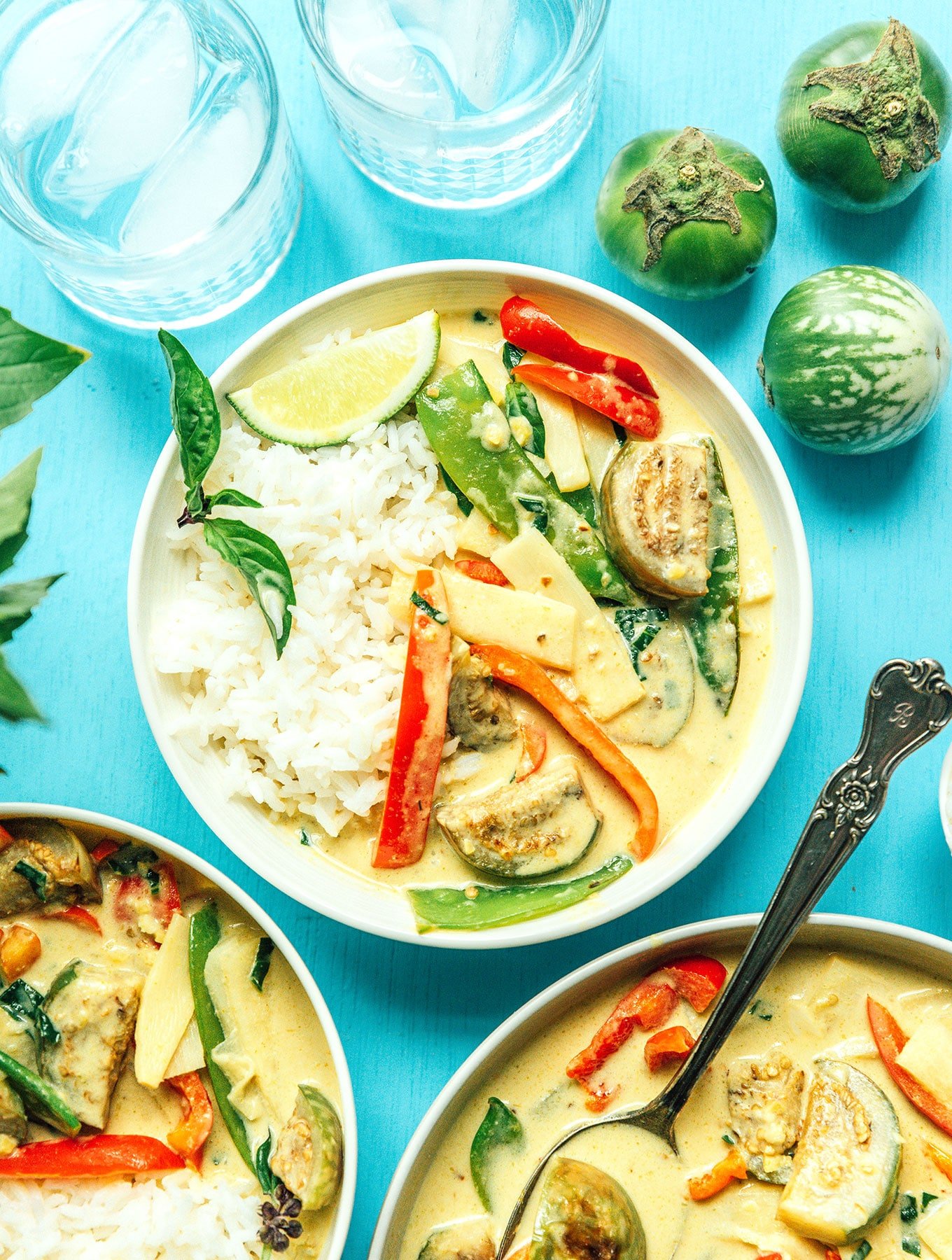
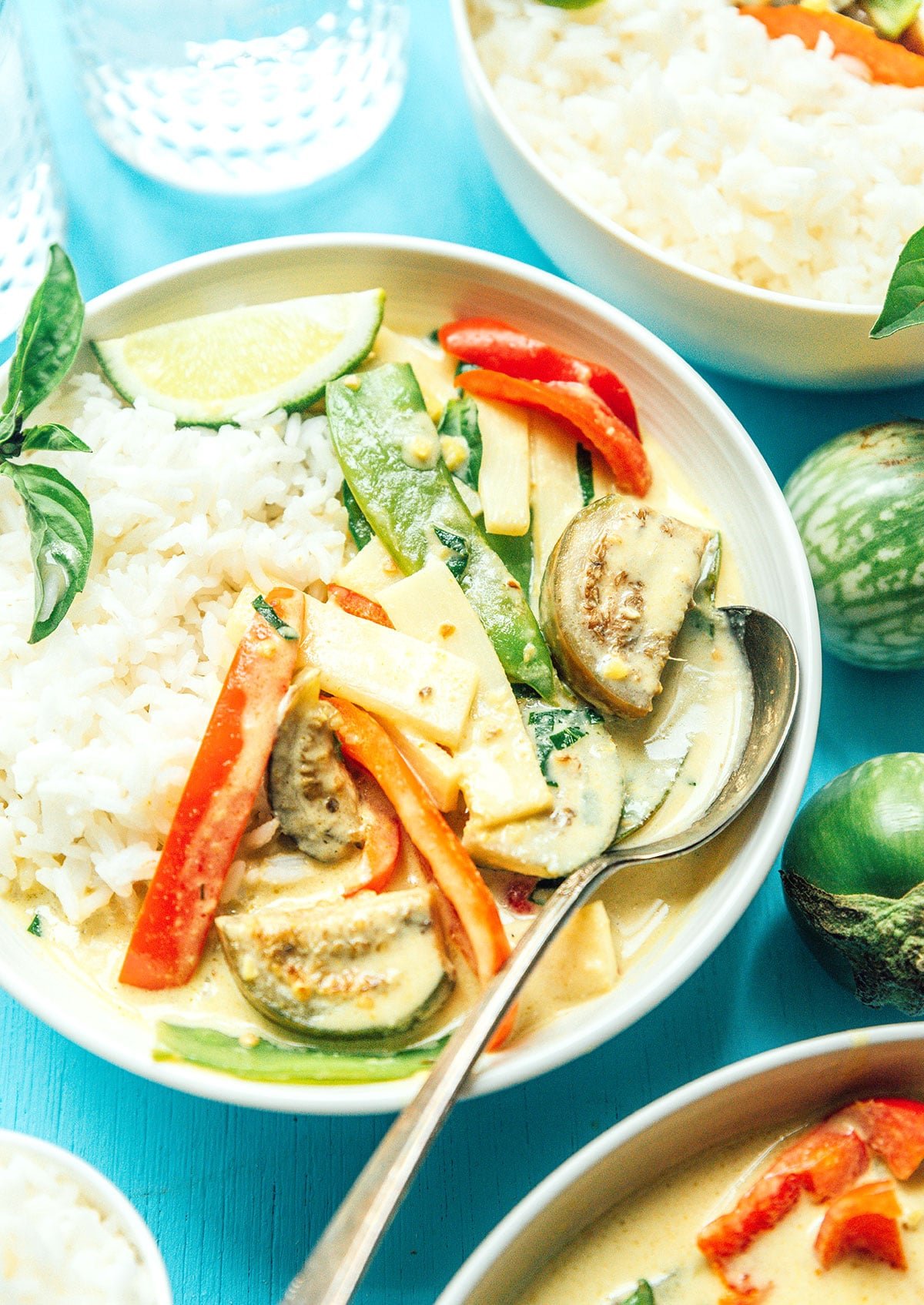
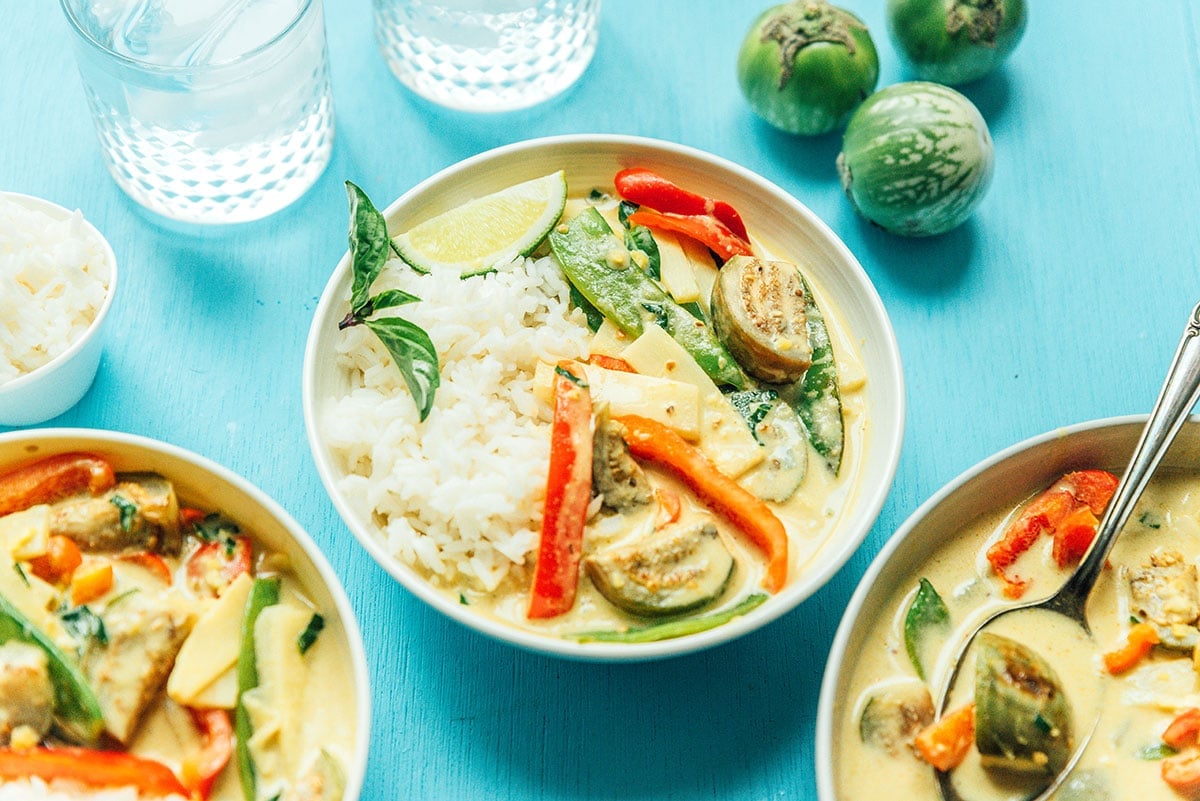
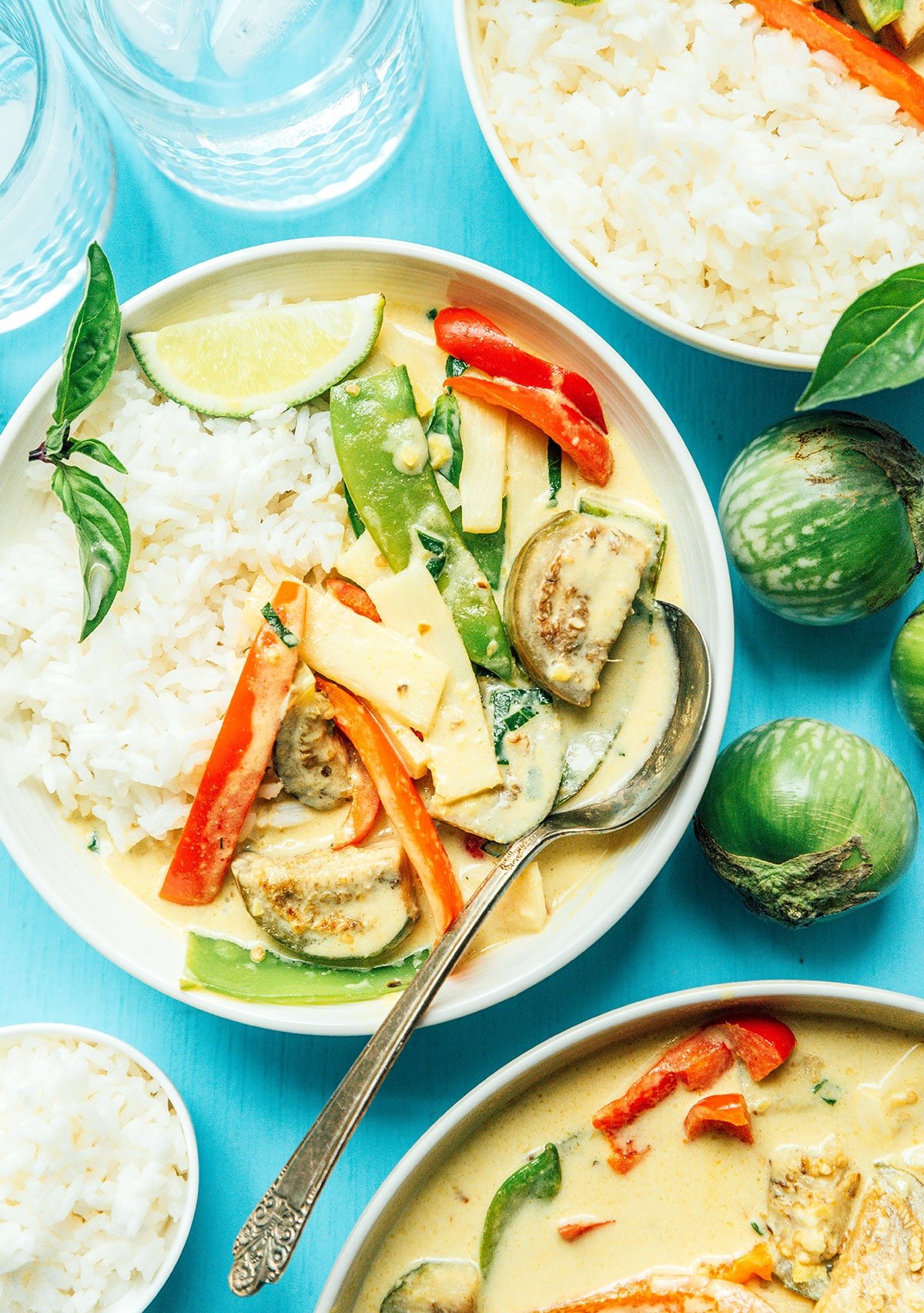
During my Thailand trip a few years ago, I took a cooking class and learned how a true Thai curry should taste (it’s magical, friends). After my fair share of recipe tests back home (all in the name of science), I came up with some pretty spot-on recreations—weeknight vegetarian coconut curry, anyone? This Thai eggplant green curry is my latest creation, and let me tell you, it’s good (like, dangerously good). We’re talking green Thai eggplants, red bell peppers, snow peas, and bamboo shoots, all served atop a bed of steamed jasmine rice. But honestly, the sauce is where this curry shines. We’re making a slight improvisation with a pre-made curry paste, but we’ve amped it up with easy-to-find flavor boosters! So, next time you feel like ordering takeout, I suggest making this 30-minute recipe instead—you won’t be disappointed!
Grab These Ingredients
Once you have your veggies, you don’t need much more for this Thai eggplant green curry! Jump down to the recipe card for exact measurements—this is only an overview!
Thai Eggplant: This type of eggplant is usually found at your neighborhood Asian supermarket. If preferred, you can use another eggplant variety (like Indian or Chinese). Extra Veggies: We like to complement the tender eggplant with some sliced red bell pepper, snow peas, and canned bamboo shoots. They’re the perfect Thai curry veggies! Coconut Oil: All of that will be sautéed in coconut oil for maximum flavor (but feel free to use any vegetable oil you have on hand). Curry Paste: Include any store-bought or homemade green curry paste to get that classic green curry flavor (just double-check that it doesn’t contain shrimp paste or fish sauce). Coconut Milk: Use full-fat canned coconut milk or coconut cream for the thickest, creamiest sauce (Thai brands are best if you can find one!). Coconut milk in a carton won’t work well here. Soy Sauce: Add a dash of soy sauce to amp up the salty flavor. Optional: My secret to next-level curry (while only using store-bought curry paste)? Add flavor boosters! Include fresh minced ginger, lemongrass paste, fresh Thai basil, and/or minced garlic.
Making Thai Curry Is Actually Really Easy
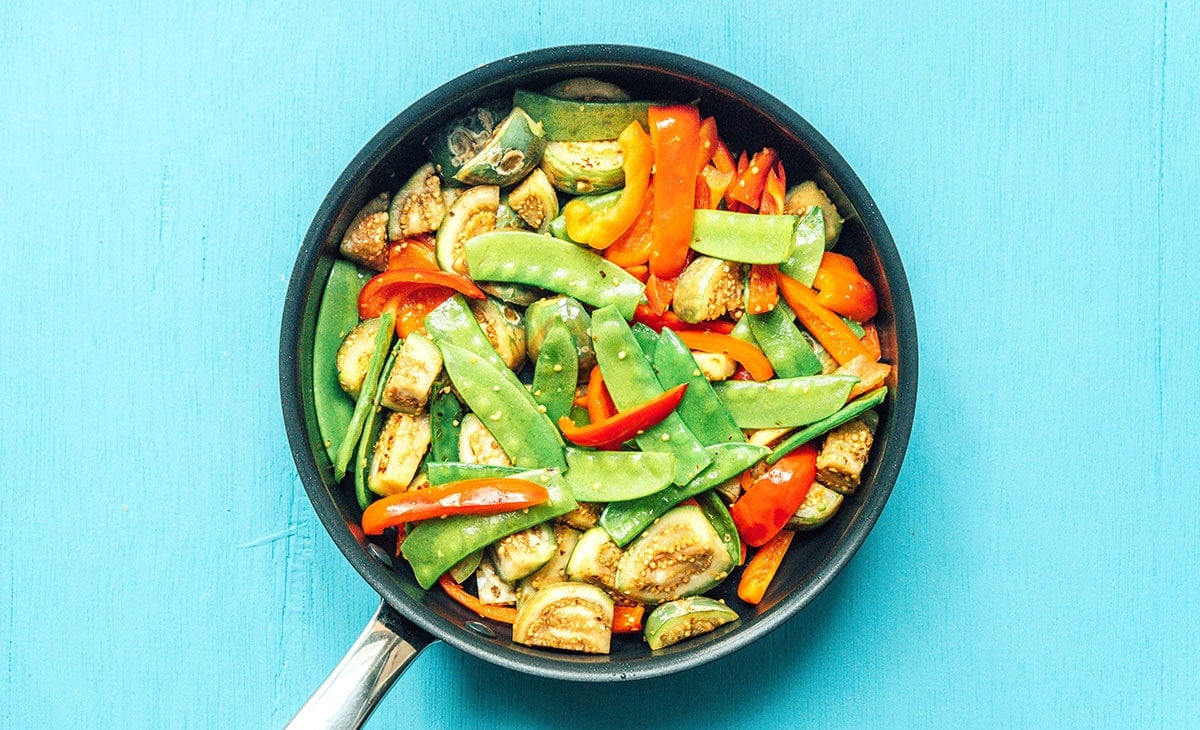
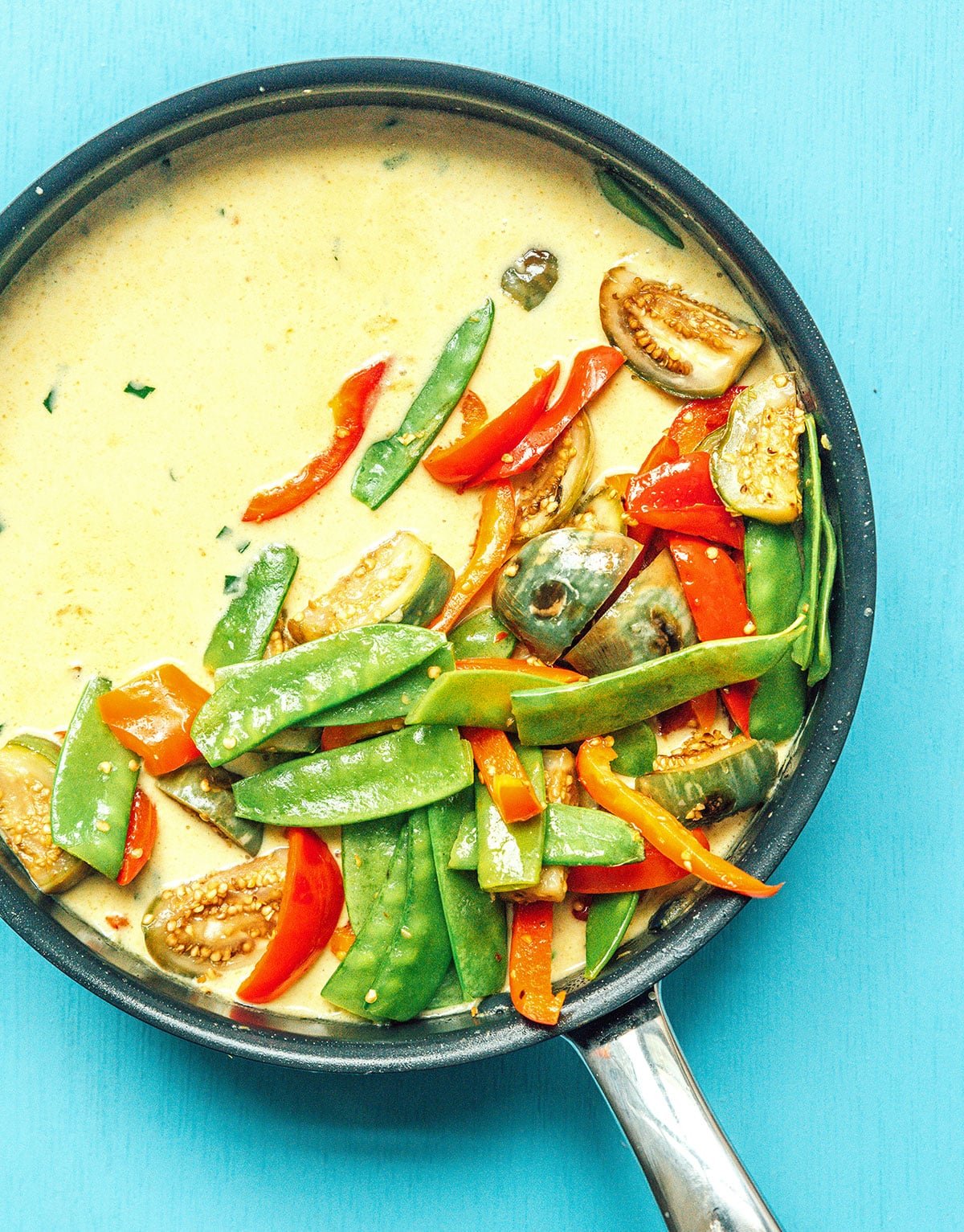
Once you understand the basics of curry-making, this Thai eggplant curry is a total breeze (jump to the recipe card for the full printable instructions)! Step 1: Prep The Veggies And RiceCut the eggplant into bite-sized chunks, leaving the skins on. Slice the bell peppers and trim the tough ends off of the snow peas. If serving with rice, start that now. Step 2: Sauté The VegetablesHeat 1 tablespoon of the oil in a large sauté pan or wok over medium heat and add the eggplant. Cook until slightly soft and brown on the edges. Add the peppers and snow peas, cooking until the veggies are brightly colored. Remove all of the veggies from the pan and cover to keep warm. Step 3: Add The FlavoringsHeat another tablespoon of oil in the pan or wok, then add the curry paste. Cook for a minute until fragrant, then add coconut milk and soy sauce. Whisk to combine, tasting and adding more curry paste as needed. Step 4: Serve Your CurryStir the bamboo shoots and the cooked veggies into the green curry sauce. Spoon over rice, then top with Thai basil. Enjoy!
Recipe swaps and tips
Can’t find Thai eggplants? Swap them with zucchini cubes. They cook quickly and soak up the broth just as well! Japanese eggplants are another great option—they’re slightly milder and tender, so they work perfectly in this dish. Protein Boost: Add tofu, chickpeas, or even tempeh to up the plant protein content. Just sauté them before adding them to the curry for a crispy texture. Spice Control: If you want your Thai eggplant green curry to be spicier, add a few Thai bird chilis or a pinch of chili flakes for extra heat. Curry Paste Swap: If you can’t find green curry paste, try yellow curry paste or red curry paste! Each has a slightly different flavor profile, but they’re equally delicious.