Radishes and turnips are both root vegetables that belong to the same family. As root vegetables, it is primarily the bulb-like root we like to eat. While they are both generally round, they come in other shapes and a variety of colors.
Origin and History
Radishes: Radishes originated in Southeast Asia, particularly in regions of what is now modern-day China. They have been cultivated for thousands of years and were carried by nomadic people to the Middle East and Egypt, where they were eaten by the Ancient Egyptians, Romans, and Greeks. All these ancient civilizations ate radishes, probably because they thrive in a variety of climates, including harsh climates, and are stored well. Today, radishes are grown around the world, and in the USA, California and Florida are the largest producers. Turnips: Like radishes, turnips are an ancient vegetable. They originated in the eastern Mediterranean and were one of the first vegetables to be cultivated in ancient times. Their use spread throughout Europe where they were an important food source for hundreds of years because they were easy to grow, thrived in cold climates, and were a reliable emergency food source in times of trouble. In good times, they were used mainly as animal fodder, but in the famines and wars of medieval Europe, people relied on turnips to survive. Both radishes and turnips evolved over centuries through natural and selective breeding to produce the wide variety of shapes, sizes, colors, and flavors we have today.
Appearance
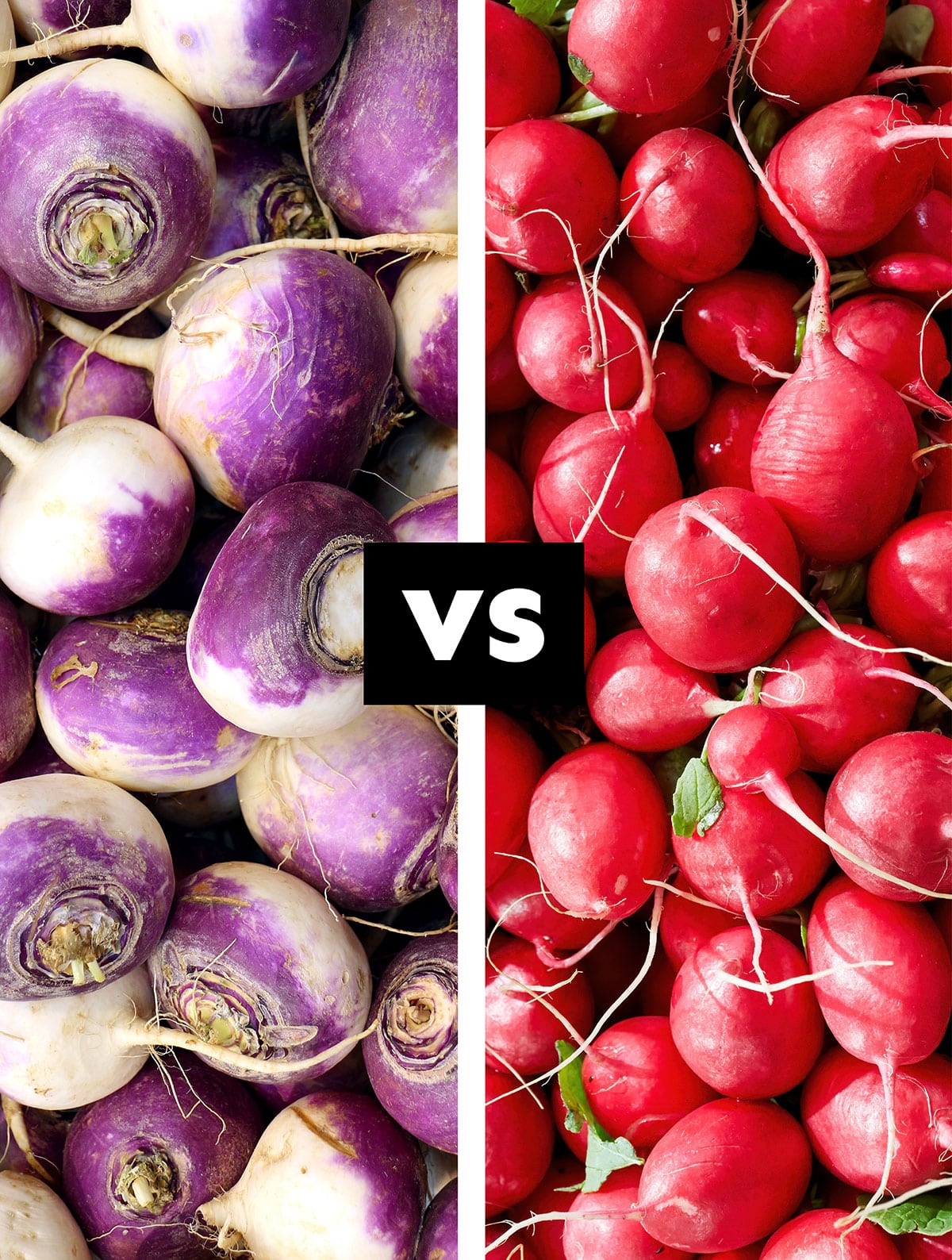
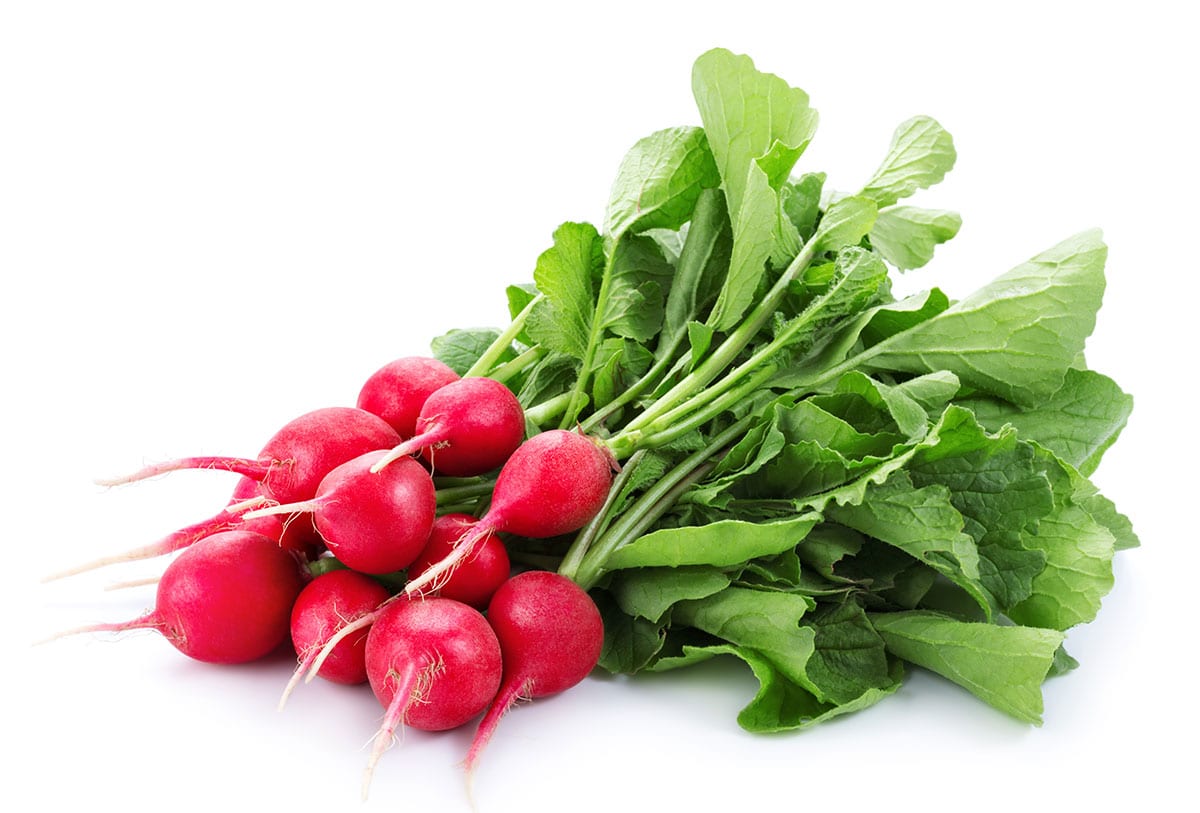
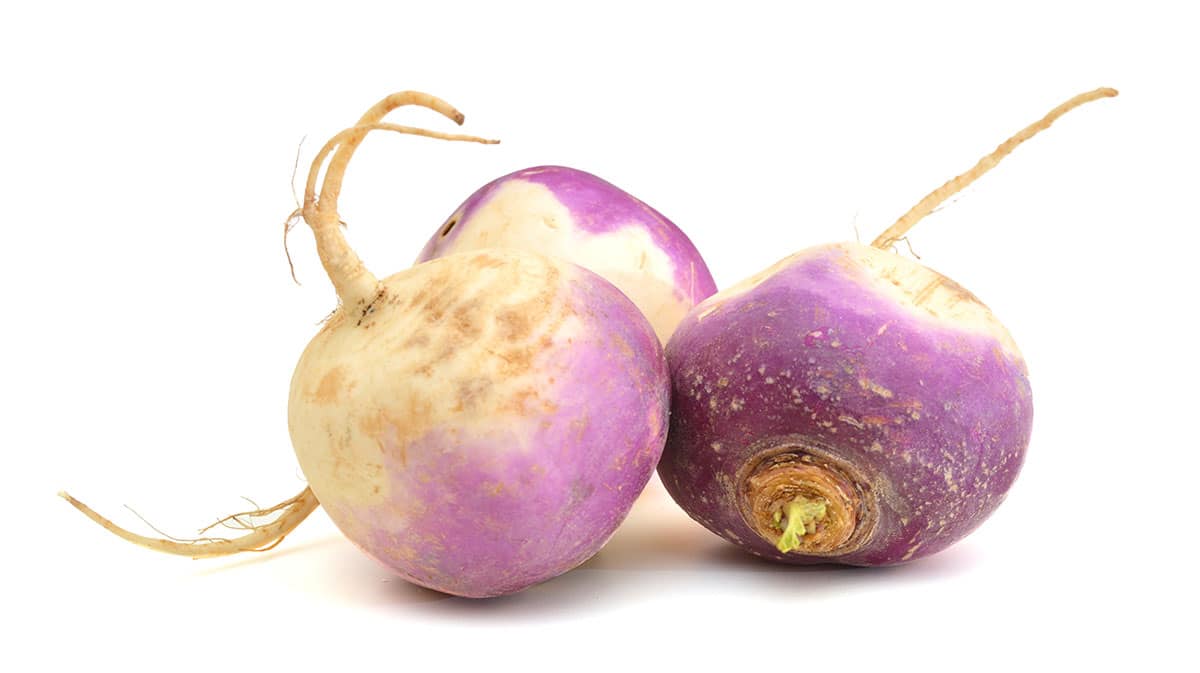
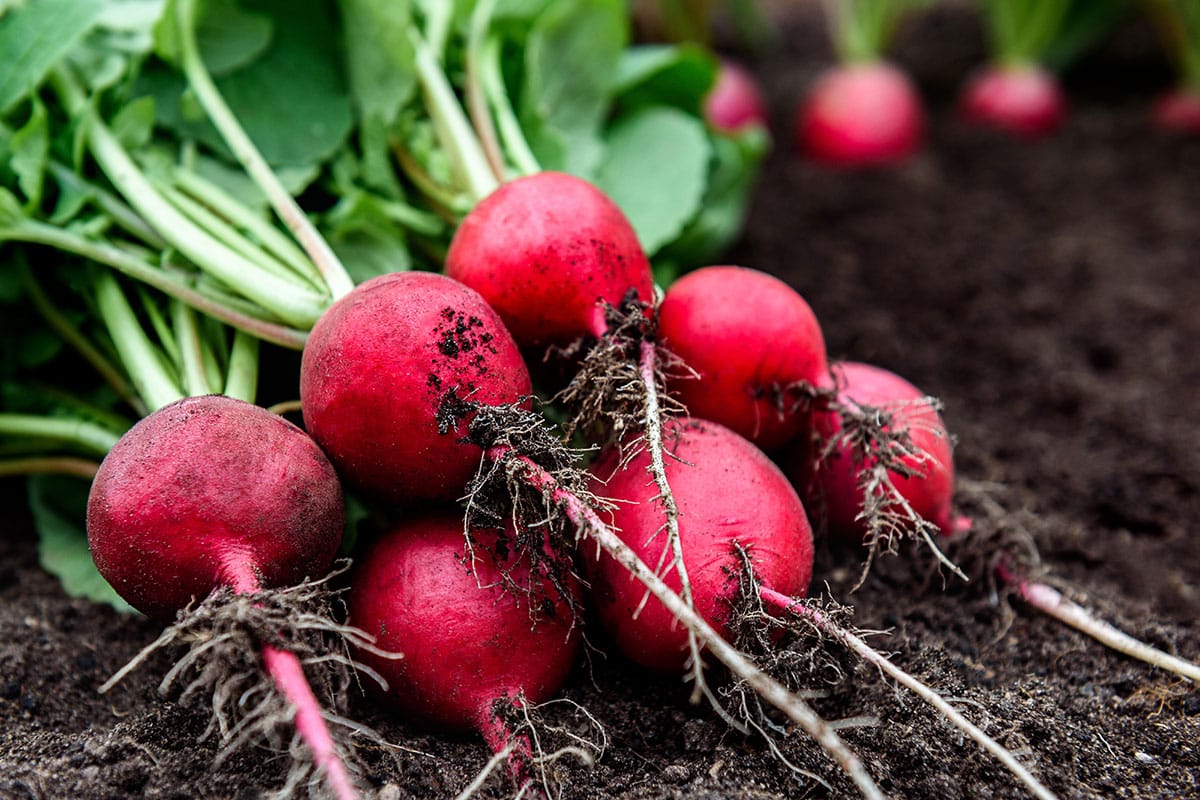
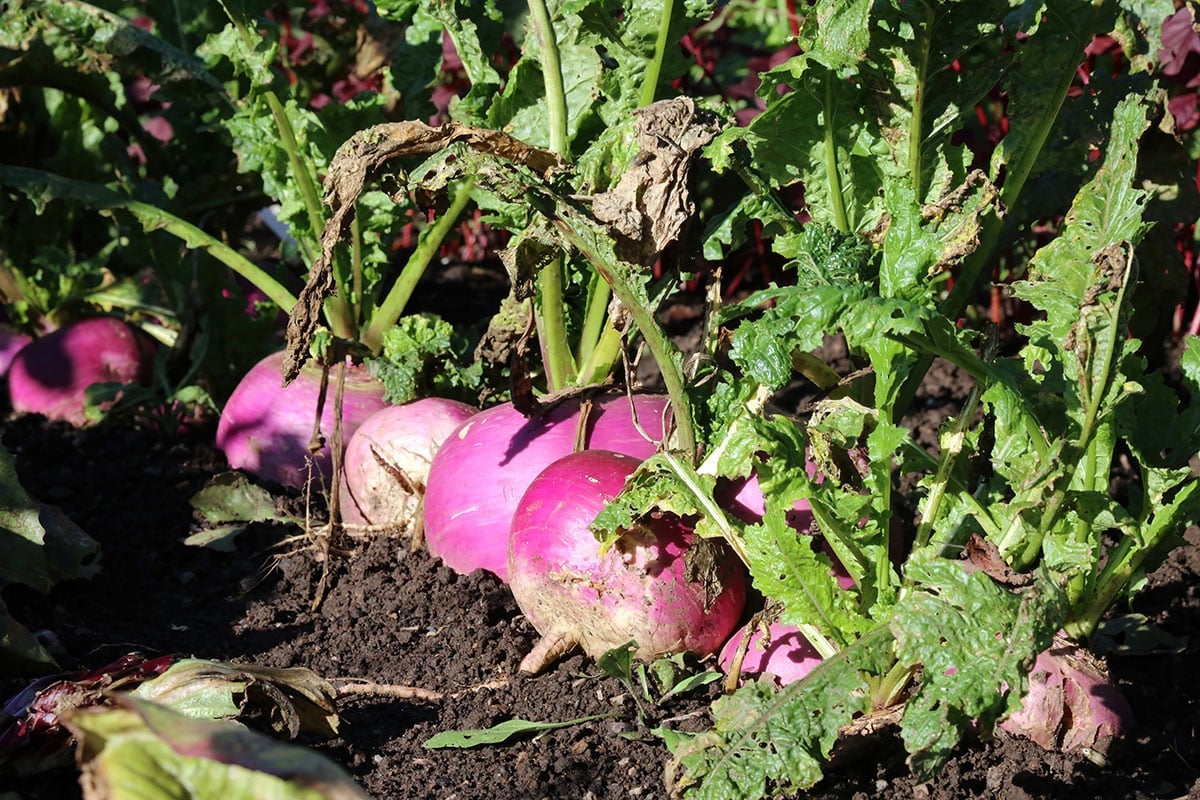
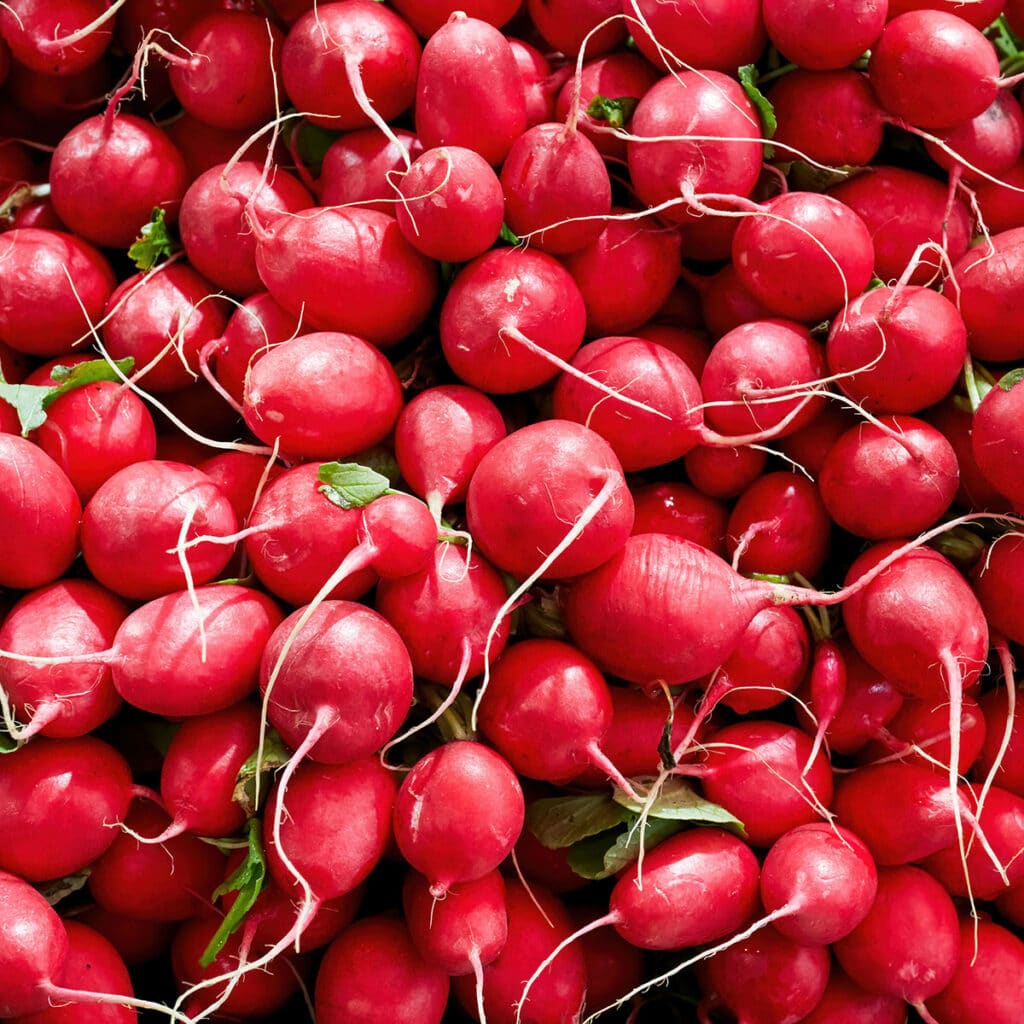
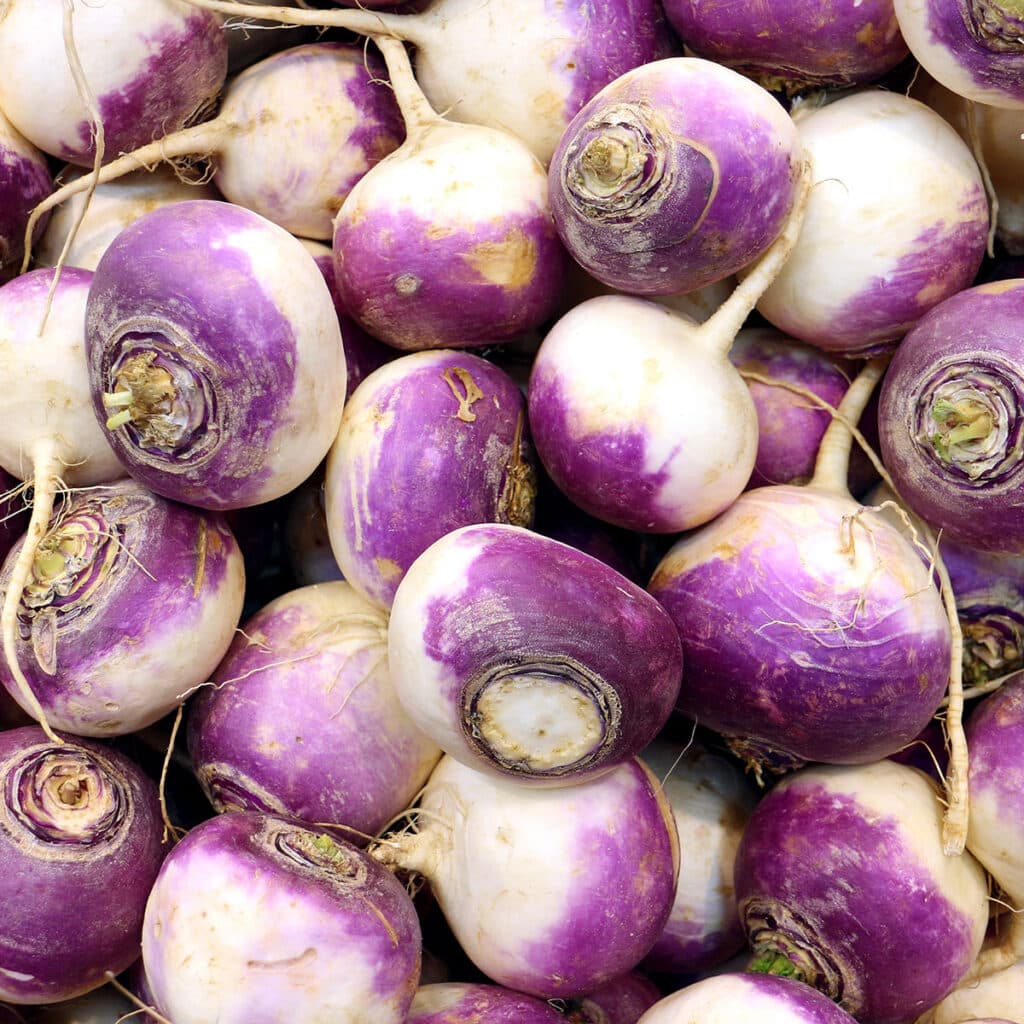
Radish: Radishes are small round veggies and most are bright red or pink, but they can also be found in white, purple, and black varieties. Turnips: Turnips are larger than radishes, and have a more bulbous shape. Most turnips are a combination of off-white and purple as shown in the photo. They can, however, be white, yellow, or a combination of colors. Turnips are also quite a bit denser and thus heavier for their size than radishes.
Flavor and Texture
What does a radish taste like? Radishes are crisp and watery making them great in salads. They are peppery, and can be pretty spicy depending on which variety you choose. Their spiciness is more intense in the outer layer than in the inner core which is milder. Radish leaves are also edible, and have a peppery taste that mixes well in a bowl of leafy greens. What do turnips taste like? Turnips, on the other hand, have a denser texture that becomes tender when cooked. The flavor of turnips is mild and slightly sweet, especially when they are cooked. Young turnips tend to be sweeter, while older turnips can have a stronger taste. Like radishes, turnip greens are edible and have a peppery taste that can be bitter. This largely depends on their maturity when harvested. The greens are mild when young, but grow more peppery with age.
Radish Vs Turnip Culinary Uses
Radishes: Radishes are often enjoyed raw in salads, slaws, sandwiches, and appetizer platters. Sliced, diced, or shaved, radishes contribute a vibrant crunch that balances the textures and flavors of your cooking. Their sharp taste can also provide a zesty contrast when used in tacos, soups, spring rolls, sushi, or just as a garnish. Beyond their raw form, radishes can be pickled for a tangy and spicy condiment. You can also roast or air fry radishes like you would other vegetables. Look here for new recipe ideas for radishes. Turnips: Turnips are an underappreciated veggie that can be used in many ways. You can boil, steam, roast, or mash them, and you can find them in quite a few soup recipes. They are also great in stir-fries, as they retain much of their crunch when cooked. You can also use turnip greens like you would other leafy greens in sautés and salads.
Storage
Radishes: Storing radishes is pretty easy. Just store them in your refrigerator’s crisper drawer. They will stay fresh for a couple of weeks though the sooner you eat them, the crisper they will be. Oh, and you can freeze radishes. You need to blanch them first to help preserve their texture and flavor. If you don’t blanch them, you may find them mushy once thawed. Turnips: Storing turnips is the same, right to the crisper drawer. They typically last a few weeks to a couple of months, depending on their freshness when purchased. Can you freeze turnips? Like radishes, the answer is yes. Turnips freeze well and can be frozen, diced and blanched, mashed, or roasted.
Varieties
Radishes: Over time, numerous radish varieties were developed by farmers or sometimes just by nature. Some were bred to have larger bulbs, distinct colors, or better taste. Here are some of the most common types of radishes you might find.
Black Spanish Cherry Belle Chinese Red Meat Daikon Easter Egg French Breakfast German Giant Green Meat Malaga Violet Pink Beauty Plum Purple Red Globe (probably the most commonly found radish in the USA) Sparkler Watermelon Radish White Icicle Zalata
Turnips: There was once a time when turnips were primarily grown for their leaves, which were used as a vegetable green. Over time, through selective breeding, larger and better tasting roots were developed. Today, of course, there are dozens of different varieties of turnips. This list represents just a few of the more common or popular types of turnips.
Alltop Amber Globe Arctic Gold Ball Golden Globe Hakurei (Salad Turnip) Market Express Milan Purple Top White Globe (the most common turnip in the USA) Seven Top Shogoin Tokyo Cross White Egg